Molluscum Contagiosum in Children: What It Is and When Treatment Helps

Molluscum contagiosum is a common viral skin infection in children. It often causes small, firm, dome-shaped bumps with a tiny central dimple.
Key Takeaways
- Molluscum contagiosum is a common viral skin infection in children.
- It often causes small, firm, dome-shaped bumps with a tiny central dimple.
- Many children do not need treatment because the bumps often go away on their own.
- Treatment may be considered if lesions are spreading, itchy, inflamed, or cosmetically bothersome.
- Good skin care and avoiding scratching can help reduce spread and irritation.
- A doctor should assess uncertain rashes, infected-looking bumps, or lesions near the eyes or genitals.
Molluscum contagiosum in children is a common, usually harmless viral skin infection that causes small, smooth bumps. Many cases improve without treatment, but medical care may be helpful when bumps are widespread, irritated, or affecting daily life.
Overview
Molluscum contagiosum in children is a viral skin infection caused by a poxvirus. It leads to small, raised bumps on the skin that are usually painless and benign. The condition is especially common in young children because close contact during play, shared surfaces, and developing immune systems can make spread easier.
The bumps may appear anywhere on the body, but they are often seen on the trunk, arms, legs, and sometimes the face. In healthy children, molluscum contagiosum usually stays limited to the skin and does not cause serious illness. Even though the bumps can look concerning to parents, the condition is often self-limited and tends to resolve over time.
One of the most important points for families is that treatment is not always necessary. Some children improve without any procedures or medicines, while others benefit from treatment because the bumps are numerous, itchy, irritated, or causing emotional distress. A pediatrician or dermatologist can help decide the best approach based on the child’s age, symptoms, and the location of the lesions.
Symptoms and What the Bumps Look Like
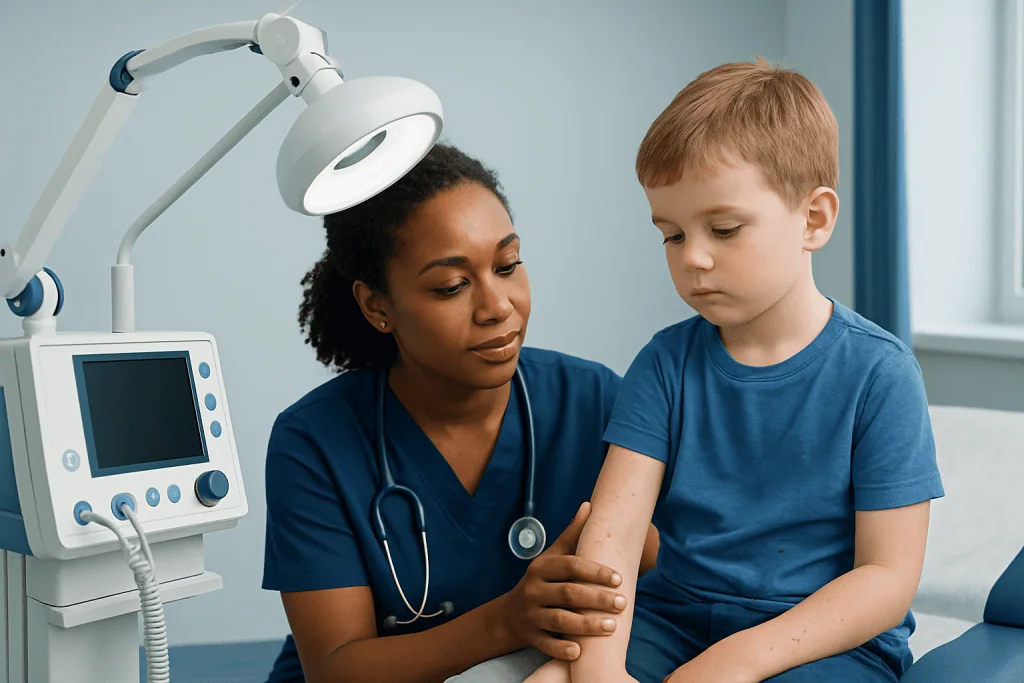
The typical molluscum bump is small, round, smooth, and flesh-colored, white, or pink. Many have a central dimple or tiny indentation, which is a classic clue. The bumps may appear one at a time or in clusters, and they can range from just a few lesions to many scattered over different areas of the body.
Most children do not feel unwell, and the bumps themselves are often painless. However, they can become itchy, red, or inflamed, especially if the child scratches them. This irritation does not always mean the condition is worsening; in some cases, redness and crusting can happen as the immune system begins to clear the virus.
Children with eczema or sensitive skin may have more irritation around the lesions. A dry, itchy rash can develop nearby, making the area more uncomfortable and increasing the urge to scratch. This can lead to further spread through self-inoculation, meaning the virus moves from one part of the child’s skin to another.
- Small dome-shaped bumps
- Central dimple or plug
- Skin-colored, pearly, white, or pink appearance
- Possible itching or surrounding eczema
- Clusters on the trunk, limbs, face, or skin folds
Causes, Spread, and Risk Factors

Molluscum contagiosum is caused by a virus that infects the top layers of the skin. It spreads through direct skin-to-skin contact and sometimes through shared items such as towels, clothing, bath sponges, or sports equipment. Scratching can also spread the virus to nearby skin, which is why bumps may multiply over time.
Children are more likely to develop molluscum if they have close physical contact with other children, spend time in daycare or school settings, or participate in activities with shared surfaces. Swimming does not necessarily cause the infection, but shared towels and close contact around pools may make spread more likely. The virus can also pass more easily through small breaks in the skin.
Certain children are more prone to prolonged or widespread lesions. These include children with eczema, because their skin barrier is more easily disrupted, and those with weakened immune systems, who may have more extensive disease. Although molluscum is contagious, it is generally not dangerous in otherwise healthy children. It is different from bacterial skin infections and from other viral rashes such as warts, even though some lesions may seem similar at first.
How Doctors Diagnose Molluscum Contagiosum
Doctors usually diagnose molluscum contagiosum by examining the skin. The appearance of smooth, dome-shaped bumps with a central dimple is often enough to make the diagnosis without tests. A child’s medical history, including how long the bumps have been present and whether there is itching or eczema, also helps guide evaluation.
In some cases, the bumps may resemble other skin conditions. These can include warts, folliculitis, insect bites, or other common childhood rashes. If the appearance is not typical, if lesions are unusually large, or if they are in sensitive areas such as the eyelids or genital region, a doctor may refer the child to a dermatologist for closer assessment.
Testing is not commonly needed. Rarely, if the diagnosis is uncertain, a specialist may remove a small sample or examine the core material from a lesion. Parents should avoid trying to squeeze or open the bumps at home, as this may increase irritation, spread, and the risk of secondary infection. If there are concerns about persistent skin changes, a doctor may also review whether there is associated eczema or another skin problem that needs treatment.
When Treatment Helps and What Options Are Used
Many children with molluscum contagiosum do not need active treatment because the lesions often clear on their own over months. Watchful waiting is a reasonable choice when the bumps are few, not bothersome, and not in sensitive locations. This approach can spare children from discomfort related to procedures, especially when symptoms are mild.
Treatment may be helpful when bumps are numerous, spreading quickly, becoming repeatedly inflamed, or causing itching, embarrassment, or problems with school and sports participation. Lesions near the eyes, on the face, or in the genital area may also need individualized assessment. The decision often depends on balancing the likelihood of natural resolution with the child’s comfort and quality of life.
Common medical treatments include topical therapies, carefully applied blistering or peeling agents, cryotherapy, and curettage. Some methods can be uncomfortable, so they are used selectively in children. A dermatologist may recommend an approach based on the child’s age, skin type, lesion location, and tolerance. If the bumps have become secondarily infected or if the skin around them is very inflamed, the doctor may also treat that irritation separately.
When the diagnosis is uncertain or lesions are widespread, a child may benefit from expert dermatology care. If irritation around the bumps is severe, gentle management of associated skin inflammation may be advised, and in selected cases clinicians may review options commonly used in eczema treatment to reduce scratching and help the skin barrier recover.
Prevention and Self-care at Home
Good skin care can help limit irritation and reduce the chance of spreading molluscum to other areas. Children should be encouraged not to scratch, pick, or squeeze the bumps. Nails should be kept short, and any associated itching should be discussed with a doctor so that the skin can be managed more comfortably.
Families can reduce spread by not sharing towels, washcloths, clothing, or personal items. Covering visible lesions with clothing or a bandage during close-contact activities may be useful, especially if a child tends to touch the bumps often. Regular handwashing and gentle bathing are sensible measures, but harsh scrubbing should be avoided.
If the child also has dry or eczema-prone skin, regular moisturizing is helpful. Fragrance-free skin care products are often better tolerated. Parents should not use home remedies that burn, cut, or scrape the bumps, because these can damage the skin and may lead to infection or scarring. If skin concerns persist, evaluation through pediatric dermatology can help families understand safe next steps.
When to See a Doctor
Parents should seek medical advice if they are unsure whether the bumps are molluscum contagiosum, if the lesions are near the eyes, or if they involve the genital area. A doctor should also assess bumps that become very red, swollen, painful, or drain pus, as these signs may suggest a secondary bacterial infection rather than simple irritation.
Medical review is also important if the child has many lesions, if new bumps keep appearing for a long time, or if the condition is causing significant distress. Children with eczema, immune system problems, or very sensitive skin may need a tailored plan to prevent ongoing irritation and spread.
In addition, parents may wish to consult a specialist if treatment options need to be discussed in more detail. Acibadem International’s multidisciplinary specialists in JCI-accredited hospitals diagnose and treat skin conditions in children and adults, including molluscum contagiosum, for international patients. A professional evaluation can help confirm the diagnosis, explain whether waiting is reasonable, and choose treatment only when it is likely to be helpful.
Frequently asked questions
Is molluscum contagiosum dangerous in children?
In most healthy children, molluscum contagiosum is not dangerous. It is a common skin infection that usually stays on the surface of the skin and often clears over time. The main concerns are spreading, itching, irritation, and cosmetic or emotional effects.
Does every child with molluscum need treatment?
No. Many children do not need treatment because the bumps often go away on their own. Treatment is usually considered when lesions are widespread, bothersome, inflamed, or in sensitive areas.
How long does molluscum contagiosum last?
The condition can last for several months and sometimes longer before it fully clears. The exact timeline varies from child to child. Even when it lasts a while, it often improves without causing long-term health problems.
Can my child still go to school or daycare?
In many cases, yes. Children with molluscum contagiosum can often continue normal activities if the bumps are covered when appropriate and good hygiene is followed. Parents should still check local school, daycare, or sports policies and ask a doctor if they are unsure.
What happens if the bumps turn red or crusty?
Redness or crusting can sometimes happen as the immune system starts clearing the lesions. However, marked pain, swelling, warmth, pus, or rapidly worsening redness may suggest a secondary infection and should be checked by a doctor. It is best not to squeeze or pick at the lesions.
Can molluscum leave scars?
Molluscum itself does not always leave scars, but scratching, infection, or aggressive removal can increase the risk. Gentle skin care and avoiding picking can help protect the skin. A doctor can advise on the safest treatment options if removal is being considered.
References
- American Academy of Dermatology
- American Academy of Pediatrics
- Centers for Disease Control and Prevention
- National Health Service
- Mayo Clinic
This article is for general information only and is not a substitute for professional medical advice. Please consult a qualified doctor about your individual situation.
Molluscum Contagiosum in Turkey — costs, top hospitals & a free quote
JCI-accredited · board-certified surgeons · reply within 24h
Add us as a Preferred Source to see more of our trusted health content across Google Search, AI Overviews and Discover.

More from the Health Library



Related Specialists
Dr. Abdullah Doğan
Cardiovascular Surgery
Prof. Dr. Ece Aydoğ
Physical Medicine & Rehabilitation
Dr. Emine Çiğdem Kırçiçeği Çiçekdağ
Anesthesiology
Dyt. Burcu Akbeyaz
Nutrition & Diet