MRI-Compatible Pacemakers: Can You Safely Have an MRI?

Some modern pacemakers are designed for MRI under specific conditions and are often called MRI-conditional devices. MRI safety depends on the full system, including the pacemaker, leads, settings, and the type of scan needed.
Key Takeaways
- Some modern pacemakers are designed for MRI under specific conditions and are often called MRI-conditional devices.
- MRI safety depends on the full system, including the pacemaker, leads, settings, and the type of scan needed.
- A pacemaker should be checked and usually reprogrammed before the scan, then checked again afterward.
- People should never assume all pacemakers are MRI-safe; the device model must be verified by a qualified team.
- When managed carefully, MRI can be performed safely in many patients with cardiac implantable electronic devices.
Many people with newer pacemakers can safely have an MRI, but only when the device and leads are confirmed to be MRI-conditional and a specific safety protocol is followed. The decision depends on the exact device system, the body area being scanned, and close coordination between cardiology and radiology teams.
Overview: What MRI-Compatible Pacemakers Mean
MRI-compatible pacemakers are more accurately described as MRI-conditional pacemakers. This means the device may be used safely in an MRI environment only under specific conditions set by the manufacturer and confirmed by the medical team. These conditions can include the exact pacemaker model, the leads attached to it, the scanner strength, the area of the body being imaged, and the settings used during the scan.
A pacemaker helps regulate the heart rhythm by sending small electrical impulses to the heart. Because MRI uses powerful magnets and radiofrequency energy, it can potentially affect metal-containing or electronic implants. In the past, many people with pacemakers were told they could not have MRI. Today, advances in device design and imaging protocols mean that many patients can undergo MRI safely when the right precautions are taken.
Even with newer devices, the word “compatible” should not be understood as “safe in every situation.” MRI safety is not a simple yes-or-no question. It depends on careful review by specialists who understand both cardiac rhythm devices and MRI protocols.
Why MRI Can Be a Concern With Pacemakers
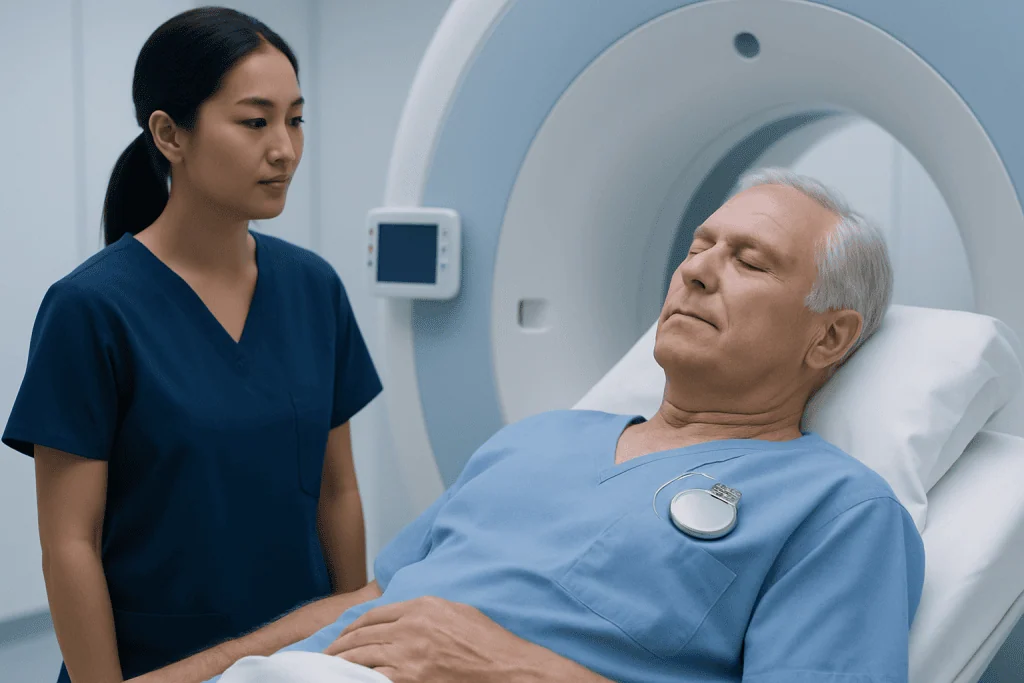
MRI scanners create strong magnetic fields that can interact with a pacemaker system in several ways. The magnetic field may affect the device settings, interfere with sensing or pacing, or in rare cases cause the device to switch into an unintended mode. Radiofrequency energy can also lead to heating at the tip of the leads, which is one reason the lead type matters as much as the pacemaker itself.
Another concern is that the pacemaker may misinterpret signals during imaging. For someone who depends heavily on pacing, any unexpected change in device function could be important. This is why continuous monitoring and having trained staff available are key parts of the process.
Older or non-MRI-conditional systems usually require even more careful assessment. In some cases, MRI may still be possible if the scan is medically necessary and the center has the right expertise and safety pathway. The goal is to balance the value of the MRI with the potential device-related risks.
Who May Be Able to Have an MRI

A person may be eligible for MRI if the pacemaker system is confirmed to be MRI-conditional and all manufacturer requirements are met. Importantly, this usually refers to the entire system, not just the pacemaker generator. The leads must also be approved as part of an MRI-conditional system. A mismatch between generator and leads can change the safety profile.
The medical team will also consider whether the patient has any abandoned, fractured, or extra leads, because these can add complexity. The patient’s heart rhythm history matters too. Someone who is pacemaker-dependent may still have an MRI, but the device settings and monitoring plan must be adjusted carefully.
Eligibility also depends on the MRI itself. The body part being scanned, the strength of the scanner, and the urgency of the test all play a role. If MRI is not the best choice, the doctor may consider alternatives such as CT or ultrasound, depending on the clinical question.
Patients who need evaluation for related rhythm or structural heart concerns may also encounter other cardiac imaging and procedural pathways, such as electrophysiology evaluation and ablation or cardiac MRI when appropriate and safe for their device status.
How Doctors Check MRI Safety Before the Scan
Before an MRI, the team first identifies the exact pacemaker model and lead information. This may come from the patient’s device card, medical records, or device interrogation in clinic. If the details cannot be confirmed, MRI planning becomes more difficult and may require additional review.
The pacemaker is then checked to assess battery status, lead function, pacing needs, and any alerts. If the person relies on the pacemaker, the team may program it to a special MRI mode for the scan. In others, certain sensing functions may be adjusted temporarily to reduce the chance of inappropriate device behavior during imaging.
Safety planning also includes deciding whether the MRI is essential and whether another imaging test could provide the needed information. Communication between the referring doctor, radiologist, and cardiology or electrophysiology team is important. This multidisciplinary approach helps make the scan both useful and as safe as possible.
In some patients, a broader heart assessment may be relevant, especially if symptoms suggest rhythm disease or structural disease such as arrhythmia or heart failure.
What Happens During and After the MRI
On the day of the scan, the pacemaker is typically reviewed again and placed into the programmed MRI setting if required. The patient is monitored during the MRI, often with pulse oximetry, electrocardiographic or rhythm observation, and direct communication with the imaging team. Emergency equipment and trained staff should be available throughout the procedure.
The MRI staff follow the device-specific conditions, such as scanner limits and patient positioning guidance where applicable. If the patient feels unwell, has palpitations, dizziness, or anxiety during the scan, they should let the team know immediately. Many scans are completed without any significant problem when proper protocols are followed.
After the MRI, the pacemaker is checked again and returned to its usual settings if they were changed. The team confirms that battery status, lead measurements, and pacing or sensing function remain satisfactory. This post-scan check is a standard and important part of safe care.
Benefits, Limits, and Alternatives
MRI offers excellent detail for many parts of the body, especially the brain, spine, joints, and soft tissues. In some situations, it provides information that other tests cannot show as clearly. For patients with pacemakers, being able to access MRI can improve diagnosis and treatment planning for many conditions throughout life.
At the same time, not every pacemaker system is suitable for MRI, and not every center has the same level of experience with cardiac devices in the MRI setting. Some people may need their imaging performed in a hospital with dedicated cardiology-radiology coordination. Others may be advised to use a different test if the MRI conditions cannot be met safely.
Possible alternatives include CT scans, echocardiography, nuclear imaging, or ultrasound, depending on the medical question. For some cardiac conditions, additional treatment planning may involve procedures such as pacemaker implantation or implantable cardioverter-defibrillator placement if a different device strategy is needed in the future.
Practical Advice for Patients and When to Ask for Medical Help
Anyone with a pacemaker should keep their device identification card accessible and bring it to imaging appointments. It is helpful to know the implant date, hospital, and cardiologist or electrophysiologist who manages the device. Patients should always tell radiology staff about any pacemaker, defibrillator, or implanted leads before scheduling an MRI.
If a person is told they need an MRI, they should ask whether the pacemaker system has been confirmed as MRI-conditional and whether a pre-scan device check is arranged. They should also ask who will monitor them during the scan and whether a post-scan device interrogation is planned. These are routine and sensible questions.
Medical advice should be sought promptly if there are symptoms such as fainting, new palpitations, chest discomfort, shortness of breath, dizziness, or signs that the pacemaker site has become swollen, red, or painful. These symptoms do not always mean a device problem, but they should be assessed by a qualified doctor.
For international patients who need coordinated evaluation, Acibadem International’s multidisciplinary specialists and JCI-accredited hospitals assess pacemakers and imaging needs with cardiology and radiology teams working together.
Frequently asked questions
Can a person with a pacemaker ever have an MRI?
Yes, many people with modern MRI-conditional pacemakers can have an MRI when strict safety steps are followed. The device and leads must be identified, checked, and managed by trained specialists before and after the scan.
What is the difference between MRI-safe and MRI-conditional?
In practice, pacemakers are usually described as MRI-conditional rather than simply MRI-safe. This means they can be used in the MRI environment only under specific conditions, such as approved device components, certain scanner settings, and careful monitoring.
Do the pacemaker leads matter as much as the pacemaker itself?
Yes. MRI safety depends on the full implanted system, including the generator and the leads. Even if the pacemaker unit is MRI-conditional, the overall system may not be considered MRI-conditional if the leads are not compatible or if there are abandoned leads.
Will the pacemaker need to be turned off for the MRI?
Not necessarily turned off, but it is often placed into a special MRI mode. The exact programming depends on the type of device and whether the person depends on pacing for their heart rhythm.
Is MRI with a pacemaker dangerous?
There are potential risks, which is why MRI should never be done casually in someone with a pacemaker. When the device is properly assessed and the scan is carried out using established protocols, many patients can undergo MRI safely.
What should a patient bring to an MRI appointment if they have a pacemaker?
They should bring their pacemaker identification card if available and any details about where and when the device was implanted. It is also helpful to provide contact information for the doctor or clinic that follows the device.
References
- American Heart Association
- Heart Rhythm Society
- Radiological Society of North America
- European Society of Cardiology
- U.S. Food and Drug Administration
This article is for general information only and is not a substitute for professional medical advice. Please consult a qualified doctor about your individual situation.
Explore treatments in Turkey — costs, top hospitals & a free quote
JCI-accredited · board-certified surgeons · reply within 24h
Add us as a Preferred Source to see more of our trusted health content across Google Search, AI Overviews and Discover.