Muscle Strengthening: What Patients Need to Know

Muscle strengthening improves muscle function, posture, balance, and support around the joints. Progressive overload, proper form, and rest are central to safe and effective results.
Key Takeaways
- Muscle strengthening improves muscle function, posture, balance, and support around the joints.
- Progressive overload, proper form, and rest are central to safe and effective results.
- Strengthening can help many people, including older adults and those recovering from illness or injury, when supervised appropriately.
- Mild soreness can be normal, but sharp pain, swelling, or weakness should be assessed by a doctor.
- A balanced plan includes warm-up, resistance exercise, protein-rich nutrition, sleep, and recovery.
Muscle strengthening means using resistance to help muscles work harder over time, which can improve strength, balance, joint support, and everyday function. For most people, a safe program starts gradually, focuses on good technique, and is adjusted for age, health conditions, and goals.
Overview: what muscle strengthening means
Muscle strengthening is a form of physical activity that uses resistance to make muscles work harder than usual. That resistance may come from body weight, resistance bands, free weights, machines, or daily activities such as climbing stairs or carrying groceries. Over time, muscles adapt by becoming stronger and more efficient, which can make everyday movement feel easier.
For patients, muscle strengthening is not only about athletic performance or appearance. It plays an important role in maintaining independence, protecting joints, supporting posture, and reducing the physical strain of daily tasks. A well-designed program can also improve balance and physical confidence, especially in older adults or people returning to activity after illness or injury.
Muscle strengthening is different from simply being active. Walking, cycling, or other aerobic exercise helps the heart and lungs, while strengthening specifically targets muscle force and endurance against resistance. Both are valuable, and many people benefit most from combining them in a weekly routine.
Why muscle strengthening matters for health
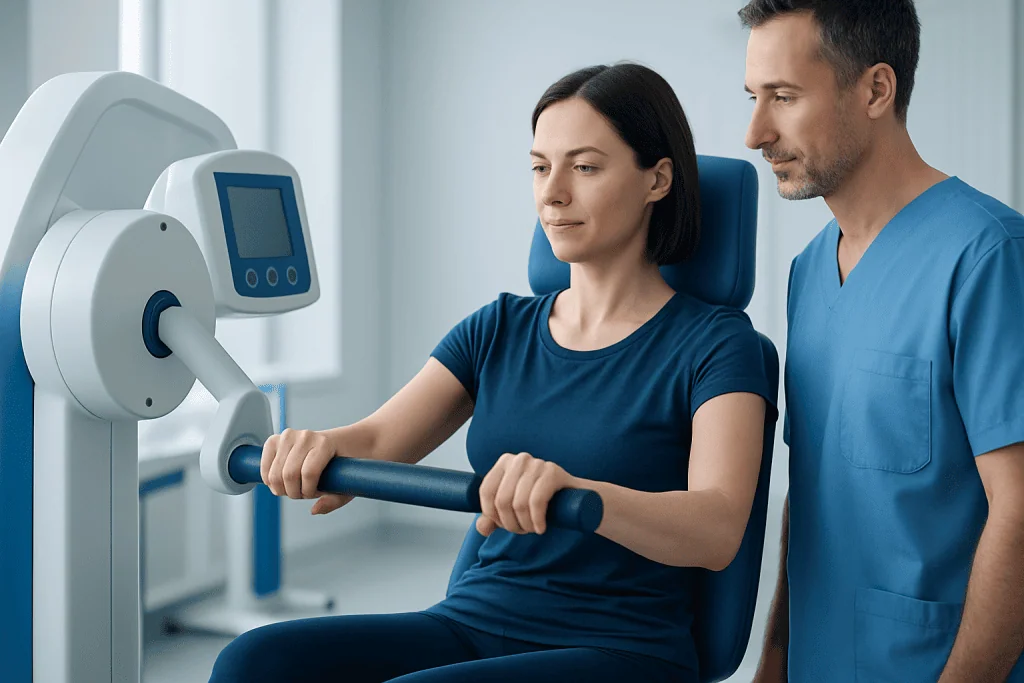
Strong muscles help the body move efficiently and safely. They support the spine, hips, knees, shoulders, and other joints during standing, lifting, reaching, and walking. When muscles are weak, other tissues may have to compensate, which can contribute to poor movement patterns, discomfort, or a higher risk of falls.
Muscle strengthening also supports healthy aging. As people get older, they naturally lose muscle mass and strength, a process sometimes called sarcopenia. Regular resistance exercise can slow this decline and help preserve mobility, balance, and the ability to perform daily tasks such as getting out of a chair, climbing steps, or carrying bags.
In addition, strengthening work can complement medical care for several conditions. It is often part of recovery plans for some joint, spine, and movement-related problems, including herniated disc and scoliosis, when a doctor or rehabilitation professional recommends it. In these situations, exercises are usually tailored to symptoms, function, and overall health.
Who can benefit and how programs are individualized

Most people can benefit from muscle strengthening, including younger adults, older adults, and people with sedentary jobs. It can also help those returning to activity after time away from exercise. The key is to match the type and intensity of training to the person’s health status, mobility, experience, and goals.
For some patients, strengthening is part of rehabilitation rather than general fitness. A person recovering from injury, joint pain, surgery, or prolonged illness may need a closely supervised plan. In these cases, doctors may recommend physical therapy and rehabilitation to rebuild strength safely, restore movement, and improve confidence with daily activities.
Programs are usually individualized based on factors such as age, pain levels, balance, flexibility, heart and lung health, and any underlying medical conditions. Someone with shoulder pain may need a different routine from someone recovering from knee weakness, and a patient with neurological symptoms may require more structured assessment before exercising.
How muscle strengthening works
Muscles become stronger through gradual adaptation. When resistance is applied, muscle fibers and the nervous system respond over time by improving coordination, force production, and endurance. This process works best when the body is challenged consistently but not excessively.
A central principle is progressive overload, which means increasing the challenge little by little as the body adapts. This may involve adding repetitions, increasing resistance, improving control, or using a wider range of motion. Progress should be steady and realistic rather than sudden, because rapid increases can raise the risk of strain or overuse.
Recovery is also essential. Muscle tissue needs time, sleep, hydration, and adequate nutrition to repair and adapt. Rest days between hard sessions for the same muscle group can be helpful, especially for beginners. Without enough recovery, performance may plateau and soreness or fatigue may persist longer than expected.
- Resistance can come from body weight, bands, machines, dumbbells, or functional activities.
- Technique matters more than lifting heavier weights too soon.
- Consistency over weeks and months is more important than occasional intense sessions.
Safe ways to start muscle strengthening
Beginners often do best with simple movement patterns that train major muscle groups. Examples include chair squats, wall push-ups, step-ups, bridges, seated rows with a band, and gentle core exercises. Starting with movements that are controlled and easy to learn can build confidence while reducing unnecessary strain.
It is usually sensible to begin with a warm-up of five to ten minutes, such as easy walking or cycling and gentle joint movement. After warming up, patients can perform a small number of strengthening exercises for the legs, hips, back, chest, shoulders, arms, and core. Many plans use one to three sets with a manageable number of repetitions, but exact routines should be adjusted to the individual.
Good form is one of the best ways to protect the body. Movements should be slow and deliberate, breathing should remain steady, and pain should not be ignored. If a patient is unsure how to perform exercises correctly, professional guidance can be helpful through orthopedic evaluation or supervised exercise instruction when musculoskeletal problems are present.
Common symptoms, setbacks, and warning signs
It is normal to feel some muscle fatigue during exercise and mild soreness a day or two afterward, especially when starting a new routine. This kind of soreness usually improves on its own and becomes less noticeable as the body adapts. Fatigue that settles with rest is generally different from injury-related pain.
Warning signs include sharp or sudden pain, swelling, joint instability, numbness, dizziness, chest discomfort, severe shortness of breath, or weakness that does not improve. Pain that changes the way a person moves, or symptoms that continue for several days, may mean the exercise load was too high or that another issue is present.
Some symptoms deserve closer medical attention because they may not simply reflect deconditioning. For example, persistent nerve-related pain, loss of coordination, or pain traveling down the arm or leg can sometimes be linked with spinal or nerve conditions and should be assessed rather than trained through. In selected cases, doctors may use MRI or other tests to better understand the cause of symptoms.
Supporting factors: nutrition, sleep, and recovery
Muscle strengthening works best as part of a broader health routine. Muscles need enough energy and protein from food to recover and adapt. Most patients do not need complicated diets, but balanced meals that include protein, whole grains, fruits, vegetables, and healthy fats can support training and overall health.
Sleep is another key factor. During rest, the body repairs tissues and restores energy. People who sleep poorly may notice slower recovery, lower motivation, and reduced exercise performance. Hydration also matters, especially in warm climates or during longer sessions.
Recovery strategies can be simple and practical. These may include lighter activity on rest days, stretching if it feels comfortable, attention to posture during work, and adjusting training after illness or flare-ups of pain. Patients with chronic pain or repeated injuries may benefit from a more structured assessment to identify technique issues, joint limitations, or muscle imbalances.
When to seek medical care
A doctor should be consulted before starting a new strengthening plan if a patient has significant heart or lung disease, uncontrolled blood pressure, recent surgery, unexplained weight loss, severe osteoporosis, major balance problems, or a long-standing neurological disorder. Medical guidance is also advisable for people with persistent joint pain, back pain, or a history of serious injury.
Medical care is especially important if exercise causes chest pain, fainting, severe shortness of breath, sudden weakness, loss of bladder or bowel control, or pain after a fall or trauma. These symptoms are not typical training effects and should not be dismissed as simple soreness.
If symptoms are limiting progress, a tailored rehabilitation plan may help. Near the end of the care pathway, patients may be assessed by multidisciplinary teams; Acibadem International’s specialists in JCI-accredited hospitals diagnose and treat musculoskeletal and rehabilitation-related conditions for international patients. A qualified clinician can help determine whether the next step is exercise modification, rehabilitation, imaging, or specialist referral.
Frequently asked questions
How often should muscle strengthening be done?
For many adults, strengthening the major muscle groups at least two times per week is a common goal. The exact schedule depends on age, fitness level, recovery, and any health conditions. Rest between hard sessions for the same muscle group helps the body adapt.
Is muscle strengthening safe for older adults?
Yes, in most cases it can be very helpful for older adults when it is adapted to ability and health needs. It may improve balance, mobility, and independence in daily life. Starting gradually and using supervised guidance when needed can improve safety.
What is the difference between muscle strengthening and aerobic exercise?
Muscle strengthening uses resistance to challenge muscles, while aerobic exercise mainly improves heart and lung fitness. Examples of strengthening include squats, resistance bands, and weight training. Both types of exercise are important and often work best together.
Is soreness after exercise normal?
Mild soreness after a new or harder workout can be normal and often improves within a couple of days. It usually feels different from sharp pain, swelling, or joint instability. If pain is severe, persistent, or associated with weakness or numbness, medical advice is sensible.
Can muscle strengthening help with back or joint problems?
In many cases, yes, because stronger muscles can support joints and improve movement patterns. However, the right exercises depend on the cause of the problem. Patients with ongoing pain should get medical or rehabilitation guidance rather than trying random exercises.
Do patients need weights to start muscle strengthening?
No. Many people begin effectively with body-weight exercises, resistance bands, or simple functional movements such as sit-to-stand practice. Weights and machines can be added later if needed and if technique is good.
References
- World Health Organization
- Centers for Disease Control and Prevention
- American College of Sports Medicine
- National Institute on Aging
- National Health Service
This article is for general information only and is not a substitute for professional medical advice. Please consult a qualified doctor about your individual situation.
Joint and spine care in Turkey — expert assessment & treatment
JCI-accredited · board-certified surgeons · reply within 24h
Add us as a Preferred Source to see more of our trusted health content across Google Search, AI Overviews and Discover.