Muscle Wasting and Weakness: How Motor Neuron Disease Is Diagnosed

Motor neuron disease affects the nerve cells that control voluntary muscle movement. Diagnosis usually combines history, neurological examination, EMG, nerve conduction studies, imaging, and blood tests.
Key Takeaways
- Motor neuron disease affects the nerve cells that control voluntary muscle movement.
- Diagnosis usually combines history, neurological examination, EMG, nerve conduction studies, imaging, and blood tests.
- There is no single test that confirms every case, so ruling out other conditions is an important part of the process.
- Early symptoms may include weakness, muscle twitching, cramps, speech or swallowing changes, and visible muscle loss.
- Prompt medical assessment can help with symptom control, rehabilitation, nutrition, breathing support, and future planning.
Motor neuron disease diagnosis is based on symptoms, a careful neurological examination, and tests that help rule out other causes of muscle wasting and weakness. Early evaluation can clarify what is happening and support timely symptom management, rehabilitation, and care planning.
Overview
Motor neuron disease is a group of progressive neurological conditions that damage the motor neurons, the nerve cells responsible for sending signals from the brain and spinal cord to the muscles. When these signals are disrupted, muscles gradually become weak, stiff, or wasted because they are no longer receiving normal stimulation. This can affect walking, hand use, speaking, swallowing, and breathing.
The term includes several disorders, and the most widely known is amyotrophic lateral sclerosis, often discussed under the broader topic of ALS. Not every person develops the same pattern of symptoms, and the speed of progression can vary. Some people first notice weakness in one hand or foot, while others develop speech or swallowing changes before limb symptoms appear.
Diagnosis can be challenging, especially early on, because motor neuron disease shares features with other neurological, muscular, and spine-related conditions. For that reason, specialists look at the full picture rather than relying on one symptom or one test. A careful, step-by-step assessment is the safest and most accurate approach.
Symptoms of Muscle Wasting and Weakness
The most common early clue is weakness that cannot be explained by a simple injury or overuse. A person may trip more often, struggle to lift the front of the foot, find it harder to grip objects, or notice that buttons, keys, and other fine-motor tasks take more effort. Over time, the muscles involved may look thinner, which is known as muscle wasting or atrophy.
Other symptoms can include muscle twitching, called fasciculations, muscle cramps, stiffness, or increased muscle tone. Some people notice that one limb is affected first, while others experience a more general decline in strength. Involvement of the muscles used for speech and swallowing can lead to slurred speech, a weak voice, choking episodes, or difficulty chewing and swallowing certain foods.
Breathing muscles can also be affected in some cases, leading to shortness of breath, poor sleep, morning headaches, or daytime fatigue. Because these symptoms may overlap with other conditions, doctors also consider disorders such as peripheral neuropathy, spinal cord compression, myopathies, and diseases like myasthenia gravis during the evaluation.
- Weakness in the hands, arms, legs, or feet
- Visible muscle wasting
- Muscle twitching or cramps
- Stiffness or spasticity
- Speech or swallowing difficulty
- Breathlessness or reduced exercise tolerance
Causes and Risk Factors

In many people, the exact cause of motor neuron disease is not known. Researchers believe it may result from a combination of genetic susceptibility and environmental influences, but the disease is not usually linked to anything a person did or did not do. A smaller proportion of cases run in families, and in those situations, genetic testing may be discussed as part of diagnosis and counseling.
Age is one recognized risk factor, as many cases begin in mid to later adulthood, although younger adults can also be affected. Family history can increase the likelihood of inherited forms. In some cases, the doctor may ask about prior medical problems, occupational exposures, or neurological symptoms in relatives, but these questions help build context rather than identify a single definite cause.
It is also important to remember that many more common conditions can cause weakness, cramps, or muscle loss. These include thyroid disease, vitamin deficiency, nerve compression, inflammatory disorders, and structural spine problems. Part of the diagnostic process is to separate motor neuron disease from other treatable causes that may present in a similar way.
How Motor Neuron Disease Is Diagnosed
Diagnosis starts with a detailed medical history and neurological examination. The doctor asks when symptoms began, how they have changed, whether they affect one side or several body regions, and whether speech, swallowing, or breathing have changed. On examination, specialists assess muscle strength, reflexes, tone, coordination, gait, and any signs of muscle wasting or fasciculations.
There is no single blood test or scan that confirms motor neuron disease in every person. Instead, doctors look for a pattern showing both upper motor neuron involvement, such as brisk reflexes or stiffness, and lower motor neuron involvement, such as wasting, weakness, and fasciculations. At the same time, they investigate whether another condition could better explain the symptoms.
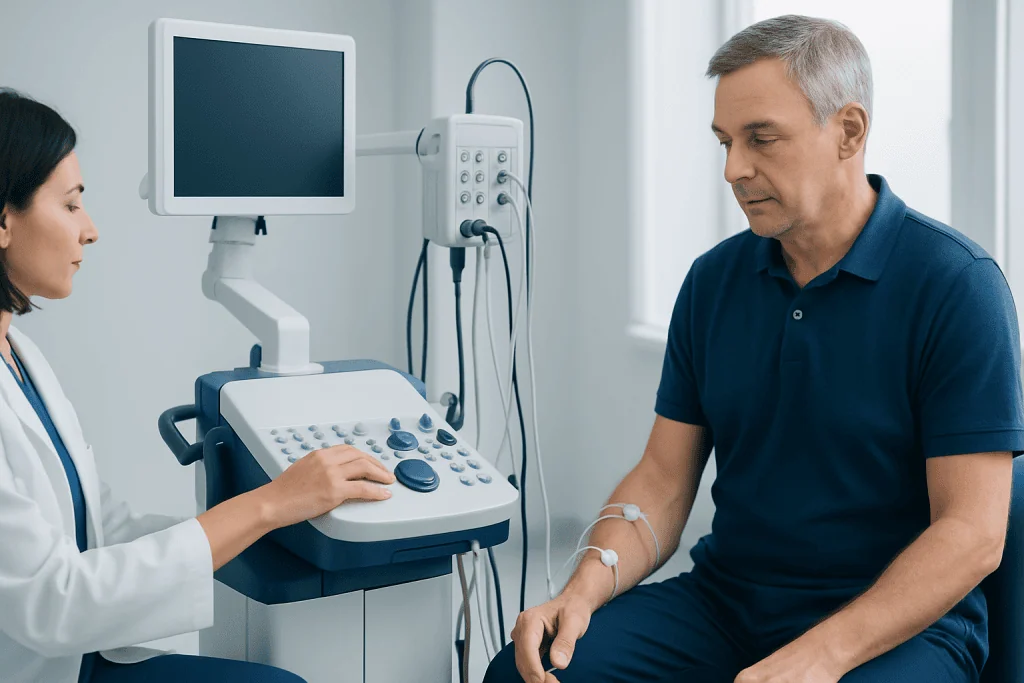
Electromyography and nerve conduction studies are key tests in most cases. An EMG records the electrical activity of muscles and can show changes consistent with loss of nerve supply. Nerve conduction studies help evaluate how well nerves carry signals and can help distinguish motor neuron disease from neuropathies or other neuromuscular problems. These tests are often performed alongside a specialist neurological assessment and may be part of a broader EMG evaluation.
Additional tests may include MRI of the brain or spine to exclude structural problems, blood tests to look for metabolic, autoimmune, infectious, or nutritional causes, and in selected cases genetic testing. Sometimes pulmonary function tests are used to assess breathing muscles, and swallowing assessments are recommended if there are choking episodes or weight loss. A diagnosis may take time, especially when symptoms are mild or still evolving.
Conditions That May Need to Be Ruled Out
Because early motor neuron disease can resemble other disorders, doctors often test for conditions that are more treatable or that require a different care pathway. Examples include cervical spinal cord compression, multifocal motor neuropathy, inflammatory muscle disease, thyroid disease, vitamin B12 deficiency, and disorders of the neuromuscular junction. This process is an important part of safe diagnosis, not a sign of uncertainty or delay for its own sake.
Imaging is often useful when weakness affects the arms or legs asymmetrically, or when pain and sensory symptoms suggest a spine problem. MRI can help exclude disc disease, spinal stenosis, or tumors pressing on nerve structures. If needed, the person may be referred for MRI scanning to support a more precise diagnosis.
Laboratory studies may include tests for inflammation, thyroid function, electrolytes, vitamins, and autoimmune markers. In selected situations, lumbar puncture, muscle biopsy, or further specialized neurophysiology may be considered. The exact combination of tests depends on the person’s symptoms, age, examination findings, and rate of progression.
Treatment Options and Supportive Care
Although motor neuron disease cannot usually be reversed, treatment focuses on slowing disease progression when possible, relieving symptoms, preserving independence, and supporting quality of life. Neurologists may consider disease-specific medications where appropriate, but care usually extends beyond medication alone. Physical therapy, occupational therapy, speech and language therapy, respiratory monitoring, and nutritional support are all important parts of comprehensive management.
Rehabilitation can help maintain mobility, reduce stiffness, and teach energy-saving strategies for everyday activities. Assistive devices such as braces, walking aids, communication supports, or adapted utensils may improve comfort and independence. When swallowing becomes difficult, nutrition teams may suggest texture changes, safer eating techniques, or additional support to maintain calorie intake and hydration.
Breathing support becomes important if respiratory muscles weaken. This may include regular lung function checks and noninvasive ventilation when needed. Some people also benefit from care pathways linked to physical therapy and rehabilitation and speech therapy programs aimed at communication and swallowing.
Near the end of the diagnostic and treatment journey, care is often best coordinated by a multidisciplinary team. Acibadem International’s multidisciplinary specialists in JCI-accredited hospitals diagnose and treat neuromuscular conditions for international patients, with input from neurology, rehabilitation, respiratory medicine, nutrition, and supportive care services.
Self-care, Monitoring, and Daily Living
Self-care does not replace medical treatment, but it can make day-to-day life more manageable. People with progressive weakness often benefit from balancing activity with rest, using prescribed mobility aids, and avoiding falls by improving home safety. Simple measures such as removing trip hazards, adding handrails, and using supportive footwear may reduce injury risk.
Nutrition and hydration are especially important if chewing or swallowing becomes tiring. Small, frequent meals, modified food textures, and advice from a dietitian may help maintain strength and body weight. If speech changes occur, communication strategies and devices can support social connection and daily needs.
Emotional support is also an important part of care. A diagnosis of motor neuron disease can affect mood, family routines, work, and future planning. Many people benefit from counseling, social work support, or patient organizations that provide practical guidance and help families navigate changing care needs.
When to See a Doctor
A person should see a doctor if muscle weakness is persistent, progressive, or accompanied by visible muscle wasting, twitching, stiffness, speech changes, swallowing difficulty, or shortness of breath. These symptoms do not always mean motor neuron disease, but they should be assessed by a qualified clinician. Earlier evaluation can help identify treatable causes and speed access to supportive care.
Urgent medical attention is important if there is choking, repeated aspiration, significant weight loss, new breathing difficulty, or rapidly worsening weakness. These symptoms can affect safety and may require prompt intervention. If symptoms suggest a neuromuscular disorder, referral to a neurologist or a specialist neurology service is often the next step.
Keeping a simple symptom diary can help the medical team understand the pattern of changes over time. Notes about falls, hand function, speech, swallowing, breathing, and fatigue may make appointments more productive and support more personalized care planning.
Frequently asked questions
Is muscle wasting always a sign of motor neuron disease?
No. Muscle wasting can happen for many reasons, including inactivity, nerve compression, nutritional problems, muscle disease, and other neurological disorders. A doctor needs to assess the full picture before deciding on the cause.
What test confirms motor neuron disease?
There is not one single test that confirms every case. Doctors usually combine a neurological examination with EMG, nerve conduction studies, imaging, and laboratory tests to reach the diagnosis and rule out other conditions.
How long does it take to diagnose motor neuron disease?
Diagnosis can take time, especially in the early stages when symptoms are mild or overlap with other disorders. Some people are diagnosed after one specialist assessment, while others need repeat examinations and follow-up testing over several months.
Can motor neuron disease be mistaken for another condition?
Yes. It can resemble spinal disorders, neuropathies, myopathies, myasthenia gravis, and some metabolic or inflammatory conditions. This is why doctors carefully rule out other explanations before confirming the diagnosis.
Does motor neuron disease affect sensation as well as strength?
Motor neuron disease mainly affects the nerves that control voluntary muscle movement, so weakness, stiffness, and muscle wasting are more typical than numbness. If a person has prominent sensory symptoms such as tingling or numbness, doctors may look closely for another or additional diagnosis.
What specialist should a person see for possible motor neuron disease?
A neurologist, especially one with experience in neuromuscular disorders, is usually the most appropriate specialist. Depending on symptoms, care may also involve rehabilitation physicians, respiratory specialists, speech therapists, dietitians, and other members of a multidisciplinary team.
References
- World Health Organization
- National Institute of Neurological Disorders and Stroke
- NHS
- Mayo Clinic
- Muscular Dystrophy Association
This article is for general information only and is not a substitute for professional medical advice. Please consult a qualified doctor about your individual situation.
Motor Neuron Disease in Turkey — costs, top hospitals & a free quote
JCI-accredited · board-certified surgeons · reply within 24h
Add us as a Preferred Source to see more of our trusted health content across Google Search, AI Overviews and Discover.

Physical Medicine & Rehabilitation
Restoring movement and function after injury, surgery or neurological conditions.
152 specialists in this unit