Myasthenia Gravis vs ALS: How Muscle Weakness Patterns Differ

Myasthenia gravis usually causes fluctuating weakness that worsens with activity and improves with rest. ALS typically causes steadily progressive weakness and may lead to muscle wasting, cramps, and twitching.
Key Takeaways
- Myasthenia gravis usually causes fluctuating weakness that worsens with activity and improves with rest.
- ALS typically causes steadily progressive weakness and may lead to muscle wasting, cramps, and twitching.
- Eye symptoms such as drooping eyelids or double vision are common in myasthenia gravis but uncommon as an early feature of ALS.
- Both conditions can affect swallowing and breathing, so new or worsening symptoms need prompt medical attention.
- Diagnosis often involves a neurological exam, blood tests, electrodiagnostic testing, and sometimes imaging or pulmonary assessment.
- Early specialist evaluation can help distinguish between these conditions and support better symptom management.
Myasthenia gravis and ALS can both cause muscle weakness, but they affect the body in different ways. Understanding the pattern of weakness, associated symptoms, and how symptoms change over time can help guide timely evaluation and treatment.
Overview: Why Myasthenia Gravis and ALS Are Compared
Myasthenia gravis and amyotrophic lateral sclerosis (ALS) are both neurological conditions that can cause muscle weakness, which is why they are sometimes compared. Even so, they affect different parts of the neuromuscular system. Myasthenia gravis is an autoimmune disorder that disrupts communication between nerves and muscles, while ALS is a progressive disease that damages the nerve cells that control voluntary movement.
The most important difference for many patients is the pattern of weakness. In myasthenia gravis, weakness often fluctuates during the day, may worsen with repeated use, and can improve after rest. In ALS, weakness usually progresses more steadily over time and is less likely to improve with rest.
Because early symptoms can overlap, such as trouble speaking, swallowing, or lifting the arms, a careful medical evaluation is important. A neurologist looks not only at which muscles are weak, but also at how the weakness started, whether it comes and goes, and whether other signs such as twitching, muscle wasting, or eye symptoms are present.
How Muscle Weakness Patterns Differ
In myasthenia gravis, weakness is typically fatigable. This means the muscle may work fairly well at first but becomes weaker with repeated activity. A person may notice that their eyelids droop more later in the day, speech becomes slurred after prolonged talking, or chewing becomes difficult by the end of a meal. After resting, strength may partly return.
In ALS, weakness is generally persistent and progressive rather than fluctuating. A person may first notice difficulty turning a key, tripping because of foot drop, or losing grip strength in one hand. Over weeks to months, the weakness gradually spreads to other muscle groups. Rest does not usually restore strength in the same way it can in myasthenia gravis.
Another major distinction is muscle wasting. ALS often causes visible thinning of affected muscles over time because the nerve supply is lost. Muscle cramps and fasciculations, often described as small muscle twitches under the skin, are also common. In myasthenia gravis, muscle bulk is usually preserved, especially early on, because the problem is with signal transmission rather than direct nerve cell degeneration.
- Myasthenia gravis: fluctuating weakness, worsens with exertion, improves with rest
- ALS: steadily progressive weakness, often asymmetrical at first, may include wasting and twitching
- Shared features: speech, swallowing, neck, arm, leg, and breathing muscles can be affected
Symptoms More Common in Myasthenia Gravis

Eye-related symptoms are one of the clearest clues that weakness may be due to myasthenia gravis. Drooping eyelids and double vision are common early features because the small muscles that move the eyes are frequently involved. These symptoms often fluctuate, becoming more noticeable later in the day or after reading, driving, or screen use.
Bulbar symptoms can also occur in myasthenia gravis. These may include nasal speech, slurred speech after talking for a while, difficulty chewing tougher foods, or choking on liquids when tired. Some people have weakness in the neck, shoulders, or hips, making it harder to hold the head up, climb stairs, or lift objects overhead.
Although myasthenia gravis can become serious if it affects breathing muscles, sensation remains normal, and thinking, memory, and bowel or bladder function are usually not directly affected. The hallmark remains fluctuating weakness rather than a constant decline. Patients who want to understand this condition in more detail may also read about myasthenia gravis.
Symptoms More Common in ALS
ALS often begins with focal weakness in one hand, one leg, or the muscles involved in speech and swallowing. Unlike myasthenia gravis, the weakness usually does not come and go. It gradually becomes more noticeable and may spread from one region to another. Everyday tasks such as buttoning clothes, walking long distances, writing, or lifting the front of the foot may become more difficult.
Muscle twitching, cramps, stiffness, and visible muscle wasting are more typical of ALS than myasthenia gravis. Some people develop brisk reflexes or spasticity, while others notice more obvious muscle thinning and weakness. This reflects the fact that ALS can affect both upper and lower motor neurons.
Speech and swallowing problems may also occur in ALS, especially when the disease starts in the bulbar muscles. Breathing weakness can develop as the condition progresses. Eye movements are often relatively spared early in ALS, so fluctuating double vision and eyelid drooping are less characteristic. For more background, readers may find it helpful to learn about ALS.
Causes, Risk Factors, and Why They Are Not the Same Disease
Myasthenia gravis is an autoimmune disease. The immune system mistakenly produces antibodies that interfere with communication at the neuromuscular junction, the place where nerve signals activate muscles. In many people, this involves antibodies against acetylcholine receptors or related proteins. The thymus gland may also play a role in some cases.
ALS is a neurodegenerative disease. It damages motor neurons in the brain and spinal cord, which gradually reduces the nerve input that muscles need in order to move. Most cases are sporadic, meaning they occur without a clear family history, while a smaller number are inherited. Researchers continue to study how genetics, cellular stress, and other biological factors contribute to disease development.
Because the underlying causes are different, the treatments are different as well. Myasthenia gravis is often treated by improving nerve-muscle communication and reducing harmful immune activity. ALS care focuses on slowing disease progression where possible, managing symptoms, supporting breathing and nutrition, and maintaining function and quality of life through a multidisciplinary approach.
How Doctors Diagnose the Difference
Diagnosis begins with a detailed history and neurological examination. The clinician asks when the weakness started, whether it fluctuates, which muscles are involved, and whether symptoms such as double vision, twitching, cramps, swallowing difficulty, or shortness of breath are present. This pattern-based approach is often the first step in distinguishing myasthenia gravis from ALS.
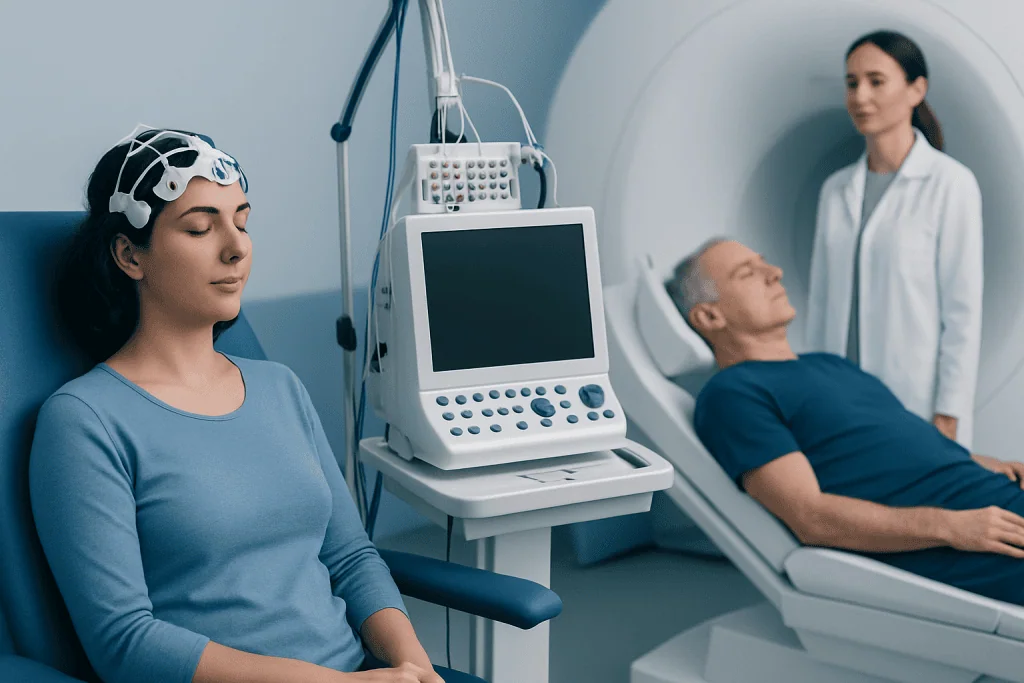
For suspected myasthenia gravis, testing may include blood tests for specific antibodies, repetitive nerve stimulation, single-fiber electromyography, and chest imaging to evaluate the thymus. In some cases, bedside tests and pulmonary function testing are also used to assess the severity of muscle involvement, especially if breathing symptoms are present. A structured neurological assessment and electromyography testing can be especially helpful.
For suspected ALS, doctors usually rely on the neurological examination, electromyography, nerve conduction studies, imaging such as MRI to rule out other causes, and sometimes blood or other laboratory tests to exclude conditions that can mimic ALS. Because symptom overlap can be confusing, assessment in a dedicated neurology program may help coordinate diagnosis, follow-up, and supportive care.
Treatment Options and Ongoing Care
Treatment for myasthenia gravis often includes medicines that improve communication between nerves and muscles, along with therapies that reduce immune system activity when needed. Some patients may benefit from thymus surgery depending on age, antibody status, imaging findings, and disease subtype. Treatment is individualized and may change over time based on symptom severity and response.
ALS treatment usually involves a team-based plan. This may include disease-modifying medication when appropriate, physical therapy, speech and swallowing support, nutritional guidance, breathing assessment, and devices that improve mobility or communication. Because ALS affects more than one aspect of daily life, coordinated follow-up is important.
In both conditions, respiratory and swallowing symptoms deserve close attention. A person who is choking more often, losing weight, waking with breathlessness, or becoming short of breath with minimal activity should be reassessed promptly. Supportive therapies such as physical therapy and rehabilitation can help maintain comfort, mobility, and independence as part of a broader care plan.
Near the end of the diagnostic journey or during ongoing treatment, some patients seek care in centers with neurological subspecialty expertise. Acibadem International’s multidisciplinary specialists and JCI-accredited hospitals evaluate and treat international patients with neuromuscular conditions using individualized care plans.
When to Seek Medical Advice and Practical Self-Care
Anyone with new, unexplained muscle weakness should arrange a medical evaluation, especially if symptoms are progressing or interfering with daily activities. Prompt assessment is particularly important when weakness affects speech, swallowing, or breathing. Sudden shortness of breath, inability to swallow safely, or rapidly worsening weakness requires urgent medical attention.
Until the cause is clear, practical self-care focuses on safety and symptom tracking. Patients may find it useful to note whether weakness varies during the day, which activities make it worse, and whether rest improves it. Recording symptoms such as eyelid drooping, double vision, cramps, twitching, falls, fatigue with chewing, or voice changes can help the clinician identify patterns.
General supportive steps may include pacing activities, planning meals when energy is better, avoiding overexertion, and asking for help with tasks that feel unsafe. Speech or swallowing changes should not be ignored, even if they seem mild. Because both myasthenia gravis and ALS can affect breathing muscles, regular follow-up with a qualified doctor is an important part of safe care.
Frequently asked questions
What is the main difference between myasthenia gravis and ALS?
The main difference is how weakness behaves and what causes it. Myasthenia gravis usually causes fluctuating weakness that worsens with use and improves with rest, while ALS causes steadily progressive weakness due to damage to motor neurons.
Can myasthenia gravis be mistaken for ALS?
Yes, especially early on if symptoms involve speech, swallowing, or generalized weakness. However, eye symptoms, fatigability, and improvement with rest are more suggestive of myasthenia gravis, while muscle wasting and twitching are more suggestive of ALS.
Are drooping eyelids and double vision common in ALS?
They are not typical early features of ALS. Drooping eyelids and double vision are much more characteristic of myasthenia gravis because the muscles controlling the eyes are commonly affected.
Do both conditions affect breathing and swallowing?
Yes, both conditions can affect the muscles used for swallowing and breathing. That is why worsening shortness of breath, choking, weak cough, or difficulty handling saliva should be assessed quickly by a doctor.
How do doctors test for myasthenia gravis vs ALS?
Doctors usually combine a neurological exam with targeted tests. These may include blood tests for myasthenia gravis antibodies, electromyography, nerve conduction studies, MRI, and breathing assessments, depending on the symptoms.
Is muscle twitching more common in myasthenia gravis or ALS?
Muscle twitching is more commonly associated with ALS. In ALS, fasciculations often occur alongside progressive weakness and muscle wasting, whereas myasthenia gravis more often causes fatigable weakness without significant muscle loss.
References
- National Institute of Neurological Disorders and Stroke
- National Institute of Arthritis and Musculoskeletal and Skin Diseases
- Muscular Dystrophy Association
- ALS Association
- Mayo Clinic
This article is for general information only and is not a substitute for professional medical advice. Please consult a qualified doctor about your individual situation.
Myasthenia Gravis in Turkey — costs, top hospitals & a free quote
JCI-accredited · board-certified surgeons · reply within 24h
Add us as a Preferred Source to see more of our trusted health content across Google Search, AI Overviews and Discover.