Narcolepsy vs Epilepsy: Key Differences and How Doctors Tell Them Apart

Narcolepsy commonly causes persistent daytime sleepiness, while epilepsy causes recurrent unprovoked seizures. Cataplexy in narcolepsy can resemble a seizure because it causes sudden muscle weakness, often triggered by emotion.
Key Takeaways
- Narcolepsy commonly causes persistent daytime sleepiness, while epilepsy causes recurrent unprovoked seizures.
- Cataplexy in narcolepsy can resemble a seizure because it causes sudden muscle weakness, often triggered by emotion.
- Loss of awareness, automatic movements, or confusion afterward can occur with some epileptic seizures, but symptoms vary by seizure type.
- A detailed description from the person and witnesses is often one of the most important parts of diagnosis.
- Sleep studies may help diagnose narcolepsy, while EEG and brain imaging may be used when epilepsy is suspected.
- Both conditions can usually be managed with individualized medical care and safety planning.
Narcolepsy and epilepsy can both cause sudden, unexpected episodes, but they are different neurological conditions. Narcolepsy primarily disrupts sleep-wake regulation, while epilepsy involves recurrent seizures caused by abnormal electrical activity in the brain; careful history and targeted testing help doctors distinguish them.
Narcolepsy vs Epilepsy at a Glance
Narcolepsy and epilepsy are neurological conditions that may both be mistaken for one another because their symptoms can begin suddenly. A person may appear to “zone out,” fall, stop responding, or behave unusually for a short time. However, the underlying cause, pattern of symptoms, diagnostic tests, and treatment approaches are different.
Narcolepsy is a chronic disorder of sleep-wake regulation. Its central feature is excessive daytime sleepiness, sometimes with irresistible sleep episodes. Epilepsy is a condition in which a person has a tendency to experience recurrent seizures. Seizures result from sudden abnormal electrical activity in the brain and may affect awareness, movement, sensation, behavior, or emotions.
| Feature | Narcolepsy | Epilepsy |
|---|---|---|
| Main problem | Difficulty regulating sleep and wakefulness | Recurrent seizures due to abnormal brain electrical activity |
| Typical episodes | Sleep attacks, cataplexy, sleep paralysis, vivid dream-like experiences | Changes in awareness, movements, sensations, behavior, or consciousness |
| Common trigger | Sleep deprivation; cataplexy may be triggered by laughter, surprise, or strong emotion | May occur without a clear trigger; sleep loss, alcohol withdrawal, illness, or flashing lights can trigger seizures in some people |
| After an episode | May feel refreshed after a brief nap; cataplexy does not usually cause confusion | May have fatigue, headache, muscle soreness, or confusion after some seizures |
| Key tests | Overnight sleep study and multiple sleep latency test | Electroencephalogram (EEG), brain imaging, and clinical assessment |
It is possible, though uncommon, for an individual to have both narcolepsy and epilepsy. This is why symptoms should not be self-diagnosed from a single episode or online description. A clinician considers the full pattern over time.
How Symptoms Can Overlap
The overlap between narcolepsy and epilepsy is most noticeable when symptoms affect responsiveness or muscle control. In narcolepsy, a sleep attack may cause someone to fall asleep during passive activities, such as reading, watching television, or sitting quietly. Severe sleepiness can also occur during conversations, meals, or work if the condition is untreated.
Cataplexy is a sudden, temporary loss of muscle tone that occurs in some people with narcolepsy, especially narcolepsy type 1. It may involve drooping eyelids, slack facial muscles, slurred speech, weakness in the knees, or complete collapse. It is often associated with laughter, excitement, surprise, anger, or another strong emotion. Awareness is usually preserved, even if the person cannot respond or move normally.
Some epileptic seizures can involve a blank stare, brief unresponsiveness, repetitive movements such as lip smacking or picking at clothing, stiffening, jerking, or a fall. Not every seizure causes dramatic convulsions. Focal impaired-awareness seizures, for example, may look like daydreaming or confusion to an observer.
Sleep paralysis and vivid hallucination-like experiences as a person falls asleep or wakes can occur in narcolepsy. These experiences can be frightening, but they are linked to sleep transitions rather than seizure activity. A doctor can help distinguish these events from nocturnal seizures or other sleep-related conditions.
Clues That Help a Clinician Tell Them Apart

Doctors begin by asking what happens before, during, and after an episode. Information from family members, colleagues, or anyone who witnessed an event can be especially useful because the person may not remember all details. Keeping a diary of sleep patterns, episodes, triggers, medications, and recovery can support the assessment.
For narcolepsy, clinicians look for ongoing excessive daytime sleepiness lasting for months, unplanned naps, refreshing short naps, and symptoms such as cataplexy, sleep paralysis, or vivid dream-like experiences at sleep onset or awakening. Cataplexy linked to emotion with preserved awareness is a particularly helpful clue, although it should still be professionally evaluated.
For epilepsy, clinicians look for recurrent unprovoked events consistent with seizures. Signs that may suggest a seizure include a sudden behavioral arrest, loss of awareness, involuntary jerking, stiffening, unusual sensations, an aura, tongue injury, loss of bladder control, or a period of confusion and fatigue afterward. None of these signs alone confirms epilepsy, and several non-seizure conditions can resemble seizures.
Video recordings may be useful when they can be obtained safely and respectfully. They should never delay emergency help or place anyone at risk. A clinician also considers other possible explanations, including fainting, migraine, medication effects, heart rhythm problems, anxiety-related episodes, sleep deprivation, and other sleep disorders.
Tests Used for Narcolepsy and Epilepsy
Testing is selected based on the symptoms and medical history. Narcolepsy evaluation usually includes an overnight sleep study, called polysomnography, followed by a multiple sleep latency test on the next day. These tests measure sleep stages, how quickly a person falls asleep, and whether rapid eye movement (REM) sleep begins unusually early. Adequate sleep and a stable schedule beforehand are important for reliable results.
Blood tests or other assessments may be used to look for conditions that worsen sleepiness, such as thyroid disease, anemia, medication side effects, or sleep apnea. In selected cases, testing of cerebrospinal fluid for hypocretin may be considered, particularly when cataplexy is present and diagnostic uncertainty remains.
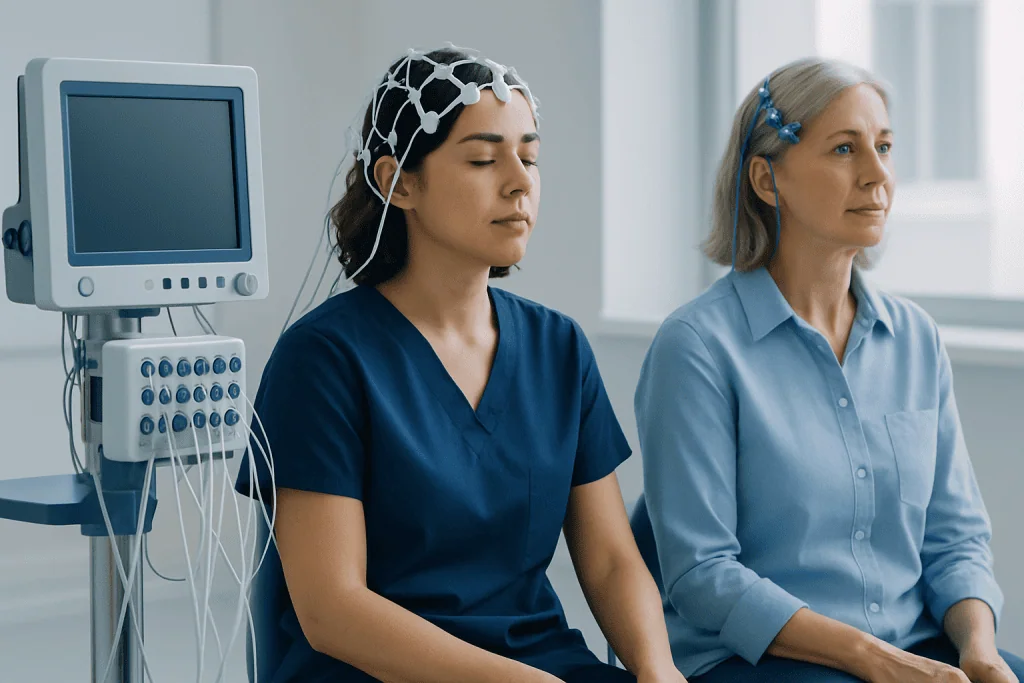
When epilepsy is suspected, an EEG may be used to record electrical activity in the brain. A routine EEG can be normal even in a person with epilepsy, so prolonged ambulatory EEG, sleep-deprived EEG, or video EEG monitoring may sometimes be recommended. MRI of the brain may help identify structural causes or guide further care.
A diagnosis should be based on the overall clinical picture, not on one test result alone. Sleep specialists, neurologists, and epilepsy specialists may work together when the episodes are complex or symptoms overlap. Relevant evaluation may also include assessment for epilepsy or related sleep disorders when clinically appropriate.
What Treatment May Involve for Each Condition
Treatment for narcolepsy focuses on reducing daytime sleepiness, managing cataplexy or other REM-related symptoms when present, and improving safety and daily functioning. A consistent sleep schedule, planned short naps, regular exercise, and avoiding sleep deprivation are often important parts of care. Medication may be considered by a sleep medicine specialist based on the individual’s symptoms, health history, work demands, and possible side effects.
People with narcolepsy may need practical adjustments at school, work, and home. These can include scheduled breaks, avoiding long periods of monotonous activity, and discussing driving safety with a clinician. People should not drive, operate machinery, swim alone, or work at heights if unexpected sleep episodes are not adequately controlled.
Epilepsy treatment usually involves anti-seizure medication selected according to seizure type, epilepsy syndrome, age, other medical conditions, and personal circumstances. Some people may benefit from dietary therapy, devices, surgery, or other specialist treatments when seizures continue despite appropriate medication. Abruptly stopping anti-seizure medicine can increase seizure risk and should be avoided unless a prescribing clinician gives specific guidance.
For people with difficult-to-control seizures, a specialist may discuss epilepsy surgery or other advanced treatment options after detailed testing. Regardless of diagnosis, treatment plans are individualized and should include education for family members or close contacts about how to respond safely during an episode.
Safety and Everyday Self-care
Until the cause of sudden episodes is clarified, it is sensible to take precautions that reduce injury risk. This may include avoiding driving or other potentially hazardous activities when symptoms are unpredictable, taking showers rather than baths, using caution around open flames, and informing trusted people about what to do if an episode occurs. Local rules regarding driving with narcolepsy or seizures vary, so people should ask their clinician about applicable requirements.
Good sleep habits are helpful for both conditions. A regular bedtime and wake time, sufficient sleep opportunity, limiting alcohol, and discussing medicines that affect alertness with a clinician can reduce avoidable triggers. For epilepsy, missed medication, severe sleep deprivation, and alcohol or recreational drug use may increase seizure risk for some people.
During a convulsive seizure, bystanders should stay calm, move harmful objects away, cushion the person’s head if possible, and time the event. They should not restrain the person or place anything in their mouth. Once movements stop, placing the person on their side may help keep the airway clear if they are not fully alert.
During cataplexy, the priority is preventing a fall or injury. The person may remain aware but temporarily unable to move or speak. Staying nearby, speaking calmly, and allowing the episode to pass are usually more helpful than trying to force movement.
When to Seek Medical Care
Any first-time unexplained loss of awareness, collapse, seizure-like event, or repeated sudden sleep episode deserves medical assessment. An appointment with a doctor is also appropriate for persistent daytime sleepiness that interferes with work, school, relationships, driving, or routine activities, especially when it occurs despite adequate sleep.
Emergency medical care is needed if a seizure lasts longer than five minutes, repeated seizures occur without full recovery between them, breathing is difficult, an injury occurs, the person is pregnant, the event happens in water, or it is the person’s first known convulsive seizure. Urgent assessment is also important after a prolonged period of confusion or if new weakness, severe headache, chest pain, or other concerning symptoms develop.
People already diagnosed with epilepsy should follow their clinician’s individualized emergency plan, including any prescribed rescue medication instructions. Those with narcolepsy should contact their care team when symptoms change, treatment side effects occur, or sleepiness creates a safety concern.
Acibadem International’s multidisciplinary specialists and JCI-accredited hospitals can assess sleep-related and seizure-related symptoms for international patients, coordinating diagnostic evaluation and individualized treatment planning when needed.
Frequently asked questions
Can narcolepsy be mistaken for epilepsy?
Yes. Narcolepsy may be mistaken for epilepsy when cataplexy causes sudden weakness or collapse, or when sleep attacks appear as sudden unresponsiveness. A careful history, witness descriptions, sleep testing, and sometimes EEG monitoring can help distinguish the conditions.
Does cataplexy cause loss of consciousness?
Cataplexy usually does not cause loss of consciousness. A person is often aware of what is happening but may be unable to speak, stand, or move normally for a short time. Because falls can occur, an evaluation is important to confirm the cause.
Can epilepsy cause sleepiness?
Yes. Sleepiness may occur after a seizure, and some anti-seizure medicines can also affect alertness. However, persistent excessive daytime sleepiness with unplanned sleep episodes may point toward a sleep disorder or another cause that should be assessed.
What is the difference between a sleep attack and a seizure?
A sleep attack is an episode of falling asleep, usually related to excessive daytime sleepiness and sleep-wake dysregulation. A seizure is caused by abnormal electrical activity in the brain and can produce many possible symptoms, including altered awareness, unusual movements, or sensory changes. The appearance of an episode alone may not be enough to tell the difference.
Can an EEG diagnose narcolepsy?
A standard EEG is not the main test for narcolepsy. Narcolepsy is typically assessed with overnight polysomnography and a multiple sleep latency test, alongside a detailed clinical evaluation. EEG may be used when seizure activity is part of the diagnostic question.
Should someone stop driving while being evaluated for episodes?
A person with unexplained blackouts, seizures, sudden sleep episodes, or uncontrolled cataplexy should discuss driving immediately with a clinician. Temporary restrictions may be necessary to protect the person and others while the cause is evaluated. Legal requirements differ by location.
References
- National Institute of Neurological Disorders and Stroke
- National Institute of Neurological Disorders and Stroke: Epilepsy Information
- American Academy of Sleep Medicine
- Epilepsy Foundation
- Mayo Clinic
This article is for general information only and is not a substitute for professional medical advice. Please consult a qualified doctor about your individual situation.
Narcolepsy in Turkey — costs, top hospitals & a free quote
JCI-accredited · board-certified surgeons · reply within 24h
Add us as a Preferred Source to see more of our trusted health content across Google Search, AI Overviews and Discover.

Neurology
Diagnosis and treatment of disorders of the brain, spinal cord, nerves and muscles.
51 specialists in this unit