Neurological Sleep Medicine vs Pulmonology Sleep Medicine

Neurological sleep medicine focuses on sleep problems linked to the brain, nerves, movement, and sleep-wake regulation. Pulmonology sleep medicine mainly evaluates breathing-related sleep disorders such as obstructive sleep apnea and hypoventilation.
Key Takeaways
- Neurological sleep medicine focuses on sleep problems linked to the brain, nerves, movement, and sleep-wake regulation.
- Pulmonology sleep medicine mainly evaluates breathing-related sleep disorders such as obstructive sleep apnea and hypoventilation.
- Many patients benefit from a multidisciplinary sleep team because some disorders overlap both specialties.
- Symptoms such as loud snoring and witnessed pauses in breathing suggest a respiratory evaluation, while unusual nighttime behaviors or leg movements may suggest neurological assessment.
- Sleep studies, medical history, and targeted exams help determine which specialist is most appropriate.
Neurological sleep medicine and pulmonology sleep medicine both diagnose and treat sleep disorders, but they focus on different causes. In general, neurology-centered sleep care addresses brain, nerve, movement, and behavior-related sleep problems, while pulmonology-centered sleep care focuses on breathing disorders during sleep.
Overview
Neurological sleep medicine and pulmonology sleep medicine are two closely related areas within sleep care. Both specialties aim to understand why a person is not sleeping well and how sleep problems affect daytime health, mood, concentration, and long-term wellbeing. The difference lies mainly in the body systems they emphasize during diagnosis and treatment.
Neurological sleep medicine focuses on sleep disorders connected to the brain, spinal cord, nerves, and the body’s sleep-wake control systems. This includes conditions such as narcolepsy, parasomnias, restless legs syndrome, REM sleep behavior disorder, circadian rhythm disorders, and some movement-related sleep problems. A neurologist with sleep training may also assess how neurological diseases influence sleep.
Pulmonology sleep medicine centers on breathing during sleep. A pulmonologist with sleep expertise commonly evaluates obstructive sleep apnea, central sleep apnea, obesity hypoventilation, and other disorders that affect oxygen levels, carbon dioxide regulation, and airflow at night. They also consider how lung disease and respiratory muscle weakness may disturb sleep.
In practice, the two fields often overlap. For example, central sleep apnea can involve the brain’s breathing control, and some neuromuscular disorders can affect nighttime breathing. That is why comprehensive sleep centers often use a team approach. The most helpful question is not which specialty is “better,” but which one best matches the person’s symptoms and likely cause.
What Each Specialty Usually Treats
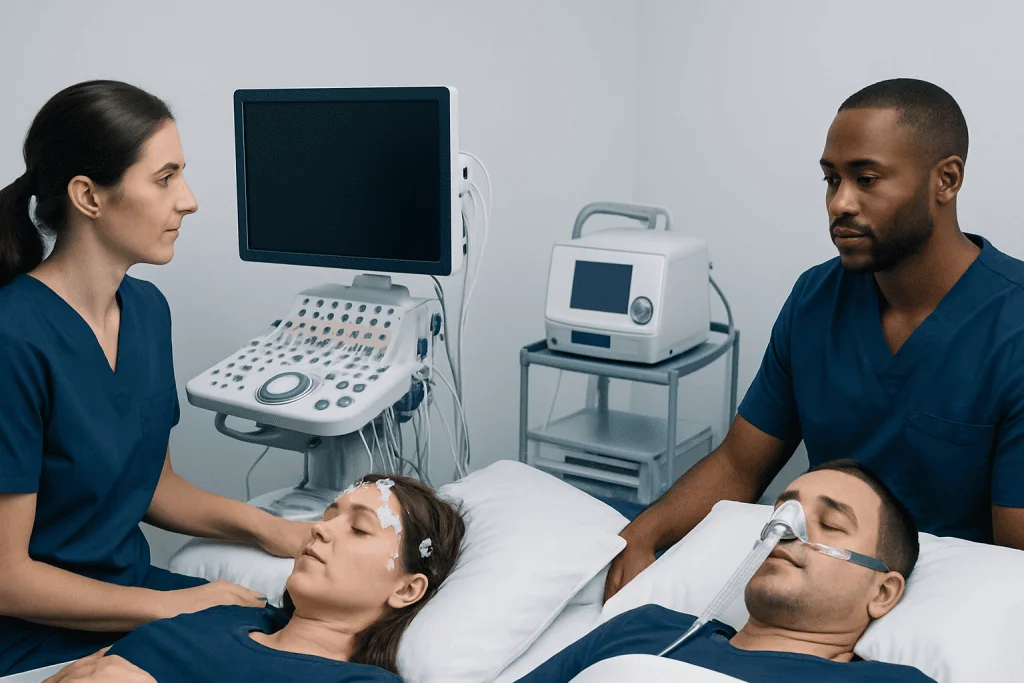
Neurological sleep medicine commonly evaluates disorders in which sleep regulation itself is affected. These may include excessive daytime sleepiness without an obvious breathing problem, sudden muscle weakness triggered by emotions in narcolepsy, vivid dream enactment, sleepwalking, sleep talking, repeated leg movements, or irregular sleep timing. Patients with Parkinson’s disease, epilepsy, dementia, or other neurological conditions may also need neurological sleep assessment when sleep symptoms are prominent.
Pulmonology sleep medicine usually evaluates symptoms that suggest abnormal breathing at night. These include loud habitual snoring, witnessed pauses in breathing, choking or gasping during sleep, waking with a dry mouth or morning headache, unrefreshing sleep, and daytime sleepiness linked to sleep-disordered breathing. People with chronic lung disease, severe obesity, chest wall conditions, or suspected low oxygen during sleep may also be referred to this specialty.
Some conditions sit between the two fields and may require both perspectives. Central sleep apnea, for example, may relate to heart disease, medications, or neurological control of breathing. Sleep problems in neuromuscular disorders may involve both nerve or muscle weakness and respiratory support needs. A patient may therefore be guided toward sleep apnea evaluation by a pulmonology-led team, or to a neurology-led service if symptoms point more strongly to disorders of sleep regulation or movement.
- Neurology-leaning sleep issues: narcolepsy, parasomnias, REM sleep behavior disorder, restless legs syndrome, periodic limb movement disorder, circadian rhythm disorders
- Pulmonology-leaning sleep issues: obstructive sleep apnea, obesity hypoventilation, sleep-related hypoxemia, respiratory muscle weakness affecting sleep
- Overlap disorders: central sleep apnea, neuromuscular sleep-related breathing problems, sleep disturbance in Parkinson’s disease or stroke
Symptoms That Can Point to One Specialty or the Other

Certain symptoms can offer clues about whether neurological sleep medicine or pulmonology sleep medicine may be the better first step. Symptoms that often suggest a breathing-related sleep disorder include loud snoring, observed breathing pauses, choking or gasping at night, sleeping restlessly, frequent awakenings, and significant daytime fatigue. Morning headaches and high blood pressure may also be associated with sleep-disordered breathing.
Symptoms that may point more toward a neurological sleep problem include sudden daytime sleep attacks, unusual nighttime movements, dream enactment, sleepwalking, repeated leg jerks, an urge to move the legs at night, vivid hallucinations around sleep onset, or inability to move briefly when falling asleep or waking. These patterns can suggest abnormalities in sleep regulation, movement control, or transitions between sleep and wakefulness.
It is also common for symptoms to overlap. A person may snore heavily and also have restless legs, or have both daytime sleepiness and unusual dream-related behaviors. In those situations, one specialist may begin the evaluation and then involve another if needed. What matters most is a careful assessment rather than trying to self-diagnose based on one symptom alone.
Because daytime tiredness, poor concentration, mood changes, and memory complaints can occur in many sleep disorders, they do not reliably distinguish one specialty from the other. A detailed history from both the patient and, when possible, a bed partner is often one of the most useful parts of the evaluation.
How Diagnosis Is Made
Diagnosis begins with a full medical history, sleep history, and review of symptoms. The clinician usually asks about bedtime habits, snoring, breathing pauses, dream enactment, leg discomfort, insomnia symptoms, work schedule, medications, alcohol use, and any neurological, lung, or heart conditions. A bed partner’s observations can be especially helpful for behaviors or breathing changes the patient may not notice.
The physical examination depends on the suspected disorder. A pulmonology-focused assessment may pay particular attention to the airway, neck structure, weight-related factors, and breathing patterns. A neurological sleep assessment may place more emphasis on the nervous system examination, movement findings, muscle strength, gait, or signs of disorders affecting the brain and nerves.
Sleep testing is often central to diagnosis. Polysomnography, commonly called an overnight sleep study, can measure brain waves, breathing, oxygen levels, heart rhythm, eye movements, and limb activity. Home sleep apnea testing may be used in selected patients with a strong suspicion of obstructive sleep apnea. For some neurological sleep disorders, additional testing such as a multiple sleep latency test after an overnight study may help evaluate abnormal daytime sleepiness.
Depending on the findings, the doctor may also request blood tests, breathing tests, imaging, or specialist consultations. If symptoms suggest a neurological condition affecting sleep, evaluation may expand to disorders such as Parkinson’s disease or seizure-related events. If disordered breathing is suspected, the next step may be more formal sleep study (polysomnography) or respiratory evaluation.
Treatment Options and Team-Based Care
Treatment depends on the diagnosis rather than the specialty name. For breathing-related disorders, common treatments may include weight management, positional strategies, oral appliances in selected cases, and positive airway pressure therapy such as CPAP. Some patients may also need treatment for underlying nasal obstruction, lung disease, heart disease, or low nighttime oxygen levels. When appropriate, a clinician may discuss CPAP therapy as part of a broader management plan.
For neurological sleep disorders, treatment may include sleep scheduling strategies, medication when indicated, safety measures for parasomnias, management of contributing neurological conditions, and lifestyle changes that support stable sleep-wake rhythms. Restless legs syndrome, REM sleep behavior disorder, narcolepsy, and circadian rhythm disorders each require tailored care. In some cases, mental health support or behavioral sleep therapy is also useful.
Some patients need both respiratory and neurological input. For example, a person with a neuromuscular condition may require help with both the neurological cause and the breathing consequences during sleep. A patient with complicated sleep apnea, central events, or unexplained sleepiness may also benefit from multidisciplinary review. This kind of collaboration improves diagnostic accuracy and can make treatment more practical for everyday life.
When sleep disorders are related to broader neurological symptoms, additional evaluation may be helpful through services such as neurology care. Near the end of the care pathway, patients may also value a center where different specialties work together; Acibadem International’s multidisciplinary specialists and JCI-accredited hospitals diagnose and treat sleep-related conditions for international patients.
How to Know Which Specialist to See First
If the main concern is loud snoring, witnessed breathing pauses, choking at night, or persistent daytime sleepiness together with signs of poor nighttime breathing, pulmonology sleep medicine is often a logical first choice. This is especially true in people with obesity, chronic lung disease, or known risk factors for obstructive sleep apnea. A primary care doctor can also help decide whether a home sleep test or in-lab study is the right starting point.
If the main concern is unusual behaviors during sleep, dream enactment, sleepwalking, repeated jerking movements, irresistible daytime sleep episodes, or suspected narcolepsy, neurological sleep medicine may be the better first step. This is also often the case when a person has a known neurological disorder and sleep symptoms are changing or becoming more disruptive.
Many people are unsure where their symptoms fit, and that is completely understandable. In that situation, the best starting point is often a general sleep clinic, a primary care physician, or whichever specialist is most accessible. After the initial assessment, referral to another expert can be arranged if the pattern suggests a different cause.
It may help to keep a short sleep diary before the appointment. Recording bedtime, wake time, naps, snoring, unusual behaviors, medication use, caffeine, and daytime symptoms can make the first visit more informative and efficient.
Self-care, Safety, and When to Seek Medical Advice
Good sleep habits support treatment in both neurological and pulmonology sleep medicine. Helpful steps include keeping a regular sleep schedule, limiting alcohol close to bedtime, avoiding sedating substances unless prescribed, creating a dark and quiet sleep environment, and seeking advice about weight management if recommended by a clinician. These steps do not replace medical treatment, but they can improve sleep quality and make other therapies more effective.
Safety is especially important when symptoms include excessive daytime sleepiness or abnormal nighttime behaviors. People who may fall asleep unexpectedly or act out dreams should take precautions with driving, heights, sharp objects, and sleep environment hazards until they have been assessed. Bed partners should mention any observed breathing pauses, kicking, shouting, or complex movements during sleep, as these details can be important.
Medical review is advisable if sleep problems are frequent, worsening, or affecting daytime function, memory, mood, school, work, or relationships. Prompt assessment is particularly important for loud snoring with witnessed apneas, sudden sleep attacks, violent dream enactment, morning headaches with daytime fatigue, or sleep symptoms in someone with heart, lung, or neurological disease.
Emergency care may be needed if a person has severe breathing difficulty, chest pain, confusion, or safety-threatening episodes. For non-urgent concerns, a planned consultation with a qualified sleep specialist is the safest and most reliable way to identify the cause and choose the right treatment path.
Frequently asked questions
What is the main difference between neurological sleep medicine and pulmonology sleep medicine?
The main difference is the type of sleep problem being evaluated. Neurological sleep medicine focuses on brain, nerve, movement, and sleep-wake regulation disorders, while pulmonology sleep medicine focuses on breathing-related disorders during sleep. Both specialties may work together when symptoms overlap.
Should a person with snoring see a pulmonologist or a neurologist?
Loud, regular snoring—especially with witnessed pauses in breathing or gasping—often points first to pulmonology sleep medicine because it may suggest obstructive sleep apnea. However, the final decision depends on the full symptom pattern and medical history. A primary care doctor or sleep clinic can help guide the referral.
Which specialist treats narcolepsy and unusual sleep behaviors?
Narcolepsy, sleepwalking, REM sleep behavior disorder, and other unusual sleep-related behaviors are often evaluated by neurological sleep medicine specialists. These conditions involve sleep regulation, movement, or brain-related changes during sleep. Diagnosis may still require formal sleep testing.
Can one patient need both types of sleep specialists?
Yes. Some sleep disorders involve both breathing and neurological factors, and some patients have more than one sleep disorder at the same time. In these situations, team-based care can be especially helpful.
What tests are commonly used in sleep medicine?
A detailed history and physical examination are the first steps. Many patients also need an overnight sleep study, and some may be candidates for home sleep apnea testing. Additional tests depend on whether the doctor suspects breathing problems, movement disorders, narcolepsy, or another cause.
How can someone prepare for a sleep specialist appointment?
It helps to bring a list of symptoms, medications, medical conditions, and any observations from a bed partner. A short sleep diary covering bedtimes, wake times, naps, and unusual nighttime events can also be useful. If previous sleep studies or test results are available, bringing those records may save time.
References
- American Academy of Sleep Medicine
- National Institute of Neurological Disorders and Stroke
- National Heart, Lung, and Blood Institute
- American Thoracic Society
- American Academy of Neurology
This article is for general information only and is not a substitute for professional medical advice. Please consult a qualified doctor about your individual situation.
Neurological Sleep Medicine in Turkey — costs, top hospitals & a free quote
JCI-accredited · board-certified surgeons · reply within 24h
Add us as a Preferred Source to see more of our trusted health content across Google Search, AI Overviews and Discover.
Check your numbers in seconds
BMI, calories, due date, blood pressure and 30+ more clinical calculators — free, instant, doctor-reviewed ranges.