Neurological Sleep Testing: How Complex Sleep Disorders Are Diagnosed
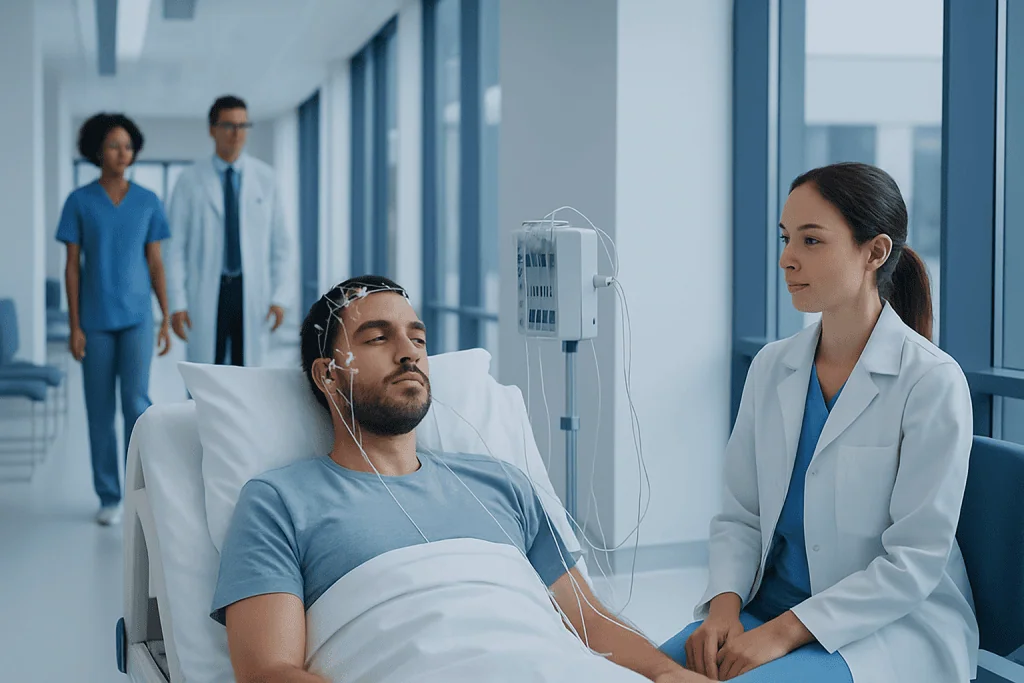
Neurological sleep testing records brain activity, breathing, heart rhythm, oxygen levels, and body movements during sleep. It can help diagnose complex conditions such as narcolepsy, REM sleep behavior disorder, parasomnias, sleep-related seizures, and sleep apnea.
Key Takeaways
- Neurological sleep testing records brain activity, breathing, heart rhythm, oxygen levels, and body movements during sleep.
- It can help diagnose complex conditions such as narcolepsy, REM sleep behavior disorder, parasomnias, sleep-related seizures, and sleep apnea.
- Different tests are used for different concerns, including overnight polysomnography, daytime sleepiness testing, and video EEG monitoring.
- Preparation is usually simple, and most tests are safe, noninvasive, and designed to reflect normal sleep as closely as possible.
- Accurate diagnosis is important because treatment depends on the specific sleep disorder and may involve neurology, pulmonology, psychiatry, or ENT care.
Neurological sleep testing is used to understand sleep problems that may involve the brain, nerves, breathing, movement, or unusual behaviors during sleep. These tests help specialists identify the cause of symptoms and plan treatment based on objective findings rather than symptoms alone.
Overview: What neurological sleep testing is
Neurological sleep testing is a group of specialized assessments used to evaluate sleep problems that may involve the brain and nervous system. Unlike a basic sleep evaluation that focuses mainly on snoring or breathing pauses, neurological sleep testing looks more broadly at how the brain behaves during sleep, how sleep stages are organized, and whether movements, behaviors, or nighttime events suggest a neurological disorder.
The most familiar test is overnight polysomnography, often called a sleep study. It records brain waves, eye movements, muscle activity, breathing, heart rhythm, oxygen levels, and limb movements while a person sleeps. Depending on the symptoms, specialists may also use daytime tests for excessive sleepiness, video-based monitoring for unusual nighttime behaviors, or longer EEG studies when seizures are a concern.
These tests are especially useful when symptoms are complex, unexplained, or affect safety and daily life. For example, a person may act out dreams, fall asleep suddenly during the day, have violent movements at night, or experience episodes that are hard to distinguish from epilepsy. Neurological sleep testing helps clarify what is happening and whether the problem is due to a sleep disorder, a neurological condition, or a combination of both.
Symptoms and situations that may lead to testing
A doctor may recommend neurological sleep testing when a person has symptoms that cannot be explained by poor sleep habits alone. These may include excessive daytime sleepiness, sudden sleep attacks, vivid dream enactment, unusual movements during sleep, sleepwalking, night terrors, repeated awakenings, or episodes of confusion on waking. Morning headaches, poor concentration, memory problems, and unexplained fatigue can also point to a sleep-related condition.
Testing is also considered when there are safety concerns. A person who falls asleep while driving, injures themselves during sleep, or has episodes that resemble seizures may need more detailed evaluation. Family members often notice clues, such as shouting, kicking, pauses in breathing, jerking movements, or getting out of bed while still asleep.
In some cases, neurological sleep symptoms overlap with other medical problems. Conditions such as epilepsy, Parkinsonian syndromes, mood disorders, and breathing-related sleep problems can present in similar ways. Careful testing helps identify whether symptoms come from one condition or several at the same time, which is important for choosing the right treatment.
What conditions neurological sleep testing can help diagnose
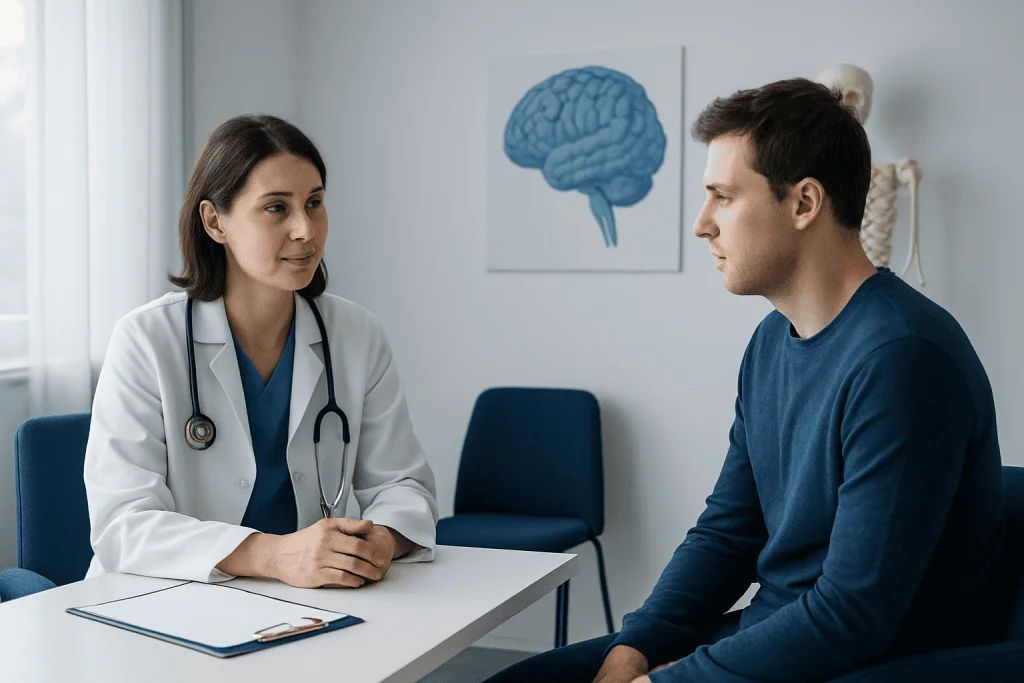
Neurological sleep testing can help diagnose a wide range of disorders. These include narcolepsy, idiopathic hypersomnia, REM sleep behavior disorder, periodic limb movement disorder, certain parasomnias such as sleepwalking, and sleep-related epilepsy. It is also valuable when obstructive sleep apnea may be affecting cognition, mood, headaches, or nighttime heart rhythm.
One important role of testing is to distinguish between conditions that can look similar. For example, dream enactment may be caused by REM sleep behavior disorder, while sudden jerks or unusual spells may raise concern for seizures. Severe sleep deprivation, medication effects, and some psychiatric conditions can also produce nighttime behaviors that require careful interpretation.
Testing may reveal more than one diagnosis. A person with vivid nighttime behaviors may also have sleep apnea, or someone with daytime sleepiness may have both insufficient sleep and a central hypersomnia disorder. In some patients, doctors also evaluate for related disorders such as sleep apnea when symptoms suggest breathing problems are disrupting normal sleep architecture.
Types of tests used in neurological sleep medicine
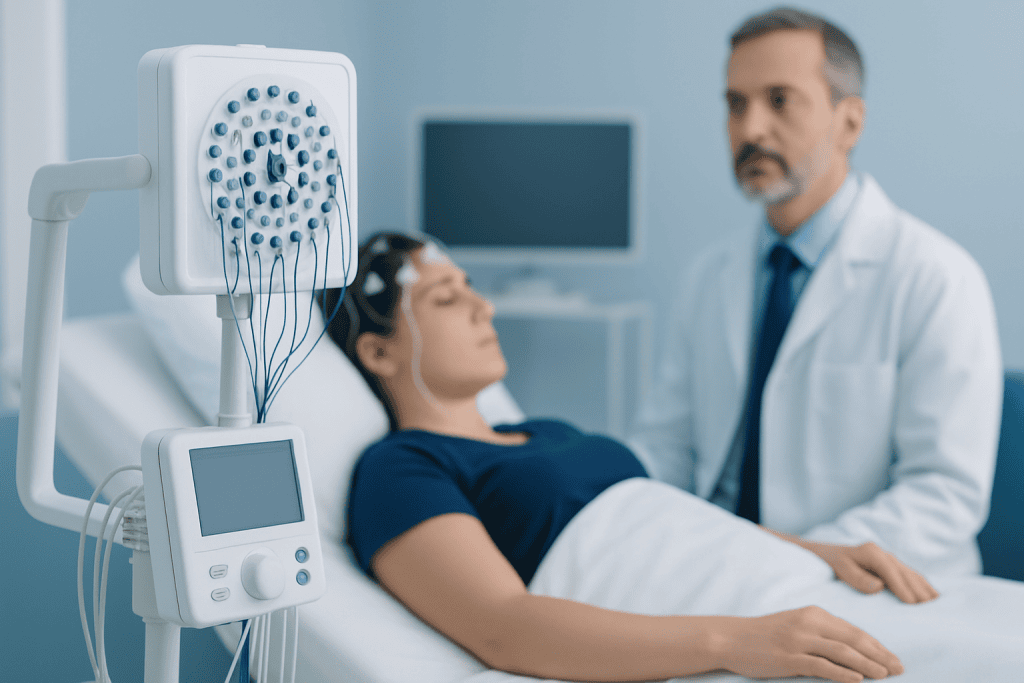
Overnight polysomnography is the foundation of many evaluations. During this test, sensors are placed on the scalp, face, chest, fingers, and legs to record sleep stages, breathing effort, airflow, oxygen saturation, limb movements, and heart rhythm. A video recording may be added so specialists can match body movements or behaviors with changes in brain activity and sleep stage.
When a person has severe daytime sleepiness, a Multiple Sleep Latency Test may be performed the day after an overnight study. This test measures how quickly a person falls asleep during several scheduled naps and whether REM sleep begins unusually early. It is commonly used when evaluating narcolepsy or other central disorders of hypersomnolence.
If seizures are suspected, doctors may recommend prolonged EEG or video EEG monitoring alongside sleep assessment. In some cases, actigraphy, sleep diaries, blood tests, or medication reviews are also part of the workup. Depending on the findings, a patient may be referred for electroencephalography (EEG), a polysomnography sleep test, or additional neurology evaluation to better define the cause of symptoms.
How to prepare and what to expect during the test
Preparation usually begins with a review of symptoms, medications, sleep habits, and any relevant medical history. Patients may be asked to keep a sleep diary for one to two weeks before testing. The care team may also advise avoiding caffeine, alcohol, or daytime naps before certain studies, especially when measuring daytime sleepiness.
On the night of the test, the patient typically arrives at a sleep center in the evening. A technologist places sensors on the scalp and body using a gentle adhesive. Although the setup can feel unfamiliar, the equipment is designed to allow normal movement in bed. Most patients are able to sleep enough for useful information to be collected.
The test itself is painless and noninvasive. Staff monitor the recordings from another room and can assist if the patient needs to get up during the night. If unusual events occur, such as talking, movements, breathing pauses, or episodes of confusion, the synchronized video and sensor data help specialists understand exactly when they happen and what is occurring in the brain and body at the same time.
For daytime testing, the patient remains at the center after the overnight study and is given several opportunities to nap at planned intervals. Between naps, staff ask the person to stay awake. This controlled approach makes it possible to measure sleepiness objectively rather than relying only on how tired someone feels.
How results are interpreted and why diagnosis can be complex
Sleep specialists do not base a diagnosis on one number alone. They review sleep stages, total sleep time, sleep efficiency, breathing patterns, oxygen levels, muscle tone, limb movements, EEG changes, and behavior seen on video. These findings are then interpreted together with the patient’s symptoms, medical history, examination, and sometimes reports from a bed partner or family member.
Diagnosis can be complex because sleep patterns vary from night to night, and some conditions overlap. Medications, shift work, anxiety, depression, alcohol use, and inadequate sleep can all change the results. For this reason, doctors may repeat a study, order additional tests, or adjust medications before finalizing a diagnosis.
A careful interpretation helps avoid misdiagnosis. For example, not every vivid dream or nighttime movement means REM sleep behavior disorder, and not every episode of collapse or staring is a seizure. In specialized centers, neurologists and sleep physicians may work together with respiratory, ENT, or mental health professionals to make sure the diagnosis fits the whole clinical picture.
Treatment options after neurological sleep testing
Treatment depends on what the testing shows. If the main problem is obstructive sleep apnea, treatment may focus on airway support, weight management, positional strategies, or ENT assessment. If narcolepsy or another hypersomnia disorder is diagnosed, management may include scheduled sleep routines, safety planning, and medications prescribed by a specialist.
For parasomnias and REM sleep behavior disorder, treatment often begins with making the sleep environment safer. Doctors may also review medications, address triggers such as sleep deprivation, and prescribe treatment when appropriate. If nighttime episodes are linked to seizures, epilepsy treatment rather than standard sleep medication may be needed.
When breathing-related sleep disruption is part of the problem, patients may be referred for sleep apnea treatment. If enlarged tonsils, nasal obstruction, or other upper airway issues contribute, ENT evaluation may also be helpful. Because sleep disorders can affect memory, mood, blood pressure, and quality of life, treatment usually works best when it addresses the full picture rather than a single symptom.
Near the end of the diagnostic process, some patients benefit from multidisciplinary follow-up. At Acibadem International, multidisciplinary specialists in JCI-accredited hospitals evaluate and treat complex sleep-related neurological conditions for international patients when advanced assessment is needed.
Self-care, prevention, and when to see a doctor
Not every sleep problem can be prevented, but healthy sleep habits support better diagnosis and treatment. A regular sleep schedule, limiting alcohol before bedtime, avoiding sleep deprivation, and reviewing medicines that affect sleep can reduce some symptoms. People with known parasomnias should make the bedroom safer by removing sharp objects, securing windows, and reducing fall risks.
It is important to seek medical advice when sleep symptoms are frequent, worsening, or dangerous. A person should see a doctor if they act out dreams, have repeated episodes that may be seizures, fall asleep unintentionally during the day, stop breathing during sleep, or wake feeling unrefreshed despite adequate time in bed. Bed partner observations can be very useful and should be shared during the appointment.
Prompt evaluation is especially important when symptoms affect driving, work safety, learning, mood, or memory. Children, older adults, and people with neurological diseases may show symptoms differently, so changes in behavior, attention, or nighttime restlessness should not be ignored. Early and accurate testing can lead to more targeted treatment and better long-term sleep health.
Frequently asked questions
What is the difference between a regular sleep study and neurological sleep testing?
A regular sleep study often focuses mainly on breathing problems such as sleep apnea. Neurological sleep testing goes further by analyzing brain waves, muscle activity, behaviors, and sometimes seizures or unusual movements during sleep. It is used when symptoms suggest a more complex sleep-related neurological issue.
Is neurological sleep testing painful?
No, these tests are generally noninvasive and painless. Sensors are attached to the skin and scalp to record signals while the patient sleeps or rests. The setup may feel unusual at first, but it should not be painful.
Can a sleep test diagnose narcolepsy?
Yes, narcolepsy is often evaluated with an overnight sleep study followed by a Multiple Sleep Latency Test the next day. This combination helps measure how quickly a person falls asleep and whether REM sleep starts earlier than expected. Doctors also consider symptoms and medical history before making the diagnosis.
Why might a doctor order video EEG with sleep testing?
Video EEG may be used when nighttime events could be seizures rather than a primary sleep disorder. The combined recording allows specialists to compare physical behavior on video with electrical activity in the brain. This helps distinguish epilepsy from parasomnias or other abnormal sleep behaviors.
How should someone prepare for a neurological sleep test?
Preparation varies by test, but patients are often asked to keep a sleep diary and avoid caffeine, alcohol, or naps before the study. They should also tell the care team about all medicines and supplements they use. Following the instructions closely helps make the results more accurate.
Can sleep disorders and neurological disorders occur together?
Yes, they often overlap. A person may have both sleep apnea and a parasomnia, or a neurological condition such as epilepsy or a movement disorder may affect sleep quality. That is one reason neurological sleep testing can be so valuable in complex cases.
References
- American Academy of Sleep Medicine
- National Institute of Neurological Disorders and Stroke
- National Heart, Lung, and Blood Institute
- MedlinePlus
- International Classification of Sleep Disorders
This article is for general information only and is not a substitute for professional medical advice. Please consult a qualified doctor about your individual situation.
Explore treatments in Turkey — costs, top hospitals & a free quote
JCI-accredited · board-certified surgeons · reply within 24h
Add us as a Preferred Source to see more of our trusted health content across Google Search, AI Overviews and Discover.