Neuromodulation for Tremor: When Electrical Therapy Is Considered

Neuromodulation can help reduce tremor that does not respond well to medication. Deep brain stimulation is the best-known neuromodulation option for selected patients.
Key Takeaways
- Neuromodulation can help reduce tremor that does not respond well to medication.
- Deep brain stimulation is the best-known neuromodulation option for selected patients.
- Careful evaluation is needed to confirm the tremor type and decide whether electrical therapy is suitable.
- Treatment aims to improve daily function and quality of life, not necessarily to cure the underlying condition.
- Follow-up programming and long-term care are important parts of successful treatment.
Neuromodulation for tremor refers to treatments that use carefully controlled electrical stimulation to reduce involuntary shaking. It is usually considered when tremor significantly affects daily life and medications do not provide enough benefit or cause troublesome side effects.
Overview of Neuromodulation for Tremor
Neuromodulation for tremor is a treatment approach that changes abnormal nerve signaling using electrical stimulation. Tremor is a rhythmic, involuntary shaking movement that can affect the hands, head, voice, legs, or other body parts. For some people, tremor is mild and manageable. For others, it can interfere with writing, eating, dressing, working, and social confidence.
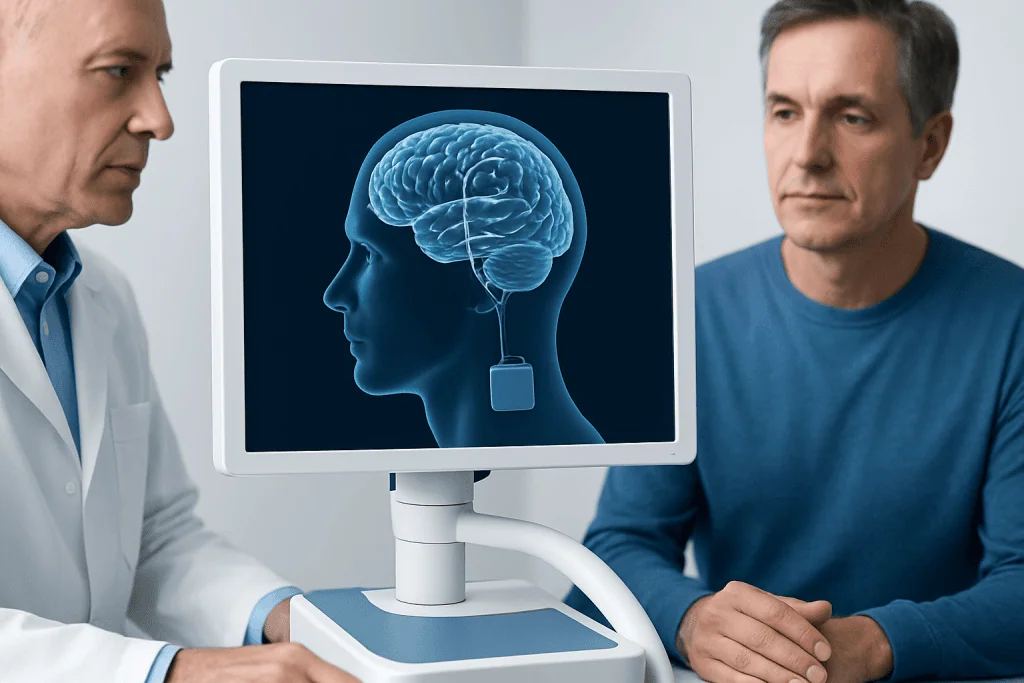
The most established neuromodulation treatment for tremor is deep brain stimulation, often called DBS. In this procedure, thin electrodes are placed in specific brain areas involved in movement control. These electrodes are connected to a small implanted device that delivers electrical pulses. The stimulation does not destroy brain tissue; instead, it adjusts the activity of circuits that contribute to tremor.
Neuromodulation is usually considered after a person has had a careful diagnosis and has tried appropriate medications. It is not the first step for most patients. Doctors recommend it when tremor remains disabling, when medications stop helping enough, or when side effects such as sleepiness, dizziness, or poor balance become too difficult to tolerate.
Because tremor can have different causes, evaluation by specialists is important. Neurologists, neurosurgeons, neurophysiologists, and rehabilitation professionals often work together to decide whether this treatment may be helpful and safe for the individual patient.
Which Tremor Conditions May Be Treated
Neuromodulation is not used for every form of tremor. It is most commonly offered for severe essential tremor and for tremor related to Parkinson’s disease when symptoms remain difficult to control. In selected cases, it may also be considered for other movement disorders, depending on the person’s symptoms, overall health, and response to previous treatment.
Essential tremor often causes shaking during action, such as holding a cup, writing, or using utensils. Parkinsonian tremor is often most noticeable at rest, although some people also have action tremor. The exact pattern matters because treatment planning depends on which brain circuits are most involved.
Doctors also look at how much the tremor disrupts everyday function. A person may be a candidate if the tremor makes tasks unsafe or very difficult, such as eating independently, working with the hands, or taking medications accurately. Social and emotional impact also matters, especially if tremor leads to embarrassment or withdrawal from usual activities.
Even when the tremor diagnosis seems clear, specialists may reassess it before recommending neuromodulation. This helps avoid treating symptoms caused by another condition, medication effect, anxiety-related shaking, or a problem better managed in a different way.
When Electrical Therapy Is Considered

Neuromodulation is generally considered when standard medical treatment has not provided enough relief. This may mean that medications no longer control tremor adequately, only work for a short time, or cause side effects that outweigh the benefits. The decision is not based only on tremor severity but also on how much the symptoms affect independence and quality of life.
A person may also be considered if tremor is mainly on one side or clearly worse on one side, although both sides can sometimes be treated depending on the clinical situation. Age alone does not automatically rule out treatment, but doctors carefully assess overall health, memory, mood, walking, and any other neurological symptoms before proceeding.
Not everyone with severe tremor is a good candidate. Certain medical conditions, uncontrolled psychiatric illness, active infection, or significant cognitive problems may increase the risks of surgery or make results less predictable. Expectations are also important. Neuromodulation can reduce tremor substantially in many patients, but it does not cure the disease process itself.
Before making a recommendation, the care team usually asks practical questions: Which activities are most affected? Have medications been tried appropriately? Is the main problem tremor, or are there other symptoms that may limit improvement? This patient-centered approach helps ensure that treatment goals are realistic and meaningful.
How Evaluation and Diagnosis Are Done
Evaluation begins with a detailed neurological assessment. The doctor observes when the tremor appears, which body parts are involved, and whether it occurs at rest, while holding a posture, or during movement. Medical history is reviewed carefully, including family history, previous medications, and whether caffeine, stress, fatigue, or alcohol change the symptoms.
Tests may be used to confirm the diagnosis and prepare for treatment. Brain imaging can help with surgical planning and may also rule out other structural causes. Blood tests or other investigations may be ordered if the tremor pattern suggests a metabolic or medication-related cause. In some cases, neuropsychological testing is recommended to assess memory, attention, and mood before an implanted therapy is considered.
Patients being evaluated for DBS usually meet both a movement disorders neurologist and a neurosurgeon. The team explains expected benefits, possible limitations, and potential risks. This is also the time to discuss how the implanted system works, what follow-up visits involve, and whether the patient feels comfortable with long-term device management.
In many centers, candidacy is decided through a multidisciplinary review. This helps balance symptom severity, diagnosis, imaging findings, general health, and patient goals. When the evaluation suggests that surgery is not the best option, doctors may recommend medication adjustments, therapy, or other supportive treatments instead.
Deep Brain Stimulation and Other Treatment Options
Deep brain stimulation is the main neuromodulation procedure used for tremor. During deep brain stimulation, electrodes are placed in a target area of the brain that helps regulate movement. A pulse generator, similar to a pacemaker, is implanted under the skin and connected to the electrodes. After surgery, the system is programmed and adjusted over time to achieve the best balance between tremor control and side effects.
DBS can be very helpful for carefully selected patients with essential tremor or Parkinson-related tremor. In many cases, it reduces shaking enough to improve daily tasks such as eating, drinking, writing, or buttoning clothes. One advantage is that stimulation settings can be adjusted after implantation, which gives flexibility if symptoms change over time.
Like any procedure, DBS has risks. These may include bleeding, infection, hardware-related problems, speech or balance changes, tingling, or mood effects. Most side effects from stimulation itself can often be improved by reprogramming, but this requires regular follow-up with an experienced team. Battery replacement or maintenance may also be needed depending on the device type.
For some patients, doctors may also discuss other advanced options such as focused ultrasound or stereotactic radiosurgery, depending on the tremor type, side of symptoms, anatomy, and local expertise. These are not implanted neuromodulation systems, but they may be part of the broader conversation about procedural treatment when medications have not been enough.
Recovery, Follow-Up, and Daily Life After Treatment
Recovery after DBS usually happens in stages. The surgical wounds need time to heal, and the device is often programmed after the initial recovery period. It is common for several follow-up visits to be needed because settings are adjusted gradually. Fine-tuning can make a major difference, so patience is an important part of the process.
Many patients notice meaningful improvement in hand control and daily activities, but the degree of benefit varies. Some continue to need medication, though sometimes at a lower dose. The main goal is better function rather than complete elimination of symptoms. Doctors also continue to monitor any non-tremor symptoms that may affect overall mobility or independence.
Rehabilitation and practical coping strategies remain valuable even after successful treatment. Occupational therapy can help with handwriting, utensil use, and adaptive techniques for dressing or work tasks. Attention to sleep, stress management, and regular exercise may also support better symptom control in daily life.
Long-term follow-up is essential because tremor disorders can change over time. Device settings may need to be updated, and hardware checks are part of routine care. Near the end of the treatment journey, some international patients may choose centers such as Acibadem International, where multidisciplinary specialists in JCI-accredited hospitals evaluate and treat movement disorders using advanced neurological and neurosurgical care.
Self-Care, Questions to Ask, and When to See a Doctor
People living with tremor can often reduce day-to-day strain by using practical self-care measures. These may include using cups with lids, weighted utensils if recommended, planning fine motor tasks when symptoms are least troublesome, reducing excess caffeine, and allowing extra time for activities that require precision. These steps do not replace medical treatment, but they can make life easier.
It is wise to ask clear questions before deciding on neuromodulation. Helpful topics include the exact diagnosis, the expected level of tremor reduction, which side or body part is most likely to improve, what risks are most relevant, how often programming visits are needed, and how the implanted device may affect travel, scans, or other medical procedures.
A doctor should be consulted if tremor is getting worse, interfering with work or self-care, causing falls, or appearing together with stiffness, slowness, weakness, or changes in speech. A prompt review is also important if a person with an implanted device develops redness, swelling, fever, sudden worsening of symptoms, or problems charging or operating the system.
Neuromodulation is a highly individualized decision. The best results usually come when the diagnosis is precise, the treatment goals are realistic, and care is provided by an experienced team. Patients and families should feel comfortable taking time to understand the options and seeking specialist advice before moving forward.
Frequently asked questions
What is neuromodulation for tremor?
Neuromodulation for tremor is a treatment that uses controlled electrical stimulation to change abnormal signaling in brain circuits involved in movement. The most established example is deep brain stimulation, which can reduce tremor in selected patients.
Is deep brain stimulation only used after medicines fail?
In most cases, yes. Doctors usually consider DBS when medications do not control tremor well enough or cause side effects that limit their use. The decision also depends on how much tremor affects daily activities and quality of life.
Can neuromodulation cure essential tremor or Parkinson’s disease?
No, neuromodulation does not cure the underlying condition. Its goal is to reduce tremor and improve function, which may make everyday tasks easier and increase independence.
Who may not be a good candidate for neuromodulation?
Some people may not be suitable because of certain medical problems, active infection, significant memory or thinking difficulties, or uncontrolled psychiatric illness. A detailed specialist assessment is needed to weigh potential benefits against risks.
How long does it take to see results after deep brain stimulation?
Improvement may begin once the system is activated and programmed, but the best result often takes time. Several follow-up visits are commonly needed to adjust settings gradually and safely.
Are there risks with electrical therapy for tremor?
Yes, as with any brain procedure, there are possible risks such as bleeding, infection, or device-related problems. There can also be stimulation side effects such as speech, balance, or tingling symptoms, although many can be improved through reprogramming.
References
- World Health Organization
- National Institute of Neurological Disorders and Stroke
- National Health Service
- International Parkinson and Movement Disorder Society
- American Academy of Neurology
This article is for general information only and is not a substitute for professional medical advice. Please consult a qualified doctor about your individual situation.
Neuromodulation in Turkey — costs, top hospitals & a free quote
JCI-accredited · board-certified surgeons · reply within 24h
Add us as a Preferred Source to see more of our trusted health content across Google Search, AI Overviews and Discover.