Neuromodulation for Tremor: Which Patients May Benefit Beyond Medication?

Neuromodulation does not cure the underlying condition, but it may reduce tremor and improve daily function. The best candidates are usually people with disabling tremor that persists despite appropriate medication.
Key Takeaways
- Neuromodulation does not cure the underlying condition, but it may reduce tremor and improve daily function.
- The best candidates are usually people with disabling tremor that persists despite appropriate medication.
- Common options include deep brain stimulation and, in selected cases, focused ultrasound-based procedures.
- Careful evaluation by a movement disorders team is important to match the right treatment to the right patient.
- Age alone does not determine eligibility; overall health, diagnosis, goals, and brain imaging findings matter more.
Neuromodulation for tremor can offer symptom relief when medicines do not provide enough control or cause troublesome side effects. It is most often considered for carefully selected people with essential tremor or Parkinson’s disease whose tremor significantly affects daily life.
Overview: What Neuromodulation for Tremor Means
Neuromodulation for tremor refers to treatments that change abnormal brain signaling involved in tremor. Rather than relying only on medicine, these approaches target specific brain circuits that contribute to involuntary shaking. The goal is not to cure the disease itself, but to reduce tremor severity and help a person regain comfort, independence, and control in daily tasks.
Tremor can happen in different neurological conditions, but the most common reasons people are evaluated for neuromodulation are essential tremor and Parkinson’s disease. In both, tremor may interfere with writing, eating, dressing, working, or social confidence. For some people, medication helps enough. For others, benefit is incomplete, wears off, or comes with side effects such as sleepiness, imbalance, or mental clouding.
When tremor remains disabling despite well-managed medical care, a specialist may discuss procedural options. The two best-known approaches are deep brain stimulation and focused ultrasound-based treatment in carefully selected patients. These procedures are not suitable for everyone, but for the right person they may offer meaningful improvement in quality of life.
Which Patients May Benefit Beyond Medication?
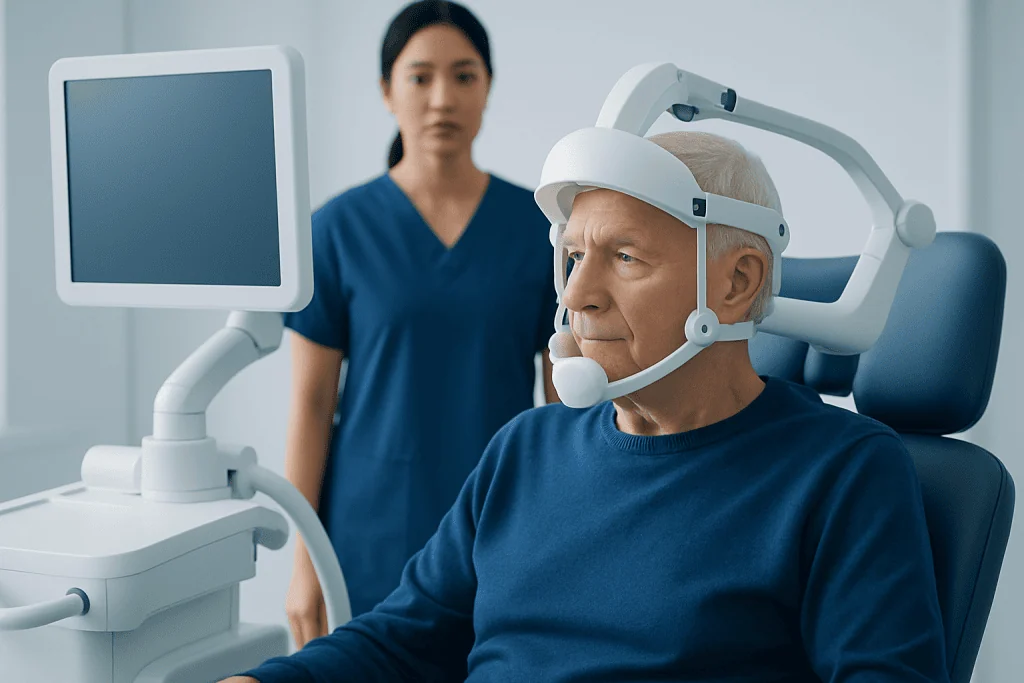
Neuromodulation is usually considered when tremor has become functionally significant. This means the shaking is not just noticeable, but disruptive. A person may struggle to hold a cup, use utensils, type, sign documents, apply makeup, shave, or perform hobbies that require fine hand control. Tremor that affects work, social activity, sleep, or emotional well-being may also justify a more advanced evaluation.
Good candidates often share several features. They have a clear diagnosis, have tried appropriate medicines at suitable doses under medical supervision, and still have bothersome symptoms or medication side effects. Their expectations are realistic, and they understand that treatment aims to improve symptoms rather than permanently remove the disease.
Patients who may benefit include:
- People with essential tremor that remains disabling despite medication
- People with Parkinson’s disease whose tremor is resistant to medication or fluctuates through the day
- People who cannot tolerate tremor medicines because of side effects
- People whose tremor affects mainly one side or one hand and limits daily activities
- People healthy enough to undergo evaluation, imaging, and follow-up care
Eligibility depends on more than symptom severity alone. Doctors also consider the type of tremor, whether stiffness or slowness are also present, whether both sides are affected, and whether the person has memory problems, untreated depression, unstable medical illness, or other factors that may change the balance of benefit and risk.
Main Types of Neuromodulation Used for Tremor

The most established neuromodulation treatment for tremor is deep brain stimulation, or DBS. In DBS, thin electrodes are placed in carefully selected brain targets involved in movement control. These electrodes are connected to a small implanted pulse generator that sends electrical signals to help regulate abnormal activity. The stimulation can be adjusted over time, which is one of the main advantages of DBS.
DBS is especially useful for some people with essential tremor and Parkinson’s disease. It may improve tremor substantially and can often be tailored after the procedure as symptoms change. Because the stimulation is adjustable and reversible in principle, many specialists view DBS as a flexible option for patients who need treatment on one or both sides and ongoing symptom management.
Another option for selected patients is MR-guided focused ultrasound. This treatment uses precisely targeted ultrasound energy to create a small lesion in a tremor-related brain area without an incision. It is not the same as DBS because there is no implanted device and no later adjustment of stimulation settings. It may be considered in people who are not ideal candidates for implanted hardware or who prefer a non-implant approach.
Less commonly, other lesioning procedures may be discussed in specialized centers. The choice depends on the diagnosis, which side is most affected, whether symptoms are present on both sides, overall health, personal preferences, and local expertise. A movement disorders neurologist and functional neurosurgeon usually guide this decision together.
How Doctors Decide if a Patient Is a Good Candidate
A careful assessment is essential before any tremor procedure. First, the diagnosis must be as accurate as possible. Not every shaking movement is the same. Tremor can result from essential tremor, Parkinson’s disease, medication effects, thyroid problems, anxiety, brain injury, or other neurological conditions. Because treatment works best when the cause is clearly defined, patients often undergo a detailed neurological examination and review of their symptom pattern over time.
Doctors also assess how much the tremor affects daily life. Standardized rating scales, handwriting samples, spiral drawing tests, and practical questions about eating, dressing, and work can help show whether symptoms are severe enough to justify an intervention. In Parkinson’s disease, the team also looks at how symptoms respond to levodopa and whether stiffness, slowness, walking, or balance problems are major concerns.
Imaging studies such as MRI are commonly used to evaluate brain structure and to plan treatment safely. Some patients also need neuropsychological testing, especially before DBS, to assess memory, attention, language, and mood. This is important because cognitive impairment, untreated psychiatric illness, or unrealistic expectations may reduce the overall benefit or increase difficulty after the procedure.
Finally, the team considers general medical fitness. Heart and lung health, bleeding risk, infection risk, medications such as blood thinners, and the ability to attend follow-up appointments all matter. In international centers such as Acibadem International, multidisciplinary specialists in JCI-accredited hospitals may evaluate and treat tremor in patients traveling from abroad, helping coordinate neurology, neurosurgery, imaging, and aftercare.
What to Expect From Treatment and Its Limits
For appropriately selected patients, neuromodulation can reduce tremor and make daily tasks easier. Many people notice better control when drinking from a glass, using utensils, writing, or performing personal care. Improvement may be especially meaningful when a dominant hand is affected. However, results vary from person to person, and some symptoms may respond better than others.
It is important to understand the limits. Neuromodulation does not stop disease progression in Parkinson’s disease, and it does not remove the underlying tendency to tremor in essential tremor. In some people, symptoms can change over time, and additional treatment adjustments or medications may still be needed. DBS devices may require programming visits and, eventually, battery replacement depending on the system used.
Potential risks differ by procedure. With DBS, possible concerns include bleeding, infection, hardware problems, speech changes, balance difficulty, or stimulation-related side effects. Focused ultrasound has its own risks, such as numbness, tingling, imbalance, or gait issues in some patients. Most centers discuss these carefully in advance so that patients can make an informed decision based on both expected benefit and possible drawbacks.
Shared decision-making is central. Some patients value adjustability and long-term flexibility and lean toward DBS. Others prefer to avoid implanted hardware and may ask whether a lesioning option is suitable. The best plan depends on the individual’s tremor pattern, goals, and health profile rather than on any single “best” procedure for all.
Treatment Pathway: Before, During, and After the Procedure
The treatment journey usually begins with consultation in a movement disorders clinic. The person’s symptoms, medical history, previous medication trials, and treatment goals are reviewed in detail. If neuromodulation seems appropriate, the team explains the available approaches, expected outcomes, and possible risks. Additional imaging and pre-procedure testing are then arranged.
During DBS treatment, the exact details vary by center and patient. In general, electrodes are placed in the targeted brain area and connected to a pulse generator. After surgery, programming sessions help fine-tune stimulation settings over time. This step is very important because the full benefit often depends on careful adjustment combined with medication review.
With focused ultrasound treatment, there is no implanted device. Instead, treatment is performed with imaging guidance to target the brain area responsible for tremor. Patients are typically monitored closely during and after the procedure so the team can assess symptom response and watch for side effects.
Follow-up remains essential whichever approach is used. Doctors monitor symptom control, balance, speech, mood, cognition, and any need for medication changes. Rehabilitation support, practical hand strategies, and regular neurological review can help maintain function and maximize long-term benefit.
When to See a Doctor About Tremor Procedures
A person should speak with a doctor if tremor is becoming more than a minor inconvenience. Early discussion is helpful when shaking starts to interfere with work, meals, hygiene, handwriting, or social interactions. It is also worth asking for specialist review if medicines no longer work well, cause unwanted side effects, or if the diagnosis is uncertain.
Referral to a movement disorders neurologist is often the next step. This type of specialist can confirm the cause of tremor, optimize medications, and decide whether advanced treatment should be considered. In some cases, a patient may discover that a different diagnosis or a better medication plan is the most appropriate answer. In others, neuromodulation may become a realistic and helpful option.
Urgent medical evaluation is important if tremor appears suddenly, follows a head injury, is accompanied by weakness, confusion, difficulty speaking, severe headache, or changes in walking. Those features may point to a different neurological problem that needs prompt attention. For long-standing tremor, a planned specialist assessment is usually the safest way to explore treatment choices calmly and thoroughly.
Frequently asked questions
Is neuromodulation only for severe tremor?
Neuromodulation is generally considered when tremor significantly affects daily life rather than based on appearance alone. A person does not need to wait until symptoms are extreme, but there should usually be clear functional impact despite appropriate medical treatment.
Can neuromodulation cure essential tremor or Parkinson’s disease?
No. Neuromodulation is a symptom treatment, not a cure for the underlying condition. Its main role is to reduce tremor and improve function when medication alone is not enough.
How do doctors choose between deep brain stimulation and focused ultrasound?
The choice depends on the diagnosis, which side of the body is affected, whether symptoms are present on both sides, overall health, and patient preference. DBS offers adjustability over time, while focused ultrasound avoids an implanted device but is not adjustable afterward.
Is age a reason someone cannot have a tremor procedure?
Age by itself is usually not the only deciding factor. Doctors look more closely at overall health, memory and thinking, balance, diagnosis, imaging findings, and the ability to tolerate the procedure and follow-up care.
What if tremor medicines help a little but not enough?
Partial benefit from medication does not rule out neuromodulation. In fact, many people are evaluated because medicines reduce tremor somewhat but still leave major limitations or cause side effects that are hard to tolerate.
Will a person still need medication after neuromodulation?
Sometimes yes. Some patients can reduce medication, while others continue taking it at the same or a lower dose. The exact plan depends on the condition being treated, how well symptoms respond, and whether other movement symptoms are present.
References
- National Institute of Neurological Disorders and Stroke
- National Institute for Health and Care Excellence
- American Academy of Neurology
- International Parkinson and Movement Disorder Society
- National Health Service
This article is for general information only and is not a substitute for professional medical advice. Please consult a qualified doctor about your individual situation.
Neuromodulation in Turkey — costs, top hospitals & a free quote
JCI-accredited · board-certified surgeons · reply within 24h
Add us as a Preferred Source to see more of our trusted health content across Google Search, AI Overviews and Discover.