Neurophysiology for Seizures and Fainting: Which Tests Help Find the Cause?

Neurophysiology testing often helps distinguish seizures from fainting and other causes of blackout episodes. An EEG is one of the main tests used to measure the brain’s electrical activity.
Key Takeaways
- Neurophysiology testing often helps distinguish seizures from fainting and other causes of blackout episodes.
- An EEG is one of the main tests used to measure the brain’s electrical activity.
- Diagnosis usually combines symptom history, witness accounts, examination, and sometimes heart or imaging tests.
- Not every seizure-like event is epilepsy, and not every fainting spell starts in the brain.
- Keeping a detailed record of episodes can make testing more accurate and useful.
Neurophysiology tests can help doctors understand why a person has seizures, blackouts, or fainting episodes. These tests, often used alongside heart monitoring and brain imaging, look at how the brain and nerves are functioning during or between events.
Overview: Why neurophysiology matters
Seizures and fainting can look similar, especially when a person suddenly loses awareness, falls, or has brief body movements. Because the causes can be very different, finding the reason for these episodes is an important first step. Neurophysiology is the branch of medicine that studies how the brain, spinal cord, and nerves work, often by recording electrical signals.
In people with blackouts, collapse, staring spells, shaking episodes, or unexplained loss of consciousness, neurophysiology tests can provide valuable clues. The most common test is an electroencephalogram, or EEG, which records the brain’s electrical activity through small sensors placed on the scalp. Doctors may use this to look for patterns that suggest epilepsy or another brain-related cause.
Neurophysiology testing is only one part of the diagnostic process. A careful medical history, description from witnesses, physical examination, medication review, and sometimes blood tests, heart tests, or brain scans are also important. The goal is not simply to label the event, but to understand what triggered it and whether treatment is needed.
Seizures and fainting: how they differ
A seizure happens when there is a sudden abnormal burst of electrical activity in the brain. Depending on which parts of the brain are involved, a seizure may cause jerking movements, blank staring, confusion, unusual sensations, or loss of awareness. Some seizures are obvious, while others are subtle and easy to miss.
Fainting, also called syncope, usually happens when blood flow to the brain briefly drops. This can be related to dehydration, standing for a long time, a drop in blood pressure, pain, emotional stress, or a heart rhythm problem. People may feel dizzy, nauseated, sweaty, or have tunnel vision before they faint, although not everyone has warning symptoms.
The two conditions can overlap in appearance. Some people who faint may have brief twitching or stiffness, which can be mistaken for a seizure. Likewise, a seizure may cause sudden collapse with little warning. Because of this, doctors often ask detailed questions about what happened before, during, and after the event, including recovery time, tongue biting, injuries, confusion afterward, and whether anyone witnessed the episode.
If a doctor suspects a brain-related cause, the workup may include tests used in epilepsy evaluation. If the pattern suggests a circulation or rhythm problem, heart-focused assessment may be just as important as neurological testing.
Which neurophysiology tests help find the cause?
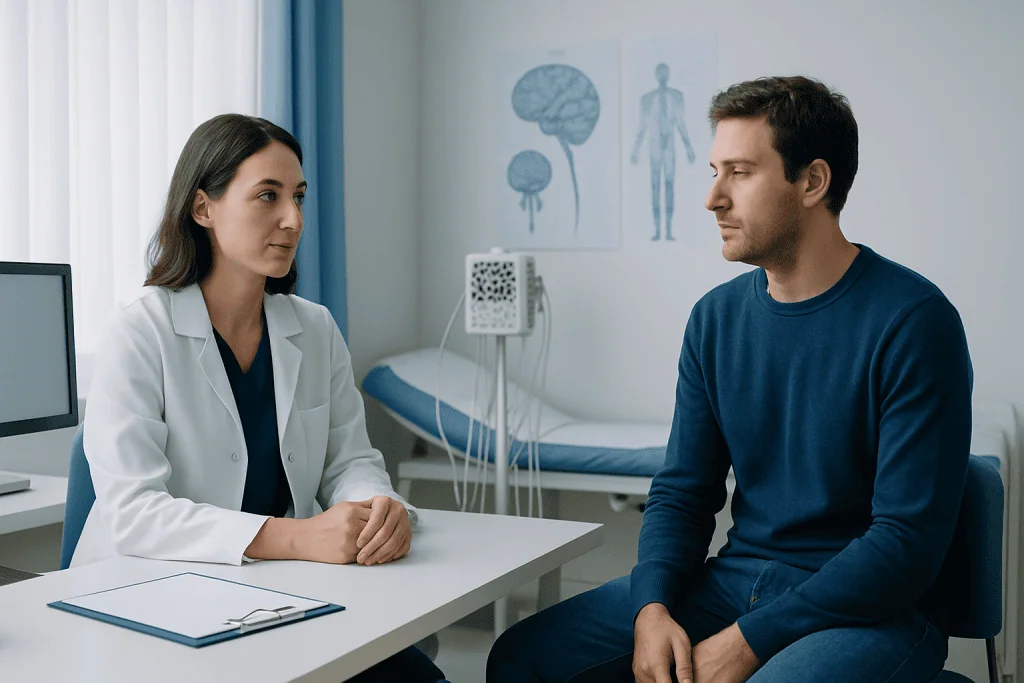
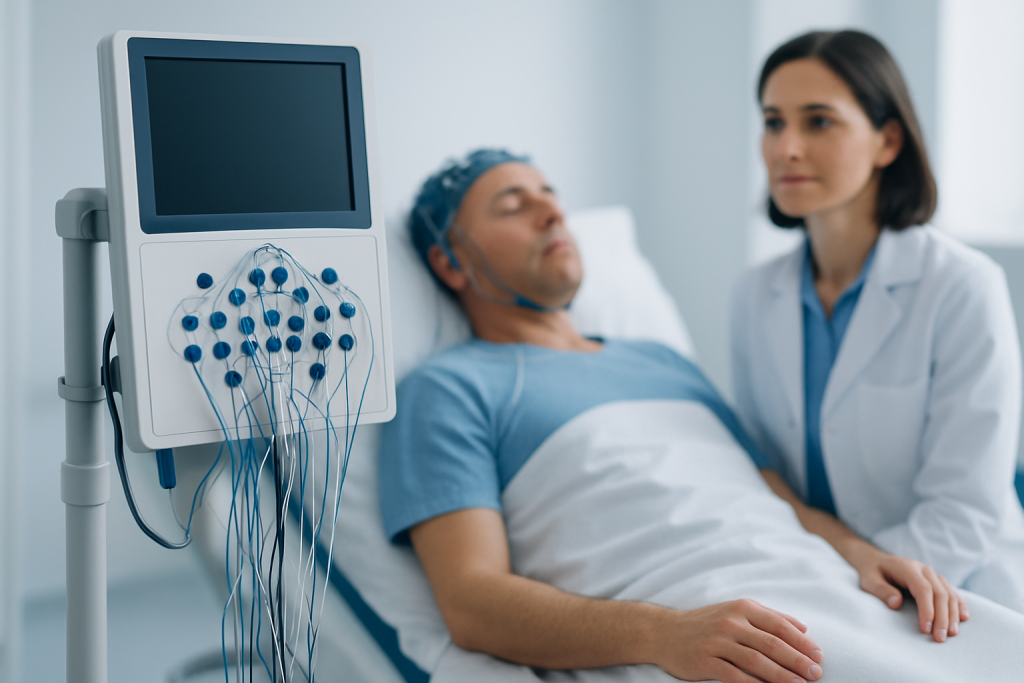
The most widely used neurophysiology test for possible seizures is the EEG. During a routine EEG, electrodes are placed on the scalp to record electrical activity in the brain. The test is painless and usually takes a short time. It may be done while the person is awake, drowsy, or asleep, because some abnormalities are more likely to appear in certain states.
Sometimes a routine EEG is normal even when a person has epilepsy. In that case, doctors may recommend a sleep-deprived EEG, prolonged EEG, or ambulatory EEG. These tests record brain activity for longer periods and can increase the chance of capturing abnormal patterns. Video EEG monitoring is especially helpful because it records both the brain’s activity and the person’s behavior at the same time, allowing specialists to compare what the body is doing with what the brain signals show.
Video EEG can be very useful when the diagnosis is unclear, when episodes happen often, or when doctors need to distinguish epileptic seizures from fainting, sleep disorders, movement disorders, or non-epileptic events. In some centers, this may be part of more advanced video EEG monitoring to capture typical episodes in a controlled setting.
Other neurophysiology tests may occasionally be used depending on symptoms. For example, evoked potentials can assess how the brain responds to visual, sensory, or sound signals, though they are not the main test for routine seizure or fainting assessment. The exact test plan depends on the person’s age, symptoms, medical history, and how often episodes occur.
Other tests that may be needed alongside EEG
Because fainting is not always caused by the brain, doctors often look beyond neurophysiology alone. An electrocardiogram, or ECG, checks the heart’s rhythm and can help identify arrhythmias that may cause sudden blackouts. Some people may need a Holter monitor or another longer-term heart rhythm device if episodes are intermittent.
Imaging tests may also be recommended. Brain imaging does not measure electrical activity, but it can show structural causes such as scars, tumors, stroke-related changes, or developmental differences that may increase seizure risk. Depending on the situation, a clinician may suggest brain MRI or, less often, CT scanning when urgent evaluation is needed.
Blood tests can help rule out triggers such as low blood sugar, infection, electrolyte imbalance, or medication-related causes. In people with suspected reflex fainting or unexplained syncope, tilt table testing may be considered to see how blood pressure and heart rate respond to position changes.
The most accurate diagnosis usually comes from combining several pieces of information rather than relying on a single test. A normal EEG does not completely rule out epilepsy, and an abnormal EEG does not always mean that a person’s episodes are definitely seizures. That is why results must be interpreted by an experienced specialist in the context of the full clinical picture.
What to expect before, during, and after testing
Before testing, the medical team usually explains how to prepare. For an EEG, a person may be asked to arrive with clean, dry hair and avoid heavy hair products. In some cases, sleep deprivation is recommended because it can make certain brain activity easier to detect. People should also bring a list of medications and be ready to describe their episodes in as much detail as possible.
During an EEG, the electrodes sit on the scalp and record brain signals; they do not give electric shocks. The person may be asked to open and close the eyes, breathe deeply for a short period, or look at flashing lights. These steps can sometimes bring out patterns that help with diagnosis. The test is generally safe, though flashing lights may rarely trigger a seizure in sensitive individuals, which is why it is performed under supervision.
After the test, most people can return to their usual activities unless a doctor advises otherwise. The recording is reviewed by a specialist who looks for features such as spikes, sharp waves, slowing, or seizure activity. Results are then discussed together with symptoms and any other test findings.
If episodes remain unexplained, the next step may be longer observation or referral to a specialist center. Some patients benefit from neurology support and follow-up when episodes affect daily life, recovery, or confidence, even while the exact diagnosis is still being clarified.
How doctors interpret results and make a diagnosis
Interpreting neurophysiology results is a careful process. Doctors are not looking only for a yes-or-no answer; they are trying to understand patterns. An EEG may show changes that suggest a tendency toward seizures, but it does not always capture an actual event. Some people with epilepsy have normal EEGs between seizures, while some healthy people may show minor nonspecific changes that are not dangerous.
That is why the history of the episode remains central. Doctors often ask about triggers, posture, stress, sleep loss, fever, recent illness, alcohol use, and medications. They may also ask how quickly the person recovered, whether there was confusion afterward, and whether witnesses noticed skin color changes, eye position, or specific movements.
In children, older adults, and people with other medical conditions, diagnosis may be more complex. Events can be caused by more than one factor, such as a heart rhythm problem plus medication side effects, or epilepsy plus another neurological condition. Specialist assessment helps sort out these possibilities and guide treatment safely.
When needed, patients may be referred for broader evaluation of syncope and blackout episodes or other conditions that can mimic seizures. This step-by-step approach helps avoid both overdiagnosis and missed diagnosis.
Treatment, self-care, and when to seek medical advice
Treatment depends on the cause. If testing suggests epilepsy, management may include anti-seizure medication, lifestyle guidance, and monitoring. If episodes are linked to fainting, treatment may focus on hydration, posture strategies, trigger avoidance, medication adjustments, or heart care. Some people need both neurological and cardiological assessment before a final plan is made.
Self-care can support the diagnostic process. Keeping an episode diary is especially helpful. Useful details include the date and time, what the person was doing beforehand, warning symptoms, how long the episode lasted, whether there were movements or incontinence, and how recovery felt afterward. A video recorded safely by a witness, if available, can also be very informative for specialists.
It is important to seek medical advice after a first seizure, repeated fainting episodes, unexplained blackouts, or injuries related to collapse. Urgent assessment is especially important if the episode happens during exercise, causes prolonged confusion, is associated with chest pain or shortness of breath, occurs in pregnancy, or leads to significant injury. Anyone with prolonged seizure activity or repeated seizures without recovery between them needs emergency care.
For international patients who need coordinated assessment, Acibadem International’s multidisciplinary specialists and JCI-accredited hospitals diagnose and treat seizure and fainting disorders using modern neurophysiology, imaging, and cardiac evaluation when needed.
Frequently asked questions
What is the main neurophysiology test for seizures?
The main neurophysiology test is the EEG, or electroencephalogram. It records electrical activity in the brain and can help doctors look for patterns linked to seizures or epilepsy.
Can an EEG tell the difference between a seizure and fainting?
An EEG can provide important clues, especially if it captures an event or shows seizure-related patterns. However, doctors usually need to combine EEG results with symptom history, witness descriptions, and sometimes heart tests to make a reliable diagnosis.
Does a normal EEG mean a person does not have epilepsy?
No. A normal EEG does not completely rule out epilepsy because abnormal electrical activity may not happen during the recording. If suspicion remains high, doctors may recommend repeat, sleep-deprived, ambulatory, or video EEG testing.
Are neurophysiology tests painful or risky?
Most neurophysiology tests, including EEG, are painless and noninvasive. Special parts of the test, such as flashing lights or deep breathing, are supervised carefully because they can rarely trigger symptoms in sensitive individuals.
Why might heart tests be needed for fainting?
Fainting is often caused by a temporary drop in blood flow to the brain, and heart rhythm problems can be one reason for that drop. An ECG or longer-term heart monitoring may help identify whether the episodes are cardiac rather than neurological.
What should a person do before an EEG appointment?
They should follow the clinic’s instructions carefully, which may include washing the hair and avoiding gels or oils. It is also helpful to bring a medication list and a clear description of recent episodes, including any witness accounts.
This article is for general information only and is not a substitute for professional medical advice. Please consult a qualified doctor about your individual situation.
Neurophysiology in Turkey — costs, top hospitals & a free quote
JCI-accredited · board-certified surgeons · reply within 24h
Add us as a Preferred Source to see more of our trusted health content across Google Search, AI Overviews and Discover.
Check your numbers in seconds
BMI, calories, due date, blood pressure and 30+ more clinical calculators — free, instant, doctor-reviewed ranges.

More from the Health Library
MRI or Ultrasound: How Doctors Choose the Right Test
Diagnostic Mammogram vs Screening Mammogram: Key Differences Explained

Quest Diagnostics Login and MyQuest: What the Patient Portal Lets You Do

Lab Test Results: What Abnormal Values Mean and When to Follow Up
What Is a Diagnostic Test? Common Types and Why Doctors Order Them