Neuropsychological Testing for ADHD and Autism: What Results Can and Cannot Show

Neuropsychological testing measures thinking and behavior patterns, not just symptoms. Test results can support an ADHD or autism evaluation, but they do not stand alone as a diagnosis.
Key Takeaways
- Neuropsychological testing measures thinking and behavior patterns, not just symptoms.
- Test results can support an ADHD or autism evaluation, but they do not stand alone as a diagnosis.
- Results may show strengths and challenges in attention, language, learning, memory, and executive function.
- A normal test result does not always rule out ADHD or autism, especially if symptoms vary by setting.
- Testing is often most useful when combined with interviews, rating scales, school reports, and developmental history.
Neuropsychological testing for ADHD and autism can provide a detailed picture of how a person thinks, learns, focuses, and manages daily tasks. It is a valuable part of assessment, but results must be interpreted alongside clinical history, observations, and input from caregivers, teachers, or the individual.
Overview
Neuropsychological testing for ADHD and autism is a structured evaluation of cognitive, academic, language-related, and behavioral functions. It is designed to help clinicians understand how a child, teenager, or adult processes information, maintains attention, solves problems, remembers details, and manages social or everyday demands. Rather than looking for a single “yes or no” marker, the process looks for patterns that may fit with attention-deficit/hyperactivity disorder (ADHD), autism spectrum disorder (ASD), or other conditions that can affect learning and behavior.
These evaluations are often recommended when there are questions about inattention, impulsivity, hyperactivity, social communication, sensory differences, school performance, emotional regulation, or uneven development. The results can help explain why someone is struggling, but they can also highlight strengths such as verbal reasoning, visual problem-solving, creativity, or strong rote memory. This balanced view is important because treatment planning is usually most effective when it builds on strengths as well as addressing difficulties.
It is also important to understand what neuropsychological testing is not. It is not a brain scan, and it does not directly “see” ADHD or autism in the brain. Instead, it measures performance on carefully designed tasks and compares that performance with what is expected for a person’s age and background. Because of this, testing is one part of a broader clinical assessment rather than a standalone answer.
What the evaluation usually includes
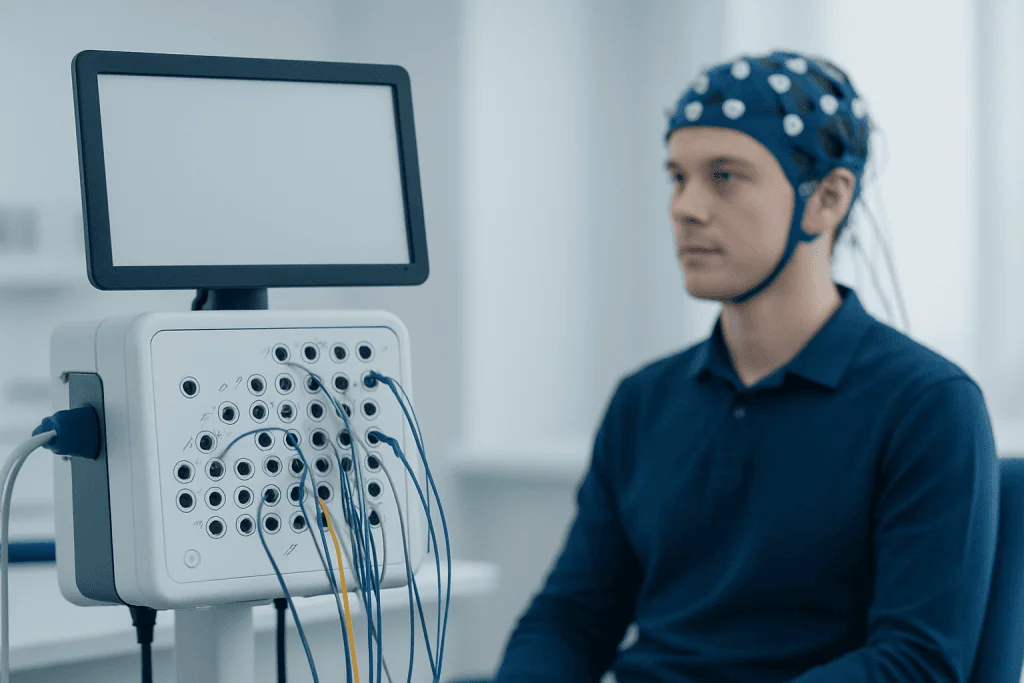
A neuropsychological evaluation usually begins with a detailed history. The clinician may ask about pregnancy and early development, language milestones, school progress, behavior at home, medical history, sleep, mental health, and family history. Parents, caregivers, teachers, or partners may be asked to complete questionnaires. For adults, the person being evaluated often provides much of this information directly, sometimes with additional input from family members when helpful.
Testing itself often includes standardized tasks that measure attention, processing speed, impulse control, working memory, planning, problem-solving, language, visual-spatial skills, learning, memory, and academic abilities. For autism-related concerns, the evaluation may also explore social understanding, pragmatic language, flexibility, and patterns of restricted or repetitive interests or behaviors. In some cases, emotional and behavioral questionnaires are included because anxiety, depression, trauma, sleep problems, and stress can affect concentration and social functioning.
The exact test battery varies. Age, referral question, language background, school concerns, and coexisting medical or developmental issues all influence which tests are chosen. A good evaluation is individualized, not a one-size-fits-all checklist. The final report usually combines test scores with history and clinical observations to explain what the results may mean in daily life.
- Clinical interview and developmental history
- Behavior rating scales from home, school, or work
- Attention and executive function tests
- Learning, memory, and academic assessments
- Language and social communication measures when relevant
- Clinical interpretation and practical recommendations
What results can show

Neuropsychological testing can show patterns of strengths and weaknesses that are commonly seen in ADHD or autism. In ADHD, results may suggest difficulties with sustained attention, working memory, response inhibition, processing speed, organization, and task monitoring. In autism, results may suggest differences in social reasoning, cognitive flexibility, language pragmatics, sensory-related regulation, or an uneven profile in which some abilities are much stronger than others.
Results can also help identify whether difficulties are affecting learning and everyday functioning. For example, a child who seems inattentive in class may actually be struggling with language processing or a specific learning disorder. Another person may have strong reasoning abilities but significant challenges with planning, transitions, or interpreting social cues. In this way, testing can help separate symptoms that look similar on the surface but have different underlying causes.
Another important benefit is that testing can guide support. Recommendations may include classroom accommodations, behavioral strategies, parent guidance, speech and language support, occupational therapy, psychotherapy, or medical review. If ADHD or autism is diagnosed as part of a broader assessment, the report can help families and clinicians make informed choices about next steps, including ADHD treatment or autism support and treatment planning when appropriate.
What results cannot show
Although neuropsychological testing is very useful, it has clear limits. No single test can prove or rule out ADHD or autism on its own. These are clinical diagnoses based on patterns of symptoms, developmental history, current functioning, and behavior across settings. A person may perform well during formal testing yet still experience meaningful difficulties at school, work, or home.
Testing also cannot fully capture how symptoms change from day to day. Sleep quality, anxiety, motivation, unfamiliar settings, masking, perfectionism, and the one-to-one structure of testing can all influence performance. Some people with ADHD focus better in a quiet testing room than they do in a busy classroom or workplace. Some autistic individuals, especially those who have learned to compensate socially, may not show the full extent of their everyday challenges in a structured appointment.
In addition, test results do not always explain why a difficulty exists. Problems with attention or social communication may be related to ADHD or autism, but they can also appear with anxiety, depression, trauma, sleep disorders, hearing problems, language disorders, learning disorders, or other neurodevelopmental conditions. This is why careful interpretation matters, and why testing should be considered one part of a full ADHD evaluation or autism assessment rather than the final word by itself.
How ADHD and autism can overlap
ADHD and autism can share some features, and they can also occur together. Both may involve executive function difficulties, sensory sensitivities, emotional regulation problems, and challenges with transitions or daily routines. Because of this overlap, neuropsychological testing is often used not just to look for one condition, but to better understand the full profile of a person’s functioning.
For example, a child with autism may seem inattentive because they are overwhelmed by sensory input or do not understand social expectations in the classroom. A child with ADHD may seem socially awkward because impulsivity, distractibility, or missed cues interfere with interaction. Testing can help point toward the most likely explanations, but the distinction is often made through a combination of developmental history, behavior observation, and reports from multiple settings.
When both conditions are present, support plans may need to address each one. That might include behavioral strategies for attention and organization together with support for social communication, predictability, and sensory needs. The goal of assessment is not only to label symptoms, but to understand what type of help is most likely to improve everyday life.
How clinicians interpret results
Interpretation is the most important part of the process. A neuropsychologist does not simply add up scores and match them to a diagnosis. Instead, they look at the overall pattern: which skills are stronger, which are weaker, how consistent the scores are, whether the profile fits the person’s history, and whether there are signs of another explanation. This is why two people with similar symptoms may receive different conclusions after testing.
Context matters as well. Age, language, education, cultural background, medical conditions, hearing or vision differences, and emotional state can all affect test performance. Skilled clinicians take these factors into account to reduce the risk of overinterpreting results. They may also recommend further evaluation if the profile suggests related issues, such as a learning disorder, speech-language difficulty, anxiety disorder, or sleep problem.
The final report should be practical and understandable. Ideally, it explains not just what scores were obtained, but what they mean in real life. It may describe how difficulties could affect classroom learning, homework, social relationships, work tasks, independence, or emotional wellbeing. In complex cases, some families seek care from multidisciplinary teams; Acibadem International’s multidisciplinary specialists and JCI-accredited hospitals evaluate and treat neurodevelopmental conditions for international patients.
Preparing for testing and using the results well
Good preparation can make testing more useful. Before the appointment, it helps to gather school reports, previous evaluations, therapy notes, and examples of concerns from home, school, or work. Bringing a list of questions can also be helpful. Many families want to know not only whether ADHD or autism is likely, but also what supports will be most useful if a diagnosis is confirmed or if the evaluation shows another explanation.
On the day of testing, practical steps matter. Adequate sleep, regular meals, hydration, glasses or hearing aids if used, and a calm explanation of the process can all support more reliable performance. It is usually best to follow the testing center’s instructions about medications, breaks, and what to bring. For children, reassurance that the evaluation is not a school exam can reduce stress.
After the evaluation, the report is most helpful when it is translated into action. Families may share recommendations with schools, therapists, or physicians. Depending on the findings, next steps could include behavioral interventions, educational supports, counseling, speech-language therapy, occupational therapy, or medical review for symptoms such as inattention, hyperactivity, sleep difficulties, or anxiety. Some people may also benefit from broader child neurology assessment or neurology evaluation if there are additional developmental or neurological concerns.
When to seek an evaluation
An evaluation may be worth considering when attention, behavior, communication, learning, or social functioning are affecting daily life. Common signs include persistent distractibility, impulsivity, difficulty finishing tasks, poor organization, delayed language or social development, very intense interests, sensory sensitivities, frequent misunderstandings with peers, or a noticeable gap between ability and performance. Adults may seek testing because of long-standing concentration problems, workplace difficulties, burnout, or newly recognized social communication differences.
It can also be helpful when the picture is unclear. Sometimes a child has already received support but is still struggling, or symptoms overlap with anxiety, learning difficulties, sleep problems, or mood concerns. Testing may bring clarity about what is primary, what is overlapping, and what type of intervention is likely to help most. Early evaluation can be especially useful when school accommodations or developmental support are needed.
Anyone with concerns should speak with a qualified healthcare professional. A pediatrician, psychiatrist, psychologist, neurologist, developmental specialist, or neuropsychologist can advise whether formal testing is appropriate and how it fits into a complete assessment. Reaching out does not commit a family to a diagnosis; it is simply a step toward better understanding and more tailored support.
Frequently asked questions
Can neuropsychological testing diagnose ADHD by itself?
No. Neuropsychological testing can support an ADHD assessment by showing attention and executive function patterns, but ADHD is a clinical diagnosis. Doctors and psychologists also consider symptoms over time, developmental history, and functioning in more than one setting.
Can testing confirm autism on its own?
Not usually. Autism is diagnosed through a broader clinical assessment that includes developmental history, social communication patterns, behavior, and observation. Testing may provide helpful supporting evidence, but it is not the only factor.
What if the test results are normal but concerns remain?
This can happen. Some people manage well in a quiet, structured testing setting but still struggle in daily life at school, work, or home. If concerns continue, clinicians may rely more heavily on history, behavior reports, observation, or repeat evaluation later.
How long does a neuropsychological evaluation take?
The length varies depending on age, goals, and complexity. Some evaluations are completed in a few hours, while others are spread across multiple sessions. There is also time needed for record review, scoring, interpretation, and the final report.
Is neuropsychological testing only for children?
No. Adults can also benefit from testing, especially if they have long-standing concentration, organization, learning, or social communication concerns. Adult evaluations may help clarify whether symptoms relate to ADHD, autism, mood, sleep, or another condition.
How should families use the final report?
The report is most useful when it guides practical next steps. Families can share it with schools, therapists, and medical professionals to support accommodations and treatment planning. It can also help individuals better understand their learning style, strengths, and daily challenges.
References
- American Academy of Pediatrics
- Centers for Disease Control and Prevention
- National Institute of Mental Health
- American Psychological Association
- World Health Organization
This article is for general information only and is not a substitute for professional medical advice. Please consult a qualified doctor about your individual situation.
ADHD in Turkey — costs, top hospitals & a free quote
JCI-accredited · board-certified surgeons · reply within 24h
Add us as a Preferred Source to see more of our trusted health content across Google Search, AI Overviews and Discover.

More from the Health Library



Related Specialists

Dr. Yusuf Hakan Abacı
Orthopedic Surgery & Traumatology
Prof. Dr. Hakan Cincik
Otorhinolaryngology
Assoc. Prof. Dr. Bertan Cengiz
Orthopedic Surgery & Traumatology
Dr. Necip Güngör Atikeler
Radiology