Neuropsychological Testing for ADHD: When It Helps and What It Can Show

Neuropsychological testing for ADHD measures thinking and behavior patterns, not just attention alone. ADHD is diagnosed clinically, and test results are usually one part of a broader evaluation.
Key Takeaways
- Neuropsychological testing for ADHD measures thinking and behavior patterns, not just attention alone.
- ADHD is diagnosed clinically, and test results are usually one part of a broader evaluation.
- Testing can help identify coexisting issues such as learning difficulties, anxiety, depression, or sleep-related effects.
- Results may guide school accommodations, workplace support, and individualized treatment planning.
- Testing is especially useful when symptoms are unclear, longstanding, or overlap with other conditions.
Neuropsychological testing for ADHD can provide a detailed picture of attention, memory, processing speed, and executive functioning. It is often most helpful when symptoms are complex, other conditions may be involved, or there are questions about learning, work, or school functioning.
Overview: What Neuropsychological Testing for ADHD Means
Neuropsychological testing for ADHD is a structured evaluation of cognitive skills and day-to-day functioning. It looks at areas such as attention, impulse control, working memory, planning, organization, language, and processing speed. Rather than relying on a single score, it helps show how a person thinks, learns, and manages tasks in real life.
Attention-deficit/hyperactivity disorder, or ADHD, is usually diagnosed through a clinical assessment that includes a medical history, symptom review, and information from school, home, or work. Neuropsychological testing does not replace this clinical process. Instead, it can add detail when the picture is complicated or when there is a need to understand strengths and weaknesses more clearly.
This kind of testing may be used for children, teenagers, or adults. It is often considered when symptoms overlap with other concerns, such as learning problems, anxiety, depression, sleep difficulties, or recovery after a neurological illness. In those situations, testing can help distinguish whether inattention is more consistent with ADHD, another condition, or several factors happening together.
When Testing Helps Most
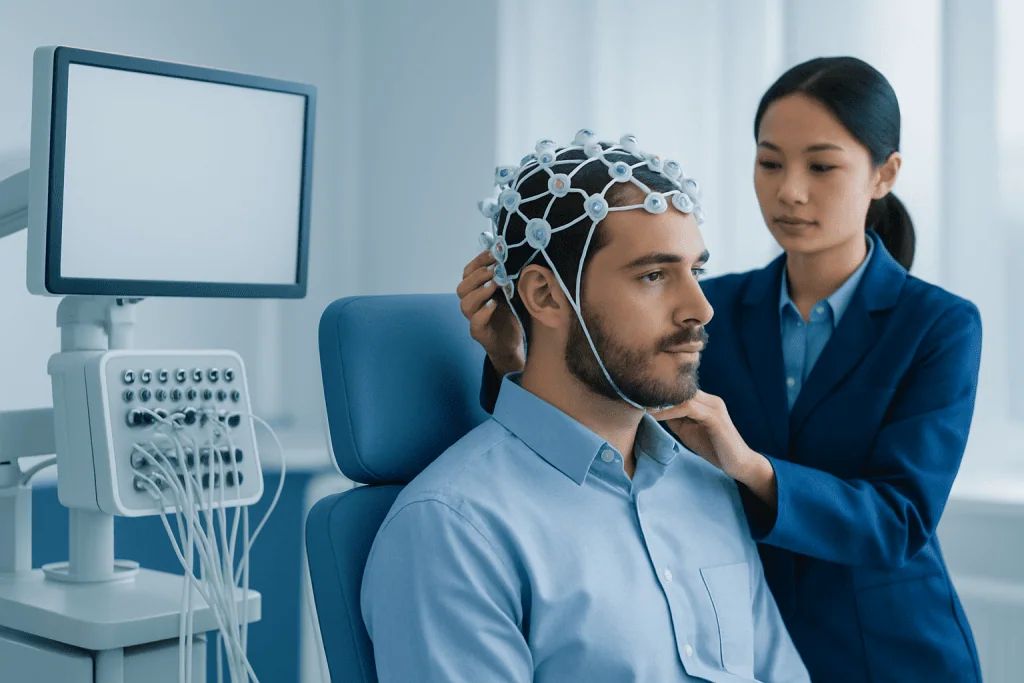
Neuropsychological testing is not necessary for every person with suspected ADHD. Many people receive an accurate diagnosis through a thorough interview, symptom questionnaires, developmental history, and information from parents, teachers, partners, or employers. However, testing can be especially helpful when the diagnosis is uncertain or when symptoms do not fit a simple pattern.
Examples of situations where testing may help include concerns about learning disabilities, unusually high or low academic performance, major differences between settings, or questions about whether another condition is affecting concentration. It may also be valuable when there are legal, educational, or occupational questions about accommodations and support.
Testing may be considered when a person has already been diagnosed with ADHD but continues to struggle despite treatment. In that setting, results can help explain whether executive function problems, memory difficulties, emotional factors, or another issue may be contributing. It can also help build a practical plan for school or work.
- Symptoms overlap with anxiety, depression, trauma, sleep problems, or substance use
- There are concerns about a learning disorder or uneven cognitive skills
- School or workplace accommodations are being considered
- Treatment has not worked as expected and the reasons are unclear
- A broader neurological or developmental evaluation is needed
What the Tests Can Show

Neuropsychological testing can show patterns that are commonly associated with ADHD, especially in areas linked to executive functioning. Executive functions are the mental skills used to start tasks, stay organized, shift attention, manage time, remember instructions, and control impulses. Some people with ADHD show weaknesses in these areas even when general intelligence is average or above average.
Common test domains include sustained attention, selective attention, working memory, verbal and visual memory, processing speed, language, reasoning, and cognitive flexibility. A person may be asked to respond to targets, repeat information, solve problems, copy designs, or switch between rules. These tasks can reveal where performance is efficient and where it breaks down.
At the same time, no single test can confirm ADHD on its own. Some people with ADHD perform well in a quiet testing room, especially if tasks are new, structured, and one-to-one. Others without ADHD may score poorly because of stress, poor sleep, depression, pain, or medical conditions. For that reason, neuropsychologists interpret results in context rather than using one isolated measure as proof.
Testing can also highlight strengths. For example, a person may have strong verbal reasoning but weaker processing speed, or excellent creativity with difficulty sustaining attention on repetitive tasks. Understanding this profile can be useful for treatment planning and for discussing practical support at school, home, or work.
How ADHD Is Evaluated Alongside Other Conditions
ADHD symptoms can overlap with many other conditions, and this is one reason neuropsychological testing can be useful. Anxiety may cause restlessness and poor concentration. Depression can reduce motivation and slow thinking. Sleep disorders may lead to forgetfulness and mental fatigue. Learning disorders can look like inattention when a child avoids reading or written tasks because they are unusually difficult.
A careful evaluation usually includes interviews, rating scales, developmental history, educational history, and sometimes review of previous records. Depending on the situation, clinicians may also consider hearing or vision issues, medication effects, substance use, thyroid problems, seizure disorders, concussion history, or other neurological conditions. The goal is not only to identify ADHD, but also to understand the full picture.
In some cases, additional specialty assessment may be appropriate, such as neurology evaluation when symptoms suggest a neurological cause, or a brain check-up when there are broader concerns about cognition and brain health. When mood or stress appears to play a major role, emotional assessment may be part of the process as well.
Because of this broad approach, test results are often most useful when interpreted by a clinician trained in neuropsychology and integrated with medical and psychosocial information. This helps reduce the risk of oversimplifying symptoms that may have more than one cause.
What to Expect During the Evaluation
A neuropsychological evaluation usually begins with an interview. The clinician asks about current symptoms, childhood history, education, work, health conditions, medications, sleep, mood, and family background. For children and adolescents, parents or caregivers often provide important developmental and school information. Teachers may also be asked to complete questionnaires.
The testing session itself may last several hours, sometimes split across more than one visit. Tasks are typically paper-based, verbal, or computer-based. The person may be asked to remember words, identify patterns, respond quickly to visual or sound cues, solve puzzles, or complete activities that require planning and mental flexibility.
Preparation is usually simple. It helps to get adequate sleep, eat normally, bring glasses or hearing aids if needed, and take prescribed medications unless the clinician gives other instructions. Honest effort is important because the goal is to understand everyday functioning as accurately as possible.
After testing, the neuropsychologist reviews the findings and explains what they mean. The final report often includes whether the results support ADHD, whether other conditions may be present, and what accommodations or treatment options may help. In some settings, this may be followed by neuropsychological assessment and follow-up as part of longer-term care.
How Results Support Treatment and Daily Life
One of the main benefits of neuropsychological testing for ADHD is that it can turn vague struggles into a more specific care plan. If testing shows prominent problems with working memory, organization, or processing speed, treatment can be tailored toward those areas. If learning difficulties or emotional symptoms are also present, those can be addressed at the same time.
Treatment for ADHD often includes a combination of education, behavioral strategies, school or workplace support, psychotherapy, and in some cases medication prescribed by an appropriate clinician. Testing results may help families and professionals decide which supports are most relevant. For example, a student may benefit from extra time, reduced-distraction settings, written instructions, or help with task breakdown and organization.
Adults may use the results to improve time management, structure, and communication at work. Practical changes can include calendar systems, reminders, breaking projects into shorter steps, reducing distractions, and planning more realistic routines. A strengths-based explanation of the results can also reduce self-blame and make it easier to ask for support.
When care is needed, a multidisciplinary approach can be helpful. Near the end of the diagnostic journey, some patients may benefit from coordinated support involving psychiatry, psychology, neurology, and educational specialists. Acibadem International’s multidisciplinary specialists and JCI-accredited hospitals diagnose and treat neurocognitive and attention-related conditions for international patients.
Limitations, Self-Care, and When to Seek Professional Advice
Although neuropsychological testing can be very informative, it has limits. A person may have ADHD even if some test scores fall in the average range. Likewise, attention problems on testing do not automatically mean ADHD. Results always need to be interpreted alongside symptom history, life impact, and information from multiple settings.
Self-care still matters, whether or not testing is done. Sleep, regular physical activity, structured routines, and management of stress can all affect attention and executive function. Reducing multitasking, using visual reminders, and keeping tasks short and concrete may also help people function better in daily life while formal assessment is being arranged.
Professional advice should be sought when attention, impulsivity, forgetfulness, or disorganization regularly interfere with learning, work, relationships, or safety. Evaluation is also important when symptoms begin suddenly, worsen quickly, or are accompanied by headaches, major mood changes, seizures, fainting, or other neurological signs. Those situations may suggest something other than ADHD and deserve timely medical review.
If there are concerns about thinking skills more broadly, clinicians may consider related assessments or supportive care, including neurological rehabilitation support in select cases where attention problems are linked to a neurological event or illness. The most appropriate next step depends on age, symptoms, and overall health, so an individualized medical opinion is always best.
Frequently asked questions
Can neuropsychological testing diagnose ADHD by itself?
No. ADHD is usually diagnosed through a clinical evaluation that includes symptom history, functional impact, and information from more than one setting. Neuropsychological testing can support the diagnosis and clarify cognitive strengths and weaknesses, but it is not usually used alone.
Who may benefit most from neuropsychological testing for ADHD?
Testing is often most helpful when symptoms are complicated or overlap with other issues such as anxiety, depression, learning difficulties, sleep problems, or neurological concerns. It can also be useful when school or workplace accommodations are being considered or when treatment has not worked as expected.
What kinds of skills are measured during testing?
The evaluation may measure sustained attention, working memory, processing speed, impulse control, planning, organization, language, and reasoning. These results help create a fuller picture of how a person functions in everyday life, not just how they perform on one task.
How long does neuropsychological testing for ADHD take?
The exact length varies, but many evaluations take several hours and may be divided into more than one session. Time depends on age, the questions being asked, and whether the clinician is also looking for learning, emotional, or neurological factors.
Can a person have normal test results and still have ADHD?
Yes. Some people with ADHD do well in highly structured one-to-one testing situations, especially when tasks are short or novel. This is why clinicians interpret test results together with real-world symptoms, developmental history, and reports from school, home, or work.
Is neuropsychological testing useful for adults with suspected ADHD?
Yes, it can be. In adults, testing may help separate ADHD from stress, burnout, anxiety, depression, sleep deprivation, or other medical causes of concentration problems. It can also provide practical guidance for workplace strategies and accommodations.
References
- American Academy of Pediatrics
- American Psychiatric Association
- Centers for Disease Control and Prevention
- National Institute of Mental Health
- American Academy of Clinical Neuropsychology
This article is for general information only and is not a substitute for professional medical advice. Please consult a qualified doctor about your individual situation.
ADHD in Turkey — costs, top hospitals & a free quote
JCI-accredited · board-certified surgeons · reply within 24h
Add us as a Preferred Source to see more of our trusted health content across Google Search, AI Overviews and Discover.