

Newborn Fell Off the Bed: An Evidence-Based Guide for Patients

Call emergency services immediately if the newborn is unresponsive, having trouble breathing, having a seizure, or has persistent bleeding. Newborns should receive prompt medical advice after any fall, including a fall from a bed or other raised surface.
Key Takeaways
- Call emergency services immediately if the newborn is unresponsive, having trouble breathing, having a seizure, or has persistent bleeding.
- Newborns should receive prompt medical advice after any fall, including a fall from a bed or other raised surface.
- Vomiting repeatedly, unusual sleepiness, poor feeding, behavior changes, and a bulging soft spot can be warning signs after a head injury.
- Do not shake the baby, press on a swollen area, or give medicine unless a clinician advises it.
- Most short falls do not cause serious injury, but only a healthcare professional can assess the individual situation safely.
- Prevention includes keeping one hand on the baby during changes and using a safe sleep space rather than an adult bed.
If a newborn fell off the bed, a caregiver should first check that the baby is breathing, responsive, and moving normally, then contact a healthcare professional promptly for individualized advice. Even when a newborn appears well after a short fall, careful observation and a low threshold for urgent assessment are important because newborns cannot describe symptoms and may have subtle signs of injury.
Newborn Fell Off the Bed: First Steps to Take
If a newborn fell off the bed, the caregiver should stay as calm as possible and quickly check the baby’s breathing, color, responsiveness, and movement. If the baby is not breathing normally, is unconscious, has a seizure, or has severe or ongoing bleeding, emergency services should be called immediately. The baby should not be shaken or moved unnecessarily, particularly if there is concern about a neck, back, or limb injury.
If the newborn is awake and appears stable, the caregiver should pick the baby up gently, comfort them, and look for visible swelling, bruising, bleeding, or an area that seems painful when the baby moves. It is sensible to note the approximate height of the fall, the surface the baby landed on, whether the head was struck, and any symptoms seen right away. This information can help a clinician decide on the next steps.
A newborn is generally defined as a baby from birth through 28 days of age. Because babies in this age group are physically delicate and cannot communicate pain, dizziness, or confusion, caregivers should contact a pediatrician, urgent care service, or emergency department promptly after a fall for advice. A clinician may recommend an in-person examination even when the baby looks well.
Why Falls Can Be Different in Newborns
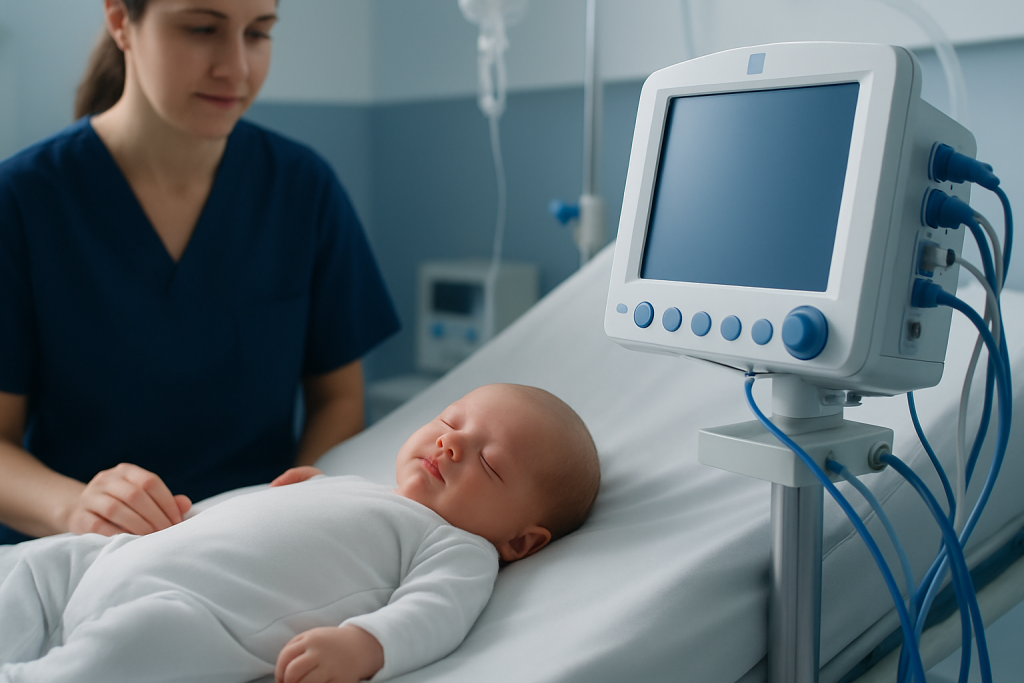
Newborns have relatively large heads compared with their bodies, weaker neck control, and skull bones that are still developing. A fall from a bed, changing surface, sofa, or caregiver’s arms can therefore result in the head being the first point of contact. The likelihood and type of injury depend on factors such as the height of the fall, the landing surface, the angle of impact, and whether another object was involved.
Many babies who fall a short distance have no serious injury. They may cry immediately because they are startled or uncomfortable, then settle with feeding and comfort. However, crying alone cannot confirm that there is no injury, and an initially reassuring appearance does not replace clinical guidance for a newborn.
Possible injuries can include a scalp bruise or swelling, a cut, a fracture, or, less commonly, an injury inside the skull. A healthcare professional considers the baby’s age, examination findings, symptoms over time, and details of the fall when evaluating risk. They will also look for injuries beyond the head, including pain or reduced movement in an arm or leg.
Signs to Watch for After a Baby Fall
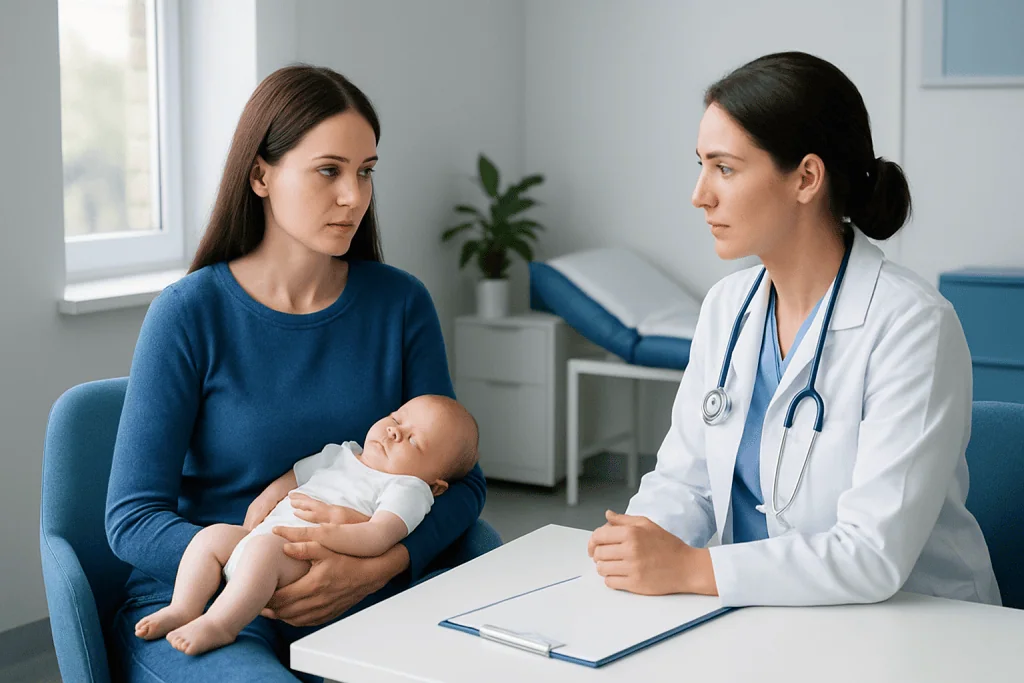
After an initial check, caregivers should observe the newborn closely while arranging medical advice. Changes in behavior can be especially important in a very young baby. For example, a baby who is much harder to wake than usual, unusually floppy, persistently irritable, or difficult to console should be assessed urgently.
Feeding is another useful observation. A newborn who refuses several feeds, has a weak suck, vomits repeatedly, or seems unable to feed normally may need urgent evaluation. One small spit-up can occur commonly in young babies and does not always mean injury, but repeated vomiting or vomiting together with other changes should not be ignored.
Other concerning signs include a growing scalp swelling, a soft spot that appears unusually full or bulging when the baby is calm and upright, fluid or blood from the nose or ears, unequal pupils, abnormal eye movements, weakness, or less movement on one side of the body. A caregiver should not repeatedly press on a bump or soft spot to check it, as this may cause discomfort and does not determine the seriousness of an injury.
- Normal breathing, skin color, and alertness are reassuring but should still be discussed with a clinician after a newborn fall.
- Immediate crying can be reassuring in the moment, but it does not rule out injury.
- A worsening symptom, even hours after the fall, requires urgent medical attention.
When to Seek Medical Care
Emergency care is needed immediately if the newborn loses consciousness, does not respond normally, has difficulty breathing, turns blue or very pale, has a seizure, or has bleeding that does not stop with gentle pressure to a small superficial wound. Emergency assessment is also appropriate after a high fall, a fall onto a hard surface with a significant head impact, or when the caregiver suspects a neck, spinal, or broken-bone injury.
A caregiver should seek urgent same-day medical assessment for repeated vomiting, increasing sleepiness, persistent crying or irritability, poor feeding, unusual movements, a large or worsening head swelling, a sunken or unusually bulging soft spot, or any behavior that feels clearly different for that baby. Trusting a caregiver’s concern is important, especially during the newborn period.
Even without clear warning signs, it is advisable to call the baby’s pediatrician or a local medical advice line promptly after a newborn falls from a bed. They can advise whether the baby needs emergency department evaluation, an urgent clinic visit, or monitoring at home. If the caregiver cannot reach a clinician or is uncertain about the baby’s condition, seeking in-person urgent care is the safer choice.
What a Medical Assessment May Involve
During an assessment, a clinician will ask about the timing and circumstances of the fall. Helpful details include the estimated height, the surface involved, whether the baby landed on the head or another body part, whether there was an immediate cry, and how feeding, sleep, and behavior have changed since the incident.
The examination may include checking alertness, pupil responses, muscle tone, movement of all limbs, the scalp and skull, the soft spot, and signs of pain or bruising. In newborns, clinicians also consider general well-being, including feeding ability and vital signs. They may observe the baby over time if symptoms are uncertain or evolving.
Imaging tests, such as X-rays or CT scans, are not automatically needed after every fall. Clinicians balance the possible benefit of detecting an injury against the limitations and risks of testing, including radiation exposure from CT scans. Testing is usually considered when examination findings, symptoms, or the details of the injury suggest a higher likelihood of a significant problem.
Home Observation and Comfort Measures
If a clinician advises observation at home, caregivers should follow the specific instructions they receive and keep the baby with a responsible adult. It can be useful to write down the time of the fall, symptoms, feeds, vomiting episodes, and periods of alertness. This record can make changes easier to recognize and communicate if further care is needed.
Newborns normally sleep frequently, so sleep itself is not automatically a warning sign. However, after a fall, caregivers should be able to rouse the baby enough to see a normal response for that child, such as opening the eyes, moving, crying, or feeding. If the baby cannot be awakened normally or seems markedly less responsive, emergency care is needed.
Comfort the baby with gentle holding, usual feeds if they are able to feed, and a quiet environment. A cool cloth may sometimes be used briefly over intact skin for a small area of swelling, but ice should not be placed directly on a newborn’s skin. Caregivers should not give pain medicines, herbal products, or other treatments unless a qualified clinician has advised what is appropriate for the baby’s age and situation.
Preventing Falls From Beds and Changing Surfaces
Falls often happen during everyday moments, including when a caregiver turns away briefly, reaches for supplies, or assumes that a newborn cannot yet roll. Although newborn movement may seem limited, babies can wriggle, push with their legs, or shift unexpectedly. Prevention focuses on creating safe routines rather than blaming a caregiver after an accident.
For sleep, the safest routine is to place the baby on their back in a separate, firm, flat sleep space designed for infants, such as a safety-approved crib or bassinet. Adult beds, sofas, armchairs, and changing tables are not safe places to leave a baby unattended. Bed rails and pillows do not reliably prevent falls and can introduce other safety risks.
During diaper changes, keeping supplies within reach and maintaining a hand on the baby can reduce risk. When practical, changing the baby on a clean mat on the floor may be safer than using a raised surface. Families may also wish to discuss safe sleep and injury prevention at routine pediatric visits. Acibadem International’s multidisciplinary specialists and JCI-accredited hospitals can assess infants with injuries and support international patients who need pediatric care.
Frequently asked questions
My newborn fell off the bed but seems fine. Should I still call a doctor?
Yes. A newborn should receive prompt medical advice after a fall, even if they appear normal at first. The clinician can consider the baby’s age, the fall height and surface, and any subtle changes in feeding, alertness, or behavior.
How long should a newborn be watched after falling off a bed?
The appropriate observation period depends on the baby’s age, symptoms, and the circumstances of the fall, so it should be guided by a healthcare professional. Caregivers should watch for any new or worsening symptoms and seek urgent care immediately if concerning signs develop.
Should a caregiver keep a newborn awake after a fall?
Not necessarily. Newborns need frequent sleep, and preventing sleep is usually not required. However, the baby should be rousable and respond in their usual way; a baby who is difficult to wake or unusually unresponsive needs emergency assessment.
Is vomiting always a sign of a serious head injury in a newborn?
No. Newborns can spit up for many routine reasons, particularly around feeds. Repeated vomiting, forceful vomiting, or vomiting accompanied by sleepiness, poor feeding, irritability, or other changes after a fall should be assessed urgently.
Can a newborn have a concussion after falling from a bed?
A head injury can affect how the brain functions, but concussion can be difficult to identify in newborns because they cannot report symptoms such as headache or dizziness. Clinicians instead look for observable changes, including altered alertness, feeding problems, vomiting, unusual crying, or abnormal movements.
What if there is a bump on the newborn’s head after the fall?
A bump can result from a scalp injury, but its size and appearance alone cannot show whether there is a more significant injury. Avoid pressing on it repeatedly, and contact a healthcare professional promptly, especially if the swelling is large, increasing, soft, or accompanied by behavior or feeding changes.
References
- American Academy of Pediatrics
- Centers for Disease Control and Prevention
- National Institute for Health and Care Excellence
- World Health Organization
- HealthyChildren.org
This article is for general information only and is not a substitute for professional medical advice. Please consult a qualified doctor about your individual situation.
Explore treatments in Turkey — costs, top hospitals & a free quote
JCI-accredited · board-certified surgeons · reply within 24h
Add us as a Preferred Source to see more of our trusted health content across Google Search, AI Overviews and Discover.

More from the Health Library


Related Specialists

Dr. Zeynep Güral
Radiation Oncology
Assoc. Prof. Dr. Nicel Taşdemir
Gynecology & Obstetrics
Dr. Belinda İrem Ardal
Acibadem Life Clinical Service
Dr. Cem Tangay
Orthopedic Surgery & Traumatology