Newborn Jaundice: Bilirubin Levels, Light Therapy, and Follow-Up

Newborn jaundice is usually temporary, but bilirubin levels must be interpreted according to the baby’s age in hours and individual risk factors. Doctors check jaundice using a skin meter or a blood test, and blood testing is used when more precise measurement is needed.
Key Takeaways
- Newborn jaundice is usually temporary, but bilirubin levels must be interpreted according to the baby’s age in hours and individual risk factors.
- Doctors check jaundice using a skin meter or a blood test, and blood testing is used when more precise measurement is needed.
- Phototherapy helps the baby’s body clear bilirubin and is recommended when levels reach treatment thresholds.
- Frequent feeding helps babies pass bilirubin through urine and stool, but parents should not give water or herbal remedies unless advised by a doctor.
- Follow-up after hospital discharge is important because bilirubin often peaks after the first 2 to 5 days of life.
- Parents should seek medical care promptly if jaundice spreads, feeding is poor, the baby is unusually sleepy, or jaundice appears in the first 24 hours.
Newborn jaundice is a common condition in the first days of life, caused by a temporary rise in bilirubin that can make the skin and eyes look yellow. Most babies do well with feeding support, careful follow-up, and, when needed, safe light therapy called phototherapy.
Overview
Newborn jaundice is the yellow color that may appear on a baby’s skin and the whites of the eyes during the first days after birth. It happens when bilirubin, a yellow pigment made during the normal breakdown of red blood cells, builds up faster than the newborn’s liver can process and remove it. Because babies naturally have a high turnover of red blood cells and an immature liver system, mild jaundice is very common.
In many newborns, jaundice is considered physiologic, meaning it is part of the normal transition after birth. It usually appears after the first 24 hours, becomes more noticeable over the next few days, and then gradually improves as feeding increases and the liver matures. However, some babies have higher bilirubin levels or risk factors that require closer monitoring.
The goal of newborn jaundice care is not only to treat visible yellowing but also to understand the bilirubin level in context. A baby’s exact age in hours, gestational age, weight, feeding pattern, blood type compatibility, and overall health all help clinicians decide whether observation, follow-up testing, or treatment is needed.
Bilirubin Levels and What They Mean
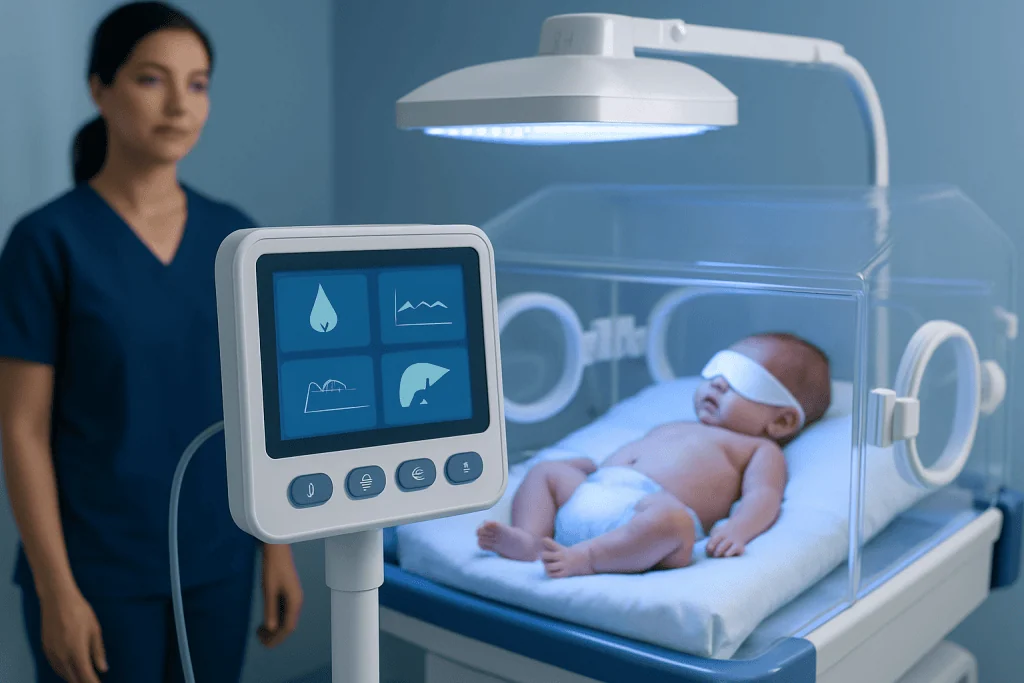
Bilirubin levels are measured either through the skin with a transcutaneous bilirubin device or by a blood test called total serum bilirubin. A skin test is quick and painless and is often used for screening. If the reading is high, close to a treatment threshold, or the baby has important risk factors, a blood test may be recommended because it provides a more precise value.
There is no single bilirubin number that is considered safe or unsafe for every newborn. Doctors compare the level with the baby’s age in hours and clinical risk factors. For example, a bilirubin level that is acceptable at 4 days of age may need attention if it occurs at 24 hours. Babies born early, babies with significant bruising, and babies with blood group incompatibility may reach treatment levels sooner.
Clinicians also consider how quickly bilirubin is rising. A level that increases rapidly may suggest increased red blood cell breakdown or another medical issue. In some cases, direct or conjugated bilirubin is checked as well, especially if jaundice lasts longer than expected or is associated with pale stools, dark urine, or poor weight gain.
Symptoms Parents May Notice
The most common sign of newborn jaundice is yellowing of the face, then the chest, abdomen, arms, and legs if bilirubin rises. The whites of the eyes may also look yellow. Jaundice can be harder to see in babies with darker skin tones, so looking at the eyes, gums, palms, and soles, and relying on medical screening when recommended, can be helpful.
Many babies with mild jaundice otherwise look well. They wake for feeds, suck effectively, have regular wet diapers, and pass stools that change from dark meconium to green and then yellow. Good feeding is important because bilirubin leaves the body through stool and urine.
Parents should pay attention to symptoms that suggest the baby needs prompt assessment. These include jaundice in the first 24 hours, yellowing that spreads quickly, poor feeding, fewer wet diapers, persistent vomiting, fever, unusual limpness, a high-pitched cry, or difficulty waking. These signs do not always mean a serious problem is present, but they should be checked by a qualified clinician without delay.
Causes and Risk Factors
Most newborn jaundice is related to normal newborn physiology. After birth, the baby no longer needs as many red blood cells as during pregnancy, so the body breaks down extra cells and produces bilirubin. At the same time, the liver is still maturing, and bowel movements may be limited during the first day or two, allowing bilirubin to build up temporarily.
Some situations increase the chance of higher bilirubin levels. These include prematurity, significant bruising or a cephalohematoma from birth, a previous sibling who needed phototherapy, and blood type incompatibility between mother and baby. Certain inherited red blood cell conditions, such as G6PD deficiency, can also contribute in some families and populations.
Feeding patterns matter as well. Breastfed babies can develop jaundice if intake is low in the early days, often called suboptimal intake jaundice. This is different from breast milk jaundice, a usually harmless, later and longer-lasting jaundice seen in some thriving breastfed babies. In both situations, a doctor or lactation professional can help confirm that the baby is feeding well and gaining appropriately.
- Risk is higher in babies born before 38 weeks of pregnancy.
- Jaundice that starts in the first 24 hours is more likely to need evaluation.
- Rapidly rising bilirubin should be assessed for increased red blood cell breakdown.
- Prolonged jaundice may require additional testing, especially if stools are pale or urine is dark.
Diagnosis and Monitoring
Newborns are routinely examined for jaundice before leaving the hospital or birth center. Many hospitals also use bilirubin screening to help plan safe discharge and follow-up. The baby’s age, gestational age, physical examination, feeding pattern, weight change, and bilirubin result are reviewed together to estimate the chance of bilirubin rising further.
If a bilirubin test is needed, the result is plotted or assessed against guideline-based thresholds. These thresholds are updated to reflect evidence on which babies benefit from treatment. Parents may be told whether the result is below the treatment level, close to it, or high enough to begin phototherapy. The care team should also explain when the next check is needed.
Monitoring may include repeat bilirubin measurements, weight checks, hydration assessment, and feeding support. Babies with significant jaundice may need tests for blood type, Coombs or direct antiglobulin test, hemoglobin level, reticulocyte count, or evaluation for infection or metabolic concerns, depending on the clinical picture. The purpose is to identify the reason for jaundice and choose the safest plan.
Treatment Options, Including Light Therapy
The main treatment for significant newborn jaundice is phototherapy, also called light therapy. Special blue light changes bilirubin in the skin into forms that the baby can pass more easily in urine and stool. During phototherapy, the baby usually wears eye protection and has as much skin exposed to the light as safely possible, while temperature, hydration, feeding, and bilirubin response are monitored.
Phototherapy is noninvasive and is used only when bilirubin reaches or approaches treatment thresholds based on the baby’s age and risk factors. Some babies receive phototherapy in the hospital, while selected lower-risk babies may be considered for home phototherapy where available and clinically appropriate. The decision depends on the bilirubin level, how close it is to treatment thresholds, the baby’s age, feeding, reliability of follow-up, and local medical practice.
Feeding support is also an important part of treatment. More effective intake helps babies produce urine and stools, which helps remove bilirubin. Breastfeeding families may be encouraged to feed frequently and receive help with latch and milk transfer. If supplementation is needed, the doctor will discuss options based on the baby’s health, weight loss, hydration, and family preferences.
In rare cases when bilirubin is very high or rises despite intensive phototherapy, more advanced treatment such as intravenous immunoglobulin for certain blood incompatibility cases or exchange transfusion may be considered in a neonatal unit. These treatments are reserved for specific situations and are guided by specialist teams.
Follow-Up, Prevention, and Self-Care at Home
Follow-up is a key part of newborn jaundice care because bilirubin often peaks after discharge, commonly during the first 2 to 5 days of life. The timing of follow-up depends on the baby’s age at discharge, bilirubin level, gestational age, feeding, weight change, and other risk factors. Parents should leave the hospital with clear instructions about when and where the baby will be seen next.
At home, parents can support bilirubin clearance by feeding the baby often and watching diaper output. Newborns usually need frequent feeds around the clock, but exact patterns vary. Parents should not give water, sugar water, herbal preparations, or sunlight treatment unless a clinician specifically recommends it. Direct sunlight can overheat or burn a baby’s delicate skin and is not a substitute for medical phototherapy.
Helpful home observations include whether the baby wakes for feeds, sucks and swallows well, has increasing wet diapers, and passes stools. Parents can also note whether yellowing is improving or spreading. If the baby has been treated with phototherapy, a follow-up bilirubin check may be recommended to make sure the level remains safe after treatment stops, especially in babies with ongoing risk factors.
When to See a Doctor
Parents should contact a doctor promptly if jaundice appears during the first 24 hours of life, if the baby looks increasingly yellow, or if yellowing reaches the arms, legs, palms, or soles. Medical review is also important if the baby is not feeding well, is difficult to wake, has fewer wet diapers than expected, has a fever or low temperature, or seems unusually floppy or irritable.
Jaundice that lasts longer than two weeks in a full-term baby, or longer than three weeks in a premature baby, should be discussed with a pediatrician. Many babies with prolonged jaundice are healthy, especially if breastfed and growing well, but clinicians may check for direct bilirubin and other signs to rule out liver or bile flow problems.
Families should feel comfortable asking for the actual bilirubin number, what it means for the baby’s age in hours, whether repeat testing is needed, and what signs should lead to urgent care. For international families seeking assessment or treatment, Acibadem International’s multidisciplinary pediatric and neonatal teams in JCI-accredited hospitals can evaluate and manage newborn jaundice with appropriate follow-up planning.
Frequently asked questions
Is newborn jaundice normal?
Mild jaundice is very common in newborns and often reflects normal changes after birth. However, it should still be assessed because some babies develop bilirubin levels that need closer monitoring or treatment. A clinician can interpret the level based on the baby’s age in hours and risk factors.
How are bilirubin levels checked in newborns?
Bilirubin can be estimated with a handheld device placed gently on the skin or measured with a blood test. Skin testing is useful for screening, while blood testing is more precise and is often used when the reading is high or close to a treatment threshold. The result is interpreted together with the baby’s age and health status.
Does phototherapy hurt the baby?
Phototherapy does not hurt the baby. It uses special light to help break down bilirubin so the body can remove it more easily. During treatment, the care team protects the baby’s eyes, monitors temperature and hydration, and encourages regular feeding.
Can sunlight treat newborn jaundice at home?
Sunlight is not recommended as a treatment for newborn jaundice. It is difficult to control the light dose, and direct sunlight can cause overheating or sunburn. If bilirubin is high enough to need treatment, medical phototherapy is the safer and more reliable option.
Should breastfeeding stop if a baby has jaundice?
In most cases, breastfeeding should continue, and families may benefit from support to improve latch and milk transfer. Frequent effective feeding helps the baby pass bilirubin through stools and urine. If supplementation is needed, the doctor will explain why and discuss the safest plan.
When does newborn jaundice usually go away?
Many full-term babies improve within one to two weeks as feeding becomes established and the liver matures. Premature babies or breastfed babies may have jaundice for longer. Persistent jaundice should be reviewed by a pediatrician to confirm that the baby is well and to decide whether any tests are needed.
What questions should parents ask before leaving the hospital?
Parents can ask what the baby’s bilirubin level is, whether it is close to the treatment threshold, and when the next check should happen. They should also ask what feeding and diaper patterns to expect and which symptoms require urgent medical attention. Clear follow-up instructions are an important part of safe newborn jaundice care.
References
- American Academy of Pediatrics
- National Institute for Health and Care Excellence
- World Health Organization
- Centers for Disease Control and Prevention
- Merck Manual Professional Edition
This article is for general information only and is not a substitute for professional medical advice. Please consult a qualified doctor about your individual situation.
Explore treatments in Turkey — costs, top hospitals & a free quote
JCI-accredited · board-certified surgeons · reply within 24h
Add us as a Preferred Source to see more of our trusted health content across Google Search, AI Overviews and Discover.

Pediatrics
Complete healthcare for infants, children and adolescents across all sub-specialties.
232 specialists in this unit