Nodular: A Complete Medical Overview

Nodular is a descriptive term used for lump-like changes in organs, skin, joints, glands, or other tissues. Many nodules are benign, but some need testing to identify their cause and rule out serious disease.
Key Takeaways
- Nodular is a descriptive term used for lump-like changes in organs, skin, joints, glands, or other tissues.
- Many nodules are benign, but some need testing to identify their cause and rule out serious disease.
- A clinician may use examination, imaging, blood tests, or a biopsy depending on the nodule’s location and features.
- New, enlarging, painful, bleeding, or persistent nodules should be assessed by a qualified healthcare professional.
- Treatment is based on the underlying diagnosis and may range from monitoring to medicines, minimally invasive procedures, or surgery.
Nodular means relating to or having one or more nodules—small, rounded lumps or areas of abnormal tissue. It is a descriptive medical term rather than a diagnosis, and its significance depends on where the nodule occurs, how it changes, and the findings of clinical assessment.
What does nodular mean?
Nodular describes a structure, condition, or appearance characterized by nodules. A nodule is a small, rounded area of tissue that can be felt as a lump, seen on an image, or identified during an examination. The word itself does not explain what caused the nodule or whether it is harmful.
Healthcare professionals may use the term in many settings, such as a nodular thyroid, a lung nodule, nodular skin lesions, nodular liver changes, or nodules affecting joints. Some are present without symptoms and are found incidentally during an ultrasound, X-ray, CT scan, MRI, or routine physical examination. Others may cause local discomfort, visible swelling, or changes in organ function.
It is understandable to feel concerned when a report includes the word nodular. However, a nodule is not automatically cancer or another serious illness. The appropriate next step depends on its location, size, appearance, rate of change, associated symptoms, and the person’s age, medical history, and risk factors.
Where can nodules develop?
Nodules can arise in almost any tissue. In the skin, they may be firm raised lumps caused by cysts, inflammatory conditions, benign growths, infections, or less commonly skin cancer. Under the skin, common examples include lipomas, which are usually soft fatty lumps, and enlarged lymph nodes, which may develop in response to infection or inflammation.
Within organs, nodules may be detected on imaging. Thyroid nodules are common and are often benign. Lung nodules can result from prior infection, inflammation, benign tumors, or cancer, so their evaluation is guided by imaging features and individual risk. Nodules may also occur in the breast, liver, adrenal glands, kidneys, uterus, prostate, or other organs.
Some medical conditions use nodular in their name because of a characteristic pattern. For example, nodular acne involves deep inflamed lesions, while nodular goiter refers to an enlarged thyroid with one or more nodules. The same word may therefore describe very different health issues, which is why the full clinical context matters.
Possible causes and risk factors

The causes of nodular changes vary widely. A nodule may form when normal tissue grows in a localized way, when a cyst develops, when scar tissue forms, or when inflammation creates a small area of swelling. Infections, immune-system activity, hormonal stimulation, injury, and inherited tendencies can also play a role.
For some organs, specific factors are important. Thyroid nodules may be associated with age, iodine intake, family history, previous radiation exposure, and certain thyroid disorders. Lung nodules may be more likely in people with a history of smoking, prior chest infection, occupational exposures, or previous cancer, although nodules also occur in people without these factors.
A nodule can be benign, malignant, inflammatory, infectious, or related to a noncancerous structural change. Its cause cannot be determined reliably by touch alone or by its name on a scan report. A clinician considers the entire picture rather than making conclusions from one feature.
- Benign growths, cysts, or fatty tissue deposits
- Inflammation, autoimmune disease, or healing after injury
- Current or previous infection
- Hormonal or metabolic influences
- Less commonly, cancerous or precancerous tissue changes
How a nodular finding is evaluated
Evaluation starts with a medical history and physical examination. The clinician may ask when the lump was first noticed, whether it has grown, whether it is painful, and whether there are symptoms such as fever, unexplained weight change, swallowing difficulty, cough, voice changes, altered bowel habits, or changes in the skin. Family history and previous illnesses are also relevant.
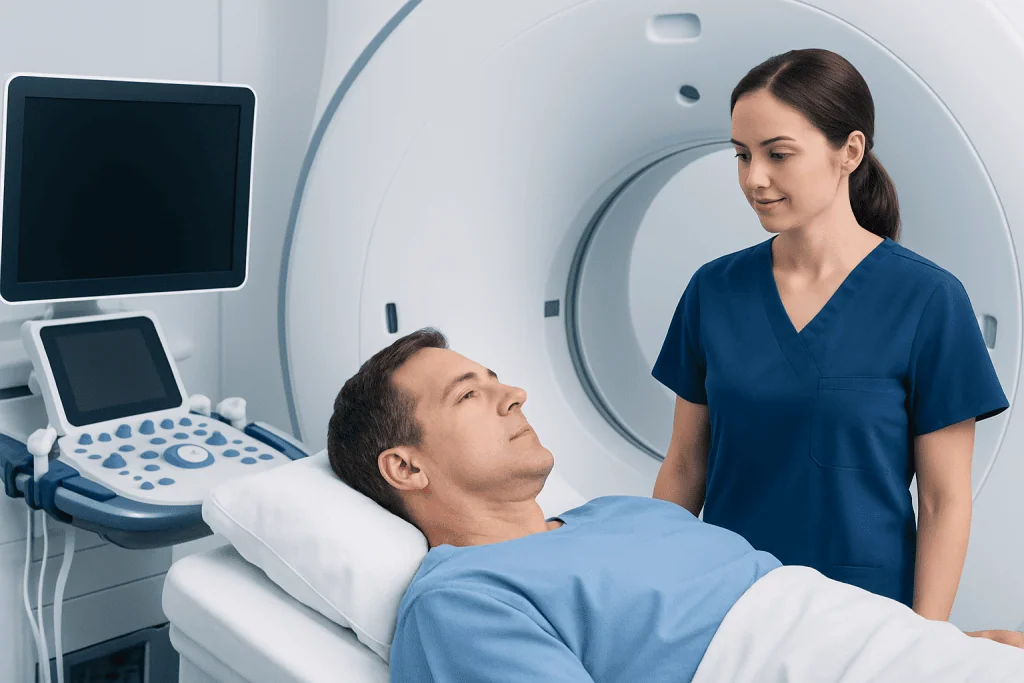
Imaging is often used to describe the nodule more precisely. Ultrasound is especially useful for superficial lumps, the thyroid, breast, and abdominal organs. X-rays, CT scans, MRI, and mammography may be selected according to the body area. Radiology reports may comment on size, borders, density, calcification, blood flow, and whether there are single or multiple nodules.
Some nodules can be monitored with repeat examination or imaging. Others require blood tests, such as thyroid function testing, or a tissue sample. A biopsy may involve a fine needle, core needle, endoscopic technique, or surgery. It is the most direct way to determine the type of cells when imaging and clinical findings do not provide a clear answer.
Not every nodule needs a biopsy or immediate removal. Decisions are individualized, balancing the appearance of the finding, its location, whether it affects function, and the person’s overall health. Patients should ask their clinician what the finding is most likely to represent and what follow-up interval, if any, is recommended.
Symptoms and changes to pay attention to
Many nodules cause no symptoms. A skin or soft-tissue nodule may be noticed as a localized bump. A thyroid nodule may sometimes produce a visible neck swelling, a sensation of pressure, hoarseness, or swallowing difficulty. Lung nodules usually do not cause symptoms themselves and are often found during imaging performed for another reason.
Symptoms do not always indicate a serious cause, and the absence of symptoms does not identify the nature of a nodule. Still, a change in size, shape, firmness, color, or sensation is useful information for the healthcare team. A lump that becomes persistently painful, fixed in place, ulcerated, or associated with bleeding merits timely assessment.
General symptoms such as prolonged fever, drenching night sweats, unexplained weight loss, unusual fatigue, or persistent cough should be discussed with a doctor, particularly when they occur alongside a newly detected nodule. These symptoms have many possible explanations, but they should not be ignored.
Treatment and follow-up options
There is no single treatment for a nodular finding. When testing shows that a nodule is benign and unlikely to cause problems, watchful waiting may be appropriate. This can involve a follow-up appointment, repeat ultrasound or other scan, and guidance on symptoms or changes that should prompt earlier review.
If a nodule is linked to an underlying medical condition, treatment focuses on that condition. Examples may include medicines for inflammation or hormonal disorders, antibiotics for selected bacterial infections, or treatment of an autoimmune disease. A clinician will explain whether medication is expected to shrink the nodule, prevent progression, improve symptoms, or address a separate underlying cause.
Procedures may be considered when a nodule is suspicious, causes pain or pressure, interferes with organ function, creates significant cosmetic concerns, or has a confirmed diagnosis requiring treatment. Depending on the site, options can include needle drainage, ablation techniques, endoscopic procedures, surgical removal, or cancer-directed treatment. The risks, benefits, and alternatives should be reviewed before a procedure is chosen.
At Acibadem International, multidisciplinary specialists and JCI-accredited hospitals can assess nodular findings and coordinate diagnostic and treatment planning for international patients. The most suitable pathway is based on the affected organ and the individual clinical findings.
When to seek medical care
A person should arrange a non-urgent medical appointment for any new lump that persists beyond a few weeks, any nodule that is growing, or an imaging finding that has not yet been discussed with the clinician who ordered the test. Prompt assessment is also sensible for a lump that is hard, irregular, fixed to deeper tissue, or associated with changes in the skin or nearby body function.
More urgent medical attention is appropriate if a nodule is accompanied by trouble breathing or swallowing, rapidly increasing neck or facial swelling, severe pain, significant bleeding, high fever, or signs of a serious allergic reaction. Emergency services should be contacted for severe breathing difficulty, chest pain, fainting, or other sudden severe symptoms.
People should avoid repeatedly squeezing, cutting, or attempting to drain a nodule at home. This can cause infection, bleeding, scarring, or delayed diagnosis. Keeping a brief record of when the nodule appeared and any observed changes can be helpful at the appointment.
Living well while a nodule is being monitored
Monitoring a nodule can create uncertainty, particularly when it was found unexpectedly. Following the agreed review schedule is one of the most useful steps. If repeat imaging is recommended, it allows the healthcare team to compare the nodule over time and determine whether it remains stable or needs further investigation.
General health measures support overall wellbeing but do not replace medical evaluation. These include avoiding tobacco, limiting alcohol where appropriate, eating a balanced diet, staying physically active within personal ability, protecting the skin from excessive sun exposure, and attending recommended preventive screenings.
Patients can prepare for appointments by bringing previous scan reports, pathology results, medication lists, and relevant family history. Useful questions include: What type of nodule is suspected? Is follow-up needed? What changes should be reported? Could any existing condition or medicine be related? Clear communication can help people take an informed role in their care.
Frequently asked questions
Is nodular the same as cancer?
No. Nodular is a descriptive term for a lump-like or rounded area of tissue, not a cancer diagnosis. Many nodules are benign, but some require assessment to identify their cause and determine whether treatment or follow-up is needed.
Can a nodular finding disappear on its own?
Some nodules related to inflammation, infection, or temporary tissue changes may reduce or resolve over time. Others remain stable for years without causing harm. The expected course depends on the location and cause, so follow-up advice should come from the treating clinician.
How do doctors know whether a nodule is benign?
Doctors combine the medical history, physical examination, imaging appearance, and sometimes blood tests to estimate the likelihood of a benign cause. If uncertainty remains or the nodule has concerning features, a biopsy may be recommended to examine cells or tissue.
Does every nodule need to be removed?
No. Many benign nodules only need observation, especially when they are small, stable, and not causing symptoms. Removal or another procedure may be considered if a nodule is suspicious, growing, painful, affecting function, or causing significant concern.
What does multiple nodules mean?
Multiple nodules means more than one rounded area of tissue is present in the same organ or body region. This pattern can occur in benign conditions as well as other disorders, so its meaning depends on the organ involved and the imaging or examination findings.
Should a painless lump be checked?
Yes, a painless lump that is new or persistent should be assessed by a healthcare professional, even though many are harmless. Pain is not a reliable way to distinguish benign from more significant causes, and an examination can guide whether tests are necessary.
This article is for general information only and is not a substitute for professional medical advice. Please consult a qualified doctor about your individual situation.
Explore treatments in Turkey — costs, top hospitals & a free quote
JCI-accredited · board-certified surgeons · reply within 24h
Add us as a Preferred Source to see more of our trusted health content across Google Search, AI Overviews and Discover.

More from the Health Library

Botulinum Toxin — Explained by Medical Evidence, Not Myths

Early Stage HPV Warts Female: What Patients Need to Know

Brilinta: A Complete Medical Overview

Legumes High Fiber: An Evidence-Based Guide for Patients

Meclizine: What Patients Need to Know