Normal Heart Rate for Women: An Evidence-Based Guide for Patients

A typical resting heart rate for adult women is 60 to 100 beats per minute. Well-conditioned women may normally have a resting heart rate below 60 if they feel well and have no concerning symptoms.
Key Takeaways
- A typical resting heart rate for adult women is 60 to 100 beats per minute.
- Well-conditioned women may normally have a resting heart rate below 60 if they feel well and have no concerning symptoms.
- Stress, caffeine, dehydration, fever, anemia, thyroid problems, medicines, and hormonal changes can all affect heart rate.
- Heart rate should be assessed in context, including symptoms such as chest pain, fainting, shortness of breath, or palpitations.
- A clinician may recommend an ECG, blood tests, or heart rhythm monitoring if the heart rate is persistently too high, too low, or irregular.
- Healthy sleep, hydration, exercise, and management of underlying conditions can support a healthy heart rate.
Normal heart rate for women at rest is usually 60 to 100 beats per minute, but what is healthy for one person can vary with age, fitness, medications, pregnancy, and hormonal changes. A heart rate is most useful when it is interpreted together with symptoms, overall health, and whether it is measured at rest, during activity, or during recovery.
Overview: What is a normal heart rate for women?
Normal heart rate for women usually means a resting pulse of 60 to 100 beats per minute in adults. This is the range most clinicians use for people who are awake, calm, and not exercising. However, the most meaningful number is not just whether the pulse falls inside that range, but whether it matches the person’s age, fitness level, medications, and symptoms.
For example, a woman who exercises regularly may have a resting heart rate in the 50s and still be completely healthy. On the other hand, a pulse of 90 may still be considered normal, but if it is new, persistent, or associated with palpitations, dizziness, or shortness of breath, it deserves medical attention. This is why heart rate should be interpreted as part of the bigger clinical picture rather than as a single isolated number.
Heart rate also changes throughout the day. It rises with movement, stress, pain, caffeine, heat, and illness, and it usually falls during rest and sleep. In women, hormone shifts related to the menstrual cycle, pregnancy, and menopause can also influence pulse rate to a modest degree.
How heart rate is measured and what affects it
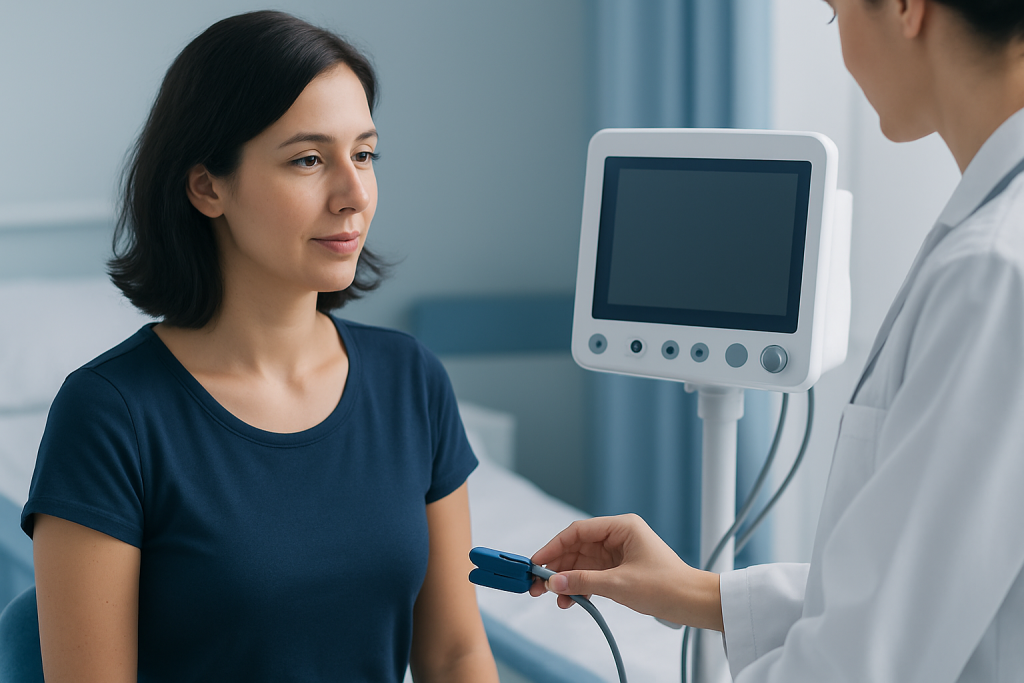
The most accurate way to compare heart rate with the normal range is to measure it when fully at rest. This is often done after sitting quietly for at least five minutes, or first thing in the morning before getting out of bed. A pulse can be checked at the wrist or neck, counted for 30 to 60 seconds, or measured with a blood pressure monitor, fitness tracker, or smartwatch. Devices can be useful, but they are not perfect, especially during movement.
Many everyday factors can temporarily change heart rate. Common examples include physical activity, emotional stress, anxiety, caffeine, nicotine, alcohol, dehydration, poor sleep, fever, and some over-the-counter cold medicines. Prescription medicines can also slow or speed the pulse. Because of this, a single reading should be interpreted carefully, and repeated readings over time are often more useful.
Body position matters too. A heart rate may be lower while lying down and slightly higher when standing. Recovery heart rate after exercise can also provide clues about cardiovascular fitness. In general, a pulse that returns toward baseline within a reasonable time after activity is reassuring, though this should be discussed with a clinician if there are symptoms or known heart conditions.
Heart rate by age, fitness, and life stage

There is no single perfect heart rate for every woman at every age. In healthy adults, the usual resting range remains 60 to 100 beats per minute, but younger adults often have slightly different baselines than older adults. More important than age alone is the individual’s conditioning, medical history, and whether the pulse is regular or irregular.
Fitness has a strong effect on resting pulse. Women who do regular aerobic exercise may have a slower resting heart rate because the heart pumps blood more efficiently. A lower rate can be normal in this setting as long as the person feels well and does not have fainting, extreme fatigue, confusion, or exercise intolerance.
Different life stages also matter. During pregnancy, blood volume and cardiac workload increase, so heart rate often rises somewhat compared with pre-pregnancy baseline. Menstrual-cycle shifts, anemia from heavy periods, thyroid disease, and menopause-related symptoms such as hot flashes can also affect pulse. If there is a sudden or sustained change rather than a mild expected variation, a medical review is sensible.
When a heart rate may be too high, too low, or irregular
A resting heart rate consistently above 100 beats per minute is called tachycardia. Sometimes this is a normal short-term response to exercise, stress, fever, or dehydration. But a persistently fast pulse at rest may also be linked to anemia, infection, thyroid overactivity, medication effects, heart rhythm problems, or other medical conditions. Some women feel this as racing, pounding, fluttering, or skipped beats.
A resting heart rate below 60 beats per minute is called bradycardia. In trained athletes, during sleep, or in some otherwise healthy people, this can be normal. It becomes more concerning when it causes symptoms such as dizziness, fainting, unusual weakness, chest discomfort, or breathlessness, or when it appears in someone without an obvious explanation.
An irregular heartbeat is also important, even if the average rate seems normal. Palpitations may be harmless, but they can sometimes reflect an arrhythmia such as atrial fibrillation. If a woman notices a new irregular rhythm, frequent episodes of racing or skipped beats, or symptoms that interfere with daily life, a doctor may recommend further evaluation. In some cases, assessment by specialists in cardiology care or longer-term rhythm monitoring is helpful.
Symptoms and possible causes that deserve attention
Heart rate concerns are not only about the number on a device. Symptoms often guide how urgent the situation is and what may be causing it. Common associated symptoms include palpitations, lightheadedness, dizziness, shortness of breath, chest discomfort, unusual fatigue, weakness, reduced exercise tolerance, or fainting. Anxiety can also cause a rapid pulse, but symptoms should not automatically be dismissed as stress alone.
Potential causes range from temporary and harmless to conditions that need treatment. A fast heart rate may be related to dehydration, fever, pain, emotional distress, stimulant use, anemia, or an overactive thyroid. A slow heart rate may be associated with athletic conditioning, medication effects, electrical conduction problems in the heart, or less commonly other systemic illnesses. Irregular heartbeats may come from extra beats, stimulant exposure, electrolyte imbalance, or more complex rhythm disorders.
If symptoms occur together with a known heart condition, high blood pressure, diabetes, thyroid disease, or a family history of sudden cardiac problems, medical review becomes more important. Doctors may also evaluate whether symptoms relate to structural heart disease such as heart valve disease or other cardiovascular conditions.
How doctors evaluate heart rate concerns
Evaluation usually starts with a detailed history and physical examination. A clinician will ask when the symptoms happen, how long they last, what triggers them, and whether there are red-flag symptoms such as fainting or chest pain. They will also review medications, supplements, caffeine intake, recent illness, menstrual history, pregnancy status if relevant, sleep quality, and exercise habits.
Tests depend on the situation. An electrocardiogram can identify many rhythm problems at the time of the visit. If symptoms come and go, a Holter monitor or event monitor may be used to record the rhythm over a longer period. Blood tests may check for anemia, infection, electrolyte imbalance, or thyroid disease. If structural heart disease is suspected, the clinician may recommend imaging such as an echocardiogram as part of broader diagnostic evaluation.
Not every woman with a pulse outside the usual range needs extensive testing. However, a pattern of persistent tachycardia, unexplained bradycardia, or an irregular pulse with symptoms usually justifies formal assessment. The goal is to distinguish normal variation from a treatable medical issue.
Treatment, prevention, and self-care
Treatment depends on the cause, not just the heart rate itself. If the pulse is elevated because of dehydration, fever, anxiety, pain, or stimulant use, management is aimed at correcting that trigger. If the issue is an arrhythmia, anemia, thyroid disorder, medication side effect, or another medical condition, treatment is tailored accordingly. Some women may only need reassurance and monitoring, while others may require medicines or more specialized care.
Everyday habits can support a healthy resting heart rate and more stable cardiovascular function. Helpful steps include regular physical activity, good sleep, adequate hydration, not smoking, and limiting excessive caffeine or alcohol if these seem to trigger symptoms. Stress management can also reduce episodes of racing heartbeat in some people. Women with chronic conditions such as high blood pressure or thyroid disease should follow their treatment plan and attend regular checkups.
It is also useful to track heart rate thoughtfully rather than obsessively. Repeated measurements under similar conditions are more meaningful than occasional readings taken during stress or activity. If wearable devices repeatedly show a concerning pattern, the information can be shared with a clinician, but device readings should not replace medical assessment. Near the end of the diagnostic pathway, some patients may also benefit from broader cardiovascular care, including cardiovascular evaluation and treatment when structural or complex heart problems are identified.
For international patients who need further assessment, Acibadem International’s multidisciplinary specialists and JCI-accredited hospitals diagnose and treat heart rhythm and cardiovascular conditions using coordinated specialist care.
When to seek medical care
A woman should seek prompt medical care if a fast, slow, or irregular heart rate is accompanied by chest pain, fainting, severe shortness of breath, confusion, blue lips, or sudden weakness. These symptoms can signal a more serious problem and should not be watched at home. Emergency care is especially important if symptoms are sudden, severe, or occur in someone with known heart disease.
Non-urgent medical evaluation is appropriate when the resting pulse is repeatedly above 100 or below 60 without a clear reason, especially if the person is not a trained athlete. It is also wise to arrange an appointment for frequent palpitations, a new irregular pulse, worsening exercise tolerance, or a clear change from the usual baseline over days to weeks.
Even when symptoms are mild, persistent concern is a good reason to speak with a doctor. Reassurance is valuable, and early assessment can identify treatable issues such as anemia, thyroid disease, medication effects, or rhythm disorders before they become more disruptive.
Frequently asked questions
What is a normal resting heart rate for women?
For most adult women, a normal resting heart rate is 60 to 100 beats per minute. The number should be interpreted in context, because fitness level, stress, sleep, medications, and illness can all affect it.
Is a resting heart rate below 60 normal in women?
It can be normal, especially in women who exercise regularly or during sleep. It is more concerning if it causes symptoms such as dizziness, fainting, unusual fatigue, or shortness of breath.
Why might a woman's heart rate be high at rest?
A higher resting heart rate can happen with anxiety, caffeine, dehydration, fever, pain, poor sleep, anemia, thyroid problems, or some medicines. If it is persistent or comes with symptoms, a clinician should evaluate it.
Does pregnancy change normal heart rate for women?
Yes. During pregnancy, the heart works harder to support increased blood volume, so heart rate often rises somewhat from pre-pregnancy baseline. A doctor should review any marked increase, irregular rhythm, chest pain, fainting, or significant shortness of breath.
How should heart rate be measured at home?
The most useful measurement is taken at rest, ideally after sitting quietly for at least five minutes or first thing in the morning. A person can check the pulse manually at the wrist or neck, or use a reliable home device or wearable.
When should a woman worry about palpitations?
Palpitations deserve medical attention if they are frequent, new, prolonged, or associated with chest pain, fainting, dizziness, or shortness of breath. Even milder palpitations should be discussed if they keep happening or affect daily life.
References
- American Heart Association
- National Heart, Lung, and Blood Institute
- Centers for Disease Control and Prevention
- National Institutes of Health
- European Society of Cardiology
This article is for general information only and is not a substitute for professional medical advice. Please consult a qualified doctor about your individual situation.
Heart care in Turkey — expert evaluation and treatment
JCI-accredited · board-certified surgeons · reply within 24h
Add us as a Preferred Source to see more of our trusted health content across Google Search, AI Overviews and Discover.
Check your numbers in seconds
BMI, calories, due date, blood pressure and 30+ more clinical calculators — free, instant, doctor-reviewed ranges.