Nuclear Cardiology Stress Testing: What Patients Need to Know

The test combines a stress test with a small amount of radioactive tracer to create images of heart blood flow. It can help detect coronary artery disease, evaluate symptoms, and estimate heart function after a heart event.
Key Takeaways
- The test combines a stress test with a small amount of radioactive tracer to create images of heart blood flow.
- It can help detect coronary artery disease, evaluate symptoms, and estimate heart function after a heart event.
- Some people exercise on a treadmill, while others receive medicine that safely simulates exercise.
- Preparation often includes avoiding caffeine for a period before the test and following medication instructions carefully.
- Results are interpreted alongside symptoms, medical history, ECG findings, and other heart tests.
Nuclear cardiology stress testing is a heart imaging test that shows how well blood flows to the heart muscle at rest and during exercise or medication-induced stress. It helps doctors look for reduced blood supply, assess symptoms such as chest discomfort or shortness of breath, and plan the next steps in care.
Overview: what nuclear cardiology stress testing shows
Nuclear cardiology stress testing is a type of heart imaging that helps doctors see whether blood reaches all parts of the heart muscle normally. It compares images taken when the heart is at rest with images taken when the heart is working harder, either through exercise or a medicine that increases blood flow demand. This comparison can reveal areas that may not be receiving enough blood.
The test is also known as a nuclear stress test or myocardial perfusion imaging. A very small amount of radioactive tracer is injected into a vein, and a special camera detects the tracer to create pictures of the heart. These images do not show the heart arteries directly, but they can show the effects of narrowed or blocked arteries on blood flow.
Doctors may recommend nuclear cardiology stress testing when a person has symptoms that could be related to reduced blood flow to the heart, such as chest pressure, breathlessness with activity, or unexplained fatigue. It may also be used after a heart event, before some surgeries, or to better understand known heart disease such as coronary artery disease.
Why doctors order this test
This test is commonly used to evaluate whether symptoms could be caused by reduced blood supply to the heart muscle. If a person has chest discomfort, shortness of breath during exertion, or a change in exercise tolerance, nuclear cardiology stress testing can help clarify whether the heart is involved. It is especially helpful when an ECG stress test alone may not provide enough information.
It can also help estimate how much of the heart muscle is affected if blood flow is reduced. That information may guide decisions about treatment, including lifestyle changes, medicines, or procedures to improve blood flow. In some cases, doctors use the test to check how the heart is doing after treatment or to assess risk before major non-cardiac surgery.
In addition to blood flow, many nuclear stress studies provide information about heart pumping function. This can help doctors understand whether symptoms might be linked to weakened heart muscle, prior damage, or other conditions that affect how the heart works.
How the test works and what to expect

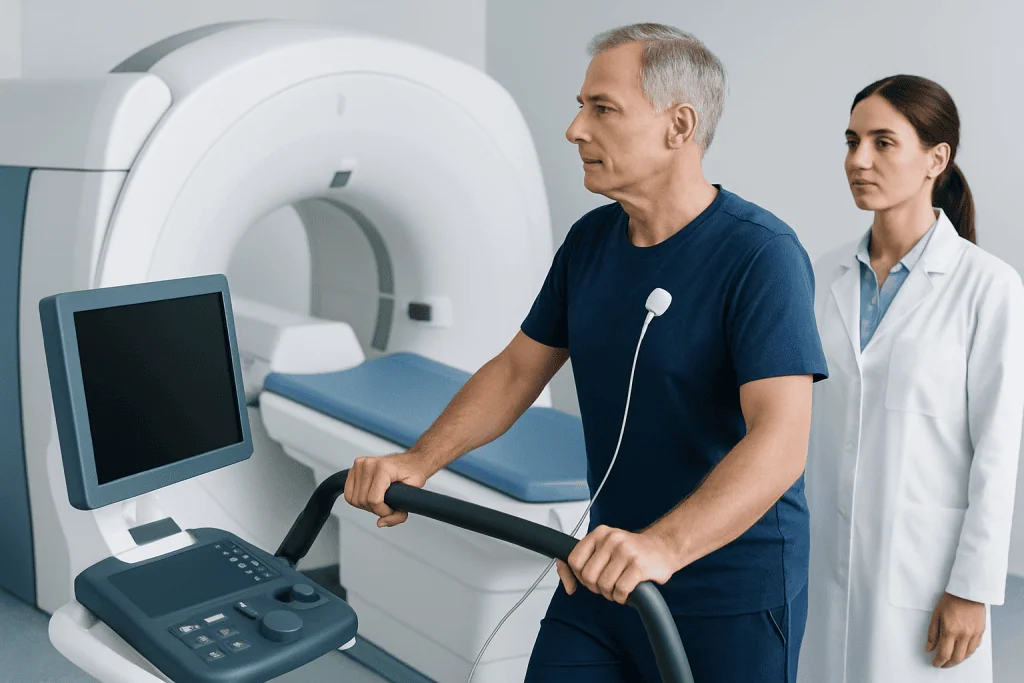
Nuclear cardiology stress testing usually happens in two parts: rest imaging and stress imaging. A small IV line is placed, the tracer is injected, and images are taken with a gamma camera while the person lies still. Later, the stress portion is performed either on a treadmill or bicycle, or with medicine if exercise is not suitable.
If exercise is used, the workload increases gradually while the heart rhythm, blood pressure, and symptoms are monitored closely. If medication is used, it briefly widens the heart’s blood vessels or increases the heart’s workload in a controlled way, creating effects similar to exercise for imaging purposes. A second tracer injection is given at peak stress, followed by another set of images.
The appointment may last several hours, depending on the protocol used and whether the rest and stress images are done on the same day. The test team may also perform an ECG throughout the visit. Some centers combine this evaluation with other cardiology care to help interpret findings in the context of symptoms, examination, and prior tests.
- Rest images show baseline blood flow.
- Stress images show how the heart performs under increased demand.
- Comparing the two helps identify reversible or fixed perfusion defects.
Who may need it and when it may not be suitable
People who may be considered for nuclear cardiology stress testing include those with possible angina symptoms, known or suspected coronary artery disease, previous heart attack, or unexplained shortness of breath during activity. It may also be used when other tests are inconclusive or when a doctor wants more detail about blood flow than a standard exercise ECG can provide.
The test is not automatically the best choice for everyone. Doctors consider age, symptoms, ability to exercise, kidney function, pregnancy status, body size, prior imaging, and the likelihood of coronary disease before recommending it. In some situations, another test such as stress echocardiography, CT coronary angiography, or direct catheter-based evaluation may be more appropriate.
Because the test involves radiation exposure, doctors use it thoughtfully and only when the expected benefit is meaningful. People who are pregnant or may be pregnant should tell the medical team in advance. Those with severe asthma, certain rhythm problems, very low blood pressure, or recent unstable cardiac symptoms may need a different approach or closer monitoring, sometimes within interventional cardiology pathways.
Preparation, safety, and possible side effects
Preparation instructions vary by center, so it is important to follow the advice provided by the testing team. People are often asked to avoid caffeine for a period before the test because caffeine can interfere with some stress medications. They may also be told not to eat for several hours and to wear comfortable clothes and walking shoes if exercise is planned.
Some heart medicines may need to be paused temporarily, while others should be continued as usual. This depends on the reason for the test and the individual’s medical condition. Patients should bring a list of medications, mention any inhalers they use, and tell the team about allergies, pregnancy, breastfeeding, or recent illness.
Nuclear cardiology stress testing is generally considered safe when performed in an appropriate setting with trained staff. Side effects are usually brief and may include flushing, headache, chest pressure, breathlessness, dizziness, or nausea, especially when stress medication is used. Serious complications are uncommon, and the team monitors the patient throughout the test so symptoms can be addressed promptly.
The radiation dose is typically low and carefully managed, but it is still an important consideration. Doctors weigh this against the value of the information the test can provide. If a person has ongoing symptoms or high-risk features, the benefit of an accurate diagnosis may outweigh the small radiation exposure.
Understanding the results
Results are interpreted by comparing the rest and stress images. If blood flow looks normal in both settings, the test suggests that major reductions in blood supply are less likely. If an area looks normal at rest but reduced during stress, this may point to reversible ischemia, meaning blood flow becomes limited when the heart works harder.
If a part of the heart shows reduced tracer uptake at both rest and stress, it can suggest scar tissue or prior damage rather than a temporary blood flow problem. The report may also include information about heart size, pumping function, and whether the heart’s response to stress appears normal. These details help doctors judge how significant any abnormality may be.
No test is perfect, and a nuclear stress test is only one part of decision-making. False-positive and false-negative results can occur. Doctors interpret findings together with symptoms, physical examination, ECG changes, blood tests, and other imaging, and may recommend further evaluation such as coronary angiography if the result suggests a meaningful blockage.
What happens after the test and treatment next steps
After the test, most people can return to their usual activities unless their doctor advises otherwise. Drinking fluids may be recommended to help clear the tracer from the body. The final report is typically reviewed with the referring doctor, who explains what the result means and whether any follow-up is needed.
If the test is normal, the next step may be reassurance, symptom monitoring, and attention to risk factors such as blood pressure, cholesterol, smoking, diabetes, sleep, and physical activity. If the test suggests reduced blood flow, treatment may include medications to reduce symptoms and protect the heart, as well as further tests to define the anatomy of the coronary arteries more clearly.
For some people, procedures to improve blood flow may be considered depending on symptoms, the amount of heart muscle at risk, and overall health. A broader plan may also include management of related conditions such as heart failure if pump function is reduced. Near the end of the care pathway, centers such as Acibadem International can evaluate international patients through multidisciplinary specialists in JCI-accredited hospitals for diagnosis and treatment planning.
When to seek medical care
A nuclear stress test is usually arranged in a planned setting, but some symptoms need quicker medical attention rather than waiting for outpatient testing. Chest pain or pressure that is severe, lasts more than a few minutes, occurs at rest, or spreads to the arm, jaw, back, or shoulder should be assessed urgently. The same is true for sudden shortness of breath, fainting, marked palpitations, or new weakness.
People should also contact a doctor promptly if they have worsening exercise tolerance, swelling in the legs, dizziness during activity, or symptoms that are becoming more frequent. These signs do not always mean a serious heart problem, but they deserve timely evaluation. Seeking care early can help determine whether testing, medication changes, or emergency treatment is needed.
After the test, patients should follow the center’s instructions about when to report persistent side effects. Ongoing chest discomfort, prolonged breathlessness, or feeling unwell after leaving the facility should be discussed with a healthcare professional without delay.
Frequently asked questions
Is nuclear cardiology stress testing painful?
Most people do not find the test painful. They may feel a brief needle stick from the IV and temporary sensations such as flushing, shortness of breath, or chest pressure during the stress portion. These effects usually pass quickly once the stress part is completed.
How long does a nuclear stress test take?
It often takes a few hours because images are taken at more than one point, and there may be waiting time between injections and scanning. Some protocols are completed in one visit, while others may be split into separate rest and stress sessions. The exact timing depends on the center and the imaging method used.
Can a person have the test if they cannot exercise?
Yes. If walking on a treadmill or cycling is not suitable, doctors can use medication to simulate the effect of exercise on the heart. This is a common and well-established option for people with mobility limitations, lung issues, or other reasons they cannot exercise enough for the test.
Does the test show blocked arteries directly?
Not exactly. Nuclear cardiology stress testing shows how well blood flows to the heart muscle, which can suggest the presence of narrowed or blocked arteries. If the result raises concern for a significant blockage, another test may be needed to look directly at the coronary arteries.
Is the radiation from the test dangerous?
The test uses a small, controlled amount of radiation, and the dose is generally considered low. Healthcare teams order it only when the expected medical benefit is likely to outweigh the risk. If there are concerns about pregnancy or cumulative radiation exposure, the doctor may consider other testing options.
What should patients avoid before the test?
Many centers ask patients to avoid caffeine for a period before the test because it can affect certain stress medicines. They may also recommend avoiding food for several hours and adjusting some medications, but instructions vary. It is safest to follow the specific guidance given by the testing center.
References
- American Heart Association
- American College of Cardiology
- Society of Nuclear Medicine and Molecular Imaging
- National Heart, Lung, and Blood Institute
- European Society of Cardiology
This article is for general information only and is not a substitute for professional medical advice. Please consult a qualified doctor about your individual situation.
Nuclear Cardiology in Turkey — costs, top hospitals & a free quote
JCI-accredited · board-certified surgeons · reply within 24h
Add us as a Preferred Source to see more of our trusted health content across Google Search, AI Overviews and Discover.
Check your numbers in seconds
BMI, calories, due date, blood pressure and 30+ more clinical calculators — free, instant, doctor-reviewed ranges.

Cardiology Department
Diagnosis and treatment of heart and vascular conditions, from prevention to advanced interventional procedures.
93 specialists in this unitMore from the Health Library

Primrose Oil: An Evidence-Based Guide for Patients

Loperamide 2mg: A Complete Medical Overview

Fev1 Fvc Ratio: A Complete Medical Overview

Mouth Roof Yellow: A Complete Medical Overview

Caffeine: What Patients Need to Know