Occupational Therapist: What Patients Need to Know

An occupational therapist helps patients perform everyday activities more safely and independently. Occupational therapy can support children, adults, and older adults with physical, cognitive, sensory, or emotional challenges.
Key Takeaways
- An occupational therapist helps patients perform everyday activities more safely and independently.
- Occupational therapy can support children, adults, and older adults with physical, cognitive, sensory, or emotional challenges.
- Treatment plans are personalized and may include exercises, adaptive techniques, splints, home modifications, and caregiver education.
- Occupational therapists often work as part of a wider rehabilitation team after stroke, surgery, injury, or neurologic illness.
- Early assessment may help prevent complications such as falls, joint stiffness, and loss of independence.
An occupational therapist is a rehabilitation professional who helps people improve the skills needed for daily life, work, school, and self-care. Treatment focuses on practical goals, such as dressing, eating, writing, moving safely at home, or returning to meaningful activities after illness, injury, or disability.
What Is an Occupational Therapist?
An occupational therapist is a licensed health professional who helps people participate in everyday activities that matter to them. These activities may include bathing, dressing, eating, cooking, working, studying, using a phone, managing medication, or moving safely around the home and community. The main goal is not only to treat a medical problem, but also to improve function, independence, and quality of life.
Occupational therapy is often recommended when a health condition affects strength, coordination, balance, sensation, thinking, vision, mood, or energy. It can be useful after surgery, injury, stroke, neurological disease, orthopedic problems, chronic pain, developmental conditions, or age-related decline. Rather than focusing only on symptoms, the therapist looks at how a person’s health affects real-life tasks and routines.
This makes occupational therapy slightly different from other forms of rehabilitation. For example, physical therapy often focuses more on movement, pain, and physical performance, while occupational therapy emphasizes practical function in daily life. In many cases, both are helpful and work together as part of a personalized rehabilitation plan.
What Does an Occupational Therapist Do?
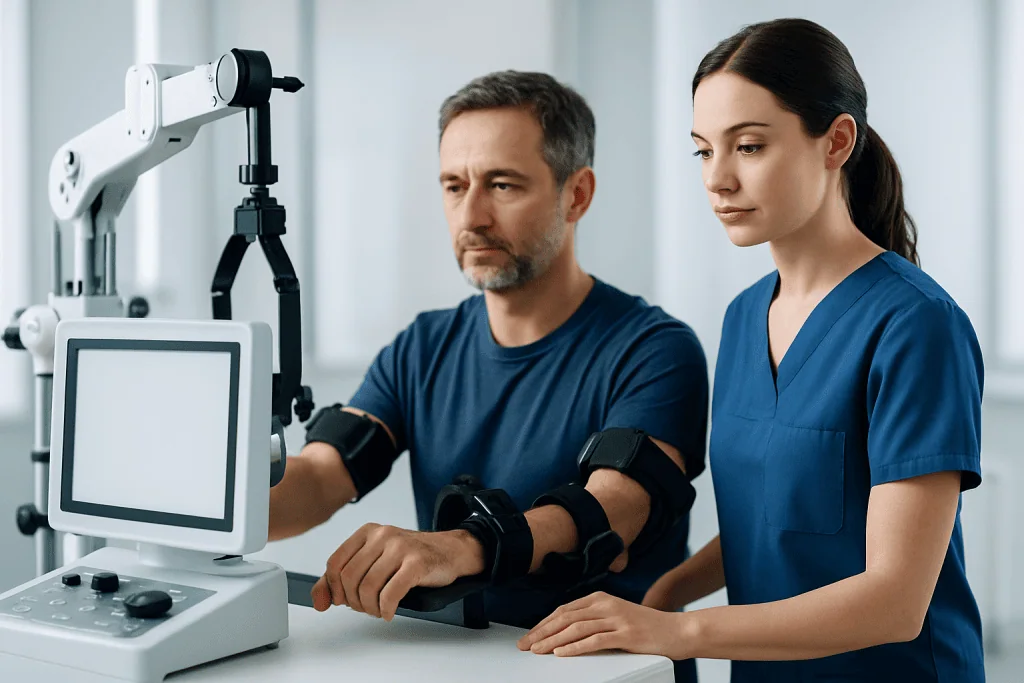
An occupational therapist begins with an assessment of the patient’s daily challenges, goals, medical history, and environment. The therapist may observe how the person gets dressed, stands from a chair, uses the hands, writes, prepares food, remembers steps, or manages tasks at home or at work. This helps identify which abilities are affected and what support may improve safety and independence.
Based on this assessment, the therapist designs a treatment plan tailored to the patient’s needs. Therapy may include strengthening and coordination exercises, hand therapy, balance-related task practice, sensory strategies, fine motor training, cognitive exercises, fatigue management, and techniques to simplify difficult tasks. Some patients also benefit from splints, adaptive utensils, grab bars, dressing aids, or seating adjustments.
Education is another major part of the therapist’s role. Patients and families may learn safer ways to move, conserve energy, organize routines, protect joints, or reduce fall risks. For people recovering from conditions such as stroke or surgery, the therapist often helps plan a gradual return to everyday activities while respecting healing and medical advice.
- Assess daily function and independence
- Set realistic, meaningful goals
- Provide practical therapy for self-care, work, school, and home tasks
- Recommend adaptive equipment or environmental changes
- Teach patients and caregivers strategies for safer daily living
Who May Benefit From Occupational Therapy?

Occupational therapy can support people of all ages. Children may need help with feeding, dressing, handwriting, play, attention, sensory regulation, or school participation. Adults may be referred after an injury, surgery, neurological event, or chronic illness that affects daily routines. Older adults often benefit when age-related weakness, arthritis, memory changes, poor balance, or vision problems make everyday tasks harder.
Common reasons for referral include stroke, traumatic brain injury, spinal cord injury, hand injuries, fractures, joint replacement, arthritis, chronic pain, multiple sclerosis, Parkinson’s disease, developmental delays, autism spectrum disorder, dementia, and recovery after major illness. People with cancer treatment-related fatigue, lymphedema risk, or reduced hand function may also be referred as part of rehabilitation.
Occupational therapy is especially valuable when symptoms interfere with independence rather than causing discomfort alone. A person may be medically stable but still struggle to shower safely, return to work, hold utensils, remember steps in a task, or care for a child. In these situations, therapy can bridge the gap between medical treatment and real-world recovery.
How Occupational Therapy Assessment Works
Assessment is usually practical, goal-based, and centered on the patient’s daily life. The occupational therapist may ask what tasks are most important, what difficulties are new, and what the person hopes to regain. This may include self-care, mobility, home responsibilities, communication tools, leisure, work duties, and school participation.
The evaluation may look at strength, range of motion, coordination, sensation, hand function, balance during tasks, visual-perceptual skills, memory, attention, planning, and problem-solving. The therapist may also review pain levels, fatigue, emotional factors, and the support available at home. In some cases, a home or workplace assessment is recommended to identify barriers and practical solutions.
Assessment findings are then used to create a realistic treatment plan with measurable goals. For example, goals may include buttoning a shirt independently, using the bathroom more safely, writing without pain, preparing a simple meal, or returning to desk work with adaptations. This functional approach helps patients see progress in ways that matter to their daily life.
Treatment Approaches and Rehabilitation Planning
Occupational therapy treatment depends on the person’s condition, stage of recovery, and goals. Sessions may focus on relearning essential activities, improving arm and hand use, building endurance, or practicing ways to complete tasks more safely and efficiently. Therapy often combines physical, cognitive, and behavioral strategies because daily activities usually depend on several skills at once.
Common approaches include task-specific practice, upper limb rehabilitation, fine motor exercises, adaptive equipment training, splinting, sensory techniques, memory and attention strategies, and environmental modifications. After orthopedic surgery or injury, some patients may also receive guidance during physical therapy and rehabilitation as part of a coordinated recovery plan. When swallowing, speech, or broader neurologic issues are also present, care may involve multiple specialists.
For patients with hand pain, nerve compression, or weakness, occupational therapy may complement medical or surgical care. For example, treatment may be part of recovery after hand surgery or support patients managing conditions such as carpal tunnel syndrome. The aim is to improve function while protecting healing tissues and reducing strain during daily activities.
In more complex cases, occupational therapists work closely with neurologists, orthopedic specialists, physiatrists, psychologists, speech therapists, and nurses. This team approach is common in rehabilitation after stroke, brain injury, spinal problems, and major surgery, and helps keep treatment consistent across different parts of recovery.
What Patients Can Expect During Sessions
Occupational therapy sessions are usually active and personalized. Rather than following the same routine for every patient, the therapist selects activities that match the person’s goals and stage of recovery. One patient may practice dressing with one hand after a stroke, while another may work on keyboard use, meal preparation, balance during bathing, or safe transfers after surgery.
Sessions may take place in a hospital, outpatient rehabilitation clinic, home setting, school, or long-term care facility. Treatment can involve one-to-one practice, caregiver training, or a home exercise and activity plan between visits. The therapist may adjust the difficulty of tasks over time as the patient becomes stronger, more coordinated, or more confident.
Progress is not measured only by medical tests. It is often tracked by functional gains, such as less help needed with dressing, better hand control, safer movement in the bathroom, or improved concentration during routine tasks. This practical focus can make therapy feel more relevant and motivating for patients and families.
Self-care, Home Support, and Ways to Get the Most From Therapy
Occupational therapy works best when strategies learned in sessions are used regularly in everyday life. Patients are often encouraged to practice specific tasks safely at home, follow exercise or splint instructions, and use adaptive techniques consistently. Small adjustments, repeated over time, can make daily activities easier and reduce frustration.
Home support may include removing trip hazards, improving lighting, using non-slip mats, placing commonly used items within easy reach, and adding aids such as shower chairs or grab bars when appropriate. For hand or joint problems, joint protection techniques, pacing, and ergonomic changes may reduce strain. For cognitive difficulties, calendars, labels, pill organizers, and step-by-step routines may be useful.
Family and caregivers often play an important role. They may help reinforce safe habits, support home exercises, and encourage independence without taking over tasks too quickly. Near the end of rehabilitation planning, patients seeking international care may also wish to know that Acibadem International’s multidisciplinary specialists and JCI-accredited hospitals provide assessment and treatment for a wide range of rehabilitation needs, including support after brain and neurosurgery when appropriate.
When to Seek Medical Care
A person should consider medical evaluation if everyday tasks become noticeably harder, less safe, or impossible because of pain, weakness, numbness, tremor, poor balance, memory changes, fatigue, or reduced coordination. This is especially important when problems affect bathing, dressing, eating, walking, working, driving, or managing medications. A doctor can help identify the underlying cause and decide whether occupational therapy is appropriate.
Urgent medical care is needed if new functional problems appear suddenly, especially with facial drooping, arm weakness, trouble speaking, severe confusion, sudden vision changes, or loss of balance. These may be signs of a medical emergency such as stroke. New symptoms after a fall, head injury, or surgery also deserve prompt attention.
Even when symptoms are not urgent, early referral can be helpful. It may reduce the risk of falls, stiffness, learned non-use of a weak arm or hand, caregiver strain, and loss of confidence in daily activities. Patients are generally encouraged to speak with a qualified healthcare professional for individualized advice and referral planning.
Frequently asked questions
What is the difference between an occupational therapist and a physical therapist?
Both are rehabilitation professionals, but they often focus on different parts of recovery. A physical therapist usually concentrates more on movement, strength, balance, and pain, while an occupational therapist focuses on helping a person perform daily tasks such as dressing, cooking, writing, or working. Many patients benefit from both at the same time.
Do patients need a doctor’s referral to see an occupational therapist?
This depends on the country, local regulations, and the healthcare setting. In many cases, a doctor, surgeon, pediatrician, or rehabilitation specialist refers the patient for occupational therapy. Even where direct access is possible, medical evaluation may still be important to understand the cause of symptoms.
How long does occupational therapy last?
The duration varies widely depending on the condition, goals, and pace of recovery. Some people need short-term support after surgery or injury, while others with neurological or long-term conditions may benefit from ongoing therapy. The therapist usually reviews progress regularly and adjusts the plan as needed.
Can occupational therapy help after a stroke?
Yes. Occupational therapy is a common part of stroke rehabilitation and can help with dressing, bathing, hand use, home safety, thinking skills, and return to routine activities. The plan is tailored to the person’s specific difficulties and recovery goals.
Is occupational therapy only for physical problems?
No. Occupational therapists also help with cognitive, sensory, developmental, and emotional factors that affect daily function. For example, therapy may address attention, memory, planning, sensory regulation, fatigue management, and coping strategies when these interfere with everyday life.
What should a patient bring to the first occupational therapy appointment?
It is often helpful to bring medical records, a list of medications, any relevant scans or reports, and supportive devices already being used, such as splints or braces. Patients may also prepare a list of daily tasks they find difficult and the goals they hope to achieve. Comfortable clothing is usually a good idea if movement or task practice will be part of the evaluation.
This article is for general information only and is not a substitute for professional medical advice. Please consult a qualified doctor about your individual situation.
Explore treatments in Turkey — costs, top hospitals & a free quote
JCI-accredited · board-certified surgeons · reply within 24h
Add us as a Preferred Source to see more of our trusted health content across Google Search, AI Overviews and Discover.

More from the Health Library

Lopsided Smile: An Evidence-Based Guide for Patients

Left Sided Heart Failure: A Complete Medical Overview

Resveratrol: What Patients Need to Know

Thyroid Biopsy — Explained by Medical Evidence, Not Myths

Thymus Gland: An Evidence-Based Guide for Patients