One month pregnant: A Complete Medical Guide for Patients

One month pregnant is typically around 4 weeks of pregnancy, even though conception happened about 2 weeks earlier. Common early signs include a missed period, breast tenderness, fatigue, nausea, and light spotting or cramping.
Key Takeaways
- One month pregnant is typically around 4 weeks of pregnancy, even though conception happened about 2 weeks earlier.
- Common early signs include a missed period, breast tenderness, fatigue, nausea, and light spotting or cramping.
- Early pregnancy care includes a home pregnancy test, prenatal vitamins with folic acid, and a review of current medicines with a doctor.
- Bleeding heavier than a period, severe pain, fainting, or one-sided pelvic pain needs prompt medical evaluation.
- Healthy habits in the first month can support fetal development before many people realize they are pregnant.
One month pregnant usually means the first 4 weeks of pregnancy, counted from the first day of the last menstrual period. At this stage, many people have few or mild symptoms, and the most helpful next steps are confirming the pregnancy, starting prenatal care, and avoiding substances that may harm the developing embryo.
Overview: what one month pregnant means
Being one month pregnant usually means a pregnancy is about 4 weeks along. Doctors count pregnancy from the first day of the last menstrual period, not from the day of conception. Because ovulation and fertilization usually happen about 2 weeks after the last period starts, the embryo itself is often around 2 weeks old at this point.
In the first month, many people are just beginning to notice changes such as a missed period, breast tenderness, tiredness, or nausea. Others feel almost no symptoms at all. Both experiences can be normal, and symptoms do not reliably measure how healthy a pregnancy is.
This early stage is important because the embryo is developing rapidly, even before pregnancy is confirmed. The placenta is starting to form, hormone levels are rising, and the neural tube, which later becomes the brain and spinal cord, begins to develop. That is why early prenatal vitamins, especially folic acid, matter so much.
What is happening in the body and to the embryo
During the first month, the fertilized egg travels through the fallopian tube and implants in the lining of the uterus. After implantation, the body begins producing human chorionic gonadotropin, or hCG, the hormone detected by pregnancy tests. Progesterone and estrogen levels also rise, helping support the uterine lining and the early pregnancy.
The embryo is still very small, but major foundations are forming. The amniotic sac and yolk sac develop, and the early structures that will become the heart, brain, spinal cord, and placenta begin to take shape. Although fetal movement cannot be felt, growth at this stage is highly organized and rapid.
These early changes can affect the whole body. Blood flow increases, metabolism shifts, digestion may slow, and the breasts may become fuller or more sensitive. Some people notice a heightened sense of smell, changes in appetite, or mood shifts linked to hormonal changes and fatigue.
Common symptoms at one month pregnant

The most common sign of being one month pregnant is a missed period. However, menstrual cycles vary, and some people do not suspect pregnancy right away. A home pregnancy test is often accurate after a missed period, though very early testing can sometimes be negative even when pregnancy has started.
Other common symptoms include:
- Breast tenderness or swelling
- Fatigue or unusual sleepiness
- Mild nausea, with or without vomiting
- Frequent urination
- Bloating
- Light cramping
- Light spotting around implantation
- Mood changes
Mild cramping and a small amount of spotting can occur in normal early pregnancy, especially around implantation. Still, symptoms can overlap with premenstrual changes, which is why testing and medical follow-up are important.
Some people have no clear symptoms at all in the first month. Lack of nausea or breast soreness does not automatically mean there is a problem. If there is uncertainty, a clinician may confirm the pregnancy with a blood test or an ultrasound at the appropriate time.
How pregnancy is confirmed and early checkups are planned
A home urine pregnancy test is often the first step. These tests detect hCG and are most reliable after a missed period. If the result is positive, the next step is to arrange a prenatal appointment. If the test is negative but the period still does not come, repeating the test in a few days may be advised.
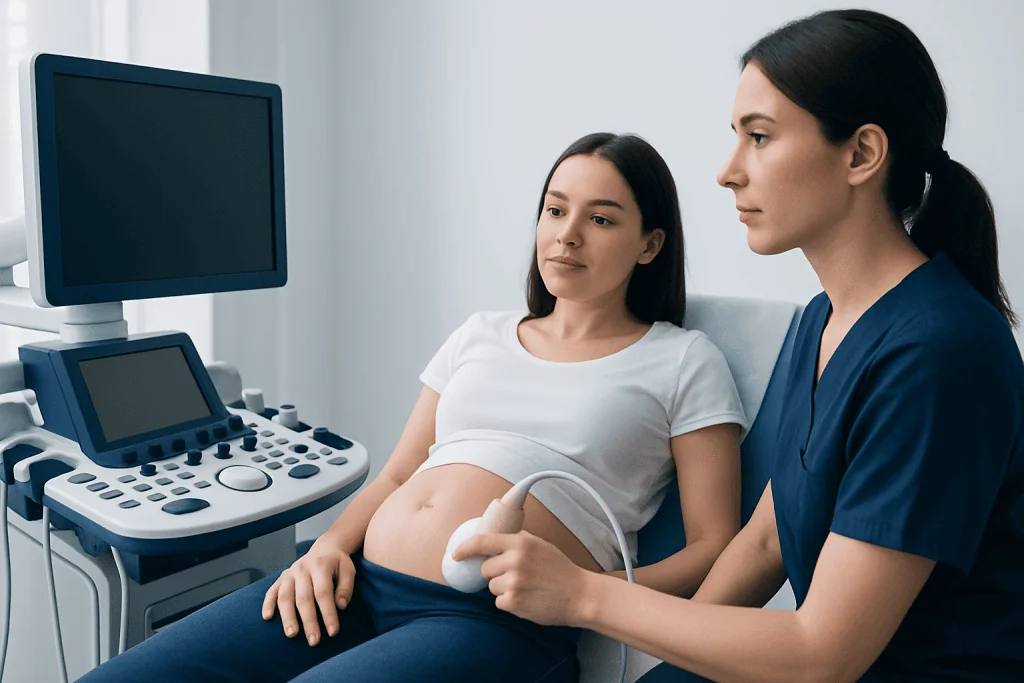
At an early prenatal visit, a doctor or midwife usually reviews menstrual dates, symptoms, medications, medical history, and any previous pregnancies. Blood tests may be used to check blood type, Rh factor, anemia, infections, and hCG levels when needed. An ultrasound may be scheduled a little later, since very early scans do not always show as much as patients expect.
Sometimes the main concern in early pregnancy is making sure the pregnancy is developing in the uterus. This is especially important if there is bleeding, pain, or a history of ectopic pregnancy. In selected cases, clinicians may use serial blood tests and ultrasound together to clarify what is happening.
If fertility treatment was used, or if there are complications such as bleeding or pelvic pain, care may involve specialists in fertility and early pregnancy assessment or obstetrics and gynecology care.
What to do in the first month: healthy habits and safety
Once someone learns they are one month pregnant, simple steps can support early development. A daily prenatal vitamin with folic acid is one of the most important actions because it helps reduce the risk of neural tube defects. It is also wise to eat regular, balanced meals, drink enough fluids, and get adequate rest.
Alcohol, smoking, and recreational drugs should be avoided during pregnancy. It is also important not to start, stop, or continue prescription medicines, over-the-counter drugs, supplements, or herbal products without medical advice. Some medicines are safe in pregnancy, while others may need to be changed. This includes pain relievers, acne medications, seizure medicines, and certain blood pressure drugs.
Food safety matters early in pregnancy. Patients are generally advised to avoid unpasteurized dairy products, raw or undercooked meat, fish, and eggs, and to be careful with foods that carry a higher risk of infection. Caffeine does not always need to be eliminated, but keeping intake moderate is commonly recommended.
Gentle physical activity is usually safe for most people unless a clinician advises otherwise. Walking, stretching, and other low-impact exercises can support energy, mood, and sleep. If there is severe nausea, persistent vomiting, fever, or trouble keeping fluids down, medical advice should be sought rather than trying to manage alone.
Possible concerns in the first month
Early pregnancy can bring uncertainty because symptoms are often vague. Light spotting and mild cramping can occur in normal pregnancy, but they can also be seen with miscarriage or an ectopic pregnancy. This is why the pattern of symptoms matters as much as the symptoms themselves.
Pregnancy loss in the first trimester is common overall, though many early losses happen before a person even realizes they are pregnant. Warning signs can include bleeding that becomes heavier, passage of tissue, increasing pelvic pain, or symptoms that are accompanied by dizziness or fainting. A clinician may evaluate these symptoms with an examination, blood tests, and ultrasound.
Another concern is severe nausea and vomiting that leads to dehydration or weight loss. While many people experience morning sickness, symptoms that prevent normal eating or drinking need medical attention. Dehydration can affect overall health and may require treatment.
Patients with chronic conditions such as diabetes, high blood pressure, thyroid disease, epilepsy, or autoimmune disorders benefit from early review of their care plan. In some cases, coordination with high-risk pregnancy care helps reduce risks and adjust medications safely.
When to seek medical care
Prompt medical care is important if there is vaginal bleeding heavier than a normal period, severe or increasing abdominal or pelvic pain, one-sided pelvic pain, shoulder pain, fainting, or severe dizziness. These symptoms can signal a problem that needs urgent assessment, including pregnancy outside the uterus.
Patients should also contact a doctor if they have fever, burning with urination, persistent vomiting, signs of dehydration, or sudden swelling and severe headache later in pregnancy. In the first month, questions about medicines, previous pregnancy complications, or underlying medical conditions are also good reasons to seek guidance early.
Even when no urgent symptoms are present, arranging prenatal care soon after a positive test is recommended. Early advice can help with nutrition, supplements, symptom relief, and screening plans. Acibadem International’s multidisciplinary specialists and JCI-accredited hospitals diagnose and treat pregnancy-related conditions for international patients when specialized care is needed.
Looking ahead after the first month
After the first month, hormone levels continue to rise and symptoms may become more noticeable. Nausea often increases between weeks 5 and 9, though each pregnancy is different. The first prenatal visits usually focus on confirming dating, reviewing health history, and planning blood tests and imaging.
Many people worry about doing everything perfectly in the first few weeks. In reality, the best approach is steady and practical: take prenatal vitamins, avoid harmful substances, eat as well as possible, and stay in contact with a qualified healthcare professional. Early pregnancy can feel uncertain, but support and monitoring can make the next steps clearer.
If there are questions about pelvic pain, bleeding, or other gynecologic symptoms during pregnancy, evaluation may also overlap with broader women’s health care services. Personalized advice is especially important because symptoms that seem similar can have different causes in different patients.
Frequently asked questions
How many weeks is one month pregnant?
One month pregnant usually means about 4 weeks of pregnancy. Pregnancy is counted from the first day of the last menstrual period, so it includes about 2 weeks before conception typically happens.
Can someone be one month pregnant and have no symptoms?
Yes. Some people have fatigue, nausea, or breast tenderness very early, while others notice almost nothing except a missed period. The presence or absence of symptoms does not by itself show whether a pregnancy is healthy.
Is cramping normal at one month pregnant?
Mild cramping can be normal in early pregnancy, especially around the time of implantation. However, severe pain, one-sided pain, or cramping with heavy bleeding should be assessed promptly by a doctor.
When should a pregnancy test be taken?
A home pregnancy test is most reliable after a missed period. Testing too early can give a false-negative result because hCG levels may still be too low to detect.
What should be avoided in the first month of pregnancy?
Alcohol, smoking, recreational drugs, and medicines not approved by a doctor should be avoided. Patients should also be cautious with raw or undercooked foods, unpasteurized products, and high-risk supplements or herbal remedies.
When is the first prenatal appointment usually scheduled?
Many clinics schedule the first routine prenatal visit several weeks after a positive home test, often around 6 to 8 weeks of pregnancy. An earlier visit may be needed if there is pain, bleeding, a past ectopic pregnancy, or significant medical conditions.
References
- American College of Obstetricians and Gynecologists
- Centers for Disease Control and Prevention
- National Institute for Health and Care Excellence
- World Health Organization
- Office on Women's Health
This article is for general information only and is not a substitute for professional medical advice. Please consult a qualified doctor about your individual situation.
IVF & fertility treatment in Turkey — success rates and costs
JCI-accredited · board-certified surgeons · reply within 24h
Add us as a Preferred Source to see more of our trusted health content across Google Search, AI Overviews and Discover.
Check your numbers in seconds
BMI, calories, due date, blood pressure and 30+ more clinical calculators — free, instant, doctor-reviewed ranges.