Ophthalmoplegia: A Complete Medical Overview

Ophthalmoplegia means reduced or absent eye movement due to weakness or paralysis of the eye muscles. Common symptoms include double vision, drooping eyelids, difficulty focusing, and trouble moving the eyes in certain directions.
Key Takeaways
- Ophthalmoplegia means reduced or absent eye movement due to weakness or paralysis of the eye muscles.
- Common symptoms include double vision, drooping eyelids, difficulty focusing, and trouble moving the eyes in certain directions.
- The condition can have many causes, including stroke, diabetes-related nerve damage, myasthenia gravis, thyroid eye disease, infections, and brain or nerve disorders.
- Diagnosis usually involves an eye and neurological examination, blood tests, and imaging such as MRI or CT when needed.
- Treatment depends on the underlying cause and may include medication, management of chronic disease, prism glasses, or surgery in selected cases.
Ophthalmoplegia is weakness or paralysis of one or more muscles that move the eyes. It is not a disease by itself, but a clinical sign that can result from nerve problems, muscle disorders, inflammation, infection, vascular disease, or neurological conditions.
Overview: what ophthalmoplegia means
Ophthalmoplegia refers to weakness or paralysis of the muscles that move the eyes. In practical terms, this means one or both eyes may not move normally in one or more directions. Because the eye muscles work in a highly coordinated way, even a small problem can lead to noticeable symptoms such as double vision, eye strain, or difficulty tracking moving objects.
This term describes a finding rather than a single disease. The problem may start in the eye muscles themselves, in the cranial nerves that control them, or in the brain pathways that coordinate movement. For that reason, ophthalmoplegia can be linked to a wide range of conditions, from temporary nerve inflammation to chronic neurological disease.
Doctors often classify ophthalmoplegia by the pattern of muscle involvement. It may affect one eye or both eyes, be partial or complete, and appear suddenly or gradually. Some people have isolated ophthalmoplegia, while others also have ptosis, facial weakness, headache, balance problems, or symptoms elsewhere in the body that help identify the cause.
Symptoms and how it may affect daily life
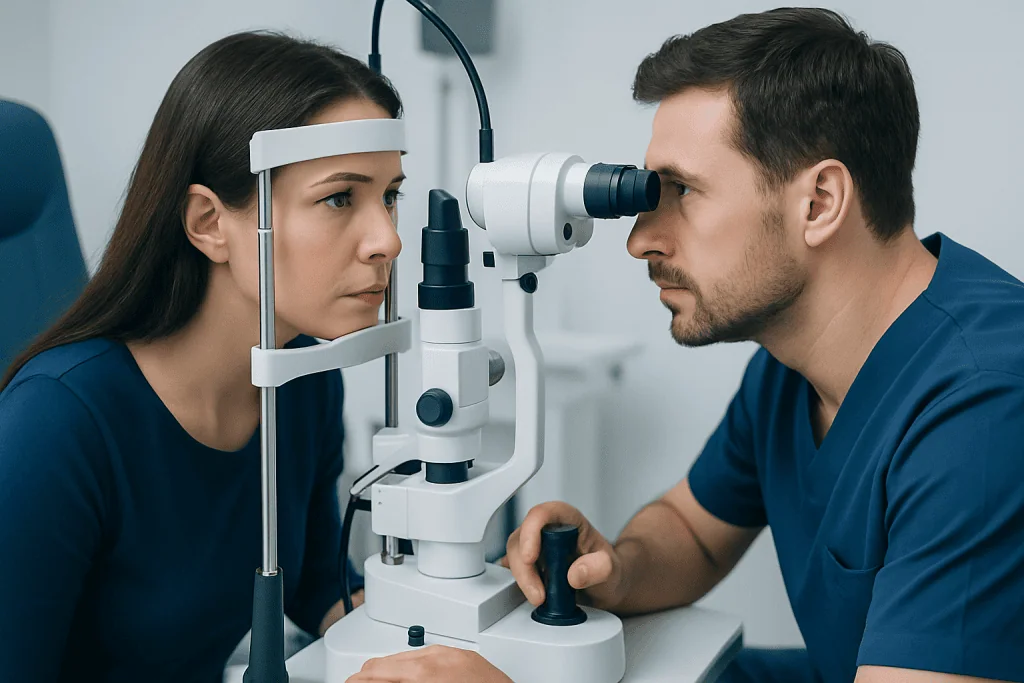
The most common symptom of ophthalmoplegia is difficulty moving the eye normally. A person may notice that one eye does not turn fully upward, downward, inward, or outward. This can disrupt the normal alignment of the eyes and make vision uncomfortable, especially when reading, driving, or changing gaze quickly.
Double vision is another frequent symptom because the eyes are no longer working together in the same direction. Some people try to compensate by turning or tilting the head to reduce diplopia. Others may experience blurred vision, trouble focusing, a sense that the eyes are “stuck,” or dizziness related to visual mismatch.
Depending on the cause, additional features may occur. These can include:
- Drooping of one or both eyelids
- Pain around the eye or headache
- Pupil changes, such as one pupil appearing larger
- Fatigue-related worsening of symptoms during the day
- Weakness in the face, limbs, or swallowing muscles
- Balance or coordination problems
The overall impact varies. In some cases, symptoms are mild and temporary. In others, they may interfere with reading, screen use, walking in busy environments, or tasks that depend on depth perception and stable vision.
Why ophthalmoplegia happens: causes and risk factors

Ophthalmoplegia can develop when the eye muscles, the nerves that supply them, or the brain centers that control eye movement are affected. Common neurological causes include cranial nerve palsies, brainstem disorders, multiple sclerosis, migraine-related syndromes, and stroke. In older adults, reduced blood flow to a nerve related to diabetes or high blood pressure is a well-recognized cause of sudden double vision and limited eye movement.
Muscle and neuromuscular junction disorders can also lead to ophthalmoplegia. Examples include myasthenia gravis, mitochondrial diseases such as chronic progressive external ophthalmoplegia, and inflammatory muscle disease. Endocrine and orbital disorders, especially thyroid eye disease, may restrict eye movement because the tissues around the eye become inflamed or enlarged.
Less common but important causes include infection, trauma, aneurysm, tumors, autoimmune inflammation, and certain inherited conditions. Sometimes the pattern of symptoms points strongly to a specific diagnosis; for instance, painful ophthalmoplegia may require urgent evaluation to rule out vascular or inflammatory causes, while fluctuating symptoms may suggest myasthenia gravis.
Risk factors depend on the cause, but may include diabetes, hypertension, smoking, thyroid disease, autoimmune disorders, recent infection, head injury, and older age. A careful review of general health, medications, and associated neurological symptoms helps guide the next steps.
How doctors diagnose ophthalmoplegia
Diagnosis begins with a detailed history and physical examination. The clinician usually asks when the symptoms began, whether they came on suddenly or gradually, whether they are constant or fluctuate, and whether there is pain, eyelid drooping, headache, or weakness elsewhere. These details can narrow the range of likely causes before testing begins.
An eye and neurological examination is central to the assessment. Doctors check eye alignment, the range of eye movements, pupil reactions, eyelid position, visual acuity, and whether the double vision changes in different gaze directions. This examination helps determine which muscles or nerves may be involved and whether the pattern suggests a local eye problem, a cranial nerve palsy, or a central nervous system cause.
Further tests depend on the clinical picture. These may include blood tests for diabetes, thyroid disease, inflammation, infection, or autoimmune disorders; imaging such as CT or MRI to examine the brain, nerves, and eye sockets; and specialized tests when myasthenia gravis or mitochondrial disease is suspected. If a structural or neurological cause is possible, doctors may arrange MRI scanning or other imaging promptly.
Because ophthalmoplegia can reflect conditions involving both the eyes and the nervous system, evaluation may involve specialists in ophthalmology, neuro-ophthalmology, neurology, endocrinology, or internal medicine. The aim is not only to confirm the eye movement problem but also to identify and treat its root cause.
Treatment options and recovery
There is no single treatment for ophthalmoplegia because management depends on what is causing it. If the problem is related to diabetes or high blood pressure affecting a cranial nerve, treatment focuses on controlling vascular risk factors and monitoring recovery. If it is caused by inflammation, infection, autoimmune disease, thyroid eye disease, or neuromuscular disease, treatment is directed at that underlying disorder.
Supportive treatment can improve comfort and day-to-day function while the main condition is being treated. Options may include temporary eye patching, prism lenses for double vision, lubricating drops if blinking is incomplete, and practical advice about reading, screen use, and driving safety. When symptoms are linked to orbital compression, some patients may need orbital decompression surgery as part of specialist care.
Some causes improve over weeks to months, while others need long-term management. Surgery on the eye muscles may be considered if misalignment remains stable and continues to cause disabling diplopia after adequate observation and treatment of the underlying disease. In selected situations, care may also include treatment of a broader neurological condition, such as stroke rehabilitation after a vascular event.
Follow-up is important because eye movement, alignment, and symptoms can change over time. Regular review allows the care team to adjust treatment, monitor recovery, and identify any new signs that could point to a different diagnosis.
Self-care, prevention, and living with symptoms
Self-care cannot replace medical evaluation, but it can help a person cope more safely and comfortably with ophthalmoplegia. Good lighting, larger print, frequent visual breaks, and reducing visual clutter may make reading and screen tasks easier. Some people benefit from covering one eye temporarily if advised by a clinician, especially when double vision is severe.
Prevention focuses mainly on reducing the risk of the underlying causes. Managing diabetes, blood pressure, and cholesterol; not smoking; treating thyroid disease; and keeping regular follow-up for autoimmune or neurological conditions can all be helpful. Prompt treatment of infections, head injuries, and vascular symptoms also matters.
It is wise to be cautious with activities that depend on accurate depth perception and stable gaze. Driving, climbing ladders, using machinery, or walking on uneven ground may be less safe when double vision is present. A doctor or eye specialist can advise whether restrictions are necessary and when they can be lifted.
For patients who need coordinated specialty care, Acibadem International’s multidisciplinary specialists and JCI-accredited hospitals evaluate and treat eye movement disorders for international patients, particularly when neuro-ophthalmology, endocrinology, and imaging expertise are needed together.
When to seek medical care
Ophthalmoplegia should be assessed by a qualified doctor because it can sometimes be the first sign of an important neurological, muscular, or vascular problem. A new inability to move one or both eyes, especially when paired with double vision or eyelid drooping, is a reason to arrange prompt medical evaluation.
Urgent medical care is particularly important if symptoms start suddenly or are accompanied by severe headache, eye pain, unequal pupils, facial droop, trouble speaking, weakness, numbness, confusion, or loss of balance. These features may signal a condition that needs immediate treatment, including nerve compression, aneurysm, or stroke.
Medical review is also important when symptoms gradually worsen, fluctuate through the day, or occur along with weight loss, fever, thyroid symptoms, or generalized muscle weakness. Even when symptoms seem mild, an accurate diagnosis helps prevent complications and guides the safest treatment plan.
Frequently asked questions
Is ophthalmoplegia the same as double vision?
No. Ophthalmoplegia refers to weakness or paralysis of the eye muscles, while double vision is a symptom that may result from it. Some people with ophthalmoplegia mainly notice limited eye movement, while others are most bothered by diplopia.
Can ophthalmoplegia go away on its own?
Sometimes it can improve, especially when caused by a temporary cranial nerve palsy or a treatable inflammatory condition. Recovery depends on the underlying cause, how severe the damage is, and whether treatment starts promptly. A doctor should still evaluate the condition to make sure nothing serious is missed.
What doctor treats ophthalmoplegia?
Evaluation often involves an ophthalmologist, and in many cases a neuro-ophthalmologist or neurologist is also involved. Depending on the cause, care may additionally include endocrinology, internal medicine, or rehabilitation specialists.
Is ophthalmoplegia always a sign of a brain problem?
No. It can be caused by problems in the eye muscles, the nerves to the eye muscles, the tissues around the eye, or the brain pathways that coordinate movement. That is why a careful examination and, when needed, imaging or blood tests are important.
Can diabetes cause ophthalmoplegia?
Yes. Diabetes can affect the small blood vessels that supply the cranial nerves controlling eye movement, which may lead to sudden double vision and limited gaze. Good blood sugar control and medical follow-up are important in these cases.
When is ophthalmoplegia an emergency?
It should be treated urgently if it begins suddenly or comes with severe headache, eye pain, a large or abnormal pupil, weakness, trouble speaking, confusion, or balance problems. These symptoms can point to conditions that need immediate medical care.
This article is for general information only and is not a substitute for professional medical advice. Please consult a qualified doctor about your individual situation.
Explore treatments in Turkey — costs, top hospitals & a free quote
JCI-accredited · board-certified surgeons · reply within 24h
Add us as a Preferred Source to see more of our trusted health content across Google Search, AI Overviews and Discover.
Check your numbers in seconds
BMI, calories, due date, blood pressure and 30+ more clinical calculators — free, instant, doctor-reviewed ranges.

More from the Health Library

Opill: What Patients Need to Know

Otc Constipation Drugs: What Patients Need to Know

Cream and Sugar: A Complete Medical Overview

Acid reflux non prescription medication: Symptoms, Causes, and Treatment — Complete Patient Guide

Miracle Poison Ivy Cure: A Complete Medical Overview