Optic Neuritis: Eye Pain, Vision Loss, and When MS Testing Is Recommended

Optic neuritis commonly causes eye pain, blurred vision, dim vision, or reduced color vision, often in one eye. It may happen on its own, but it can also be associated with multiple sclerosis and other inflammatory disorders.
Key Takeaways
- Optic neuritis commonly causes eye pain, blurred vision, dim vision, or reduced color vision, often in one eye.
- It may happen on its own, but it can also be associated with multiple sclerosis and other inflammatory disorders.
- Doctors usually diagnose optic neuritis with an eye examination and may recommend MRI or blood tests depending on the situation.
- Many people improve over weeks to months, although visual recovery can vary.
- Prompt medical evaluation is important whenever there is sudden vision loss, severe eye pain, or new neurological symptoms.
Optic neuritis is inflammation of the optic nerve, the structure that carries visual information from the eye to the brain. It often causes pain with eye movement and a sudden change in vision, and in some people it can be linked with multiple sclerosis or other immune-related conditions.
Overview
Optic neuritis is inflammation of the optic nerve. This nerve carries signals from the retina at the back of the eye to the brain, allowing a person to see clearly. When the nerve becomes inflamed, vision may become blurred, dim, or patchy, and eye movement can become painful.
The condition most often affects one eye at a time, although both eyes can be involved in some cases. Symptoms may develop over hours to a few days. Many people notice that colors, especially red, appear less bright than usual, and some describe a dark or blurry area in the center of vision.
Optic neuritis is important not only because it affects sight, but also because it can sometimes be the first sign of an underlying neurological or immune-related disorder. One of the best-known associations is multiple sclerosis, but optic neuritis may also occur with infections, other inflammatory conditions, or for no clearly identified reason.
Symptoms of Optic Neuritis
The symptoms of optic neuritis can vary from person to person. In many cases, the first complaint is pain around or behind the eye, especially when looking up, down, or to the side. Vision changes often follow soon after and may include blurred vision, reduced sharpness, or a dimming of sight.
Common symptoms include:
- Pain with eye movement
- Sudden or subacute vision loss in one eye
- Blurred or cloudy vision
- Reduced color vision or colors looking faded
- A blind spot or missing area in the field of vision
- Reduced contrast sensitivity, making objects look washed out
- Flashing lights or visual discomfort in some cases
Some people notice that symptoms become temporarily worse with exercise, overheating, fever, or a hot shower. This does not necessarily mean the condition is worsening permanently, but it should still be mentioned to a doctor. If vision loss is severe, if both eyes are affected, or if there are unusual features such as no pain at all or severe swelling, doctors may look more carefully for causes other than typical optic neuritis.
Causes and Risk Factors

Optic neuritis happens when the optic nerve becomes inflamed, but the reason for that inflammation is not always obvious. In many patients, the immune system is believed to play a role. The inflammation can damage the protective covering around the nerve fibers, called myelin, which interferes with how visual signals travel to the brain.
One well-known cause is demyelinating disease, especially multiple sclerosis. Optic neuritis may also be linked to related inflammatory conditions such as neuromyelitis optica spectrum disorder and MOG antibody-associated disease. In other cases, it may follow a viral illness, occur with autoimmune diseases, or rarely be related to infections or medication effects.
Risk factors are not the same as definite causes, but certain patterns are recognized. These include younger adulthood, female sex in typical cases, a personal history of autoimmune disease, and MRI findings that suggest a higher likelihood of MS. A specialist may also consider other explanations for optic nerve problems, such as glaucoma, retinal disease, poor blood flow to the optic nerve, or compression from another condition, especially when the presentation is not typical.
How Doctors Diagnose It
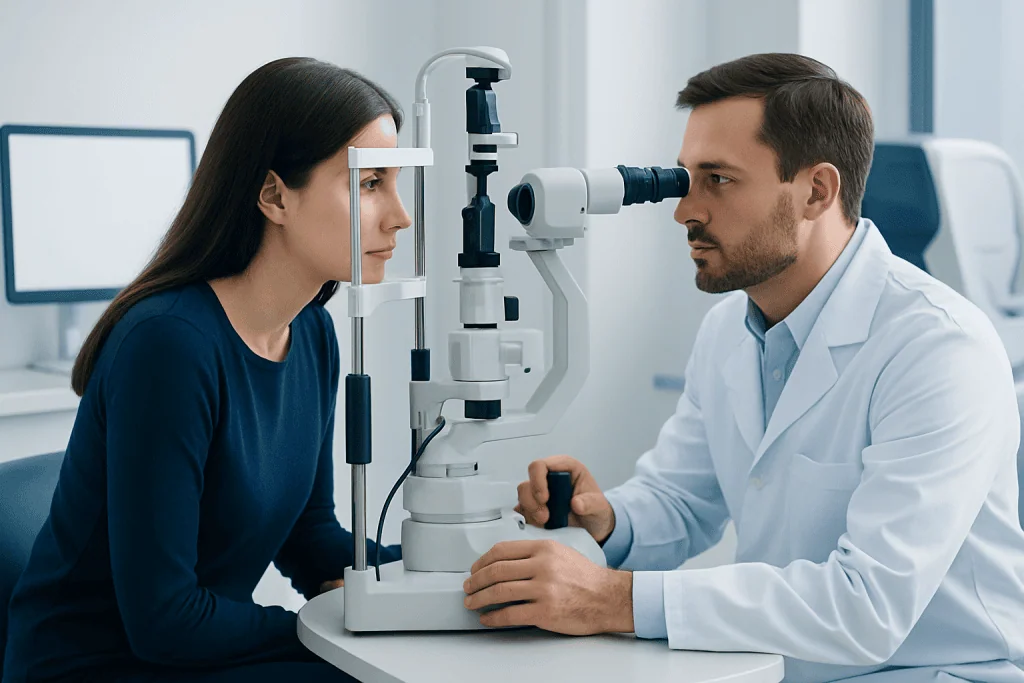
Diagnosis begins with a careful history and a full eye examination. The doctor asks when the symptoms started, whether there is pain with eye movement, and whether there are any other neurological symptoms such as numbness, weakness, balance problems, or prior episodes of visual loss. During the examination, visual acuity, color vision, visual fields, and the pupils are checked.
One important clue is a relative afferent pupillary defect, which can suggest that one optic nerve is not conducting signals normally. The optic disc at the back of the eye may look swollen in some people, but in many cases it appears normal because the inflamed part of the nerve lies behind the eyeball. Optical coherence tomography and visual field testing may be used to assess damage and follow recovery over time.
Imaging is often a key part of evaluation. MRI of the brain and orbits can help confirm optic nerve inflammation and can also look for brain lesions that may suggest a higher risk of multiple sclerosis. Depending on the pattern of symptoms, doctors may recommend blood tests, and sometimes additional neurological assessment, to check for immune-mediated or infectious causes. If the presentation is unusual, a patient may benefit from neurology evaluation together with specialist eye care assessment.
When MS Testing Is Recommended
MS testing is not automatically the same for every person with optic neuritis. It is usually considered when the pattern fits typical demyelinating optic neuritis, especially in younger adults, or when there are neurological symptoms beyond vision changes. The goal is to understand whether optic neuritis is an isolated event or part of a broader condition affecting the central nervous system.
MRI is often the most informative first step because it can show areas of inflammation or demyelination in the brain. If lesions typical of multiple sclerosis are present, the likelihood of future MS-related events may be higher. In some situations, doctors may also recommend blood tests to look for antibodies linked with neuromyelitis optica spectrum disorder or MOG antibody-associated disease, since these conditions can resemble optic neuritis but may need different follow-up and treatment strategies.
Additional testing, such as spinal fluid analysis, is sometimes recommended when the diagnosis remains unclear or when the clinical picture is complex. Not everyone with optic neuritis will go on to develop multiple sclerosis, and an abnormal MRI does not by itself predict exactly how a person’s health will unfold. Clear discussion with a neurologist or neuro-ophthalmologist helps patients understand what the test results mean and what monitoring may be sensible over time.
Treatment Options and Recovery
Treatment depends on the severity of symptoms, the underlying cause, and the overall clinical picture. In typical cases, vision often improves over time even without specific treatment. However, corticosteroids may be used in selected patients to reduce inflammation and speed visual recovery, especially when the vision loss is significant or when both eyes are affected.
When optic neuritis is related to an underlying condition, treatment may also focus on that cause. For example, a person with multiple sclerosis, neuromyelitis optica spectrum disorder, or another autoimmune disorder may need additional long-term care beyond the initial eye episode. If an infection or another specific trigger is identified, management is adjusted accordingly.
Recovery can take weeks to months. Many people regain much of their vision, but some may continue to notice reduced contrast, faded colors, or mild blurring. Follow-up visits are important so the doctor can assess healing, monitor for recurrence, and watch for signs that suggest a broader neurological disease. Near the end of the care pathway, patients seeking international evaluation may also choose centers such as Acibadem International, where multidisciplinary specialists in JCI-accredited hospitals assess and treat optic neuritis and related neurological conditions.
Self-Care, Monitoring, and When to See a Doctor
There is no home remedy that can reliably treat optic neuritis, so professional assessment is important. Still, practical self-care can support recovery. Resting the eyes when needed, avoiding overheating if symptoms temporarily worsen with heat, and keeping follow-up appointments can all be helpful. Patients should also tell their doctor about any new symptoms, even if they seem unrelated to the eye.
It can be useful to monitor changes such as worsening blur, dimming, reduced color vision, or increasing blind spots. Writing down when symptoms started and whether they are improving or progressing may help during follow-up. If there is an underlying autoimmune or neurological condition, staying engaged with the recommended care plan is an important part of long-term health.
Medical attention should be sought promptly for sudden vision loss, significant eye pain, severe headache, double vision, weakness, numbness, problems with balance, or symptoms affecting both eyes. Immediate evaluation is also important if vision loss is accompanied by fever, confusion, or signs of infection. Because several eye and neurological conditions can look similar at first, a timely diagnosis offers the best chance for appropriate treatment and reassurance.
Frequently asked questions
Is optic neuritis an emergency?
Optic neuritis deserves prompt medical evaluation because sudden vision loss and eye pain can have several causes. It is not always a life-threatening emergency, but it should not be ignored. A doctor should assess new visual symptoms quickly to confirm the diagnosis and rule out other serious eye or neurological conditions.
Does optic neuritis always mean a person has multiple sclerosis?
No. Optic neuritis can occur on its own and does not automatically mean a person has multiple sclerosis. However, because there is a known link between the two, doctors may recommend MRI and other tests to better understand the risk and guide follow-up.
Can vision return to normal after optic neuritis?
Many people recover much of their vision over several weeks to months. Even so, some may continue to notice subtle changes such as reduced color brightness, lower contrast, or mild blur. Recovery depends partly on the cause and the severity of nerve inflammation.
What does optic neuritis pain feel like?
The pain is often described as aching or discomfort behind the eye, especially when moving the eye. For some people it is mild, while for others it is more noticeable. Pain may begin before the vision changes or occur at the same time.
How is optic neuritis different from other causes of vision loss?
Optic neuritis usually involves inflammation of the optic nerve, so pain with eye movement and reduced color vision are common clues. Other causes of vision loss, such as retinal disease, glaucoma, or problems with blood flow, may have different patterns. This is why a careful eye examination and, in many cases, imaging are important.
Will a person need long-term follow-up after optic neuritis?
Often, yes. Follow-up helps the doctor monitor visual recovery and determine whether there are signs of recurrence or an underlying condition such as multiple sclerosis. The exact schedule depends on the person's symptoms, examination findings, and test results.
References
- National Eye Institute
- American Academy of Ophthalmology
- National Institute of Neurological Disorders and Stroke
- Mayo Clinic
- Multiple Sclerosis International Federation
This article is for general information only and is not a substitute for professional medical advice. Please consult a qualified doctor about your individual situation.
Explore treatments in Turkey — costs, top hospitals & a free quote
JCI-accredited · board-certified surgeons · reply within 24h
Add us as a Preferred Source to see more of our trusted health content across Google Search, AI Overviews and Discover.