

Orthopedic Surgery Risks: Common Complications and How They Are Managed

Most orthopedic surgery risks are uncommon and can often be reduced with careful planning and follow-up. Infection, blood clots, bleeding, stiffness, nerve injury, and delayed healing are among the better-known complications.
Key Takeaways
- Most orthopedic surgery risks are uncommon and can often be reduced with careful planning and follow-up.
- Infection, blood clots, bleeding, stiffness, nerve injury, and delayed healing are among the better-known complications.
- A patient’s age, general health, smoking status, diabetes, and type of procedure can affect risk.
- Early recognition of warning signs after surgery allows prompt treatment and often improves outcomes.
- Following rehabilitation, wound-care, and medication instructions is an important part of recovery.
Orthopedic surgery is commonly performed to relieve pain, improve movement, or repair injury, and most procedures are completed safely. Still, every operation carries some risk, so understanding possible complications and how they are managed can help patients prepare and recover with confidence.
Overview
Orthopedic surgery includes procedures performed on bones, joints, ligaments, tendons, muscles, and the spine. These operations may be recommended to treat fractures, arthritis, sports injuries, deformities, or long-term wear and tear. Examples include joint replacement, fracture fixation, arthroscopy, tendon repair, and spinal procedures.
Like all operations, orthopedic procedures have potential risks as well as benefits. For many people, surgery can reduce pain, improve function, and support a return to daily activities. However, it is important to understand that complications can happen even when the operation is carefully planned and performed.
Complications range from mild and temporary problems, such as swelling or nausea after anesthesia, to more significant issues, such as infection, blood clots, or delayed bone healing. Not every patient faces the same level of risk. A person’s overall health, the type of surgery, and how recovery is managed all influence the chances of complications.
Good surgical care focuses not only on performing the procedure itself, but also on preventing, identifying, and managing risks before, during, and after surgery. This is why preoperative assessment, careful surgical technique, pain control, early mobilization, and rehabilitation are all important parts of orthopedic treatment.
Common Complications After Orthopedic Surgery
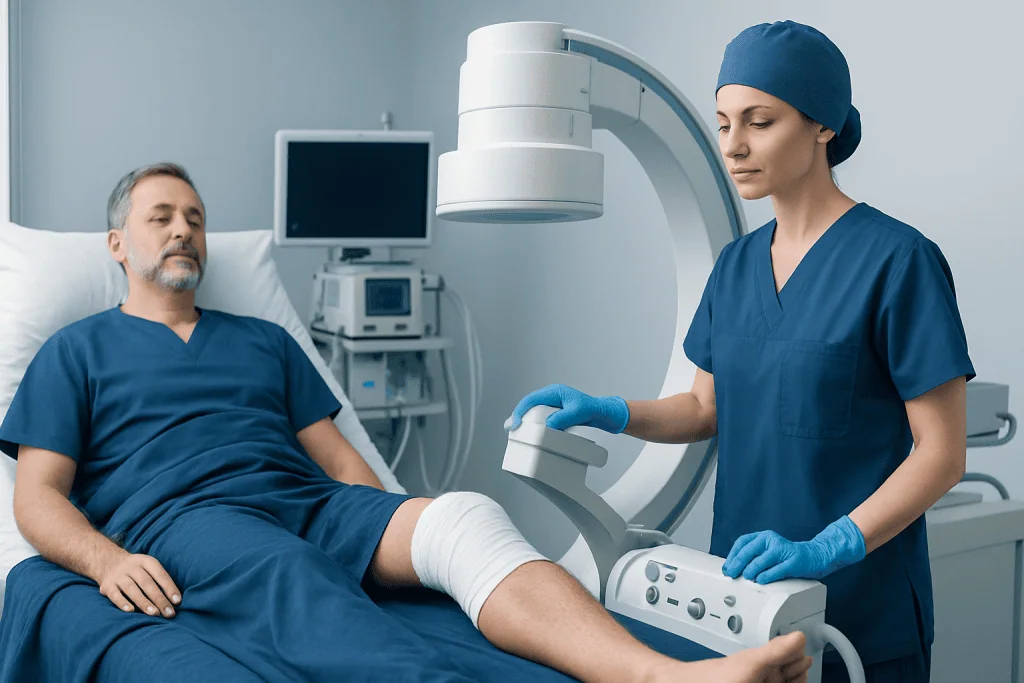
Some complications are general surgical risks, while others are more specific to bone and joint procedures. A doctor explains which risks are most relevant based on the planned operation. In many cases, the likelihood of a serious complication is low, but patients should still know what to watch for.
Infection is one of the most closely monitored risks. It can affect the skin incision or, less commonly, deeper tissues around a joint, implant, or bone. Signs may include increasing redness, warmth, swelling, drainage, fever, or worsening pain after initial improvement. Superficial infections may respond to antibiotics and wound care, while deeper infections may require further procedures.
Blood clots, especially deep vein thrombosis in the leg, can develop after surgery because of reduced mobility. In rare situations, a clot can travel to the lungs and cause a pulmonary embolism, which needs urgent treatment. Preventive measures may include early walking, leg exercises, compression devices, and blood-thinning medication when appropriate.
Other possible complications include:
- Bleeding or blood collection under the skin
- Stiffness or reduced range of motion
- Nerve or blood vessel injury
- Delayed wound healing
- Reaction to anesthesia or medications
- Implant loosening, dislocation, or mechanical problems in some procedures
- Delayed union or nonunion after fracture or bone surgery
Causes and Risk Factors
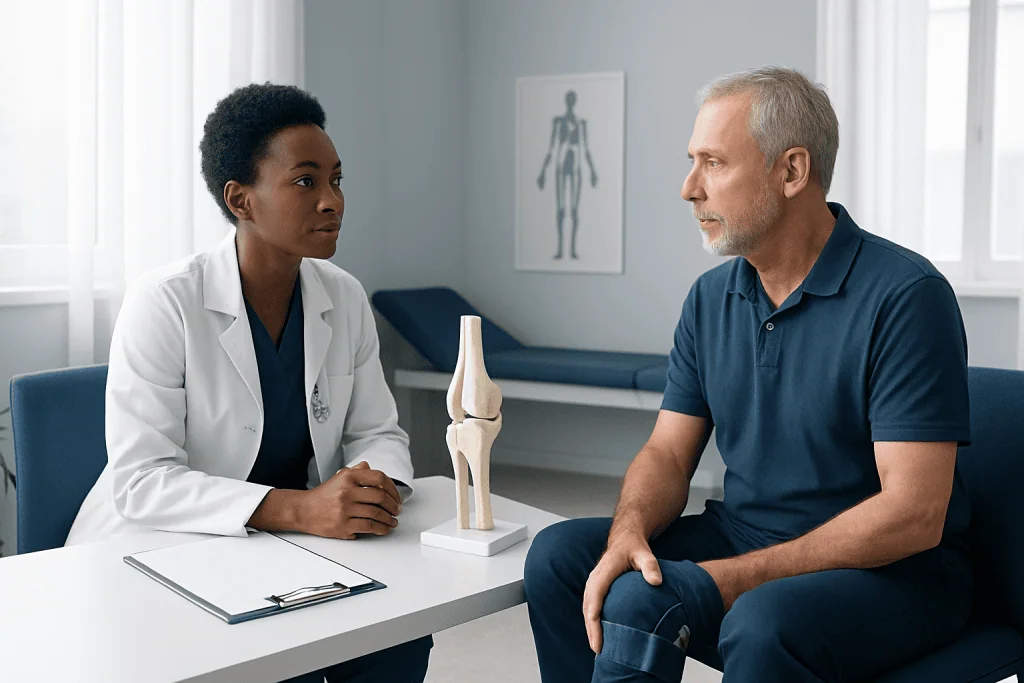
Orthopedic surgery risks depend on a combination of procedure-related and patient-related factors. Larger or more complex operations often carry greater risk than smaller procedures. For example, major joint replacement or trauma surgery may involve longer operating times, greater blood loss, or a longer period of limited mobility during recovery.
Personal health also matters. Conditions such as diabetes, obesity, heart disease, kidney disease, poor circulation, immune suppression, or osteoporosis can affect healing and increase the risk of infection or complications. Smoking is especially important because it can reduce blood flow, slow wound healing, and interfere with bone repair.
Age alone does not determine whether surgery is safe, but older adults may have more medical conditions that need to be considered. Previous surgeries, prior joint infection, use of certain medications such as steroids or blood thinners, and poor nutritional status can also influence outcomes. In some cases, the underlying orthopedic condition itself may affect risk, such as severe arthritis or a complex fracture.
Risk assessment before surgery helps identify modifiable factors. A care team may recommend improving blood sugar control, stopping smoking, treating skin or dental infections, reviewing medications, or building strength before an operation. These steps do not remove all risk, but they can make surgery safer and recovery smoother.
How Complications Are Diagnosed
Diagnosis begins with close observation of symptoms and regular follow-up after surgery. Doctors assess pain levels, wound appearance, swelling, movement, and overall recovery. A change in the expected recovery pattern, such as worsening pain after an initial period of improvement, may be a sign that something needs attention.
Physical examination is often supported by tests. Blood tests may help identify infection, inflammation, anemia, or clotting problems. Imaging such as X-rays can show implant position, bone alignment, or healing progress. Ultrasound may be used if a blood clot is suspected, while advanced imaging such as CT or MRI may be considered in selected cases.
If infection is a concern, a doctor may take a wound sample or, in some situations, fluid from a joint for laboratory analysis. If nerve symptoms such as numbness, weakness, or tingling persist, additional neurological assessment may be needed. The goal is to distinguish normal postoperative discomfort from a true complication that requires treatment.
Early diagnosis matters. Many complications are easier to manage when identified promptly, which is why patients are encouraged to report concerns rather than waiting for a routine appointment. Clear communication with the surgical team is an important part of safe recovery.
How Orthopedic Surgery Risks Are Managed
Management depends on the specific complication, its severity, and the type of surgery performed. Mild swelling, bruising, and short-term pain are usually managed with rest, elevation, cold therapy when advised, and prescribed pain relief. Physical therapy often plays an important role in restoring strength and mobility while reducing stiffness.
Infections may be treated with antibiotics, wound care, and close monitoring. If an infection is deep or involves an implant, additional surgery may be needed to wash out the area, remove infected tissue, or revise the hardware. Blood clots are typically treated with anticoagulant medication and follow-up monitoring, while preventive steps are often used routinely after major procedures.
When bones heal slowly, management may include modifying activity, improving nutrition, avoiding nicotine, and monitoring healing with repeat imaging. In selected cases, further procedures may be recommended. Mechanical complications such as loosening, instability, or dislocation after joint replacement may require bracing, reduction, revision surgery, or targeted rehabilitation depending on the problem.
Patients undergoing procedures such as knee replacement, hip replacement, or arthroscopic surgery are usually given detailed recovery instructions to lower risk. Near the end of the treatment journey, some patients may also benefit from structured rehabilitation support. Acibadem International’s multidisciplinary specialists in JCI-accredited hospitals diagnose and treat orthopedic conditions for international patients, with individualized plans based on the procedure and recovery needs.
Prevention and Self-care Before and After Surgery
Reducing orthopedic surgery risks starts before the operation. Patients are often advised to attend preoperative appointments, share a full medication list, and follow instructions about fasting, skin preparation, and temporary changes to medicines. Managing chronic conditions well before surgery can support safer healing.
Healthy habits can make a real difference. Stopping smoking, maintaining balanced nutrition, staying as active as possible within safe limits, and discussing alcohol use with the doctor may all help recovery. Some patients may be encouraged to do strengthening exercises before surgery, sometimes called prehabilitation, to prepare the body for rehabilitation afterward.
After surgery, wound care and activity guidance should be followed closely. This may include keeping the incision clean and dry, taking medicines exactly as directed, doing prescribed exercises, and avoiding movements that place too much stress on the operated area. Early movement, when recommended, can improve circulation and reduce the risk of stiffness and blood clots.
Self-care also includes knowing what is normal and what is not. Mild pain, swelling, and fatigue are common early on, but symptoms such as chest pain, shortness of breath, fever, heavy drainage, calf swelling, or sudden inability to move the limb need medical review. Recovery is a gradual process, and realistic expectations can help patients stay engaged and confident.
When to See a Doctor
Patients should contact their doctor if they have symptoms that seem unusual, severe, or progressively worse after orthopedic surgery. Warning signs include increasing redness around the incision, pus or bad-smelling drainage, fever, chills, or pain that becomes stronger instead of gradually improving. These may suggest infection or another complication that needs assessment.
Urgent medical attention is especially important for chest pain, sudden shortness of breath, fainting, or swelling and pain in one calf, as these can be signs of a blood clot or pulmonary embolism. New numbness, weakness, or changes in foot or hand color should also be reviewed quickly because they may point to nerve or circulation problems.
It is also sensible to seek advice if range of motion is not improving, the wound opens, medications are causing troublesome side effects, or a cast, brace, or dressing is causing pressure or skin problems. Asking early is better than waiting, because small concerns can sometimes be managed before they become larger ones.
Follow-up appointments are an important part of treatment, even when recovery seems to be going well. These visits allow the care team to check healing, adjust rehabilitation, review imaging when needed, and answer questions about return to work, sport, or daily activities.
Frequently asked questions
Are orthopedic surgery risks common?
Most orthopedic procedures are completed without serious problems, especially when patients are carefully assessed and follow recovery advice. Even so, every operation has some risk, and the exact level depends on the procedure and the patient’s overall health.
What is the most common complication after orthopedic surgery?
Common concerns include pain, swelling, stiffness, infection, and blood clots. The most relevant complication varies by the type of surgery, such as joint replacement, fracture repair, or arthroscopy.
How can patients lower the risk of complications?
Patients can help reduce risk by stopping smoking, controlling chronic conditions, following medication instructions, and attending all preoperative and follow-up appointments. After surgery, early movement, wound care, and prescribed exercises are especially important.
How long should swelling and pain last after surgery?
Mild to moderate swelling and discomfort are common in the early recovery period and usually improve gradually over days to weeks, depending on the procedure. If pain or swelling suddenly worsens, or is accompanied by fever, redness, or calf pain, medical advice is needed.
Can an orthopedic implant fail or loosen?
Yes, although many implants function well for years. Loosening, wear, dislocation, or mechanical problems can occur in some cases, and a doctor may evaluate these with an examination and imaging if symptoms develop.
When is a blood clot suspected after orthopedic surgery?
A blood clot may be suspected if one leg becomes newly swollen, painful, warm, or tender, especially in the calf. Sudden chest pain or shortness of breath can be more urgent warning signs and should be evaluated immediately.
References
- American Academy of Orthopaedic Surgeons
- National Institute for Health and Care Excellence
- Centers for Disease Control and Prevention
- World Health Organization
- MedlinePlus
This article is for general information only and is not a substitute for professional medical advice. Please consult a qualified doctor about your individual situation.
Joint and spine care in Turkey — expert assessment & treatment
JCI-accredited · board-certified surgeons · reply within 24h
Add us as a Preferred Source to see more of our trusted health content across Google Search, AI Overviews and Discover.

Orthopedics & Spine
Care for bones, joints and the musculoskeletal system, including joint replacement, sports injuries and trauma.
125 specialists in this unitMore from the Health Library



Related Specialists

Dr. Zeki Yenidünya
Internal Medicine
Mehmet Akif Aracı
Physical Medicine & Rehabilitation
Assoc. Prof. Dr. Özden Sıla Ulus Buturak
Breast Clinic Clinical Service
Dr. Yalda Kargar
Inpatient Clinic Physicians Clinical Service