Osteoarthritis Knee Joint Treatment: How It Works, Results and What to Expect
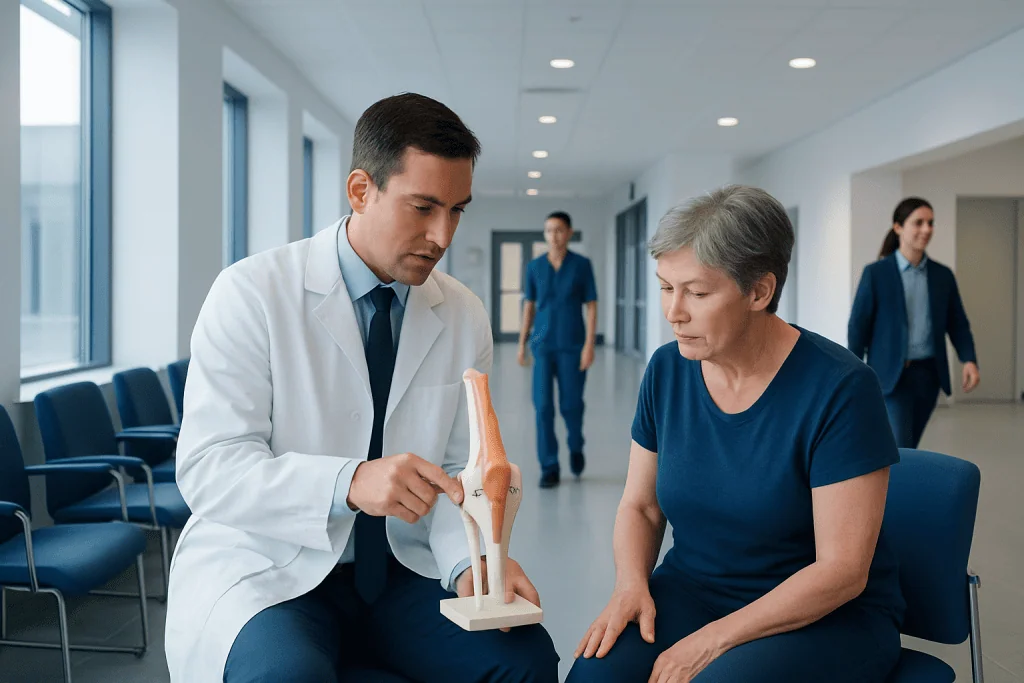
Knee osteoarthritis is a long-term joint condition, but symptoms can often be managed effectively. Exercise, muscle strengthening and weight management are core treatments for many people.
Key Takeaways
- Knee osteoarthritis is a long-term joint condition, but symptoms can often be managed effectively.
- Exercise, muscle strengthening and weight management are core treatments for many people.
- Medicines and injections may provide symptom relief for selected patients but do not restore lost cartilage.
- Knee replacement can offer substantial pain relief and functional improvement when advanced osteoarthritis limits daily life.
- Treatment decisions should be based on symptoms and function, not X-ray findings alone.
Osteoarthritis knee joint treatment is tailored to the severity of pain, loss of function, health history and personal goals. Most people begin with exercise-based rehabilitation, activity changes and symptom relief; surgery may be considered when symptoms remain severe despite appropriate non-surgical care.
Osteoarthritis knee joint treatment: how it works
Osteoarthritis knee joint treatment aims to reduce pain, improve movement and help a person stay independent in daily activities. It does not usually reverse established cartilage loss, but a structured plan can often make symptoms more manageable and may delay or avoid surgery for some people. The right approach depends on pain severity, walking ability, work and activity demands, overall health, and the person’s treatment preferences.
Knee osteoarthritis develops when the tissues within and around the joint change over time. Cartilage may thin, bone can remodel, and inflammation or irritation of the joint lining may contribute to pain and stiffness. Symptoms often fluctuate, so treatment is adjusted over time rather than following a single fixed pathway.
Care commonly combines education, supervised or home-based exercise, weight management where relevant, and appropriate pain-relieving measures. If symptoms continue to substantially affect sleep, walking, work or quality of life despite these steps, an orthopedic assessment can clarify whether joint-preserving procedures or knee replacement may be appropriate.
Symptoms, progression and assessment
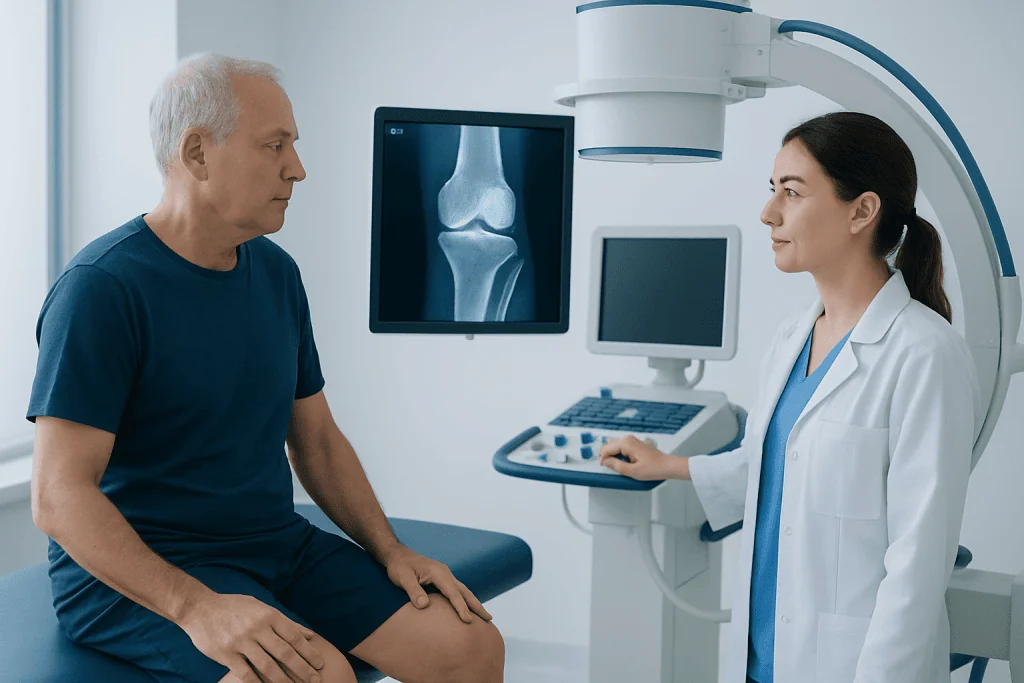
Common symptoms include pain during or after activity, stiffness after rest, reduced bending or straightening of the knee, swelling, clicking or grinding sensations, and difficulty with stairs or longer walks. Some people have mild X-ray changes but considerable pain, while others have more advanced imaging changes with fewer symptoms. For this reason, treatment is guided by the whole clinical picture.
How quickly does knee osteoarthritis progress? Progression varies widely. Some people have symptoms that change little for years, whereas others gradually develop more frequent pain and reduced function. Age, previous knee injury, excess body weight, muscle weakness, joint alignment, repeated high-impact loading and certain occupations may influence progression, but no single factor can predict an individual course with certainty.
A clinician usually asks about the pattern of pain, previous injuries, daily limitations, medical conditions and medicines. Examination assesses gait, swelling, range of motion, tenderness, stability, leg alignment and hip or back problems that may affect the knee. Weight-bearing X-rays are often used to assess joint-space narrowing and bone changes; MRI is generally reserved for unclear cases or suspected additional soft-tissue injury.
Non-surgical treatment options and candidacy

Non-surgical care is appropriate for most people with knee osteoarthritis, including those with early, moderate or intermittent symptoms. Therapeutic exercise is central: strengthening the thigh and hip muscles can improve support around the knee, while flexibility, balance and aerobic activity help maintain overall function. A physiotherapist can adapt exercises for pain level, fitness and other joint or health conditions.
For people carrying excess weight, gradual weight loss can reduce load through the knee and may improve pain and mobility. Helpful activity choices often include walking at a tolerable level, cycling, swimming, water exercise and low-impact strength training. Supportive footwear, a walking aid, a brace or an orthotic may help selected individuals, particularly when instability or alignment contributes to symptoms.
Medicines may be considered alongside non-drug measures. Topical anti-inflammatory medicines are often an option for localized knee pain, while oral pain medicines or anti-inflammatory medicines may be suitable for some people after review of stomach, kidney, heart, blood pressure and medication-related risks. Injections into the joint, including corticosteroid injections, may give temporary relief for selected patients; the expected benefit and limitations should be discussed with a clinician. Injections are not a cure and are not suitable for everyone.
- Good candidates for conservative treatment are willing and able to participate in a regular movement and strengthening plan.
- People with persistent pain should have contributing factors reviewed, including sleep, mood, activity pacing and other sources of leg pain.
- Urgent treatment is needed for a hot, very swollen knee with fever or for sudden inability to bear weight, as these symptoms may have causes other than osteoarthritis.
What should you not do with osteoarthritis of the knee?
People with knee osteoarthritis do not need to stop all physical activity. In fact, avoiding movement completely can weaken muscles, increase stiffness and reduce confidence in using the joint. The goal is to avoid activities that repeatedly cause sharp pain, significant swelling or symptoms that remain clearly worse into the next day, while staying as active as is safely tolerable.
It is generally sensible to avoid suddenly increasing running, jumping, deep squatting, kneeling, heavy lifting or hill climbing if these reliably aggravate the knee. Long periods in one position may also worsen stiffness, so regular gentle movement breaks can help. However, the safest activity limits are individual and should account for balance, fitness, joint stability and any previous injury.
It is also important not to rely only on passive treatments while delaying rehabilitation. Braces, medicines and injections can have a role, but they work best as part of a broader plan that includes strengthening, activity pacing and review of modifiable risks. A doctor or physiotherapist can help a person distinguish manageable exercise discomfort from pain that signals the need to modify an activity.
When surgery is considered: procedure steps, benefits and risks
What is the most effective treatment for osteoarthritis in the knees? There is no single best treatment for every person. Exercise-based rehabilitation, education and weight management are the most important first-line measures for many people. For advanced osteoarthritis causing substantial pain and disability after appropriate non-surgical treatment, knee replacement is generally the most effective option for achieving longer-term pain relief and improved function.
Knee replacement may be partial, replacing only the damaged compartment, or total, replacing the joint surfaces of the knee. Candidacy is based primarily on persistent symptoms and functional limitation, along with examination and imaging findings. An orthopedic surgeon also considers joint pattern, knee alignment, range of motion, medical fitness for surgery, infection risk, expectations and ability to take part in rehabilitation.
During surgery, the surgeon removes damaged joint surfaces and reshapes the bone ends to fit metal and durable plastic components. The procedure is performed with anesthesia, and the surgical team uses infection-prevention, blood-clot prevention and pain-control measures. Most patients stand and begin guided movement soon after surgery, although the precise pathway differs according to health needs and surgical plan.
Potential benefits include less pain, improved walking tolerance, better sleep and greater ability to complete everyday tasks. Risks include infection, blood clots, bleeding, stiffness, persistent pain, nerve or blood vessel injury, implant wear or loosening, and the possible need for further surgery. These complications are uncommon but important to discuss before making a decision.
Recovery timeline and realistic results
Recovery after knee replacement is gradual and requires active participation in rehabilitation. In the first days, the focus is safe walking, controlling pain and swelling, bending and straightening the knee, and learning how to manage transfers and stairs if needed. Many people use a walker or crutches initially, then reduce support as strength and balance improve.
During the first several weeks, regular physiotherapy and home exercises support range of motion, muscle strength and walking confidence. Swelling, tiredness and discomfort after exercise can be expected, but severe or worsening pain, increasing redness, wound drainage, fever, chest pain or shortness of breath require prompt medical attention. Recovery rates differ, particularly for people with other medical conditions or limited mobility before surgery.
Many people notice meaningful improvement over the first few months, while strength, endurance and confidence can continue to develop for up to a year or longer. A replacement knee is designed to support daily life and many low-impact activities, but it is not identical to a natural knee. Following the rehabilitation plan and maintaining a healthy activity level support the best possible outcome.
Acibadem International’s multidisciplinary orthopedic, rehabilitation and anesthesia teams in JCI-accredited hospitals assess and treat knee osteoarthritis for international patients, with care plans based on individual needs and clinical findings.
Does osteoarthritis in the knee ever get better?
Does osteoarthritis in the knee ever get better? The underlying structural changes of osteoarthritis generally cannot be fully reversed, but symptoms can improve substantially. Pain may settle for long periods with appropriate exercise, gradual conditioning, weight management when appropriate, activity pacing and treatment of flares. Improvement does not necessarily mean the condition has disappeared; it means the knee is functioning more comfortably and reliably.
Flare-ups can occur after unusual activity, minor injury, illness or no clearly identifiable trigger. During a flare, temporarily reducing aggravating activity, using cold or heat according to personal comfort, and returning gradually to a regular exercise program may help. A clinician should review new or persistent symptoms rather than assuming every episode is caused by osteoarthritis.
Long-term self-care also includes adequate sleep, avoiding tobacco, managing conditions such as diabetes or cardiovascular disease, and maintaining muscle strength. These measures support general health and may improve readiness for any future procedure if it becomes necessary.
When to seek medical care
Medical assessment is advisable when knee pain lasts for several weeks, interferes with work, sleep or daily activities, causes repeated swelling, or does not improve with sensible activity modification and simple self-care. A clinician can confirm the likely cause, identify treatable contributors and create an individualized plan.
Prompt medical care is important for a knee that becomes suddenly very swollen, red or hot, particularly with fever or feeling unwell. Urgent evaluation is also needed after a significant injury, if the knee is visibly deformed, if a person cannot bear weight, or if calf swelling, chest pain or shortness of breath occurs.
People considering surgery benefit from discussing expectations, recovery support at home, current medicines and medical conditions early in the process. Shared decision-making helps ensure that the chosen osteoarthritis knee joint treatment matches the person’s symptoms, goals and readiness for rehabilitation.
Frequently asked questions
Can exercise worsen knee osteoarthritis?
Appropriately selected exercise is usually beneficial and is a core part of knee osteoarthritis treatment. Exercise may cause temporary muscle soreness or mild discomfort, especially when starting, but sharp pain, major swelling or prolonged worsening should be reviewed and the program adjusted.
Are knee injections effective for osteoarthritis?
Some injections can provide temporary symptom relief for selected people, particularly during painful flares or when other measures have not been sufficient. Their effects vary, they do not rebuild cartilage, and a clinician should discuss potential benefits, risks and alternatives.
When is knee replacement recommended for osteoarthritis?
Knee replacement may be considered when advanced osteoarthritis causes persistent pain and major limitations in everyday life despite suitable non-surgical treatment. The decision is based on symptoms, examination, imaging, overall health and the person’s goals, rather than age or X-ray findings alone.
Can a knee brace help osteoarthritis pain?
A brace may help some people by improving stability or shifting pressure away from a more affected part of the knee. Benefit varies, so fitting and use should ideally be guided by a healthcare professional.
Is walking good for knee osteoarthritis?
Walking is often a useful low-impact activity when it is paced to the person’s symptoms and fitness. Starting with shorter, manageable walks and increasing gradually is generally more sustainable than doing too much at once.
What is the difference between osteoarthritis and rheumatoid arthritis in the knee?
Osteoarthritis is primarily related to changes in joint tissues over time, often affecting one knee more than the other. Rheumatoid arthritis is an autoimmune inflammatory disease that can affect several joints and may require specialist medical treatment to control inflammation.
References
- American College of Rheumatology
- National Institute for Health and Care Excellence
- Osteoarthritis Research Society International
- American Academy of Orthopaedic Surgeons
- World Health Organization
This article is for general information only and is not a substitute for professional medical advice. Please consult a qualified doctor about your individual situation.
Osteoarthritis in Turkey — costs, top hospitals & a free quote
JCI-accredited · board-certified surgeons · reply within 24h
Add us as a Preferred Source to see more of our trusted health content across Google Search, AI Overviews and Discover.
Check your numbers in seconds
BMI, calories, due date, blood pressure and 30+ more clinical calculators — free, instant, doctor-reviewed ranges.

Physical Medicine & Rehabilitation
Restoring movement and function after injury, surgery or neurological conditions.
150 specialists in this unit