

Oura Ring vs Apple Watch: Key Differences and How Doctors Tell Them Apart

Oura Ring is designed mainly for sleep, recovery, temperature trends, and passive wellness tracking, while Apple Watch combines health features with broader smartwatch and exercise functions. Doctors do not diagnose a condition from wearable data alone; they use symptoms, examination, and medical-grade tests to confirm concerns.
Key Takeaways
- Oura Ring is designed mainly for sleep, recovery, temperature trends, and passive wellness tracking, while Apple Watch combines health features with broader smartwatch and exercise functions.
- Doctors do not diagnose a condition from wearable data alone; they use symptoms, examination, and medical-grade tests to confirm concerns.
- Apple Watch is often more useful for real-time alerts and workout monitoring, while Oura Ring may be more comfortable for overnight trend tracking.
- Unexpected readings such as low oxygen, irregular pulse, or poor sleep scores can have many explanations, including normal variation or sensor error.
- Medical attention is important if wearable data is paired with symptoms such as chest pain, fainting, severe shortness of breath, or persistent palpitations.
Oura Ring and Apple Watch can both provide useful health information, but they are not interchangeable. In clinical practice, doctors distinguish them by what each device measures best, how reliable the readings may be in a given situation, and whether the data points suggest a true medical issue or simply a wearable-device limitation.
At a glance: Oura Ring vs Apple Watch
For most people, the answer to oura ring vs apple watch is simple: Oura Ring is generally better suited to sleep and recovery trends, while Apple Watch is usually better for real-time fitness tracking, notifications, and on-wrist health monitoring. Neither device replaces a medical assessment, but each can provide useful clues about sleep, activity, heart rate, and possible changes worth discussing with a clinician.
Doctors usually compare these devices by asking three practical questions: what was being measured, when the reading happened, and whether symptoms were present. This matters because a night-time temperature trend, an exercise heart-rate spike, or an irregular rhythm alert do not carry the same meaning.
The side-by-side overview below helps clarify the differences patients and clinicians most often discuss:
- Form factor: Oura Ring is worn on a finger; Apple Watch is worn on the wrist.
- Best-known strengths: Oura Ring emphasizes sleep, readiness, recovery, and temperature trends; Apple Watch emphasizes activity, workouts, heart-rate monitoring, and smartwatch functions.
- Continuous use style: Oura Ring is often comfortable overnight; Apple Watch may be preferred during daytime activity and exercise.
- Heart data: Both can track heart rate trends, but readings may vary depending on motion, fit, skin contact, and timing.
- Sleep tracking: Oura Ring is often chosen by users focused on sleep habits; Apple Watch also tracks sleep but is commonly used as part of a broader daily ecosystem.
- Rhythm-related features: Apple Watch is more commonly associated with rhythm alerts and ECG-style consumer features, though follow-up testing is still needed.
- Medical role: Neither device confirms a diagnosis. Wearables can support conversations about conditions such as arrhythmia or suspected sleep apnea, but they do not replace formal evaluation.
How clinicians tell the two devices apart
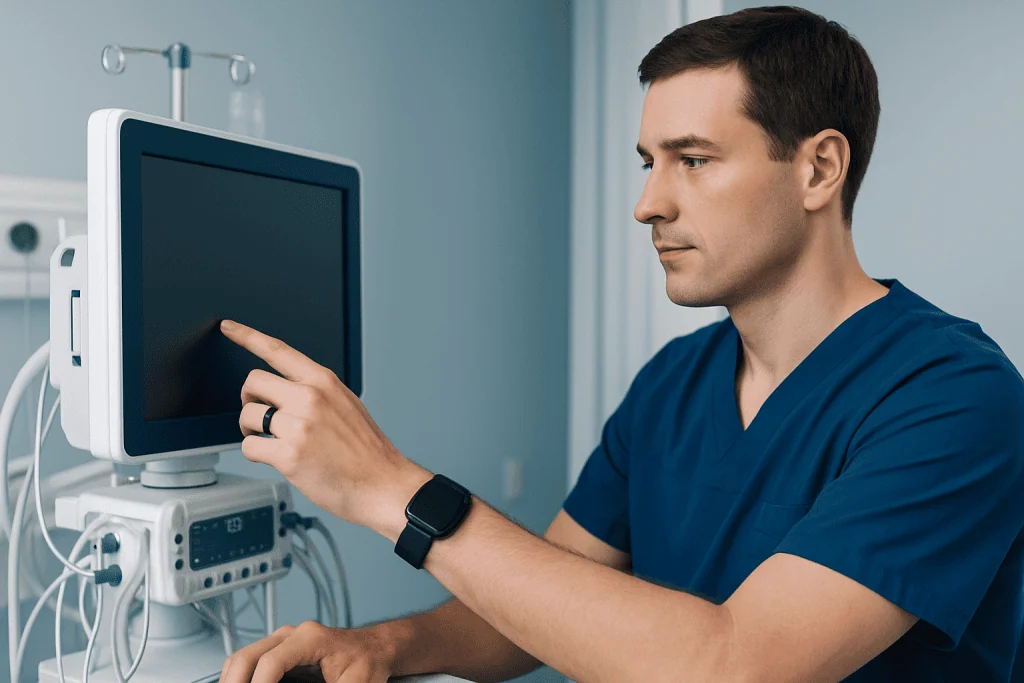
Clinicians do not simply ask which brand a patient owns. They look at the type of signal the device collects and how that signal is generated. A finger-worn ring and a wrist-worn watch may both estimate heart rate and sleep, but the body location, sensor contact, motion artifact, and software algorithms can affect results differently.
In practice, Oura Ring data is often interpreted as trend-based information. A doctor may look at several nights of sleep duration, resting heart rate patterns, or temperature changes rather than focus on a single isolated score. Apple Watch data, by contrast, is often reviewed in relation to a specific event, such as a rapid pulse during exercise, an irregular rhythm notification, or a symptom episode marked by the user.
Doctors also consider context. A low recovery score after travel, alcohol use, stress, or illness can be understandable and not necessarily dangerous. A sudden alert for pulse irregularity paired with dizziness or fainting is more concerning. The same wearable number can mean very different things depending on the patient’s age, medical history, medications, and symptoms.
Most importantly, clinicians distinguish device findings from diagnoses. A wearable may suggest poor sleep, possible rhythm disturbance, or reduced oxygen trends, but confirmation usually requires standard testing such as a medical check-up, ambulatory heart monitoring, laboratory studies, or a formal sleep study.
What each device is best at from a health perspective

Oura Ring is often favored by people who want passive health tracking with minimal distraction. Its strengths usually include overnight wear, sleep staging estimates, temperature trend awareness, and broader recovery-style summaries. For someone trying to understand whether late meals, travel, stress, or irregular sleep timing are affecting rest, this long-term pattern view can be helpful.
Apple Watch is often better suited to active, real-time use. It can be especially useful for workout tracking, daytime movement reminders, heart-rate checks during exercise, and notifications that prompt the wearer to pay attention to a sudden change. For patients who want one device for both communication and health monitoring, this broader functionality is often the main advantage.
From a physician’s point of view, the choice depends on the question being asked. If the concern is daytime palpitations, exertional symptoms, or a rhythm alert, the watch may provide more event-focused information. If the concern is whether sleep quality, recovery, or body temperature patterns are shifting over days or weeks, the ring may offer a more consistent overnight picture.
Neither device should be considered universally superior. Their value depends on the user’s priorities, wear habits, and health context. A device only helps if it is worn consistently, fits properly, and the data is interpreted sensibly rather than as a stand-alone diagnosis.
Common health questions doctors evaluate when patients bring wearable data
One of the most common reasons people show wearable reports to a doctor is concern about heart rhythm. This may involve alerts about pulse irregularity, episodes of racing heartbeat, or unexpectedly low resting heart rate. A clinician will ask whether symptoms such as chest discomfort, fainting, breathlessness, or fatigue occurred at the same time, and may recommend cardiology evaluation if needed.
Another common question involves sleep. A patient may report poor sleep scores, frequent awakenings, snoring, or daytime sleepiness despite spending enough time in bed. Wearables can point toward a problem, but they cannot confirm sleep disorders by themselves. If symptoms suggest sleep-disordered breathing, insomnia, or another condition, a doctor may assess for insomnia or consider referral for a formal sleep evaluation.
Temperature and recovery trends are another area of confusion. A ring may show a temperature increase or reduced readiness score, which can happen with infection, menstrual cycle changes, stress, travel, overtraining, or disrupted sleep. Doctors usually interpret these as non-specific signals that need context rather than proof of illness.
Blood oxygen estimates can also raise concern, especially overnight. Consumer wearables may miss important details or produce readings affected by movement, skin contact, or circulation. If low oxygen trends are paired with loud snoring, morning headaches, or excessive daytime sleepiness, formal assessment becomes more important than repeatedly checking the wearable app.
What to do if the data seems abnormal
If a wearable shows an unexpected result, the first step is to review whether there may be a practical explanation. Poor device fit, low battery, tattoos, cold skin, hand position, movement during sleep, or intense exercise can all affect readings. Repeating the measurement under calmer, more consistent conditions can sometimes clarify whether it was a one-time artifact.
Next, it helps to focus on patterns rather than isolated scores. A single bad night of sleep or one unusual heart-rate reading is often less meaningful than repeated changes over several days or weeks. Keeping a short symptom diary with notes about caffeine, alcohol, stress, illness, medications, exercise, and sleep timing can make the wearable data far more useful in a medical visit.
If there are persistent concerns, a doctor may advise further testing based on the symptom pattern. This may include blood pressure checks, blood tests, ECG, longer-term rhythm monitoring, or evaluation in a sleep clinic. In some cases, electrocardiography or other medical-grade testing is the best way to determine whether the wearable signal reflects a true health issue.
Patients should avoid self-diagnosing from app scores alone. Wearables are best used as supportive tools for awareness and follow-up, not as a substitute for clinical judgment. When the data is discussed alongside symptoms and medical history, it can become much more meaningful.
Limits of wearable devices and why results may differ
Both Oura Ring and Apple Watch rely on consumer technology, not hospital-grade monitoring. Although they may offer valuable trends, they use proprietary algorithms that estimate certain metrics rather than directly measuring them in the same way as specialized medical equipment. This means different devices can produce different sleep stages, recovery scores, or heart-rate summaries for the same person.
Accuracy may also vary with skin tone, device fit, movement, temperature, circulation, and body anatomy. For example, wrist readings during vigorous exercise may be more difficult to interpret because motion can interfere with signal quality. Ring-based data may also be affected if the ring is worn loosely or if finger swelling changes contact.
Another limitation is that consumer wearables can encourage over-monitoring in some users. Repeated checking may increase worry, especially when scores fluctuate for normal reasons. Doctors often reassure patients that day-to-day variation is expected and that health decisions should not be based on a single app-generated number.
For this reason, clinicians tend to treat wearable findings as screening clues. They can support earlier recognition of a possible issue, but they cannot replace a history, physical examination, or properly indicated diagnostic tests. This balanced approach helps patients use technology without being misled by it.
When to seek medical care
Medical care is recommended promptly if wearable data appears abnormal and is accompanied by concerning symptoms. These include chest pain, fainting, severe shortness of breath, new confusion, weakness, bluish lips, or a very rapid or very slow pulse with dizziness. In these situations, symptoms matter more than the device itself.
Non-urgent medical review is also appropriate if the device repeatedly shows irregular pulse alerts, persistent low overnight oxygen trends, marked changes in resting heart rate, worsening sleep disruption, or daytime sleepiness that affects daily life. A clinician can help determine whether this points to a heart rhythm issue, a sleep disorder, medication effect, illness, or a benign pattern.
People with known heart disease, lung disease, sleep apnea, diabetes, pregnancy-related concerns, or significant new symptoms should be especially cautious about dismissing repeated abnormal readings. If uncertainty remains, a qualified healthcare professional can advise whether further tests are needed.
For international patients who need further assessment, Acibadem International’s multidisciplinary specialists and JCI-accredited hospitals diagnose and manage heart, sleep, and general medical concerns using appropriate clinical testing rather than wearable data alone.
Choosing between Oura Ring and Apple Watch
The best choice depends less on brand preference and more on health goals. Someone focused on sleep habits, recovery trends, and comfortable overnight wear may lean toward Oura Ring. Someone who wants workout feedback, on-wrist access, and event-based heart monitoring may prefer Apple Watch.
From a medical perspective, the most useful device is the one a person will wear consistently and discuss realistically with a clinician when needed. Reliable patterns over time are often more informative than occasional spot checks. Consistency, symptom awareness, and medical context are what make wearable information truly valuable.
People do not usually need to choose one because it is medically superior in every category. Instead, they can choose based on whether they are primarily monitoring sleep and recovery, daily activity and exercise, or possible symptom episodes. The goal should be better awareness, not perfect self-diagnosis.
In short, oura ring vs apple watch is not only a technology comparison. It is also a question of how health data is generated, what it can reasonably suggest, and when a doctor should step in to confirm or rule out a genuine medical condition.
Frequently asked questions
Is Oura Ring more accurate than Apple Watch?
Not in every situation. Oura Ring may be especially useful for overnight trends such as sleep and recovery, while Apple Watch may be more useful for daytime activity and event-based heart monitoring. Accuracy depends on fit, wear consistency, movement, and what is being measured.
Can a doctor diagnose a condition from my wearable alone?
No. Doctors use wearable data as supportive information, but they usually need symptoms, medical history, examination, and standard tests to confirm a diagnosis. Wearables can raise a useful question, but they rarely provide the final answer by themselves.
Which device is better for sleep concerns?
Many users choose Oura Ring for sleep-focused tracking because it is designed around overnight wear and trend analysis. Apple Watch can also track sleep, but if a person has loud snoring, witnessed pauses in breathing, or major daytime sleepiness, a medical sleep evaluation is more important than the device choice.
Which device is better for heart rhythm concerns?
Apple Watch is often more relevant when someone wants real-time heart-related alerts or event-based monitoring during the day. Even so, a wearable cannot confirm a rhythm disorder on its own. Persistent palpitations, dizziness, or fainting should be reviewed by a clinician.
What should someone do if the wearable shows low oxygen at night?
They should not panic, because consumer devices can give imperfect readings. If low oxygen trends happen repeatedly or are paired with snoring, morning headaches, or daytime sleepiness, it is sensible to speak with a doctor. Formal testing may be needed to evaluate the cause properly.
Can these devices help detect illness early?
They may sometimes show indirect signs such as changed temperature trends, increased resting heart rate, or poorer sleep. However, these findings are non-specific and can happen for many ordinary reasons, including stress, travel, or lack of rest. They are best used as a prompt to pay attention to symptoms, not as proof of illness.
References
- American Heart Association
- American Academy of Sleep Medicine
- National Heart, Lung, and Blood Institute
- U.S. Food and Drug Administration
- Centers for Disease Control and Prevention
This article is for general information only and is not a substitute for professional medical advice. Please consult a qualified doctor about your individual situation.
Heart care in Turkey — expert evaluation and treatment
JCI-accredited · board-certified surgeons · reply within 24h
Add us as a Preferred Source to see more of our trusted health content across Google Search, AI Overviews and Discover.
Check your numbers in seconds
BMI, calories, due date, blood pressure and 30+ more clinical calculators — free, instant, doctor-reviewed ranges.

More from the Health Library



Related Specialists

Assoc. Prof. Dr. Elif Şenocak Taşçı
Medical Oncology
Dr. Hakki Süha Özçelik
Otorhinolaryngology
Assoc. Prof. Dr. Ahmet Küçükçelebi
Aesthetic Plastic & Reconstructive Surgery
Dr. Elif Gülek
Anesthesiology