Over the Counter Antifungal Creams for Athlete’s Foot: An Evidence-Based Guide for Patients

Most mild cases of athlete's foot improve with nonprescription antifungal creams used for the full recommended course. Treatment works better when feet are kept clean, dry, and protected from reinfection.
Key Takeaways
- Most mild cases of athlete's foot improve with nonprescription antifungal creams used for the full recommended course.
- Treatment works better when feet are kept clean, dry, and protected from reinfection.
- Symptoms may improve before the fungus is fully cleared, so stopping too early can lead to recurrence.
- People with diabetes, poor circulation, severe rash, or repeated infections should seek medical advice.
- Not every scaly or itchy foot rash is athlete's foot, so diagnosis matters if treatment is not helping.
Over the counter antifungal creams for athlete's foot are often an effective first-line treatment for mild to moderate fungal infections of the feet. The best results usually come from choosing an appropriate product, applying it as directed, and combining treatment with careful foot hygiene.
Overview: Do over the counter antifungal creams work?
Yes. Over the counter antifungal creams for athlete’s foot often work well for mild or moderate cases, especially when the rash is between the toes or on the soles of the feet and has not spread deeply or become complicated. These medicines are designed to treat tinea pedis, the fungal infection commonly called athlete’s foot.
Many people improve with self-care because the fungi that cause athlete’s foot usually live in the outer layers of the skin. Creams, gels, sprays, and powders sold without a prescription can reduce itching, burning, peeling, and scaling while clearing the infection itself. The key is regular use for the full recommended time, even if the skin looks better sooner.
This condition is common and usually manageable, but treatment success depends on using the right product in the right way. If a person treats the rash briefly, keeps wearing damp shoes, or has another skin condition that mimics fungus, symptoms may return or fail to improve. In those situations, a medical evaluation may be needed to confirm whether the problem is truly athlete's foot.
How athlete's foot looks and feels
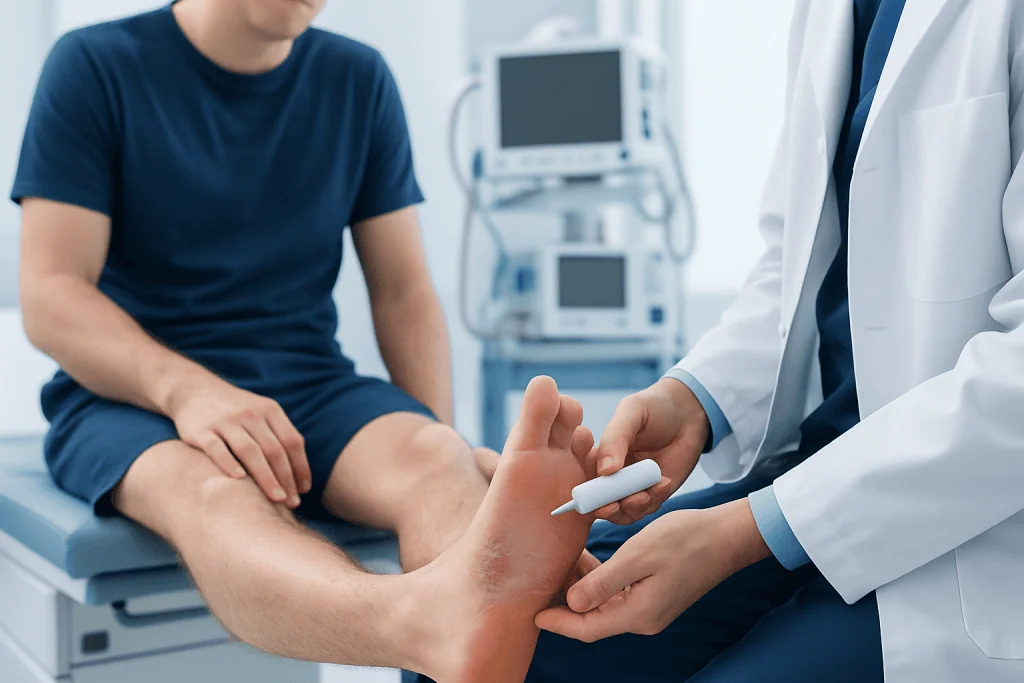
Athlete’s foot can cause itching, stinging, burning, redness, scaling, peeling, and cracked skin. It often starts between the toes, especially between the fourth and fifth toes, where moisture tends to collect. In some people, the skin may look white and soggy between the toes; in others, it becomes dry, flaky, or thickened.
There are several common patterns. Interdigital athlete’s foot mainly affects the spaces between the toes. Moccasin-type athlete’s foot causes chronic dryness and scaling on the soles and sides of the feet. A less common inflammatory form can cause blisters. Because symptoms vary, people sometimes confuse the infection with eczema, dermatitis, psoriasis, or irritation from footwear.
Toenail changes can occur at the same time, including thickening, yellowing, brittleness, or crumbling. When this happens, the person may also have a fungal nail infection such as nail fungus, which can make athlete’s foot harder to fully eliminate because the nails may act as a reservoir for reinfection.
Which over the counter antifungal creams are commonly used

Several active ingredients are commonly used in nonprescription antifungal products. Broadly, they fall into two groups: azoles and allylamines. Azoles include clotrimazole and miconazole. Allylamines include terbinafine and butenafine. These ingredients are available in creams and, in some cases, sprays or gels.
All of these medicines can be appropriate for uncomplicated athlete’s foot, but they are not identical. Some products are used for a longer period, while others may clear symptoms with a shorter course. In general, allylamine-based products are often favored for athlete’s foot because they can be highly effective against the fungi that commonly cause it. Still, the best choice also depends on the location of the rash, skin sensitivity, product instructions, and whether a clinician suspects a different diagnosis.
It is important to read labels carefully. Some products marketed for itching or rash contain hydrocortisone or only symptom-relieving ingredients and do not treat fungus itself. A steroid cream alone may briefly reduce redness and itching while allowing the fungal infection to continue or spread. If symptoms are severe, persistent, or unclear, a dermatologist may help clarify the diagnosis and treatment plan, sometimes with dermatology evaluation.
- Common OTC antifungal ingredients: terbinafine, butenafine, clotrimazole, miconazole, tolnaftate
- Common forms: creams, sprays, gels, powders
- Best use: mild, localized athlete’s foot without major cracking, pus, or widespread inflammation
How to use OTC antifungal creams correctly
Correct use matters as much as product selection. Before applying the medicine, the feet should be washed gently and dried thoroughly, especially between the toes. A thin layer of cream is usually applied not only to the visible rash but also slightly beyond its edges, because fungus can extend into skin that still looks normal.
The medicine should be used exactly as directed on the package or by a clinician. Different active ingredients have different schedules and treatment durations. Even when itching and scaling improve quickly, continuing for the full course helps lower the chance that the infection will return. Missing applications or stopping early is a common reason for recurrence.
Hands should be washed after applying the cream unless the hands are being treated too. Socks should be changed daily, and more often if they become damp. Shoes should be allowed to dry fully between uses. If the skin is severely cracked, painful, or oozing, self-treatment may be less suitable because the barrier is broken and the area may need medical assessment.
When athlete’s foot repeatedly comes back, treatment may need to address related sites where fungus can persist. A clinician may look for fungal infection in the nails, groin, or other skin folds and recommend additional care such as fungal infection treatment if the problem is recurrent or extensive.
Why treatment sometimes fails
When over the counter treatment does not seem to work, the reason is not always that the medicine is ineffective. A common issue is incorrect diagnosis. Eczema, contact dermatitis, psoriasis, bacterial infection, and other conditions can resemble athlete’s foot. If the rash is not fungal, an antifungal cream may not help.
Another reason is incomplete treatment. Symptoms often improve before the infection is eradicated. If a person stops using the medicine as soon as itching fades, surviving fungi can multiply again. Reinfection is also common when feet stay moist, shoes are shared, communal showers are used barefoot, or socks and footwear are not changed regularly.
In some cases, the infection is more severe than it first appears. Thick scaling on the soles, widespread involvement, secondary bacterial infection, or fungal nail disease can all make treatment harder. People who have reduced immunity, diabetes, or poor circulation may also heal more slowly and need a more individualized plan.
If the rash spreads, becomes painful, or keeps returning, a clinician may perform skin scraping or microscopy to confirm the diagnosis. In selected cases, prescription treatment may be recommended, including stronger topical therapy or oral antifungal treatment for more extensive disease.
Prevention and self-care that support healing
Daily habits play a major role in both treatment and prevention. Fungi thrive in warm, moist environments, so keeping the feet dry is one of the most effective supportive measures. After bathing or exercise, the skin between the toes should be dried carefully. Breathable shoes and moisture-wicking socks may help reduce the dampness that encourages fungal growth.
People who are prone to athlete’s foot may benefit from rotating shoes so each pair has time to dry fully before being worn again. Sandals or shower shoes can reduce exposure in locker rooms, pools, and shared showers. Towels, socks, and shoes should not be shared, because the infection can spread through contaminated surfaces and fabrics.
Toenails should be kept trimmed, and any nail changes should be assessed if they persist. If a person has a history of recurrent fungal infections, disinfecting or replacing heavily contaminated footwear may be helpful. Good skin care also matters: deeply cracked skin can allow bacteria to enter, increasing the risk of additional infection.
- Wash and dry feet thoroughly every day
- Change socks daily and after exercise
- Choose breathable footwear when possible
- Use footwear in communal wet areas
- Avoid sharing towels, socks, or shoes
When to seek medical care
Medical care is a good idea if symptoms do not improve after an appropriate trial of over the counter antifungal treatment, if the rash becomes worse, or if it returns repeatedly. Evaluation is also important if there is significant redness, swelling, warmth, drainage, a foul smell, or increasing pain, because these features may suggest a bacterial infection or another condition that needs different treatment.
Some people should not rely on self-treatment alone. Those with diabetes, poor circulation, nerve damage in the feet, a weakened immune system, or chronic skin disease should contact a doctor sooner rather than later. For them, even a seemingly minor foot problem can become more complicated and may require closer monitoring.
If the toenails are involved, if blisters are severe, or if the rash extends beyond the feet, prescription treatment may be needed. A doctor may recommend laboratory confirmation, topical prescription medication, or oral therapy. In some cases, foot skin symptoms are related to broader infectious diseases care or specialist evaluation.
Near the end of the care pathway, it may also help to know that Acibadem International’s multidisciplinary specialists and JCI-accredited hospitals diagnose and treat fungal skin conditions for international patients when expert assessment is needed.
Frequently asked questions
What is the best over the counter antifungal cream for athlete's foot?
There is not one single best option for every person, but common effective ingredients include terbinafine, butenafine, clotrimazole, and miconazole. The most suitable choice depends on the type of rash, how long treatment is needed, and whether the diagnosis is definitely athlete's foot.
How long does it take for OTC antifungal cream to work?
Some people notice less itching and scaling within days, but clearing the infection usually takes longer. The full treatment course should be completed exactly as directed, because stopping early can allow the fungus to come back.
Can athlete's foot go away without treatment?
It sometimes improves temporarily, but it often persists or returns if the fungus is not treated. Moisture, sweating, and contaminated footwear can keep the infection going.
Should a steroid cream be used for athlete's foot?
A steroid cream alone is usually not recommended unless a doctor advises it. It may reduce redness and itching while masking the infection and potentially making a fungal rash harder to recognize.
Why does athlete's foot keep coming back after treatment?
Recurrence is often linked to stopping treatment too soon, damp shoes or socks, shared surfaces, or fungus in the toenails. In some cases, the original rash may not have been athlete's foot at all.
When is prescription treatment needed for athlete's foot?
Prescription treatment may be needed if the infection is severe, widespread, recurrent, involves the nails, or does not improve with over the counter care. People with diabetes, immune problems, or signs of bacterial infection should seek medical advice promptly.
References
- American Academy of Dermatology
- Centers for Disease Control and Prevention
- National Health Service
- Merck Manual Consumer Version
This article is for general information only and is not a substitute for professional medical advice. Please consult a qualified doctor about your individual situation.
Explore treatments in Turkey — costs, top hospitals & a free quote
JCI-accredited · board-certified surgeons · reply within 24h
Add us as a Preferred Source to see more of our trusted health content across Google Search, AI Overviews and Discover.