Ozone therapy: A Complete Medical Guide for Patients

Ozone therapy uses medical ozone in controlled doses and delivery methods. Its role differs by condition, and it is not a universal or first-line treatment for every illness.
Key Takeaways
- Ozone therapy uses medical ozone in controlled doses and delivery methods.
- Its role differs by condition, and it is not a universal or first-line treatment for every illness.
- Potential benefits must be weighed against risks, side effects, and the strength of available evidence.
- It should only be considered after assessment by a qualified doctor in an appropriate clinical setting.
- Patients should ask why it is being recommended, what alternatives exist, and what outcomes are realistic.
Ozone therapy is a medical approach that uses ozone gas in carefully controlled settings, usually as part of a broader treatment plan rather than a stand-alone cure. Patients often ask whether it works and whether it is safe; the answer depends on the condition being treated, the method used, and the expertise of the medical team.
Overview: what ozone therapy means in medical care
Ozone therapy refers to the medical use of ozone, a gas made of three oxygen atoms, delivered in carefully controlled amounts for specific clinical purposes. In healthcare settings, it may be applied through several methods, such as mixing with a patient’s blood in a monitored process, local application to tissues, or other procedure-based techniques. It is different from the ozone found in the atmosphere and should never be confused with general oxygen therapy or unregulated wellness treatments.
Patients commonly search for ozone therapy because they want to know whether it can help with pain, wound healing, infections, or long-standing inflammatory conditions. The most important point is that ozone therapy is not a cure-all. Its clinical value depends on the problem being treated, how the ozone is administered, and whether it is used alongside standard medical care rather than in place of it.
Interest in ozone therapy is strongest in areas such as chronic wounds, some musculoskeletal pain conditions, and selected supportive care settings. However, medical organizations do not view all ozone uses equally, and the quality of evidence varies. A careful evaluation helps clarify whether the treatment is appropriate, what benefits are realistic, and what risks need to be considered.
How ozone therapy works
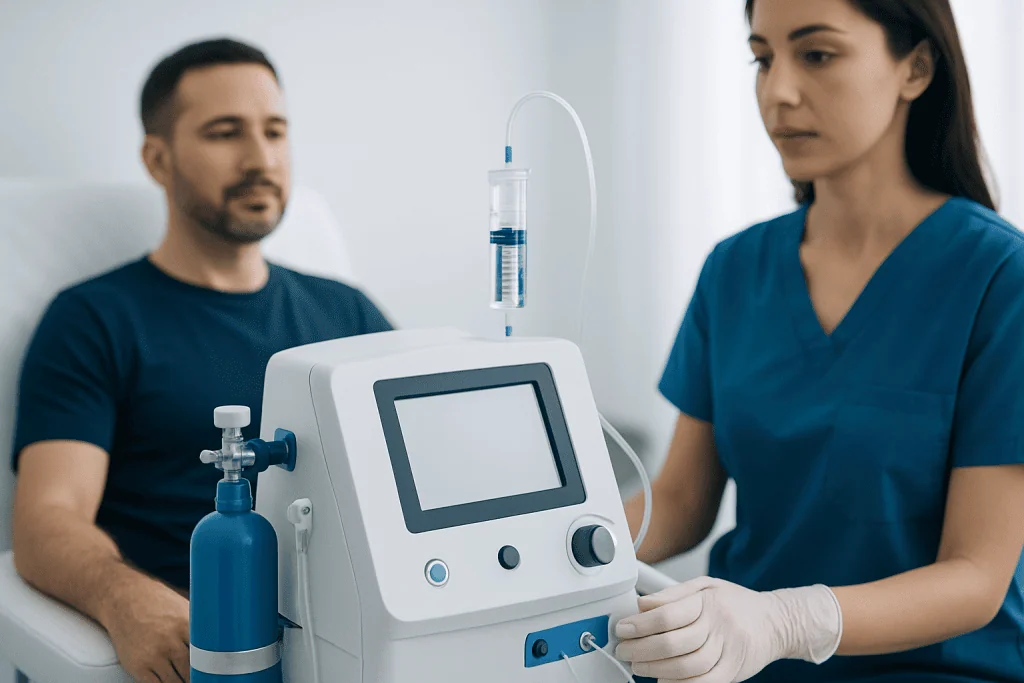
Medical ozone is thought to act by influencing oxygen-related biological processes, immune signaling, and oxidative balance. In simple terms, a controlled dose may trigger certain responses in tissues that affect inflammation, circulation, and local healing. Researchers have explored whether this controlled oxidative stimulus can support the body’s repair mechanisms under specific circumstances.
At the same time, ozone is a highly reactive gas. That is why route, dose, and indication matter so much. A substance that may have a controlled medical role in one setting can be harmful in another, especially if used improperly. For example, inhaled ozone can irritate and injure the lungs, so breathing it in is not considered a safe therapeutic approach.
Different methods are used for different goals. In some cases, clinicians may apply ozone locally to a wound or affected area. In others, they may use procedure-based techniques that are intended to work more systemically. Because these approaches are not interchangeable, patients should ask exactly which method is being proposed and why that method fits their diagnosis.
Common uses and where evidence is still developing

Ozone therapy has been studied or used in selected settings such as chronic wounds, diabetic foot ulcers, some dental or oral conditions, certain pain syndromes, and supportive treatment for tissue healing. In musculoskeletal medicine, it may be discussed for back pain related to disc problems or chronic inflammation, often alongside physical therapy, medication, or image-guided procedures. In wound care, the goal may be to support local healing while standard measures such as infection control, pressure relief, blood sugar management, and circulation assessment continue.
Even when ozone therapy is offered, it is usually considered complementary rather than a replacement for established diagnosis and treatment. For example, a patient with a difficult-to-heal ulcer may also need vascular assessment, infection treatment, and ongoing wound management. A patient with back pain may still need imaging, rehabilitation, and evaluation for conditions such as herniated disc.
Evidence remains mixed across indications. Some studies suggest benefit in selected patients, while others are limited by small size, inconsistent methods, or short follow-up. That means patients should be cautious about broad claims. A trustworthy clinician will explain where evidence is stronger, where it is uncertain, and how ozone therapy compares with standard options such as physical therapy and rehabilitation or pain management.
Possible benefits, limitations, and risks
The possible benefits of ozone therapy depend on the condition and treatment method. In appropriate cases, the intended goals may include reducing pain, supporting wound healing, improving local circulation, or helping control inflammation. Some patients also seek it when conventional treatment has only partly relieved symptoms. These are reasonable questions to discuss with a doctor, but expectations should remain realistic.
Its limitations are just as important. Ozone therapy does not reliably treat every chronic illness, and it should not delay proven care for urgent or serious disease. It is not a substitute for antibiotics when a bacterial infection needs standard treatment, nor should it replace surgery when surgery is clearly indicated. Patients should be especially careful around claims that it can detoxify the body, cure cancer, or eliminate the need for evidence-based treatment.
Risks vary by route and technique. Side effects may include local discomfort, irritation, bruising, temporary symptom flare, or procedure-related complications. Inappropriate administration can be dangerous, particularly if safety protocols are not followed. Because inhaled ozone is harmful to the respiratory tract, patients should avoid any non-medical setting promoting ozone inhalation. The safest approach is to consider ozone therapy only with trained clinicians who can explain benefits, alternatives, and possible adverse effects clearly.
Who may be considered for ozone therapy
There is no single profile of the “ideal” ozone therapy patient. Suitability depends on the diagnosis, symptom severity, treatment goals, and whether standard options have been tried or are still needed. A doctor may consider it in a patient with chronic pain, a non-healing wound, or another selected condition where supportive therapies may have a role. The decision should be individualized, not based on trends or general promises.
Before recommending ozone therapy, clinicians usually review the patient’s medical history, current medicines, imaging or laboratory results, and any factors that could increase risk. Particular caution may be needed in people with certain blood disorders, uncontrolled medical conditions, active respiratory concerns, pregnancy, or a history that makes procedure-based treatment less suitable. Exact contraindications depend on the planned method.
It can also be important to clarify the underlying diagnosis first. For instance, chronic leg pain may come from nerve, joint, or vascular problems rather than a condition likely to benefit from ozone-based supportive care. Some patients may instead need evaluation for varicose veins or referral for wound care if skin breakdown or poor healing is present.
Evaluation and what to expect during treatment
A proper evaluation starts with the medical problem, not the procedure itself. The doctor will ask about symptoms, how long they have lasted, what treatments have already been tried, and whether there are red-flag signs suggesting another diagnosis. Depending on the case, tests may include blood work, imaging, vascular assessment, or wound evaluation. This helps determine whether ozone therapy is relevant and whether another treatment should take priority.
If treatment is considered, the team should explain the route of administration, number of sessions likely to be needed, expected discomfort, and how progress will be measured. Patients should know that treatment plans vary widely. Some need only a short series of sessions, while others are reassessed after each stage to decide whether continuing makes sense.
Good practice also includes informed consent and monitoring. Patients should feel comfortable asking what evidence supports the proposed treatment in their situation, what side effects to watch for, and what happens if symptoms do not improve. In experienced centers, ozone therapy is integrated into a broader care pathway rather than offered in isolation. Acibadem International’s multidisciplinary specialists in JCI-accredited hospitals evaluate suitable patients and coordinate treatment when ozone therapy is considered as part of comprehensive care.
Self-care, practical questions, and how patients can decide
Patients considering ozone therapy can make more confident decisions by asking a few practical questions. These include: What is the exact diagnosis? What is the goal of treatment? Is ozone therapy first-line, optional, or experimental for this problem? What standard therapies should still continue? Clear answers help separate medically grounded care from overly broad claims.
Self-care remains important whether ozone therapy is used or not. For pain conditions, this may include activity modification, guided exercise, sleep support, and weight management when relevant. For wounds, careful skin care, pressure relief, blood sugar control, and follow-up are essential. In many cases, outcomes depend more on the overall care plan than on any single procedure.
Patients should also be careful about where treatment is offered. A medical setting should use proper infection control, documentation, and clinician oversight. It is wise to avoid providers who discourage conventional medicine, promise guaranteed results, or recommend ozone therapy without confirming the diagnosis. A balanced, evidence-based discussion is a sign of safer care.
When to seek medical care
Patients should seek medical care promptly if they have severe pain, sudden weakness, fever, spreading redness, chest symptoms, shortness of breath, or any rapidly worsening condition. These symptoms may signal a problem that needs urgent assessment and should not be managed with alternative or supportive treatments alone. Likewise, a wound that is deep, infected, or not healing should be evaluated without delay.
Medical review is also important if a person is considering ozone therapy for a chronic problem that has not been clearly diagnosed. Persistent back pain, leg swelling, numbness, ulcers, or ongoing fatigue can have many causes, and the right treatment depends on finding the cause first. A doctor can explain whether ozone therapy has a reasonable role or whether another approach is more appropriate.
After any procedure, patients should contact their care team if they notice unexpected side effects, increasing pain, bleeding, breathing symptoms, fever, or signs of infection. Early follow-up can help address complications quickly and adjust the treatment plan safely.
Frequently asked questions
What is ozone therapy used for?
Ozone therapy is used in selected medical settings for supportive care, including some chronic wounds, certain pain conditions, and tissue-healing approaches. Its use varies by country, clinic, and diagnosis, and it is usually considered alongside standard medical treatment rather than as a replacement.
Is ozone therapy proven to work?
The evidence is mixed and depends on the condition being treated. Some studies suggest benefit in selected cases, but the quality and consistency of research are not the same across all uses. Patients should ask their doctor how strong the evidence is for their specific diagnosis.
Is ozone therapy safe?
It can be safe only when used appropriately by trained medical professionals in a proper clinical setting. Risks depend on the route, dose, and the patient’s health status. Inhaling ozone is not considered a safe medical treatment because it can harm the lungs.
Can ozone therapy replace standard treatment?
No, it should not replace proven treatment for serious or urgent conditions. It may sometimes be used as an additional therapy, but infections, surgical problems, and major chronic diseases still need standard medical care. A doctor can help decide whether there is a complementary role.
Who should avoid ozone therapy?
Some people may not be good candidates because of their medical history, current illness, or the specific method being proposed. This can include people with certain unstable conditions or risk factors that make procedures less safe. A full medical assessment is important before treatment is considered.
What should patients ask before starting ozone therapy?
They should ask what diagnosis is being treated, why ozone therapy is being recommended, what alternatives exist, and what outcomes are realistic. It is also helpful to ask about side effects, how many sessions may be needed, and how improvement will be measured.
References
- World Health Organization
- U.S. Food and Drug Administration
- National Center for Complementary and Integrative Health
- National Institutes of Health
- European Medicines Agency
This article is for general information only and is not a substitute for professional medical advice. Please consult a qualified doctor about your individual situation.
Persistent digestive symptoms? Get evaluated in Turkey
JCI-accredited · board-certified surgeons · reply within 24h
Add us as a Preferred Source to see more of our trusted health content across Google Search, AI Overviews and Discover.