P Shot: An Evidence-Based Guide for Patients

The p shot usually refers to platelet-rich plasma injected into the penis. Research is still developing, and results may be inconsistent between patients and clinics.
Key Takeaways
- The p shot usually refers to platelet-rich plasma injected into the penis.
- Research is still developing, and results may be inconsistent between patients and clinics.
- A careful medical evaluation is important because erectile symptoms can be linked to circulation, hormones, nerves, medications, or emotional health.
- Established treatments for erectile dysfunction often have stronger evidence than the p shot.
- Patients should ask about expected benefits, risks, alternatives, and the clinician’s experience before treatment.
The p shot is a platelet-rich plasma (PRP) injection into penile tissue, promoted for erectile dysfunction, sexual performance, and tissue health. Some men may be interested in it, but current evidence is limited, treatment methods vary, and it is not considered a standard first-line option for most patients.
What is the p shot?
The p shot is a non-surgical procedure that uses platelet-rich plasma, often called PRP, prepared from a sample of the patient’s own blood. After the blood is processed, the platelet-rich portion is injected into specific areas of penile tissue. The treatment is marketed for concerns such as erectile dysfunction, reduced rigidity, changes in sensitivity, and overall sexual confidence.
In simple terms, platelets contain growth factors involved in healing and tissue repair. The idea behind the p shot is that concentrated platelets may support blood vessel function and tissue recovery. However, this theory does not automatically mean the treatment will work for every patient or every symptom.
It is also important to understand that the p shot is a broad label rather than one single standardized medical protocol. Clinics may differ in how they prepare PRP, where they inject it, how many sessions they recommend, and which patients they consider suitable. This variation is one reason why published study results can be difficult to compare.
What does the p shot claim to help with?
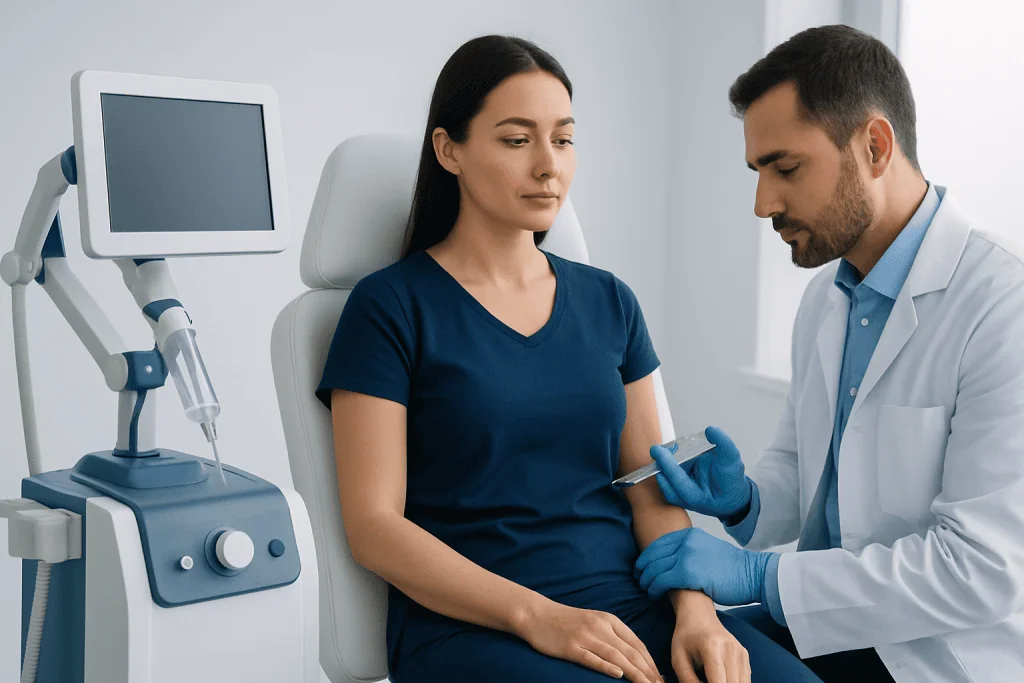
Patients usually ask about the p shot because they hope it may improve erection quality, penile blood flow, sensation, or sexual satisfaction. It is sometimes discussed for mild to moderate erectile dysfunction, especially when a man prefers a non-surgical approach or wants to explore options beyond oral medication. Some clinics also describe it as a way to support penile tissue health after injury or age-related changes.
These claims should be viewed carefully. Sexual function depends on several systems working together, including blood vessels, nerves, hormones, pelvic floor muscles, medications, sleep, stress, and relationship factors. A treatment aimed only at local tissue may not address the real cause of symptoms.
For men with ongoing erection problems, the main question is not only whether the p shot might help, but whether another diagnosis needs attention first. For example, erectile dysfunction can be associated with diabetes, cardiovascular disease, low testosterone, medication side effects, depression, or performance anxiety. A proper assessment often provides more value than choosing a procedure too quickly.
What does the evidence say?

At present, evidence for the p shot is still limited. A small number of studies suggest PRP may help some men with erectile dysfunction, but many of these studies are small, short-term, or use different treatment techniques. Because of this, it is difficult to draw firm conclusions about who benefits most, how long any benefit may last, and how the p shot compares with standard treatments.
Another challenge is study quality. In this field, researchers may use different PRP preparation methods, different injection sites, and different outcome measures. Some studies also include men receiving more than one treatment at the same time, making it harder to know whether PRP itself caused the improvement.
Professional guidance generally treats PRP for erectile dysfunction as an investigational or emerging approach rather than a routine first-line therapy. That does not mean it never helps, but it does mean patients should be cautious about strong promises. A balanced discussion should include the uncertainty around benefit, the possibility of no meaningful change, and the fact that established options often have stronger evidence.
Men who are exploring this topic may also benefit from learning about the broader evaluation and care of erectile dysfunction, since managing the underlying cause can be as important as symptom treatment.
Who may be a candidate and who may not be
The p shot may be discussed for selected men with mild erectile symptoms, men who cannot use certain medications, or men interested in additional options after medical assessment. A clinician may consider overall health, severity of symptoms, penile anatomy, circulation, hormone status, and previous response to treatment before deciding whether PRP is a reasonable option to discuss.
Not everyone is a good candidate. Men with untreated infection, active genital skin disease, certain bleeding problems, serious uncontrolled medical conditions, or unrealistic expectations may need to avoid or delay the procedure. Patients taking blood thinners or those with complex penile conditions may need a more individualized review.
It may also be unsuitable when a symptom points to a different problem that needs targeted care. For example, penile curvature, painful erections, or scar-related changes may suggest a condition such as Peyronie’s disease, which requires its own evaluation and treatment plan.
Because sexual symptoms can affect confidence and relationships, it is natural for patients to seek quick solutions. Still, choosing the right treatment starts with understanding the diagnosis. A careful assessment helps prevent unnecessary procedures and supports safer, more realistic decisions.
How the procedure is done, possible side effects, and recovery
In general, the p shot begins with a blood draw. The blood is placed in a centrifuge to separate and concentrate the platelet-rich portion. A numbing cream or local anesthetic may be used before injections are given into targeted areas of penile tissue. The appointment is often outpatient, meaning the patient goes home the same day.
Because protocols vary, the exact number of injections, the amount of PRP, and the number of sessions may differ from one center to another. Patients should ask whether the plan is based on published evidence, what goals are realistic, and how improvement will be measured over time.
Possible side effects can include temporary pain, bruising, swelling, pinpoint bleeding, skin sensitivity, or discomfort during erections for a short period after the procedure. Although serious complications appear uncommon when performed by trained clinicians under appropriate sterile conditions, infection, worsening pain, tissue injury, or dissatisfaction with results are still possible risks.
Recovery advice also varies. Many patients resume normal daily activities quickly, but they may be told to avoid sexual activity or strenuous exercise for a short period. If symptoms persist, if erections become painful, or if there is fever, significant swelling, or drainage, medical review is important.
How doctors evaluate erectile symptoms and what other treatments are available
Before considering the p shot, doctors usually look for the reason behind erectile symptoms. This may include a medical history, medication review, physical examination, and selected blood tests such as glucose, cholesterol, and hormone testing when appropriate. In some cases, additional studies of penile blood flow or nerve function may be recommended.
Treatment depends on the cause. For many men, first steps include lifestyle changes, better control of diabetes or blood pressure, limiting smoking and excess alcohol, improving sleep, and addressing stress or relationship concerns. Oral medication may be appropriate for some patients, while others may benefit from vacuum devices, injections, hormone treatment when deficiency is confirmed, or counseling.
When a more structured treatment plan is needed, a urology specialist can discuss evidence-based options including erectile dysfunction treatment. In selected cases, additional evaluation in urology care can help clarify whether vascular, hormonal, neurological, or structural factors are contributing.
For some men with severe or treatment-resistant erectile dysfunction, advanced solutions such as penile prosthesis surgery may be considered. The best choice depends on symptoms, cause, preferences, and overall health rather than on a single trend or procedure.
Questions to ask before choosing a p shot
Patients often feel more confident when they ask direct, practical questions. It is reasonable to ask what problem the treatment is intended to address, whether there is a clear diagnosis, what other options exist, and how likely benefit is in a person with similar symptoms and health conditions.
It is also helpful to ask how PRP is prepared, how many sessions are recommended, what side effects are expected, and what happens if the treatment does not work. A transparent clinician should be comfortable discussing limitations in the evidence and should not rely on guarantees.
Other important questions include whether there are signs of heart disease, diabetes, hormone imbalance, medication side effects, or psychological stress contributing to the problem. Because erectile symptoms can sometimes be an early sign of broader vascular disease, addressing general health is often part of the treatment plan.
Near the end of the decision process, some international patients choose consultation at centers with coordinated urology and men’s health services. Acibadem International’s multidisciplinary specialists and JCI-accredited hospitals diagnose and treat related conditions for international patients, with care plans tailored to individual findings.
When to seek medical care
Medical care is appropriate if erectile problems are new, persistent, worsening, or causing distress. An evaluation is especially important if symptoms are accompanied by low libido, penile pain, penile curvature, urinary problems, pelvic pain, or reduced morning erections.
Prompt assessment is also important for men with diabetes, heart disease, high blood pressure, neurological disease, or a history of pelvic surgery or trauma. These conditions can affect sexual function and may require treatment beyond a local procedure.
Urgent care should be sought for severe pain, signs of infection after an injection, significant swelling, bleeding that does not stop, or an erection lasting longer than four hours. These problems are uncommon, but they need timely medical attention to protect tissue health and long-term function.
Frequently asked questions
Is the p shot approved as a standard treatment for erectile dysfunction?
The p shot is generally considered an emerging or investigational approach rather than a standard first-line treatment for erectile dysfunction. Research is ongoing, but current evidence is not yet strong enough to place it ahead of established therapies for most patients.
How long do p shot results last?
There is no single, reliable answer because study methods and patient responses vary. Some men may notice temporary improvement, while others may see little or no benefit. Duration should be discussed realistically with a qualified clinician.
Does the p shot increase penis size?
Claims about permanent size increase are not well supported by strong medical evidence. Patients should be cautious about promotional language and ask whether a claim is backed by high-quality studies.
Is the p shot painful?
Many clinics use a numbing cream or local anesthetic to reduce discomfort during the injections. Mild soreness, bruising, or swelling afterward can happen, but experiences differ from person to person.
Who should avoid the p shot?
Men with active infection, certain bleeding disorders, uncontrolled medical illness, or symptoms that point to another untreated condition may need to avoid or postpone the procedure. A doctor should review medical history, medications, and the likely cause of symptoms before treatment.
What should be tried before a p shot?
A medical evaluation is usually the best first step, because erectile symptoms may be linked to circulation, hormones, medications, stress, or chronic disease. Depending on the cause, lifestyle measures, oral medication, counseling, devices, or other urology treatments may be more appropriate and better supported by evidence.
References
- American Urological Association
- European Association of Urology
- National Institute of Diabetes and Digestive and Kidney Diseases
- Mayo Clinic
- Cleveland Clinic
This article is for general information only and is not a substitute for professional medical advice. Please consult a qualified doctor about your individual situation.
Explore treatments in Turkey — costs, top hospitals & a free quote
JCI-accredited · board-certified surgeons · reply within 24h
Add us as a Preferred Source to see more of our trusted health content across Google Search, AI Overviews and Discover.