Pain Behind Left Eye: Possible Causes and When to Seek Care

Pain behind left eye has many possible causes, including headache disorders, sinus disease, eye surface irritation, and less common urgent eye conditions. Associated symptoms such as blurred vision, redness, double vision, nausea, or light sensitivity help doctors narrow the cause.
Key Takeaways
- Pain behind left eye has many possible causes, including headache disorders, sinus disease, eye surface irritation, and less common urgent eye conditions.
- Associated symptoms such as blurred vision, redness, double vision, nausea, or light sensitivity help doctors narrow the cause.
- Sudden severe pain, vision loss, new double vision, or pain after injury should be assessed urgently.
- Diagnosis may involve an eye exam, a neurological assessment, and sometimes imaging or laboratory tests.
- Treatment depends on the underlying cause and may range from rest and symptom relief to prescription medicines or urgent specialist care.
Pain behind left eye is a symptom rather than a diagnosis. It may be caused by common problems such as migraine, sinus inflammation, or eye strain, but it can also signal an eye or nerve condition that needs prompt medical assessment.
Overview: what pain behind the left eye can mean
Pain behind left eye usually does not come from the eye alone. In many people, it is linked to a headache disorder such as migraine or cluster headache, sinus inflammation, eye strain, or irritation on the eye surface. In a smaller number of cases, it can be related to an eye pressure problem, inflammation, infection, or a nerve condition that needs urgent evaluation.
The location of pain can be misleading because structures around the eye share nerve pathways. A problem in the sinuses, forehead, temples, jaw, or nerves that serve the eye can be felt as pressure or aching behind one eye. For that reason, doctors look not only at the pain itself but also at timing, triggers, visual symptoms, and other body signs.
Pain may feel dull, throbbing, sharp, burning, or like pressure. It may come and go, appear only with eye movement, or happen together with headache, nasal congestion, tearing, redness, nausea, or sensitivity to light. These patterns often give important clues about the cause.
Common symptoms that may occur with it
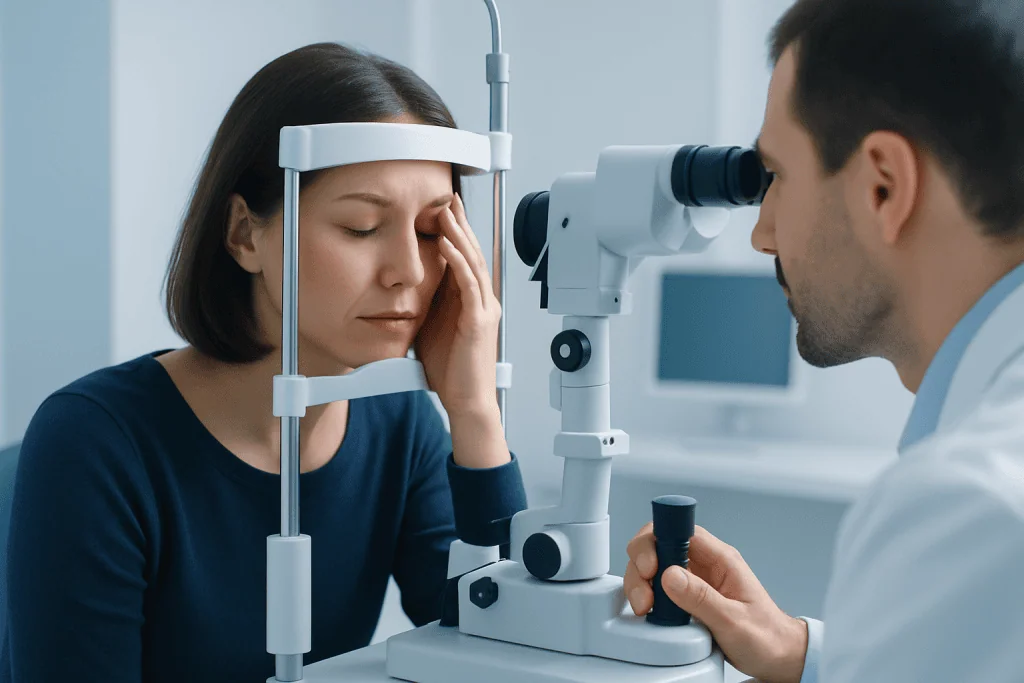
People describe pain behind left eye in different ways. Some notice a deep ache or pressure, while others feel stabbing pain or a pulsing headache centered around one eye. The discomfort may stay in one area or spread to the temple, forehead, nose, cheek, or jaw.
Symptoms that can occur along with the pain include:
- Blurred vision or trouble focusing
- Redness, tearing, or a gritty sensation
- Sensitivity to light
- Nausea or vomiting
- Nasal congestion or facial pressure
- Pain when moving the eye
- Double vision
- Drooping eyelid or a smaller pupil on one side
It is also helpful to notice how long the pain lasts and what seems to trigger it. Hours of screen time, missed meals, poor sleep, allergy flares, recent colds, or emotional stress may point toward more common explanations. Sudden onset, rapidly worsening pain, or new visual symptoms are more concerning and should not be ignored.
Possible causes of pain behind left eye

One of the most frequent causes is migraine. Migraine can cause one-sided pain around or behind an eye, often with throbbing, nausea, and sensitivity to light or sound. Some people also have visual aura, dizziness, or neck discomfort. Another headache disorder, cluster headache, causes very severe one-sided pain around one eye with tearing, nasal congestion, restlessness, or eyelid drooping, usually in repeated attacks over days or weeks.
Sinus inflammation can also create pressure behind the eye, especially if there is nasal blockage, facial fullness, or pain that worsens when bending forward. Eye strain from prolonged reading or screen use may cause aching around the eyes and forehead, particularly when uncorrected vision problems are present. Dry eye, corneal irritation, or surface inflammation can sometimes feel deeper than expected and may be accompanied by burning, redness, or a foreign-body sensation.
Less common but important eye-related causes include inflammation inside the eye, infection, and a sudden rise in eye pressure such as acute angle-closure glaucoma. These conditions may cause severe pain, halos around lights, nausea, redness, and reduced vision. Pain behind one eye can also occur with optic neuritis, in which the optic nerve becomes inflamed and pain often worsens with eye movement. Rarely, vascular, neurological, or orbital conditions can be responsible, which is why persistent or unexplained symptoms should be assessed professionally.
Risk factors and patterns doctors look for
Certain background factors make some causes more likely. A personal or family history of migraine raises the chance that one-sided eye pain is part of a headache condition. Seasonal allergies, chronic sinus problems, and recent upper respiratory infections can support a sinus-related explanation. Long periods of screen use, contact lens wear, dry indoor air, and not wearing the correct glasses can contribute to eye strain or surface irritation.
Doctors also consider age, existing medical conditions, and medications. Autoimmune disease, recent infections, or neurological symptoms may point toward inflammation affecting the optic nerve or surrounding tissues. Eye injuries, recent eye procedures, and a history of high eye pressure are especially relevant when evaluating more urgent causes.
The exact pattern matters. Brief repeated attacks with tearing and restlessness can suggest cluster headache. Throbbing pain with nausea and light sensitivity often fits migraine, including migraine presenting with pain centered behind one eye. Deep pain that worsens when moving the eye may raise concern for optic nerve or orbital inflammation. Because different conditions can overlap, self-diagnosis is not always reliable.
How the cause is diagnosed
Diagnosis starts with a detailed history. A clinician will usually ask when the pain began, whether it is sudden or gradual, what it feels like, how long it lasts, and whether it comes with vision changes, redness, tearing, headache, fever, nausea, or congestion. Questions about past headaches, glasses or contact lenses, recent illness, injury, and medications are also important.
The examination often includes checking visual acuity, eye movements, pupil reactions, eye pressure, and the front and back of the eye. If a headache or nerve-related cause is suspected, the doctor may also perform a neurological examination. This helps distinguish local eye problems from conditions involving the sinuses, brain, blood vessels, or cranial nerves.
Additional tests depend on the findings. Some people may need imaging such as MRI scanning or CT to look at the sinuses, orbit, optic nerve, or brain. Others may need blood tests if inflammation or infection is suspected. If pressure, inflammation, or structural eye disease is a concern, a full comprehensive eye examination is often the next step.
Treatment options depend on the underlying cause
There is no single treatment for pain behind left eye because the right approach depends on the diagnosis. If migraine is the cause, management may include trigger control, rest in a dark quiet room, hydration, and doctor-recommended medications for attacks or prevention. For cluster headache, specialist assessment is important because treatment differs from usual headache care.
When sinus disease is responsible, treatment may focus on reducing inflammation and improving drainage. This can include saline rinses, allergy management, and medications advised by a clinician. Eye strain often improves with correcting vision problems, limiting uninterrupted screen time, adjusting lighting, and taking regular visual breaks. Dry eye or surface irritation may be managed with lubricating drops or other treatments recommended by an eye specialist.
Urgent eye conditions need urgent treatment. A sudden pressure rise, significant inflammation, or infection may require prompt specialist care to protect vision. If a neurological or orbital cause is suspected, further assessment by eye, neurology, or ENT specialists may be needed. In complex cases, targeted evaluation in fields such as neuro-ophthalmology can help clarify whether symptoms come from the eye, optic nerve, or brain pathways.
Self-care and prevention
Some practical steps can reduce episodes related to common, non-urgent causes. Good sleep habits, regular meals, hydration, and stress management may help people who are prone to migraine or tension-related pain. Limiting prolonged screen exposure, enlarging text, adjusting screen brightness, and using the 20-20-20 rule can ease eye strain.
For people with dry eye tendencies, frequent blinking during screen use, avoiding smoke or very dry air, and using clinician-recommended lubricating drops may help. Managing allergies and seeking treatment for recurring nasal or sinus symptoms can also reduce pressure around the eyes. Wearing the correct glasses or contact lens prescription is another simple but important measure.
Prevention works best when a person notices patterns. Keeping a symptom diary can be helpful, especially if the pain recurs. Recording timing, triggers, food, sleep, menstrual cycles, associated symptoms, and response to treatments can make medical visits more productive and guide a safer long-term plan.
When to seek medical care
Prompt medical attention is important if pain behind left eye is sudden, severe, or accompanied by visual changes. Warning signs include vision loss, new double vision, halos around lights, marked redness, swelling around the eye, fever, vomiting, or pain after an eye or head injury. Pain that is clearly worse with eye movement or comes with new weakness, numbness, confusion, or trouble speaking also needs urgent assessment.
Medical review is also appropriate if the pain keeps returning, lasts more than a short time, or interferes with daily life. Even when the cause is not urgent, ongoing one-sided eye pain may need evaluation for migraine, sinus disease, surface eye problems, refractive errors, or less common inflammatory conditions.
If specialist input is needed, multidisciplinary teams can coordinate eye, neurology, ENT, and imaging assessments. Acibadem International’s multidisciplinary specialists and JCI-accredited hospitals diagnose and treat patients with eye pain, headache-related symptoms, and related neurological or sinus conditions for international patients.
Frequently asked questions
Is pain behind left eye usually serious?
Not always. Common causes include migraine, sinus inflammation, eye strain, and dry eye. However, if the pain is severe, sudden, or comes with vision changes, it should be assessed promptly because some eye conditions need urgent treatment.
Can migraine cause pain behind one eye?
Yes. Migraine often causes one-sided pain that may feel centered behind or around one eye. It may also come with nausea, sensitivity to light, visual symptoms, or worsening with activity.
How do sinus problems feel compared with eye problems?
Sinus-related pain often feels like pressure in the forehead, cheeks, or around the eye and may worsen when bending forward. It is commonly linked with congestion, facial fullness, or a recent cold. Eye-related causes are more likely to involve redness, blurred vision, pain with eye movement, or sensitivity to light.
Should someone go to the emergency department for pain behind left eye?
Emergency care is appropriate if there is sudden severe pain, vision loss, new double vision, significant redness and nausea, swelling, or symptoms after an injury. Neurological symptoms such as weakness, confusion, or trouble speaking also need urgent attention.
Can screen time cause pain behind left eye?
Yes, prolonged screen use can contribute to eye strain, especially if blinking decreases or the glasses prescription is outdated. The discomfort may feel like aching around or behind the eye and often improves with rest, better lighting, and regular visual breaks.
What kind of doctor evaluates pain behind one eye?
The first assessment may be done by a primary care doctor, ophthalmologist, or neurologist depending on the symptoms. If there are vision changes or eye redness, an eye specialist is especially important. Some cases also need ENT or neuro-ophthalmology evaluation.
References
- American Academy of Ophthalmology
- National Eye Institute
- American Migraine Foundation
- Mayo Clinic
- Merck Manual Consumer Version
This article is for general information only and is not a substitute for professional medical advice. Please consult a qualified doctor about your individual situation.
Explore treatments in Turkey — costs, top hospitals & a free quote
JCI-accredited · board-certified surgeons · reply within 24h
Add us as a Preferred Source to see more of our trusted health content across Google Search, AI Overviews and Discover.