Palpate: A Complete Medical Overview

To palpate is to examine the body by touch during a physical examination. Palpation can help detect pain, swelling, masses, enlarged organs, pulse quality, and joint changes.
Key Takeaways
- To palpate is to examine the body by touch during a physical examination.
- Palpation can help detect pain, swelling, masses, enlarged organs, pulse quality, and joint changes.
- Clinicians use different palpation techniques depending on the body part being examined.
- Palpation alone does not diagnose every condition and may be followed by imaging or lab tests.
- New, painful, growing, or persistent lumps should be assessed by a qualified doctor.
Palpate means to examine a part of the body by touch, usually with the hands and fingers, to assess tenderness, swelling, temperature, movement, or a lump. It is a basic part of the physical examination that helps guide diagnosis, but it is usually only one step alongside medical history, inspection, and sometimes imaging or laboratory tests.
What does palpate mean in medicine?
In medicine, palpate means to examine the body by touch. A doctor or other clinician uses the fingers, hand, or sometimes both hands to feel an area of the body and gather information that cannot always be seen just by looking. This can include whether a structure is tender, firm, soft, warm, swollen, mobile, enlarged, or unusually shaped.
Palpation is one of the oldest and most practical parts of a physical exam. It is commonly used when checking the abdomen, neck, lymph nodes, breasts, skin, muscles, joints, pulses, and areas of pain. For example, a clinician may palpate the abdomen to look for tenderness or organ enlargement, or palpate a joint to assess swelling and range of motion.
Touch-based examination does not work in isolation. It is usually combined with a person’s symptoms, medical history, visual inspection, listening with a stethoscope, and, when needed, tests such as blood work or MRI imaging. In this way, palpation helps narrow down possibilities and guide the next steps in care.
Why clinicians palpate the body
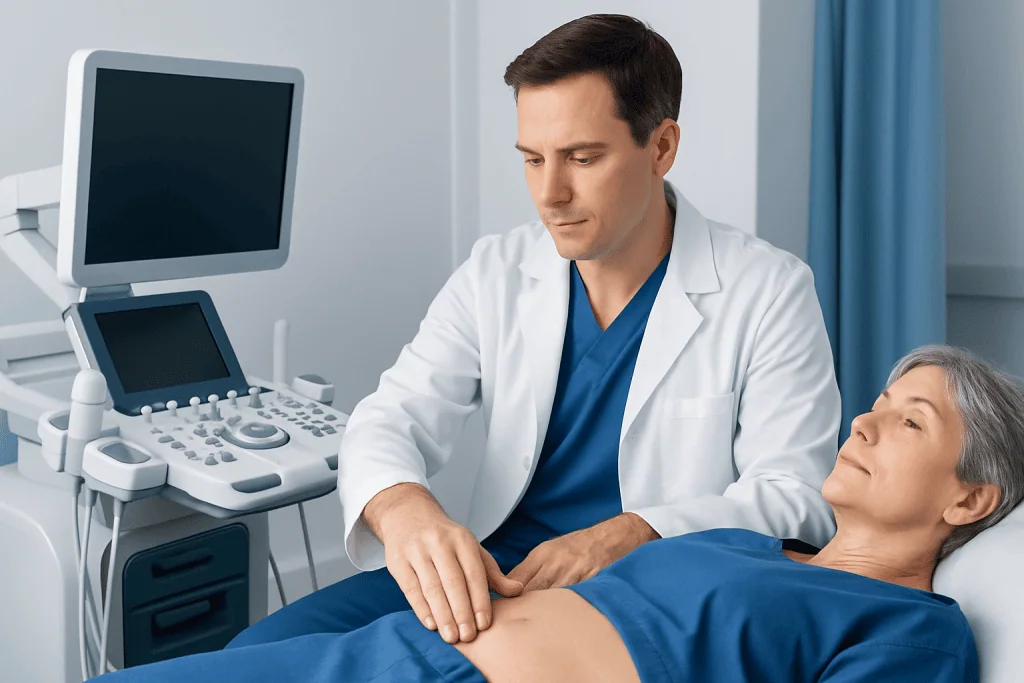
The main purpose of palpation is to gather practical clinical clues quickly and safely. The feel of a structure can suggest whether a finding is likely to be normal tissue, inflammation, muscle tightness, fluid buildup, or a mass that needs further evaluation. A clinician also notes whether touching the area reproduces pain, which can help identify the source of symptoms.
Palpation can help assess many features at once, including:
- Tenderness or pain
- Swelling or fluid
- Skin temperature and texture
- Size, shape, and consistency of a lump
- Mobility of a mass or joint
- Muscle tone or spasm
- Pulse strength and rhythm
- Enlargement of organs or lymph nodes
This information is especially useful when symptoms are broad, such as abdominal discomfort, neck fullness, breast changes, or joint pain. In some cases, palpation can suggest conditions that then need targeted evaluation, such as thyroid cancer when there is a concerning neck nodule, or breast cancer when a breast lump has suspicious features. However, palpation cannot determine every cause with certainty, so further testing is often important.
How palpation is performed
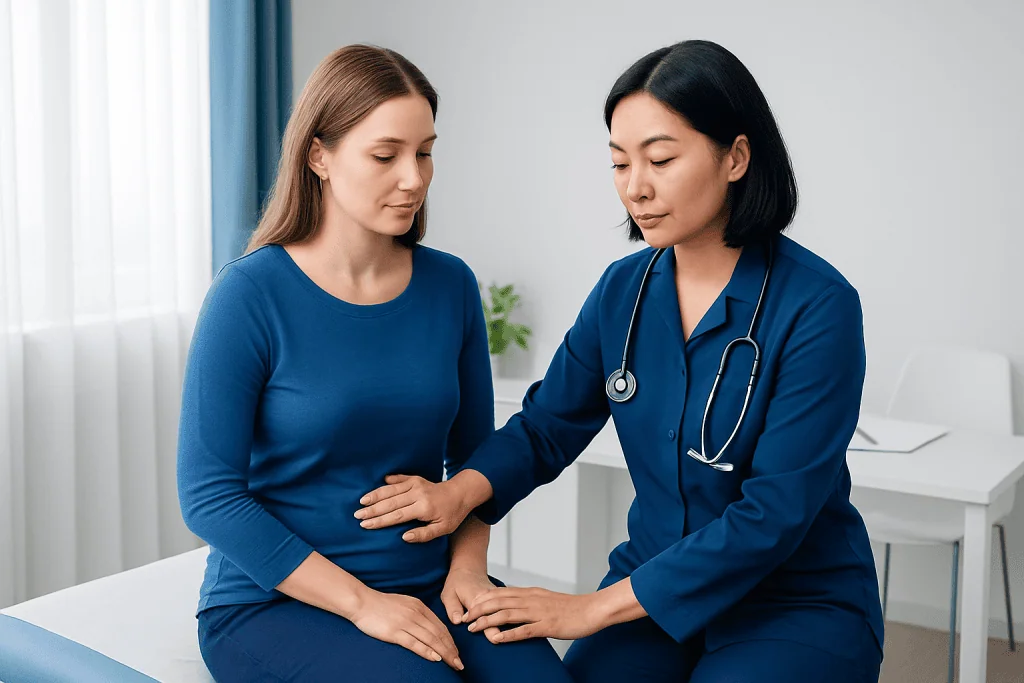
Palpation is usually done in a systematic way so important details are not missed. The clinician may first inspect the area visually, explain what will happen, and then use light or deeper pressure depending on the body part. Many exams begin gently to identify sensitive areas and help the patient relax before deeper palpation is attempted.
Different techniques may be used. Light palpation assesses surface tenderness, warmth, or superficial masses. Deep palpation explores structures farther below the skin, such as parts of the abdomen. Bimanual palpation uses both hands together to evaluate larger or deeper structures. In some settings, a clinician may also compare the same area on both sides of the body to look for differences.
During the exam, the patient may be asked to lie down, sit, breathe in and out, bend a joint, or point to where symptoms are felt most strongly. Communication matters: if the exam is painful, it is appropriate for the patient to say so. A careful palpation exam should be purposeful, respectful, and adjusted to the person’s comfort and medical needs.
What doctors can learn from palpation
Palpation can provide useful information in many body systems. In the abdomen, it may reveal tenderness, guarding, distension, or an enlarged liver or spleen. In the neck, it can help identify enlarged lymph nodes, thyroid nodules, or muscle tension. In the chest wall and musculoskeletal system, palpation may locate the exact source of pain and distinguish between joint, tendon, muscle, and soft-tissue problems.
The character of a lump can also be informative. Clinicians often describe whether a mass feels soft or firm, smooth or irregular, fixed or mobile, painful or painless. These features can help decide whether watchful follow-up is reasonable or whether prompt imaging, biopsy, or specialist review is needed. For example, a persistent lump may lead to ultrasound or biopsy depending on its location and appearance.
Palpation is also important for checking circulation. Feeling the pulse at the wrist, neck, foot, or groin can provide information about heart rate, rhythm, and blood flow. In joints, palpation can reveal warmth, fluid, crepitus, or tenderness that supports an inflammatory or degenerative cause. Even so, the findings must always be interpreted in context, since the same physical sign can have more than one explanation.
Limits of palpation and when more tests are needed
Although palpation is valuable, it has limits. Some structures are too deep to assess accurately by touch alone, and body shape, muscle tension, pain, or guarding can make the exam harder to interpret. In addition, many different conditions can feel similar during an exam. A tender abdomen, for instance, may have several possible causes ranging from muscle strain to digestive, urinary, or gynecologic problems.
For that reason, clinicians often use palpation as a starting point rather than a final answer. If a finding needs clarification, the next steps may include blood tests, imaging, or referral to a specialist. Tests might be chosen based on the location of symptoms, such as CT scanning for certain internal concerns or targeted imaging for a lump, joint problem, or organ enlargement.
Patients should also know that a normal palpation exam does not completely rule out disease. Some conditions do not produce obvious physical findings early on, while others cause symptoms before clear changes can be felt. Ongoing symptoms, unexplained weight loss, fever, persistent pain, or any steadily enlarging mass deserve proper medical follow-up even if the first examination is inconclusive.
Self-checks, body awareness, and safe next steps
People sometimes use the word palpate when talking about checking their own body for a lump or tender spot. General body awareness can be helpful because it allows a person to notice a new change and seek timely advice. However, self-palpation is not a substitute for a clinical examination, and it can sometimes lead to unnecessary worry if a normal structure is mistaken for a problem.
If a person notices a lump, swollen gland, breast change, abdominal fullness, or a painful area that persists, the safest step is to arrange a medical assessment rather than repeatedly pressing on the area. Frequent checking can increase tenderness and make it harder to judge whether a change is truly progressing. It is usually more useful to note when the symptom started, whether it changes over time, and whether there are related symptoms such as fever, redness, fatigue, or unexplained weight loss.
Good general self-care still matters. Staying hydrated, managing strain injuries early, monitoring chronic conditions, and attending routine checkups can all support earlier recognition of health issues. When a symptom needs investigation, a structured medical exam is the best way to determine whether palpation should be followed by imaging, lab tests, or specialist care.
When to seek medical care
Medical advice is important if a person finds a new lump, a swollen area, or localized pain that does not improve within a reasonable period or keeps returning. Care should also be sought for an area that becomes red, hot, increasingly tender, or associated with fever, night sweats, weakness, or unexplained weight loss. These signs do not always indicate a serious condition, but they do warrant proper assessment.
Urgent evaluation is advisable for severe abdominal pain, chest pain, shortness of breath, fainting, a rapidly enlarging swelling, or a painful limb with major color change or loss of sensation. A clinician can decide whether the problem is related to infection, inflammation, injury, circulation, or another cause that needs prompt treatment.
For people who need further evaluation, multidisciplinary specialists may combine physical examination with modern diagnostics and treatment planning. Acibadem International’s JCI-accredited hospitals care for international patients with conditions that may first be detected through palpation, using coordinated assessment when imaging, biopsy, or specialist review is needed.
Frequently asked questions
What does palpate mean in simple terms?
Palpate means to feel part of the body with the hands during an examination. Doctors use this method to check for pain, swelling, warmth, lumps, or changes in organs, muscles, and joints.
Is palpation the same as a diagnosis?
No. Palpation is one part of the physical exam and helps a clinician gather clues, but it does not by itself confirm every diagnosis. Many findings need to be interpreted with symptoms, medical history, and sometimes imaging or laboratory tests.
Can a doctor tell if a lump is serious just by palpating it?
Palpation can suggest whether a lump feels concerning based on its size, firmness, shape, movement, and tenderness. However, touch alone cannot reliably determine the exact cause. If a lump is new, growing, or persistent, imaging or biopsy may be recommended.
Why can palpation sometimes be uncomfortable?
Palpation may be uncomfortable when an area is inflamed, injured, swollen, or already painful. Clinicians usually begin gently and adjust the examination to reduce discomfort while still obtaining useful information.
Can people palpate themselves at home?
People may notice changes by touching their own body, such as a lump or tender spot, but self-checks have limits. Normal structures can be mistaken for a problem, and repeated pressing can make an area sore. A doctor should assess any persistent or concerning change.
What happens after an abnormal palpation exam?
The next step depends on the location and nature of the finding. A clinician may monitor the area, order blood tests, request imaging, or refer the person to a specialist. The goal is to clarify the cause and decide whether treatment is needed.
This article is for general information only and is not a substitute for professional medical advice. Please consult a qualified doctor about your individual situation.
Explore treatments in Turkey — costs, top hospitals & a free quote
JCI-accredited · board-certified surgeons · reply within 24h
Add us as a Preferred Source to see more of our trusted health content across Google Search, AI Overviews and Discover.

More from the Health Library

Beef Liver — Explained by Medical Evidence, Not Myths

Shin Bone — Explained by Medical Evidence, Not Myths

Low Acid Coffee: What Patients Need to Know

Butt Plug — Explained by Medical Evidence, Not Myths

Foot Bath — Explained by Medical Evidence, Not Myths