Parkinson’s vs Neuromuscular Disease: What Is the Difference?
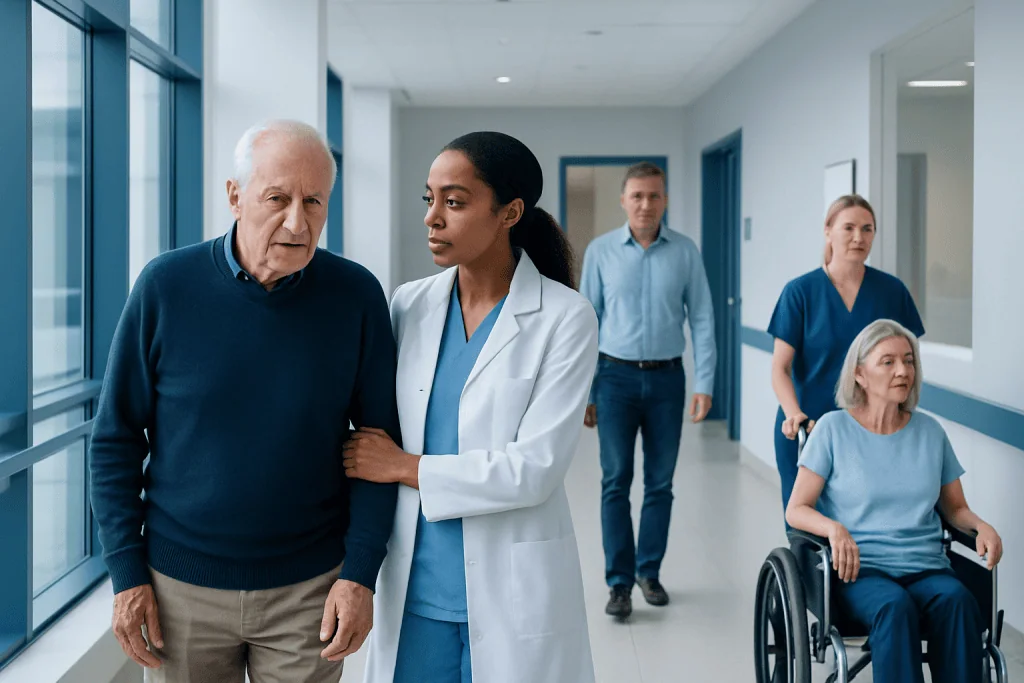
Parkinson’s disease is a movement disorder caused by changes in brain circuits, especially those involving dopamine. Neuromuscular diseases are a broad group of conditions affecting peripheral nerves, muscles, or the neuromuscular junction.
Key Takeaways
- Parkinson’s disease is a movement disorder caused by changes in brain circuits, especially those involving dopamine.
- Neuromuscular diseases are a broad group of conditions affecting peripheral nerves, muscles, or the neuromuscular junction.
- Tremor, slowness, and stiffness are more typical of Parkinson’s, while weakness is often the main feature in neuromuscular disease.
- Diagnosis usually depends on a neurological examination and may include imaging, blood tests, EMG, nerve conduction studies, or other specialized tests.
- Treatment differs because the underlying problem differs, so an accurate diagnosis is essential.
- Anyone with new, progressive movement problems or muscle weakness should be assessed by a qualified doctor.
Parkinson’s disease and neuromuscular diseases can both affect movement, but they are not the same. Parkinson’s mainly begins in the brain and affects movement control, while neuromuscular diseases involve the nerves that control muscles, the connection between nerve and muscle, or the muscles themselves.
Overview: how Parkinson’s and neuromuscular disease differ
When people notice shaking, stiffness, slower walking, weakness, or trouble using their hands, they may wonder whether the problem is Parkinson’s disease or a neuromuscular disease. These conditions can overlap in everyday effects, such as difficulty with movement, balance, speech, swallowing, or daily activities. However, they involve different parts of the nervous system and usually have different patterns of symptoms.
Parkinson’s disease is a progressive neurological condition that mainly affects movement control. It develops when brain cells involved in producing or using dopamine do not function normally. This changes how the brain starts and coordinates movement, often leading to tremor, slowness, stiffness, and balance problems. It belongs to the group of movement disorders and is often discussed alongside other Parkinson’s disease-related conditions.
Neuromuscular disease is a broad term rather than one single diagnosis. It includes conditions that affect the peripheral nerves, the neuromuscular junction where nerves communicate with muscles, or the muscles themselves. Examples include peripheral neuropathies, muscular dystrophies, inflammatory muscle diseases, motor neuron diseases, and disorders such as myasthenia gravis. Because this group is so varied, symptoms can differ widely from one person to another.
The most practical difference is this: Parkinson’s usually causes a problem with movement control, while neuromuscular disease more often causes a problem with movement power. In simple terms, Parkinson’s may make movement smaller, slower, or less automatic, while neuromuscular disease more commonly causes true weakness, fatigue, muscle wasting, or loss of nerve function. A careful medical assessment helps separate the two.
Symptoms: what patients may notice
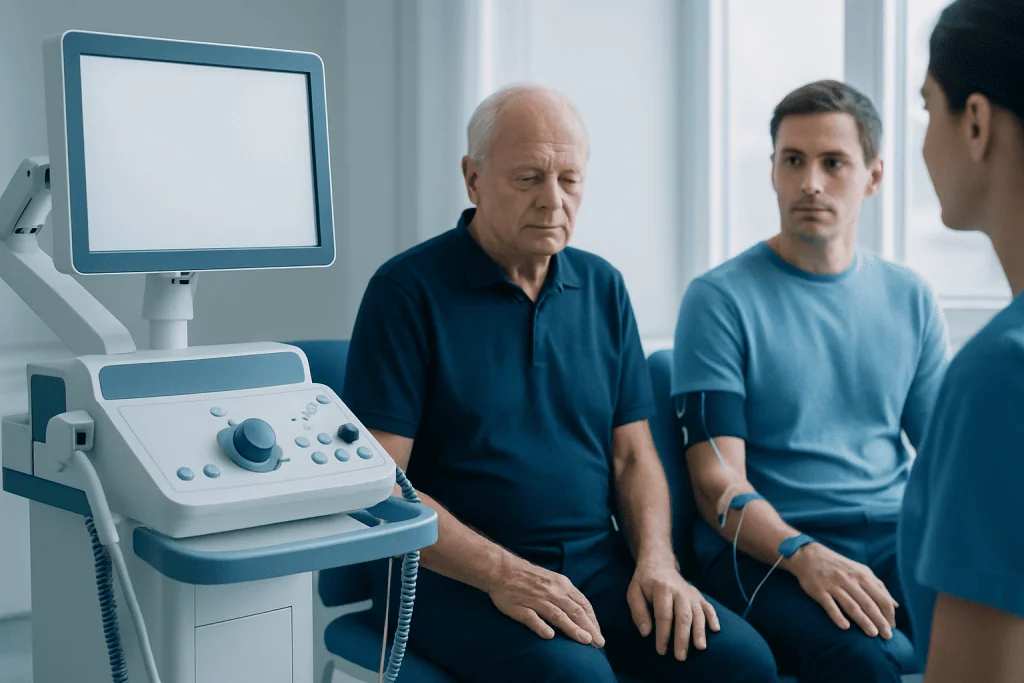
Parkinson’s disease often begins gradually. Early symptoms may affect one side of the body more than the other. A person may notice a resting tremor in one hand, smaller handwriting, reduced facial expression, a softer voice, arm swing that is less noticeable while walking, or increasing slowness in everyday tasks. Stiffness, shuffling steps, and balance changes may appear as the condition progresses.
Neuromuscular diseases often present differently. The main complaint is frequently weakness rather than tremor. A person may have trouble climbing stairs, lifting objects, rising from a chair, buttoning clothing, holding up the head, swallowing, or breathing deeply. Some conditions cause muscle cramps, twitching, numbness, tingling, burning pain, or muscles that tire quickly after repeated use.
There can be overlap. Both Parkinson’s and some neuromuscular disorders can affect speech, swallowing, posture, and walking. Both can also lead to fatigue and reduced independence. For this reason, symptoms alone do not always provide a complete answer, especially early in the course of illness.
A useful clue is the type of problem a person feels most strongly. Parkinson’s tends to produce slowness, stiffness, and a tremor that is more noticeable at rest. Neuromuscular disease tends to produce weakness, muscle fatigue, sensory changes, or visible muscle wasting. Still, only a clinician can determine the exact cause through examination and testing.
Causes and affected body systems
Parkinson’s disease mainly affects the central nervous system, especially brain regions involved in movement planning and coordination. The exact cause is often not fully known. In many people, it likely results from a combination of age-related changes, genetic susceptibility, and environmental influences. The hallmark issue is disruption of dopamine-related pathways, which affects how smoothly the brain can start and regulate movement.
Neuromuscular diseases affect the peripheral motor system rather than the movement-control centers of the brain. This group includes disorders of the motor nerves, sensory nerves, nerve roots, muscles, and the neuromuscular junction. Causes may be inherited, autoimmune, inflammatory, metabolic, toxic, infectious, or degenerative. Some neuromuscular disorders are temporary or treatable, while others are chronic and progressive.
Examples help clarify the difference. In myasthenia gravis, the immune system interferes with the signal between nerve and muscle, often causing fluctuating weakness. In muscular dystrophy, the muscle tissue itself is primarily affected. In peripheral neuropathy, the nerves that carry signals to and from the limbs are damaged. By contrast, Parkinson’s is not primarily a disease of the muscles or peripheral nerves.
Because the underlying biology is different, treatment strategies are different as well. A medicine that improves Parkinson’s symptoms will not treat most neuromuscular diseases, and a therapy used for autoimmune muscle weakness will not treat Parkinson’s. This is why diagnosis should be based on more than outward appearance alone.
Diagnosis: how doctors tell them apart
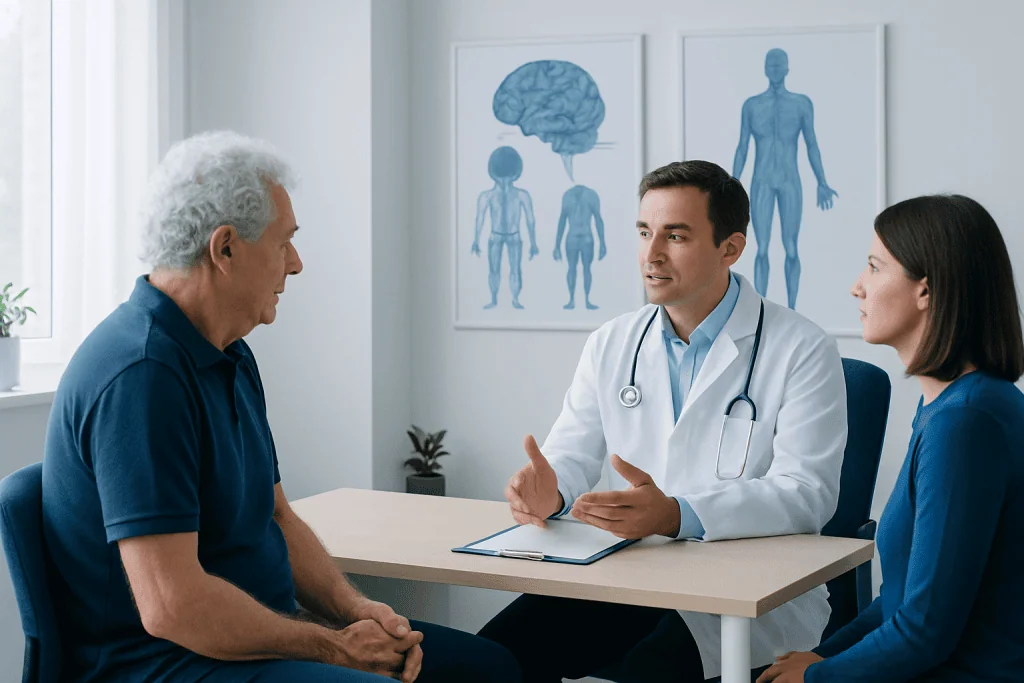
Diagnosis starts with a detailed history and neurological examination. The doctor asks when symptoms started, whether they are one-sided or symmetrical, whether weakness or tremor came first, and whether symptoms vary during the day. Walking pattern, muscle tone, coordination, reflexes, eye movements, sensation, and muscle strength can provide important clues. In Parkinson’s, the examination may show bradykinesia, rigidity, and resting tremor. In neuromuscular disease, the pattern may point more strongly to weakness, sensory loss, reduced reflexes, or fatigability.
Doctors may use different tests depending on what they suspect. Brain imaging such as MRI scanning may help rule out other causes of Parkinson-like symptoms, though Parkinson’s disease itself is often diagnosed clinically. Blood tests can look for inflammation, muscle enzyme elevation, vitamin deficiencies, thyroid problems, autoimmune markers, or metabolic causes of weakness.
When neuromuscular disease is suspected, electrophysiological tests are often especially helpful. Electromyography (EMG) and nerve conduction studies can show whether the problem lies in the nerve, the muscle, or the connection between them. In some cases, doctors may also use genetic testing, a muscle biopsy, respiratory testing, or specialized imaging of muscles or nerves.
If the diagnosis remains uncertain, referral to a neurologist with experience in movement disorders or neuromuscular disorders can be valuable. Some patients may need follow-up over time because the pattern of symptoms becomes clearer as the condition evolves. An accurate diagnosis helps guide the most appropriate treatment, rehabilitation, and long-term support plan.
Treatment options and long-term management
Treatment depends entirely on the diagnosis. In Parkinson’s disease, medicines that support dopamine pathways can reduce slowness, stiffness, and tremor in many patients. Care may also include physical therapy, speech and swallowing therapy, exercise programs, and sometimes advanced options such as deep brain stimulation for selected patients. Management usually aims to improve function, maintain mobility, and support quality of life over time.
Neuromuscular disease treatment varies by cause. Autoimmune conditions may respond to immunotherapy, while inherited muscle diseases often focus on rehabilitation, respiratory care, assistive devices, and monitoring for complications. If the issue is neuropathy, treatment may include addressing diabetes, vitamin deficiencies, medication side effects, or other underlying causes. Some conditions improve significantly when the root problem is identified early.
Rehabilitation is important in both groups, but the goals may differ. For Parkinson’s, therapy often emphasizes balance, gait, posture, flexibility, and movement amplitude. For neuromuscular disease, therapy may focus more on preserving strength, preventing contractures, reducing fatigue, supporting breathing, and adapting activities safely. Speech, occupational, and nutritional support may also be helpful depending on symptoms.
Care often works best when different specialists collaborate. Near the end of the diagnostic journey or during treatment planning, some patients benefit from evaluation in centers where neurologists, rehabilitation experts, and other specialists work together. Acibadem International’s multidisciplinary specialists in JCI-accredited hospitals diagnose and treat movement and neuromuscular conditions for international patients when such coordinated care is needed.
Prevention, self-care, and living well
There is no guaranteed way to prevent Parkinson’s disease or many neuromuscular diseases. Still, general health measures can support the nervous system and overall function. Regular physical activity, good sleep, a balanced diet, management of chronic conditions, and avoiding unnecessary toxin exposure may all play a supportive role. For people already diagnosed, staying active within safe limits is often one of the most helpful strategies.
Self-care should be tailored to symptoms. People with Parkinson’s may benefit from routines that encourage larger, more deliberate movements, home safety adjustments to reduce falls, and regular stretching or balance work. Those with neuromuscular disease may need energy-conservation strategies, mobility aids, respiratory monitoring, and careful planning around activities that worsen fatigue or overuse weak muscles.
Nutrition and swallowing deserve attention in both groups. If chewing or swallowing becomes difficult, assessment by a qualified specialist can help reduce the risk of dehydration, poor nutrition, or aspiration. Similarly, changes in mood, sleep, and social participation should not be overlooked, because chronic neurological symptoms can affect emotional well-being as much as physical ability.
Follow-up is important because symptoms can change over time. A person who was first thought to have one condition may later show features of another diagnosis or a mixed picture. Ongoing communication with the care team helps treatments stay appropriate and supports independence for as long as possible.
When to see a doctor
Medical evaluation is important if a person develops persistent tremor, slowness, stiffness, unexplained muscle weakness, frequent falls, changes in walking, or reduced hand function. Problems with swallowing, speech, facial weakness, double vision, or sudden loss of mobility should also be assessed. Early evaluation does not just identify serious causes; it can also prevent delays in treatment and rehabilitation.
Urgent medical attention is especially important for breathing difficulty, rapidly worsening weakness, choking, or sudden major changes in movement or consciousness. These symptoms can signal conditions that need prompt care. New weakness after infection, exposure to a toxin, or medication changes should also be reviewed quickly.
It is helpful for patients or families to keep a note of symptom timing, triggers, and progression before the appointment. Information about family history, current medications, and associated symptoms such as numbness, constipation, sleep changes, or fluctuating fatigue can make the assessment more precise. Videos of abnormal movements or episodes of weakness can sometimes help if symptoms are intermittent.
A doctor may recommend further evaluation if the pattern does not clearly fit Parkinson’s disease or a single neuromuscular disorder. In some cases, symptoms may resemble other neurological conditions, and additional testing is the safest way to reach the right diagnosis. Clear answers can take time, but careful assessment is the best path toward effective care.
Frequently asked questions
Is Parkinson’s disease a neuromuscular disease?
No. Parkinson’s disease is generally considered a movement disorder and a neurodegenerative condition that mainly affects the brain. Neuromuscular diseases affect peripheral nerves, muscles, or the neuromuscular junction rather than the brain’s movement-control circuits.
What is the main symptom difference between Parkinson’s and neuromuscular disease?
A common difference is that Parkinson’s often causes slowness, stiffness, and resting tremor, while neuromuscular disease more often causes true muscle weakness. Neuromuscular disorders may also cause numbness, muscle wasting, or fatigue that worsens with repeated use. The exact pattern depends on the specific diagnosis.
Can Parkinson’s be mistaken for a neuromuscular disorder?
Yes, especially early on or when symptoms are mild. Both can affect walking, speech, swallowing, and daily function. A neurological examination and targeted tests help clarify whether the main problem is in the brain, peripheral nerves, or muscles.
Do neuromuscular diseases cause tremor like Parkinson’s?
Some neuromuscular conditions can cause shakiness, muscle twitching, or unsteady movement, but the classic resting tremor seen in Parkinson’s is different. Tremor alone does not confirm Parkinson’s, and weakness alone does not confirm a neuromuscular disease. The full clinical picture matters.
Which tests are used to diagnose these conditions?
Doctors usually begin with a medical history and neurological examination. Depending on the findings, tests may include MRI, blood tests, EMG, nerve conduction studies, genetic testing, or other specialized evaluations. Not every patient needs every test.
Are both conditions treatable?
Many symptoms in both Parkinson’s disease and neuromuscular disorders can be treated or managed, although the approach differs by diagnosis. Treatment may include medication, rehabilitation, speech and swallowing support, and monitoring for complications. The earlier the correct diagnosis is made, the easier it is to plan effective care.
References
- World Health Organization
- National Institute of Neurological Disorders and Stroke
- Parkinson's Foundation
- Muscular Dystrophy Association
- American Academy of Neurology
This article is for general information only and is not a substitute for professional medical advice. Please consult a qualified doctor about your individual situation.
Explore treatments in Turkey — costs, top hospitals & a free quote
JCI-accredited · board-certified surgeons · reply within 24h
Add us as a Preferred Source to see more of our trusted health content across Google Search, AI Overviews and Discover.