Parts of the Foot: An Evidence-Based Guide for Patients

Each foot contains 26 bones and a network of joints, ligaments, tendons, muscles, nerves, and blood vessels. The forefoot, midfoot, and hindfoot each have different roles in balance, movement, and shock absorption.
Key Takeaways
- Each foot contains 26 bones and a network of joints, ligaments, tendons, muscles, nerves, and blood vessels.
- The forefoot, midfoot, and hindfoot each have different roles in balance, movement, and shock absorption.
- Pain in a specific part of the foot can offer clues about the structures involved, but diagnosis should be confirmed by a clinician.
- Supportive footwear, gradual activity changes, and early attention to symptoms can help prevent many foot problems.
- Persistent pain, swelling, numbness, deformity, or difficulty walking should be medically evaluated.
The parts of the foot include bones, joints, muscles, tendons, ligaments, nerves, blood vessels, and soft tissue that work together to support standing, walking, and balance. Understanding basic foot anatomy can help patients recognize common symptoms, protect foot health, and know when medical assessment may be helpful.
Overview: what are the parts of the foot?
The parts of the foot can be understood in two practical ways: by region and by tissue type. By region, the foot is divided into the forefoot, midfoot, and hindfoot. By tissue type, it includes bones, joints, cartilage, ligaments, tendons, muscles, nerves, blood vessels, skin, and fatty cushioning. Together, these structures help the body stand upright, absorb impact, adapt to uneven ground, and move efficiently.
Each foot has 26 bones and more than 30 joints, supported by many ligaments and muscles. The foot may look small compared with the rest of the body, but it carries body weight with every step. Because of this constant demand, even minor irritation in one structure can affect walking, exercise, work, and daily comfort.
For patients, learning the parts of the foot is useful because symptoms often relate to location. Heel pain may involve the hindfoot or plantar tissues, pain under the ball of the foot often points to the forefoot, and arch pain may involve the midfoot. Anatomy alone does not diagnose a condition, but it helps patients describe symptoms clearly and seek the right care.
Regions of the foot and what they do
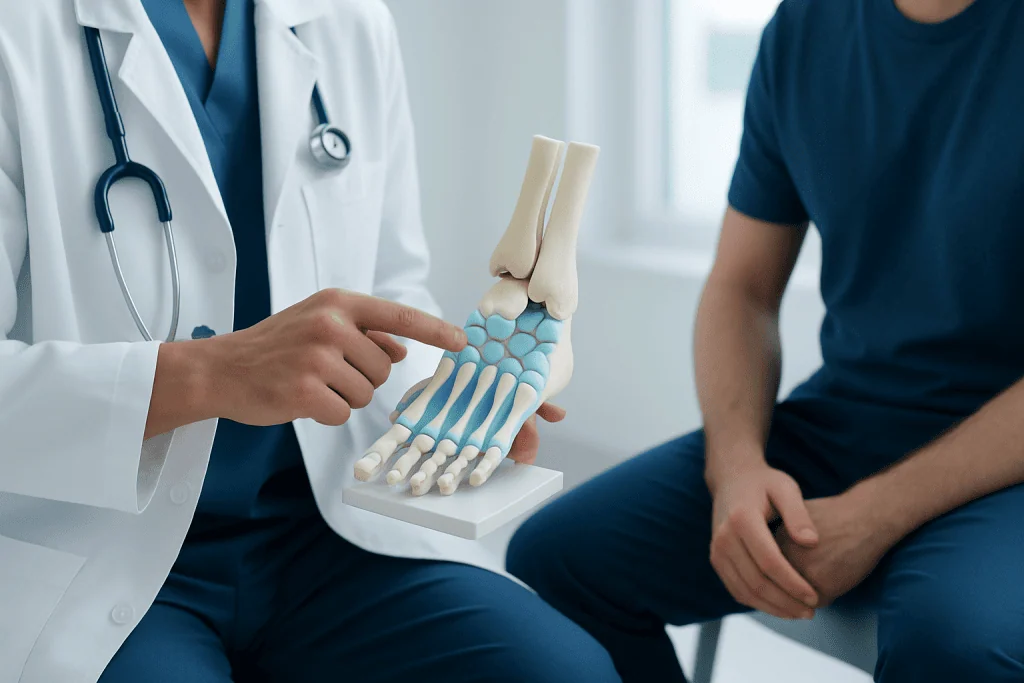
The forefoot includes the toes, also called phalanges, and the five long metatarsal bones. This region helps with push-off during walking and running. It also plays a major role in balance and weight transfer. The big toe is especially important for forward movement, and problems in this area can make walking feel weak or unstable.
The midfoot forms the arch of the foot. It contains a group of smaller bones, including the navicular, cuboid, and cuneiform bones. These structures act like a flexible bridge between the front and back of the foot. The arch helps distribute body weight, stores and releases energy during movement, and adjusts to different surfaces.
The hindfoot includes the heel bone, called the calcaneus, and the talus, which connects the foot to the ankle. This region absorbs impact when the heel strikes the ground and helps guide motion at the ankle and subtalar joints. Healthy function in the hindfoot is important for shock absorption, alignment, and smooth walking mechanics.
- Forefoot: toes and metatarsals; push-off and balance
- Midfoot: arch structures; support and weight distribution
- Hindfoot: heel and rearfoot bones; impact absorption and alignment
Bones, joints, muscles, tendons, and ligaments
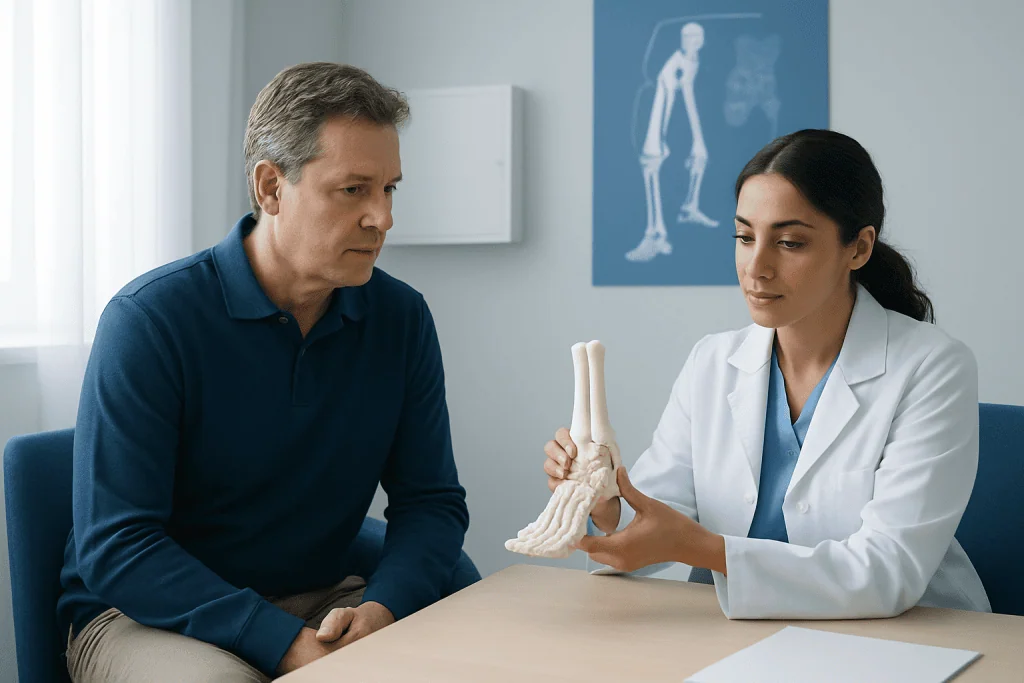
The bones of the foot are often grouped into three sets: tarsals, metatarsals, and phalanges. The tarsal bones make up the rear and middle parts of the foot, the metatarsals form the long bones in the front half, and the phalanges are the toe bones. Cartilage covers joint surfaces to reduce friction, while joints allow the foot to bend, adapt, and transfer forces with movement.
Ligaments are strong bands of connective tissue that hold bones together and help stabilize the foot. One important structure on the sole is the plantar fascia, a thick band that supports the arch. When this tissue becomes irritated, it can contribute to heel and arch pain, often discussed in relation to plantar fasciitis.
Tendons attach muscles to bones and allow the foot and toes to move. The Achilles tendon connects the calf muscles to the heel and helps with walking, climbing stairs, and standing on tiptoe. Other tendons support the arch, lift the foot, or curl the toes. Small intrinsic muscles within the foot provide fine control, while larger muscles in the lower leg power many of the stronger movements.
Nerves supply sensation to the top, sole, heel, and toes, while blood vessels deliver oxygen and nutrients. The skin and fatty pads on the sole protect deeper tissues from pressure. If any of these structures are irritated, compressed, inflamed, injured, or overused, symptoms may develop in a specific area of the foot.
How each part of the foot supports walking and balance
Walking is a coordinated sequence rather than a single movement. The heel usually contacts the ground first, allowing the hindfoot to absorb impact. The midfoot then helps stabilize the body while adapting to surface changes. Finally, the forefoot and toes create push-off, moving the body forward. If one part is weak, painful, or stiff, other parts may compensate and become overloaded.
The arches of the foot are especially important. The medial longitudinal arch, the lateral arch, and the transverse arch work together to distribute forces. These arches are supported by bone shape, ligaments, fascia, and muscle activity. In some people, low arches or high arches can change the way pressure is spread across the foot.
Balance depends on both structure and sensation. The sole of the foot constantly sends information to the brain about pressure and position. This is one reason foot numbness, nerve irritation, or poorly fitting footwear can affect stability. In older adults and people with diabetes, reduced sensation can increase the risk of falls and unnoticed injury.
Because the foot functions as part of the whole movement chain, problems in the ankle, knee, hip, or spine can also influence foot mechanics. In the same way, untreated foot pain can change posture and walking patterns. A careful clinical evaluation looks not only at one painful spot, but at alignment and movement more broadly.
Common symptoms and what location may suggest
Symptoms in the foot may include pain, swelling, stiffness, burning, numbness, tingling, redness, weakness, cramping, deformity, or difficulty bearing weight. The exact location can help guide evaluation. Heel pain is often linked to overload of soft tissues or the heel bone area. Pain in the arch may relate to ligaments, fascia, tendon strain, or midfoot joint problems. Pain in the ball of the foot can involve the metatarsals, joints, or nerves between the toes.
Toe symptoms may include swelling, tenderness, nail changes, or a feeling that a joint is rubbing in the shoe. Bunions affect the base of the big toe and can change foot shape over time, while hammertoes can create pressure on the top or tip of a toe. Some forefoot symptoms also overlap with nerve irritation, such as burning or tingling.
Outer foot pain may point to tendon strain, ligament injury, or stress on the side of the foot. Pain at the back of the heel can involve the Achilles tendon. Sudden pain after a twist or misstep may suggest a sprain or fracture, whereas pain that develops gradually is more often related to overuse, training changes, joint wear, or footwear issues.
Although location offers clues, symptoms are not always specific. For example, numbness can arise from a local nerve problem, but it may also be related to circulation or a condition affecting the nerves more generally. Persistent or unexplained symptoms deserve medical assessment rather than self-diagnosis alone.
Common causes of foot problems and how doctors diagnose them
Foot symptoms can develop for many reasons. Common causes include overuse, sudden injury, poor shoe fit, repetitive impact, excess pressure on one area, inflammatory conditions, nerve compression, age-related changes, and structural differences such as flat feet or high arches. Body weight, occupation, sports, and standing for long periods can also affect risk.
Examples of common conditions include sprains, stress fractures, tendon inflammation, bunions, plantar fasciitis, and arthritis. Joint wear may contribute to stiffness and pain in some adults, especially when symptoms are chronic or worsen with activity. In selected cases, a clinician may consider related conditions such as osteoarthritis if joint degeneration is suspected.
Diagnosis usually starts with a medical history and physical examination. A doctor asks where the pain is felt, when it started, what makes it better or worse, whether there was an injury, and whether there are symptoms such as numbness, fever, or swelling. The examination may assess tenderness, range of motion, alignment, walking pattern, skin changes, circulation, and nerve function.
If needed, imaging or other tests may help confirm the cause. X-rays can evaluate bone alignment, arthritis, or fractures. Ultrasound or MRI may be used for tendons, ligaments, fascia, or other soft tissues. Blood tests are not routine for every foot complaint, but they may be considered if infection, inflammatory disease, or metabolic conditions are possible.
Treatment options and self-care for foot health
Treatment depends on the structure involved and the cause of symptoms. Many mild foot problems improve with activity modification, relative rest, ice, elevation, supportive footwear, and a gradual return to normal activity. Stretching and strengthening exercises may help restore function, especially when guided by a clinician or physical therapist. Orthotic inserts or cushioning can reduce pressure on sensitive areas for some patients.
Medical treatment may include targeted physical therapy, bracing, taping, or medication advice from a doctor. When imaging identifies a specific injury or structural issue, management can be tailored more precisely. For persistent pain, doctors may recommend formal physical therapy and rehabilitation to improve strength, flexibility, and walking mechanics.
Some conditions need more specialized care. Fractures, severe deformities, advanced joint damage, tendon tears, or symptoms that do not improve with conservative treatment may require input from an orthopedic or foot specialist. In selected cases, doctors may discuss orthopedic surgery if non-surgical treatment is not enough or if the problem significantly limits daily life.
Foot care is especially important for people with diabetes, circulation problems, or reduced sensation. Daily inspection, nail and skin care, and early attention to blisters or sores can help prevent complications. Near the end of the care pathway, patients who need coordinated evaluation may also be seen by multidisciplinary specialists; Acibadem International’s JCI-accredited hospitals diagnose and treat foot-related conditions for international patients.
Prevention and when to seek medical care
Protecting foot health starts with everyday habits. Shoes should fit well, provide adequate support, and match the activity. Sudden increases in walking, running, or sports intensity are a common trigger for overuse symptoms, so gradual progression is helpful. Maintaining strength, flexibility, and a healthy body weight may also reduce stress on the feet.
Patients can lower risk by replacing worn shoes, avoiding prolonged pressure on one area, and paying attention to early warning signs such as aching after activity, new swelling, or recurrent rubbing. People with diabetes should check their feet daily and seek care early for cuts, color changes, warmth, swelling, or areas that do not heal. Prevention is often easier and more effective than treating an established problem.
Medical care should be sought promptly if there is severe pain, inability to bear weight, major swelling, visible deformity, a wound, signs of infection, or symptoms after a significant injury. Evaluation is also important for numbness, persistent burning, repeated ankle or foot instability, or pain that lasts more than a short time despite rest and simple measures.
A doctor should also assess children with unexplained limping, adults with night pain or rapidly worsening symptoms, and anyone with diabetes or poor circulation who develops a new foot problem. Early diagnosis can help protect mobility and reduce the risk of longer-term complications.
Frequently asked questions
How many bones are in the foot?
Each foot has 26 bones. These bones work with joints, ligaments, tendons, and muscles to support standing, walking, and balance.
What are the three main regions of the foot?
The foot is commonly divided into the forefoot, midfoot, and hindfoot. The forefoot helps with push-off, the midfoot supports the arch, and the hindfoot absorbs impact and connects foot motion to the ankle.
Why does pain location matter in the foot?
The location of pain can suggest which structures may be involved, such as the heel, arch, ball of the foot, or toes. However, location alone is not enough for diagnosis, so persistent symptoms should be assessed by a qualified clinician.
Can footwear affect the parts of the foot?
Yes. Tight, unsupportive, or worn-out shoes can increase pressure on certain bones, joints, nerves, and soft tissues. Well-fitting shoes can help reduce friction, improve support, and lower the risk of some common foot problems.
When should someone see a doctor for foot pain?
Medical assessment is important for severe pain, inability to walk, major swelling, numbness, deformity, wounds, or signs of infection. A doctor should also be seen if foot pain does not improve with rest and simple self-care.
Are foot problems more common in people with diabetes?
People with diabetes may be at higher risk of foot complications because of reduced sensation and circulation problems. Even small cuts, blisters, or pressure areas should be noticed early and discussed with a healthcare professional.
References
- American Academy of Orthopaedic Surgeons
- National Institute of Arthritis and Musculoskeletal and Skin Diseases
- MedlinePlus
- American Podiatric Medical Association
This article is for general information only and is not a substitute for professional medical advice. Please consult a qualified doctor about your individual situation.
Joint and spine care in Turkey — expert assessment & treatment
JCI-accredited · board-certified surgeons · reply within 24h
Add us as a Preferred Source to see more of our trusted health content across Google Search, AI Overviews and Discover.