PCL Tear Recovery: A Week-by-Week Timeline
A PCL tear can often be managed without surgery when it is isolated and the knee remains stable. Early protection, swelling control and guided physiotherapy are central to PCL recovery.
Key Takeaways
- A PCL tear can often be managed without surgery when it is isolated and the knee remains stable.
- Early protection, swelling control and guided physiotherapy are central to PCL recovery.
- Walking may be possible with a PCL tear, but limping, pain or a feeling of instability should be assessed.
- Recovery after PCL reconstruction is gradual because the graft and surrounding muscles need time to heal and strengthen.
- A knee injury after major trauma, or one with inability to bear weight, numbness or marked swelling, needs prompt medical evaluation.
PCL tear recovery time varies with the injury grade, other knee damage, activity demands, and whether surgery is needed. Many isolated partial tears improve with structured rehabilitation over several months, while recovery after PCL reconstruction commonly takes longer and return to pivoting sports may take 9 to 12 months or more.
PCL Tear Recovery Time: What to Expect
PCL tear recovery time is often several months, although the exact timeline depends on whether the ligament is partially or completely torn, whether other knee structures are injured, and whether treatment is non-surgical or surgical. An isolated low-grade PCL injury may allow a gradual return to everyday activities within weeks, while rebuilding strength and confidence for sport commonly takes several months.
The posterior cruciate ligament (PCL) is a strong band of tissue deep inside the knee. It connects the thighbone to the shinbone and helps prevent the shinbone from moving too far backward. A PCL injury may happen after a direct blow to the front of a bent knee, a fall, a sporting collision, or a road traffic accident. It may occur alone or alongside injuries to cartilage, menisci, other ligaments, or bone.
Recovery should be based on function rather than a calendar alone. A clinician or physiotherapist considers pain, swelling, knee motion, walking pattern, strength, stability and the requirements of work or sport. Care plans for PCL injuries are individualized because a stable isolated tear is managed differently from a multi-ligament knee injury.
Symptoms and Factors That Affect Recovery
A PCL tear may cause pain and swelling shortly after injury, particularly if it followed a significant impact. Some people notice stiffness, tenderness at the back of the knee, difficulty going downstairs, or a sense that the knee does not feel fully reliable. Unlike some ACL tears, a PCL tear may not always cause a dramatic popping sensation or immediate inability to walk.
Doctors commonly describe PCL injuries by grade. Grade I and II injuries involve stretching or partial tearing, while a grade III injury is a complete tear with greater looseness of the knee. The grade is useful, but it is not the only factor that guides treatment. Persistent instability, knee alignment, cartilage or meniscal damage, activity level, and associated ligament injuries can all affect the likely recovery course.
Healing also depends on consistent rehabilitation. Quadriceps weakness can allow the shinbone to sit farther back than intended, increasing strain on the healing PCL. For this reason, rehabilitation usually emphasizes safe quadriceps activation, controlled movement and progressive strengthening while avoiding activities that place excessive backward force on the shinbone too early.
- Isolated, lower-grade tears may respond well to non-surgical rehabilitation.
- High-energy injuries may require assessment for damage to several ligaments, nerves or blood vessels.
- People whose work or sport involves frequent pivoting, jumping or heavy physical demands may need a longer, more structured return-to-activity plan.
Diagnosis and Choosing the Right Treatment

Diagnosis begins with a detailed history of how the injury happened and a physical examination. A clinician checks knee swelling, range of motion, tenderness, walking, and the amount of backward movement of the shinbone. Examination of the other ligaments, circulation and nerve function is especially important after major trauma or a knee dislocation.
X-rays may be used to look for fractures or a small piece of bone pulled away where the ligament attaches. Magnetic resonance imaging (MRI) can show the PCL and identify associated injuries to the meniscus, cartilage, bone or other ligaments. Imaging supports the diagnosis, but symptoms and examination findings help determine the practical impact of the tear.
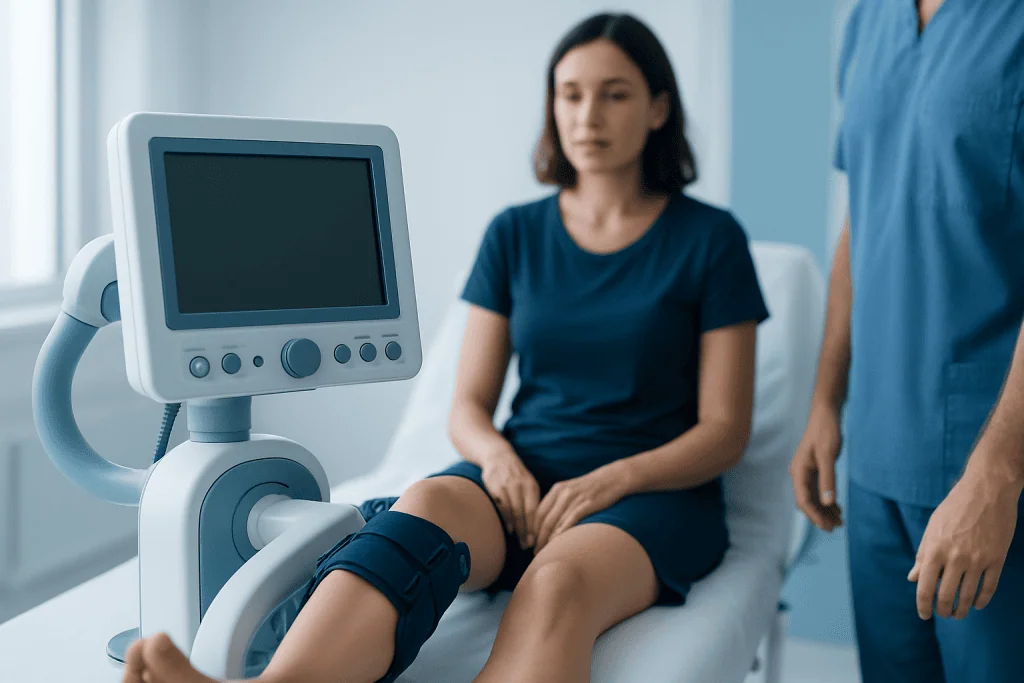
Many isolated PCL tears are treated without an operation. This may include temporary bracing, crutches if needed, activity modification and a supervised physiotherapy program. Surgery may be considered when there is ongoing functional instability despite rehabilitation, a severe combined ligament injury, an avulsion fracture needing fixation, or a person has demands that cannot be met safely with a PCL-deficient knee.
When reconstruction is advised, an orthopedic surgeon can explain the role of PCL reconstruction, the alternatives, and how accompanying injuries may influence the procedure and rehabilitation plan.
PCL Reconstruction: How It Works and Who May Need It
PCL reconstruction is a procedure that creates a new functional ligament using a graft. The graft may come from the patient’s own tissue or from donor tissue, depending on the clinical situation and the surgical team’s recommendation. It is generally not the first treatment for every PCL tear; it is considered when the expected benefits of improved stability and function outweigh the risks and recovery demands.
Suitable candidates may include people with a complete tear causing persistent instability, those with combined knee ligament injuries, or those who have not regained satisfactory function after a well-designed rehabilitation program. The decision also considers knee alignment, cartilage health, medical history, occupation, sport and personal goals. Surgery is not automatically necessary simply because an MRI shows a tear.
During the procedure, the surgeon typically performs arthroscopy to inspect the inside of the knee and treat associated problems if appropriate. Small tunnels are then prepared in the bones, the graft is positioned to reproduce the PCL’s role, and it is secured with fixation devices. The exact approach differs according to the injury pattern and whether other ligaments are reconstructed at the same time.
The potential benefit is improved knee stability for selected patients. Risks include infection, bleeding, blood clots, stiffness, ongoing pain, numbness around incisions, graft stretching or failure, and the possibility that symptoms may not fully resolve. Rehabilitation is essential after surgery and is a major part of achieving the best possible result.
Week-by-Week PCL Tear Recovery Timeline
Weeks 0 to 2: The first priorities are protecting the knee, reducing swelling and maintaining safe movement. Depending on the injury and treatment plan, a brace may support the knee and crutches may reduce weight-bearing. Ice, elevation and pain relief recommended by a clinician can improve comfort. Exercises often begin with gentle range-of-motion work and quadriceps activation, but the exact limits should follow the treating team’s guidance.
Weeks 2 to 6: Walking is gradually normalized when safe, sometimes while still using a brace. Physiotherapy focuses on improving knee motion, reducing limp, and building controlled quadriceps strength. Hamstring loading may be limited early because hamstring contraction can pull the shinbone backward and stress the PCL. People should avoid running, deep squats, twisting and impact activities unless specifically cleared.
Weeks 6 to 12: Many people progress to more challenging strength, balance and movement-control exercises. Swelling should be settling, and daily activities may become easier. Exercise choices remain individualized: an isolated non-surgical injury may progress differently from a reconstructed knee or a multi-ligament injury. A return to cycling, swimming or low-impact conditioning may be considered when movement and strength allow.
Months 3 to 6 and beyond: Rehabilitation commonly advances toward functional strength, controlled jogging, change-of-direction drills and sport-specific practice when appropriate. After PCL reconstruction, return to running and pivoting sport is usually based on objective strength, stability and movement testing rather than time alone. Full return to cutting, contact or jumping sports can take 9 to 12 months or longer, particularly when other structures were repaired or reconstructed.
How to Speed Up PCL Recovery?
The safest way to support faster PCL recovery is to follow the rehabilitation plan consistently rather than trying to accelerate beyond the knee’s healing capacity. Attending physiotherapy, completing prescribed home exercises with correct technique, and reporting increased swelling or instability can help the care team adjust the plan promptly.
Rest from painful or high-risk activities is important, but complete inactivity for long periods can contribute to stiffness and muscle weakness. A physiotherapist can guide appropriate movement and gradual loading. Good sleep, balanced nutrition, adequate protein intake, hydration, and avoiding tobacco products also support general tissue healing and training recovery.
It is important not to use pain reduction alone as proof that the knee is ready for sport. A knee can feel better before it has recovered adequate strength and control. Returning too quickly to running, contact activity, heavy lifting or deep knee-flexion exercises may prolong symptoms or increase the risk of further injury.
Rehabilitation programs may overlap with care for related knee concerns, such as meniscus tears or ACL tears, when these occur with a PCL injury. The exercises and return-to-sport criteria may need modification if multiple structures are involved.
Can I Walk Normally With a Torn PCL?
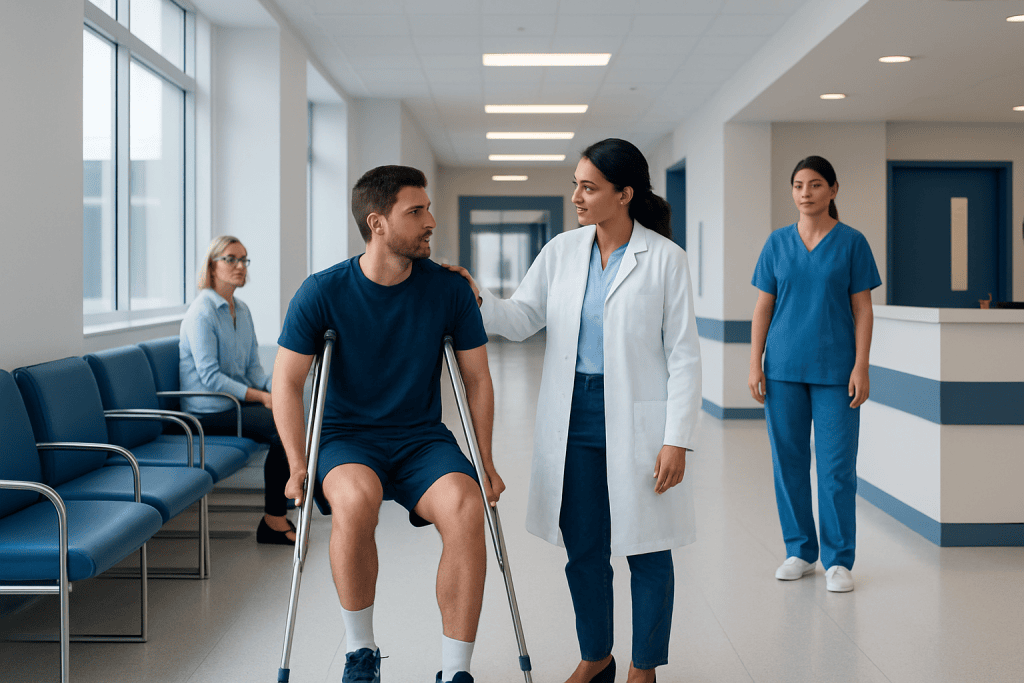
Some people can walk with a torn PCL, especially with an isolated partial tear, but normal walking may not be comfortable immediately after the injury. Swelling, pain, stiffness and a limp are common early on. A brace or crutches may be recommended temporarily to protect the knee and help restore a normal gait pattern.
Being able to walk does not rule out a significant injury. Some people compensate well in daily life but notice difficulty on stairs, slopes, uneven ground or during sport. Others develop a feeling that the knee shifts backward or gives way when the quadriceps are weak or the knee is loaded in certain positions.
Walking should progress according to medical advice. If walking causes increasing pain, repeated swelling, buckling, or loss of confidence in the knee, the person should reduce activity and contact a qualified clinician or physiotherapist. Driving and physically demanding work should also wait until knee control and emergency braking ability are safely restored.
Is a PCL Tear as Bad as an ACL? How Painful Is a PCL Tear?
Is a PCL tear as bad as an ACL? Neither injury is automatically “worse” in every person. ACL tears more often cause rotational instability during pivoting sports, while PCL tears affect backward stability of the shinbone and can be particularly important when they occur with other ligament injuries. An isolated PCL tear may be successfully managed without surgery more often than an isolated ACL tear, but severe PCL injuries and combined injuries can be complex and should be assessed by an orthopedic specialist.
How painful is a PCL tear? Pain varies considerably. Some people have substantial pain and swelling after the initial impact, while others experience only mild discomfort and mainly notice stiffness, weakness or instability. Pain can also come from associated bruising, bone injury, meniscal injury or damage to other ligaments rather than the PCL alone.
Pain that is severe, worsening, or accompanied by a cold or pale foot, numbness, marked deformity, inability to bear weight, or rapidly increasing swelling needs urgent assessment. For ongoing symptoms, an orthopedic evaluation can clarify the injury and support a safe rehabilitation plan. Acibadem International’s multidisciplinary specialists and JCI-accredited hospitals diagnose and treat knee ligament injuries for international patients.
When to Seek Medical Care
Medical assessment is recommended after a significant knee impact, fall or twisting injury, particularly when there is swelling, reduced movement, a limp, or a feeling that the knee is unstable. A prompt evaluation is valuable when symptoms do not improve over several days or when returning to physical work or sport is difficult.
Urgent medical care is needed after major trauma if the knee appears deformed, the person cannot bear weight, or the foot becomes numb, weak, cold, pale or unusually painful. These symptoms can indicate injuries beyond the ligament itself and should not be managed at home.
People recovering with rehabilitation should contact their clinician if pain or swelling suddenly increases, the knee repeatedly gives way, fever or wound concerns develop after surgery, or prescribed exercises cannot be performed safely. Regular follow-up helps ensure the plan matches healing progress and functional goals.
Frequently asked questions
How long does a PCL tear take to heal?
A partial, isolated PCL tear may improve over several weeks to a few months with protection and rehabilitation. Regaining full strength, balance and confidence for sport often takes longer. Complete tears, combined ligament injuries and surgical reconstruction generally require a longer recovery period.
Do all PCL tears need surgery?
No. Many isolated PCL tears can be treated with a brace, activity modification and physiotherapy. Surgery may be considered for persistent instability, severe complete tears, certain bone avulsion injuries, or combined ligament damage.
Can a PCL tear heal without surgery?
Some PCL injuries can heal or become functionally stable without surgery, particularly partial and isolated tears. However, healing does not always mean the ligament returns exactly to its original form or tension. Follow-up assessment helps determine whether the knee has regained adequate stability and function.
When can someone run after a PCL tear?
Running should begin only after pain and swelling are controlled and the person has adequate knee motion, strength and movement control. The timing varies by injury severity, treatment type and rehabilitation progress. A physiotherapist or orthopedic clinician should provide individualized clearance.
What exercises should be avoided early in PCL recovery?
Early rehabilitation often limits movements that pull the shinbone backward, including certain resisted hamstring exercises and deep knee-flexion activities. Running, jumping, twisting and contact sports are also commonly postponed. Exact restrictions depend on whether the injury is treated non-surgically or with reconstruction.
Can a PCL tear cause long-term knee problems?
Some people recover good everyday function, particularly after an isolated injury and appropriate rehabilitation. Persistent looseness of the knee can, however, alter joint loading and may contribute to discomfort or wear in some individuals over time. Ongoing instability, recurrent swelling or reduced activity tolerance should be reviewed by an orthopedic clinician.
References
- American Academy of Orthopaedic Surgeons
- OrthoInfo – American Academy of Orthopaedic Surgeons
- National Institute of Arthritis and Musculoskeletal and Skin Diseases
- Mayo Clinic
- American Orthopaedic Society for Sports Medicine
This article is for general information only and is not a substitute for professional medical advice. Please consult a qualified doctor about your individual situation.
Joint and spine care in Turkey — expert assessment & treatment
JCI-accredited · board-certified surgeons · reply within 24h
Add us as a Preferred Source to see more of our trusted health content across Google Search, AI Overviews and Discover.