

Pediatric EEG: How Children Prepare and What Parents Can Expect
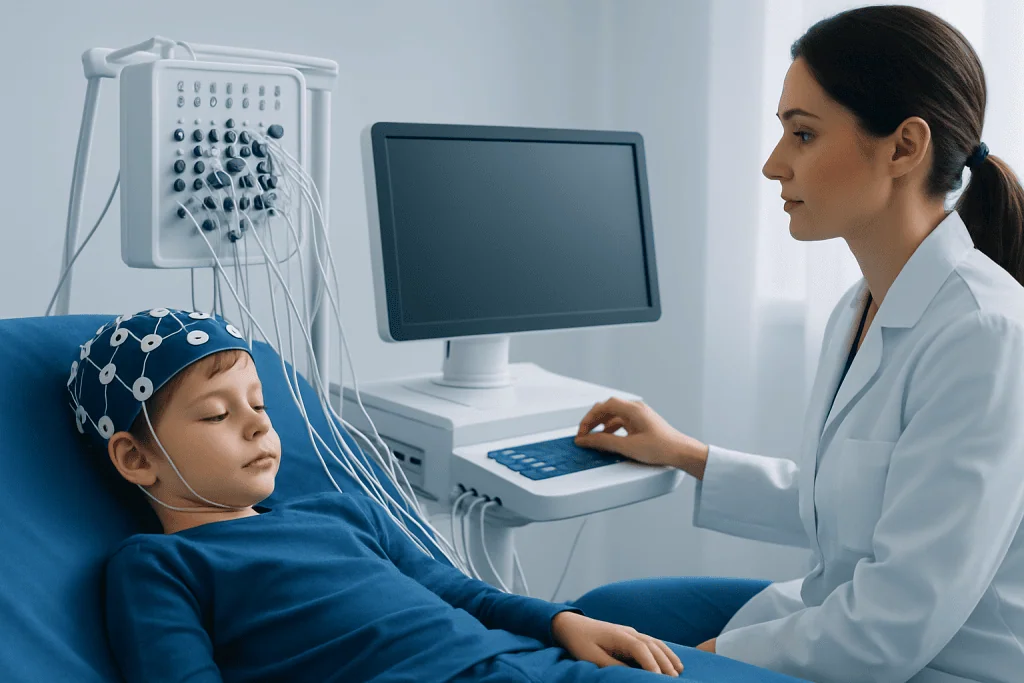
A pediatric EEG measures brain wave patterns using small sensors placed on the scalp. The test is painless, but young children may need extra reassurance and preparation.
Key Takeaways
- A pediatric EEG measures brain wave patterns using small sensors placed on the scalp.
- The test is painless, but young children may need extra reassurance and preparation.
- Doctors use EEG results to help evaluate seizures, staring spells, sleep-related events, and other neurological symptoms.
- Preparation may include clean hair, following sleep instructions, and bringing comfort items for the child.
- An EEG alone does not diagnose every condition; results are interpreted together with symptoms, history, and other tests.
A pediatric EEG is a safe, painless test that records electrical activity in a child’s brain. Knowing how to prepare and what happens before, during, and after the test can help parents and children feel more comfortable.
Overview: What Is a Pediatric EEG?
A pediatric EEG, or electroencephalogram, is a test that records the brain’s electrical activity. The brain constantly sends tiny electrical signals, and an EEG captures these signals through small sensors called electrodes placed on the child’s scalp. The test does not send electricity into the body and does not hurt.
Doctors may recommend an EEG when a child has symptoms such as seizures, unusual staring episodes, fainting-like events, abnormal movements, developmental concerns, or sleep-related behaviors that need further evaluation. In many cases, the EEG is one part of a larger neurological assessment.
For parents, the idea of a brain test can sound worrying. In practice, a pediatric EEG is a routine, noninvasive procedure performed in hospitals or outpatient neurophysiology units. The goal is to gather useful information while keeping the child as calm and comfortable as possible.
Why a Child May Need an EEG
An EEG is commonly used to help evaluate suspected seizures or epilepsy. It can show patterns in brain activity that suggest a tendency toward seizures, although a normal EEG does not completely rule them out. The results are most helpful when they are considered alongside the child’s symptoms and medical history.
Doctors may also use EEG testing to look into episodes that are not clearly seizures, such as staring spells, sudden jerking movements, unexplained loss of awareness, or unusual nighttime events. In some children, EEG can support the assessment of encephalopathy, brain inflammation, or recovery after certain illnesses or injuries.
Depending on the child’s symptoms, the care team may combine EEG findings with other evaluations, such as neurological examination, sleep assessment, or imaging. When needed, related tests may include MRI imaging or CT scanning, especially if there is concern about brain structure as well as brain activity.
How Children Prepare for a Pediatric EEG
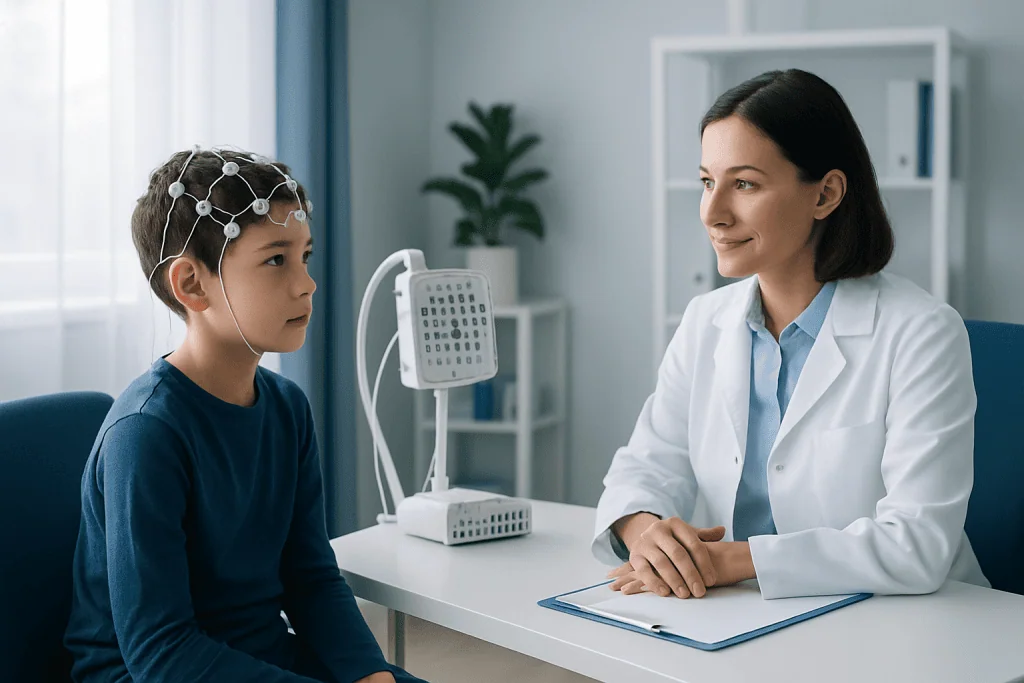
Preparation for a pediatric EEG is usually simple. Parents are often asked to wash the child’s hair the night before or the day of the test and avoid oils, sprays, gels, or leave-in conditioners. Clean, dry hair helps the electrodes stick properly and improves recording quality.
Some children will be asked to follow sleep instructions before the test. For example, the doctor may request partial sleep deprivation so the child is more likely to nap during the EEG, since sleep can reveal important brain wave patterns. Parents should follow the exact instructions provided by the medical team rather than changing sleep schedules on their own.
It can also help to prepare the child emotionally. Simple explanations such as “the stickers help the doctor look at how your brain works” are often enough for younger children. Bringing a favorite toy, blanket, book, snack for afterward, or comfort item can make the visit feel more manageable. If the child takes regular medicines, parents should ask in advance whether these should be taken as usual.
What Parents Can Expect During the Test
At the appointment, a technician measures the child’s head and places small electrodes on different parts of the scalp using a special paste or adhesive. This part can feel unfamiliar or messy, but it should not be painful. The child then lies on a bed or sits in a comfortable position while the machine records brain wave activity.
The recording itself may last from about 20 minutes to longer, depending on the reason for testing and the type of EEG ordered. Some children have a routine EEG, while others may need sleep EEG, prolonged EEG, or video EEG monitoring. During the test, the technician may ask the child to open and close their eyes, breathe deeply for a short time, or look at flashing lights. These steps help reveal changes in brain activity.
Parents are often allowed to stay with the child, especially for younger age groups. Their presence can be very reassuring. The most difficult part for many children is staying still, because movement can interfere with the recording. Gentle encouragement, distraction, and age-appropriate explanations usually help.
If prolonged or video EEG monitoring is needed, the child may remain under observation for a longer period to capture events as they happen. This is sometimes recommended when doctors need more information than a routine EEG can provide, particularly in the assessment of epilepsy or unusual episodes that are hard to classify.
Is Pediatric EEG Safe?
A pediatric EEG is considered very safe. It is noninvasive, painless, and does not expose the child to radiation. The electrodes only record electrical activity from the brain; they do not deliver shocks or alter how the brain works.
Some parts of the test, such as flashing lights or deep breathing, may briefly trigger symptoms in children who are already prone to certain seizure types. For that reason, EEG is performed by trained staff who know how to monitor the child and respond if an event occurs. In many cases, provoking a typical event during a supervised test can provide valuable diagnostic information.
Rarely, children may become tired, irritable, or upset, especially if sleep deprivation was part of preparation. Any glue or paste used for the electrodes can usually be washed out afterward. Parents can ask the team what to bring for cleanup and whether the child can return to school or usual activities the same day.
Understanding the Results
EEG recordings are interpreted by a specialist, usually a neurologist or neurophysiologist. The report looks at the background brain wave pattern and checks for any abnormal discharges or changes that might suggest seizures or other brain dysfunction. Results are not always immediate, as careful review is important.
A normal EEG can be reassuring, but it does not always exclude a neurological condition. Some children with epilepsy have normal recordings between seizures, while others may show changes that support the diagnosis. Likewise, an abnormal EEG does not automatically mean a child has epilepsy; findings must be matched to the clinical picture.
If results suggest a seizure disorder, the doctor may discuss further evaluation or treatment. Depending on the child’s needs, next steps may involve follow-up in pediatric neurology, more detailed monitoring, or treatment planning that may include epilepsy treatment. In some cases, doctors may also consider whether episodes could be related to sleep disorders, fainting, migraines, or other conditions.
After the EEG: Next Steps and Follow-Up
Most children can go home soon after a routine EEG and resume their normal activities unless the doctor advises otherwise. If the child was sleep-deprived, rest may be helpful afterward. Families should watch for any usual symptoms or episodes and report them at the follow-up visit, especially if they continue despite a normal study.
Parents can help by keeping a symptom diary before and after the EEG. Notes about what happened, how long an event lasted, whether the child responded, and what recovery looked like can be very useful. Videos of unusual episodes, taken safely when possible, may also support diagnosis.
Further testing is sometimes needed if the EEG does not fully explain the child’s symptoms. For example, a doctor may recommend additional neurological evaluation, imaging, or inpatient monitoring. If there are concerns related to another neurological condition, a specialist may also assess for disorders such as brain tumor, although many EEG evaluations are done for much more common and less serious reasons.
For families seeking international care, Acibadem International’s multidisciplinary specialists and JCI-accredited hospitals provide evaluation and treatment for pediatric neurological conditions, including EEG-based assessment when appropriate.
When Parents Should Seek Medical Advice
Parents should contact a doctor if a child has repeated staring spells, unexplained jerking movements, episodes of unresponsiveness, sudden collapses, or unusual nighttime events. Medical advice is also important if a child shows developmental regression, persistent confusion after an event, or symptoms that are becoming more frequent.
Urgent care is needed if a child has a prolonged seizure, repeated seizures without full recovery between them, breathing difficulty, a serious head injury, or a first seizure associated with significant illness or fever. Parents should follow the guidance of their local emergency services and the child’s doctor for any event that seems severe or concerning.
Even when symptoms are brief, it is reasonable to seek evaluation if parents are unsure what they observed. An EEG can be a helpful tool, but the decision to order it depends on the overall clinical picture. A pediatric neurologist can explain whether the test is needed and which type of EEG is most appropriate.
Frequently asked questions
Does a pediatric EEG hurt?
No. A pediatric EEG is painless because the electrodes only record brain activity from the scalp. A child may dislike the sticky paste or the need to sit still, but the test itself should not cause pain.
How long does an EEG take for a child?
A routine pediatric EEG often takes about 20 to 60 minutes for the recording, with extra time for preparation and electrode placement. Some children need a longer sleep EEG or video EEG monitoring, which can last several hours or more.
Can a parent stay with the child during the EEG?
In many centers, yes, especially for younger children. A parent’s presence can help the child stay calm and cooperative. The team will explain any exceptions based on safety or the type of monitoring being done.
What should a child wear to an EEG appointment?
Comfortable clothing is usually best. Two-piece outfits are often more practical than dresses or one-piece clothing, especially if the child may lie down or nap during the test. Parents can also bring comfort items such as a toy or blanket.
What if the EEG is normal but symptoms continue?
A normal EEG does not always rule out seizures or other neurological conditions. Doctors may recommend repeat EEG testing, longer monitoring, or other assessments depending on the child’s symptoms and history. Follow-up is important if episodes continue.
Will the child need to stop regular medicines before the EEG?
Usually, parents should not stop any medication unless the doctor specifically advises it. Some medicines can affect EEG findings, but sudden changes can also be unsafe. It is best to ask the medical team in advance for clear instructions.
References
- World Health Organization
- International League Against Epilepsy
- American Clinical Neurophysiology Society
- National Institute of Neurological Disorders and Stroke
- American Academy of Neurology
This article is for general information only and is not a substitute for professional medical advice. Please consult a qualified doctor about your individual situation.
Hair transplant in Turkey — costs, graft counts & a free assessment
JCI-accredited · board-certified surgeons · reply within 24h
Add us as a Preferred Source to see more of our trusted health content across Google Search, AI Overviews and Discover.

More from the Health Library



Related Specialists
Dr. Mehmet Fatih Özkan
Emergency Service
Prof. Dr. Hatem Hakan Selçuk
Interventional Neuroradiology
Prof. Dr. S. Sami Kartı
Hematology
Fzt. Umut Şahin
Physical Medicine & Rehabilitation