Pediatric Epilepsy Surgery Evaluation: Tests, Candidacy, and Family Decisions

Epilepsy surgery may be considered when a child continues to have seizures despite appropriate antiseizure medicines. Evaluation usually combines video-EEG monitoring, brain MRI, functional testing, neuropsychological assessment, and specialist team review.
Key Takeaways
- Epilepsy surgery may be considered when a child continues to have seizures despite appropriate antiseizure medicines.
- Evaluation usually combines video-EEG monitoring, brain MRI, functional testing, neuropsychological assessment, and specialist team review.
- Not every child is a candidate; doctors must identify the seizure source and assess whether it can be treated without unacceptable risk.
- Families are central to decision-making, including weighing seizure control, development, safety, recovery time, and quality of life.
- Early referral to a comprehensive epilepsy center can help families understand all options, including surgery, devices, diet therapy, and medication adjustments.
A pediatric epilepsy surgery evaluation is a careful, step-by-step process used to find out whether surgery could safely reduce or stop seizures in a child. The goal is to understand where seizures start, how seizures affect development and daily life, and which treatment option offers the best balance of benefit and safety.
Overview
Pediatric epilepsy surgery evaluation is a detailed medical assessment for children whose seizures are not well controlled with medication or whose epilepsy is linked to a brain area that may be treatable surgically. The evaluation does not mean that a child will definitely have surgery. Rather, it helps the epilepsy team answer three essential questions: where the seizures begin, whether that area can be treated safely, and whether surgery is likely to improve seizure control and quality of life.
Epilepsy in children is not one condition. Some children have brief staring spells, while others have focal seizures, convulsions, seizures during sleep, or developmental slowing related to frequent electrical disturbances in the brain. For many children, antiseizure medicines work well. For others, seizures continue despite carefully chosen medicines, and additional options may be appropriate.
Surgery is most often considered for drug-resistant epilepsy, especially when seizures begin in one identifiable part of the brain. In selected children, surgery can reduce seizure burden, improve safety, support learning and development, and sometimes allow future simplification of medication plans. Decisions are individualized and made by a multidisciplinary team together with the family.
When an Evaluation May Be Recommended
A child may be referred for a pediatric epilepsy surgery evaluation when seizures continue after trials of appropriate antiseizure medicines, when medication side effects are difficult to tolerate, or when brain imaging shows a lesion that may be causing seizures. The term drug-resistant epilepsy is commonly used when seizures persist despite two suitable antiseizure medicines used correctly, either alone or in combination. At that point, families do not need to wait through many more medication trials before asking about a comprehensive evaluation.
Evaluation may also be considered early when epilepsy is caused by certain structural brain conditions. Examples include focal cortical dysplasia, benign or low-grade tumors associated with epilepsy, scarring after an old injury, vascular malformations, or changes related to a past infection or stroke. Some infants and young children with severe epilepsy syndromes may also be assessed because ongoing seizures can interfere with feeding, sleep, safety, and development.
Common reasons for referral include:
- Seizures that continue despite appropriate medications
- Seizures that start from one suspected brain region
- A brain MRI finding that matches the seizure pattern
- Developmental regression or loss of skills related to frequent seizures
- High risk of injury, prolonged seizures, or repeated emergency visits
- Need to clarify whether non-surgical options are still best
Key Tests Used in Pediatric Epilepsy Surgery Evaluation

The evaluation usually begins with a detailed history. Doctors ask about the child’s first seizure, seizure types, triggers, sleep patterns, development, school performance, current and past medicines, family history, and any previous brain injury or infection. Parents or caregivers are often asked to share videos of events, because these can provide valuable clues about where seizures begin and how they spread.
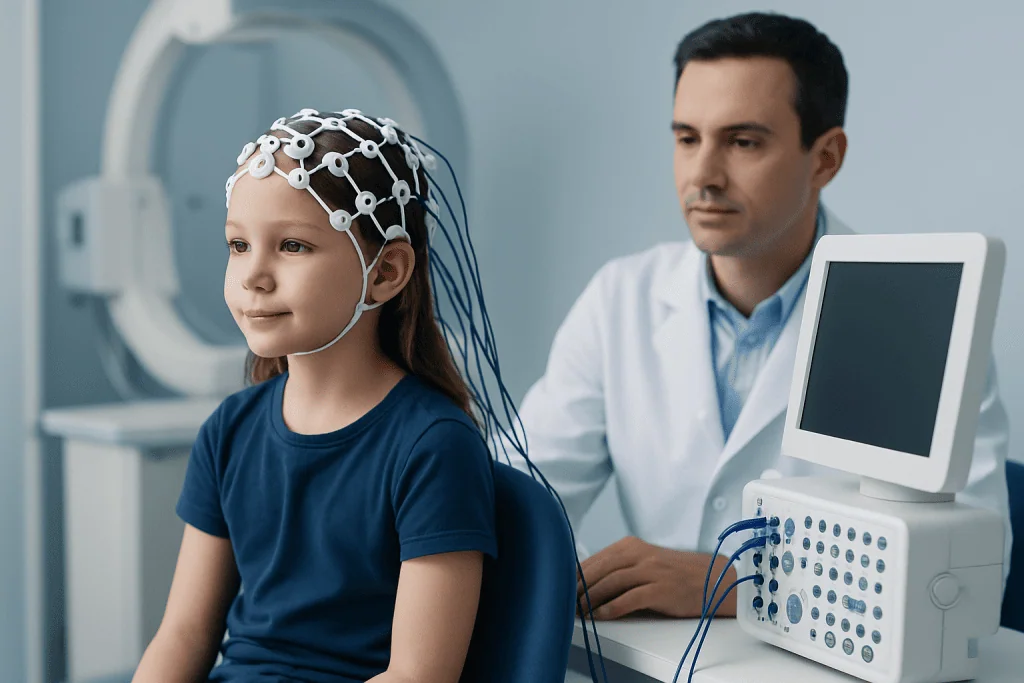
Video-EEG monitoring is one of the most important tests. During this test, the child stays in a monitored unit while scalp electrodes record brain electrical activity and a camera records behavior. The team tries to capture typical seizures safely so that EEG changes can be compared with what the child does during the event. In some cases, shorter EEG recordings or sleep EEG may also be helpful, but longer monitoring often provides clearer information.
Brain MRI with an epilepsy protocol is used to look for subtle structural causes of seizures. This specialized MRI may detect cortical malformations, scars, small tumors, or other lesions that are not always visible on routine scans. Additional imaging may include PET, SPECT, or functional MRI, depending on the child’s age, seizure type, and the center’s approach. These tests can help show areas of altered metabolism, blood flow changes during seizures, or important language and movement regions.
Neuropsychological and developmental testing is another key part of the evaluation. A psychologist or neuropsychologist assesses memory, attention, language, learning, behavior, and age-appropriate skills. For young children, the assessment may focus on developmental milestones and play-based tasks. These results help the team understand how epilepsy is affecting the child and estimate how surgery might influence learning or function.
How Doctors Decide Whether a Child Is a Candidate
Candidacy depends on whether the team can identify a seizure onset zone and whether treating that area is likely to be safe. The best situation is called concordance, meaning several test results point to the same brain region. For example, the seizure description, video-EEG, MRI, and neuropsychological findings may all suggest the same temporal or frontal lobe focus. When results agree, the path to a treatment recommendation is often clearer.
Doctors also study whether the suspected seizure area overlaps with essential functions such as speech, movement, sensation, vision, memory, or emotional regulation. In older children, functional MRI, language testing, or other mapping techniques may help define these areas. In some children, invasive monitoring with electrodes placed on or within the brain is recommended to locate seizures more precisely before deciding on surgery.
A child may be considered a good candidate when seizures are disabling, the seizure source is well defined, and the expected benefit is greater than the expected risk. A child may not be a candidate for resective surgery if seizures arise from many areas, if the seizure onset zone cannot be found, or if removing the area would likely cause major loss of function. However, even when resection is not suitable, other treatments such as neurostimulation, palliative surgery, dietary therapy, or medication changes may still help.
Possible Treatment Options After Evaluation
The evaluation may lead to several possible recommendations. Some children are offered resective surgery, in which the area causing seizures is removed. Examples include lesionectomy, temporal lobe surgery, or removal of a focal cortical dysplasia. The exact operation depends on the child’s anatomy, seizure pattern, and whether the area can be removed without unacceptable risk to important functions.
For some children, disconnection procedures may be considered. These operations do not always remove large amounts of brain tissue, but they interrupt the pathways that allow seizures to spread. Examples include corpus callosotomy for certain drop attacks or hemispheric procedures for severe epilepsy arising from one damaged hemisphere. These approaches are carefully selected and discussed in detail with families.
Other children may be better suited to device-based therapies, such as vagus nerve stimulation or responsive or deep brain stimulation in selected cases, depending on age, diagnosis, and local availability. These treatments usually aim to reduce seizure frequency or severity rather than remove a seizure focus. Ketogenic or modified dietary therapies may also be recommended for specific epilepsy types, especially when surgery is not suitable or while further evaluation continues.
Sometimes the outcome of the evaluation is a recommendation not to operate at that time. This can still be valuable. The team may adjust medicines, recommend additional genetic or metabolic testing, improve rescue seizure plans, support school accommodations, or schedule follow-up monitoring if the child’s seizure pattern changes.
Family Decisions, Benefits, and Risks
Family decision-making is a central part of pediatric epilepsy surgery evaluation. Parents or guardians are asked to consider how seizures affect the child’s safety, development, sleep, school, family routines, and emotional well-being. Older children and teenagers should be included in discussions in an age-appropriate way so that their questions and concerns are heard.
Potential benefits may include fewer seizures, shorter or less intense seizures, improved alertness, fewer emergency situations, and better opportunities for learning and participation. Some children become seizure-free, while others have meaningful reduction in seizure burden. Medication changes after surgery vary; many children continue antiseizure medicine for a period of time, and any reduction is guided slowly by the treating neurologist.
Risks depend on the type of procedure and the brain area involved. Possible risks may include infection, bleeding, stroke-like weakness, changes in vision, speech or memory problems, fluid accumulation, need for another procedure, or seizures continuing after surgery. The team explains which risks are general and which are specific to the child’s planned operation. Families should feel comfortable asking what is known, what remains uncertain, and what recovery is expected to involve.
Many families find it helpful to write down questions before appointments. Useful questions include: What test results point to the seizure focus? Are any results unclear? What are the expected benefits? What functions could be affected? What happens if surgery is delayed or declined? What non-surgical options remain? Shared decision-making helps families choose a path that fits the child’s medical needs and the family’s values.
Preparing for Evaluation and Supporting the Child
Preparation can make the evaluation easier for the child and family. Caregivers should bring a complete medication list, previous EEG and MRI reports if available, seizure diaries, school reports, developmental assessments, and videos of typical events. A seizure diary should note the date, time, duration, possible triggers, symptoms before and after the event, and recovery time.
During hospital-based video-EEG monitoring, children may need familiar items such as books, toys, comfort objects, pajamas, or schoolwork. Parents can ask the care team how medicines will be managed during monitoring, how seizures are handled safely, and whether a caregiver can stay overnight. The staff will explain safety precautions, including fall prevention and emergency response procedures.
Emotional support is also important. Children may worry about electrodes, imaging machines, blood tests, or being away from home. Simple, honest explanations usually work best: the doctors are learning more about the seizures so they can choose the safest plan. Child-life specialists, nurses, psychologists, and social workers may help reduce fear and support coping during testing.
For international families, coordination may include translation of medical records, scheduling several tests in a limited time, and planning follow-up care after returning home. Acibadem International’s multidisciplinary specialists and JCI-accredited hospitals diagnose and treat pediatric epilepsy for international patients, including children who need comprehensive epilepsy surgery evaluation.
When to See a Doctor
Families should speak with a pediatric neurologist if a child has recurrent seizures, events that may be seizures, developmental changes, or side effects from antiseizure medicines. A child already diagnosed with epilepsy should be re-evaluated if seizures become more frequent, change in type, occur during sleep, cause injuries, or interfere with learning and daily activities.
Emergency care is needed for a seizure lasting longer than the time specified in the child’s rescue plan, repeated seizures without recovery, breathing difficulty, serious injury, seizure in water, or a first seizure with concerning symptoms such as persistent confusion, weakness, or severe headache. Families should follow the individualized emergency plan provided by their child’s doctor.
A referral to a comprehensive epilepsy center is appropriate when seizures continue despite suitable treatment or when families want to understand whether surgery or advanced therapies might help. Early evaluation does not commit a child to surgery. It provides clearer information, a broader set of options, and a structured way for families and specialists to make decisions together.
Frequently asked questions
Does an epilepsy surgery evaluation mean my child will definitely need surgery?
No. The evaluation is a way to understand the child’s epilepsy in detail and decide whether surgery is safe and useful. Some children are offered surgery, while others receive recommendations for medication changes, device therapy, diet therapy, or further observation.
When should a child be referred for pediatric epilepsy surgery evaluation?
Referral is often recommended when seizures continue despite two appropriate antiseizure medicines used correctly. It may also be considered earlier if MRI shows a lesion that likely causes seizures or if frequent seizures are affecting development, safety, or quality of life.
What is the most important test before epilepsy surgery?
There is rarely one single test that answers everything. Video-EEG monitoring and epilepsy-protocol MRI are usually central, but doctors also rely on the seizure history, neuropsychological testing, functional mapping, and sometimes PET, SPECT, or invasive EEG. The strongest recommendations come when several results point to the same seizure source.
Can epilepsy surgery cure seizures in children?
Some children become seizure-free after epilepsy surgery, especially when seizures start from one well-defined area that can be safely treated. Others have fewer or less severe seizures rather than complete seizure freedom. The epilepsy team should explain the realistic goals for the individual child.
Will my child be able to stop antiseizure medicine after surgery?
Many children continue antiseizure medicine for some time after surgery. If seizures improve, the neurologist may consider gradual changes later, based on the child’s seizure control, EEG results, epilepsy type, and overall risk. Families should never stop or reduce medication without medical guidance.
Is invasive EEG always required?
No. Some children can proceed to a treatment recommendation using noninvasive tests such as video-EEG, MRI, and functional imaging. Invasive EEG may be recommended when the seizure focus is unclear, near important brain functions, or when more precise mapping is needed before surgery.
How can parents prepare for the first epilepsy surgery evaluation appointment?
Parents can bring seizure videos, a seizure diary, medication lists, previous EEG and MRI reports, school or developmental records, and questions they want answered. It is also helpful to describe the child’s daily functioning, sleep, behavior, learning, and how seizures affect family life.
References
- International League Against Epilepsy
- American Academy of Neurology
- Child Neurology Society
- National Institute for Health and Care Excellence
- Epilepsy Foundation
This article is for general information only and is not a substitute for professional medical advice. Please consult a qualified doctor about your individual situation.
Pediatric Epilepsy in Turkey — costs, top hospitals & a free quote
JCI-accredited · board-certified surgeons · reply within 24h
Add us as a Preferred Source to see more of our trusted health content across Google Search, AI Overviews and Discover.

Neurology
Diagnosis and treatment of disorders of the brain, spinal cord, nerves and muscles.
51 specialists in this unit