Pediatric Epilepsy Surgery: When Seizures Need More Than Medication

Surgery is mainly considered for children with seizures that do not respond well to medication. A detailed pre-surgical evaluation helps doctors identify whether seizures start in one treatable area of the brain.
Key Takeaways
- Surgery is mainly considered for children with seizures that do not respond well to medication.
- A detailed pre-surgical evaluation helps doctors identify whether seizures start in one treatable area of the brain.
- The goal of surgery may be seizure freedom or fewer seizures with better safety, development, and daily functioning.
- Different procedures are available, including removal, disconnection, and device-based treatments for selected children.
- Care from a specialized pediatric epilepsy team is important before, during, and after surgery.
Pediatric epilepsy surgery may be considered when a child’s seizures continue despite appropriate anti-seizure medications. For carefully selected children, surgery can reduce seizures, improve development and quality of life, and sometimes lead to seizure freedom.
Overview
Pediatric epilepsy surgery is a treatment option for some children whose seizures continue even after trying anti-seizure medicines. It is not the first treatment for most children with epilepsy, but it becomes an important consideration when seizures remain frequent, disruptive, or dangerous. In these situations, ongoing seizures can affect learning, sleep, behavior, safety, and overall development.
The purpose of surgery is to remove, disconnect, or otherwise treat the part of the brain responsible for seizures, when that can be done safely. For some children, the main goal is complete seizure control. For others, the goal may be fewer seizures, less severe seizures, or a better quality of life.
Epilepsy surgery in children is highly individualized. A child’s age, seizure type, brain imaging results, developmental needs, and general health all help guide decisions. A careful assessment by pediatric neurologists, neurosurgeons, neuropsychologists, and imaging specialists is essential to decide whether surgery is appropriate.
Although the idea of brain surgery can feel overwhelming for families, modern evaluation methods and pediatric surgical techniques have made treatment more precise than in the past. For selected children, surgery may offer benefits that medication alone cannot provide.
When Surgery May Be Considered
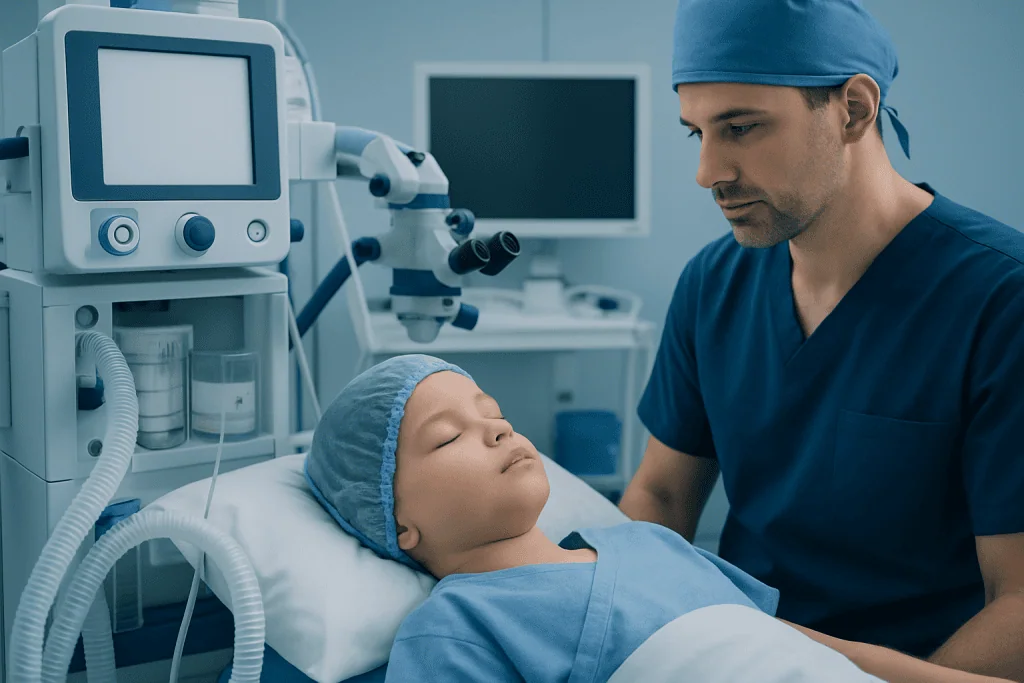
Surgery is most often discussed when a child has drug-resistant epilepsy. This generally means seizures continue despite trials of two suitable anti-seizure medicines, used correctly and tolerated as well as possible. At that point, the chance that another medicine alone will fully control seizures may be lower, so a surgical evaluation may be appropriate.
Children do not need to have constant seizures to be considered. Surgery may also be discussed when seizures are brief but frequent, happen during sleep, cause injuries, or interfere with school and development. In infants and young children, uncontrolled seizures can be especially concerning because the developing brain is more vulnerable to repeated seizure activity.
Some seizure patterns and causes are more likely to be surgically treatable than others. For example, surgery may be an option when seizures arise from one specific area of abnormal brain tissue, a scar, a benign tumor, or a structural difference seen on imaging. In some cases, surgery is considered for conditions linked to epilepsy that affect one region or one hemisphere more than the other.
Not every child with epilepsy is a candidate for surgery. If seizures come from many areas of the brain, or from an area that cannot be treated safely, doctors may recommend continued medical treatment or device-based approaches instead. A specialized evaluation helps clarify the safest and most effective path.
Symptoms and Signs That Suggest a Specialist Review

Parents and caregivers may notice that a child’s seizures are not improving as expected, even with medication. This does not automatically mean surgery is needed, but it is a reason to ask whether a pediatric epilepsy center evaluation would be helpful. Early referral can be important, especially when seizures are affecting development.
Signs that deserve specialist review include seizures that happen often, cause falls or injuries, occur in clusters, or continue after trying more than one appropriate medicine. Seizures that interrupt sleep, lead to long recovery periods, or cause repeated emergency visits also deserve closer assessment.
Other concerns may be less obvious but still important. A child may show slowing in language, memory, attention, or social development. Some children have changes in mood or behavior related to poor seizure control or medication side effects. In younger children, missed developmental milestones can be a key sign that better seizure control is urgently needed.
- Seizures continue despite two well-chosen medications
- Seizures cause injuries, falls, or loss of awareness
- Episodes interfere with school, sleep, or normal activities
- There is developmental regression or delayed progress
- Brain imaging has shown a possible focal abnormality
Causes and Risk Factors for Surgical Epilepsy
The children most likely to benefit from pediatric epilepsy surgery are often those whose seizures begin in a defined brain area. This may happen because of focal cortical dysplasia, scarring after a stroke or injury, certain developmental brain differences, or a small benign lesion. In these cases, the seizure source may be localized well enough to treat directly.
Some children have epilepsy related to genetic or metabolic conditions, infections, or widespread brain abnormalities. These causes do not always rule out surgery, but they can make the decision more complex. The care team looks closely at whether the seizures come from one main area or from several regions.
Age is also part of the discussion. Even very young children may be considered for surgery if seizures are severe and the likely benefits outweigh the risks. In fact, earlier treatment can sometimes protect learning and development by reducing the impact of persistent seizures during critical growth periods.
Doctors also consider the location of the seizure focus. If it is near areas involved in speech, movement, vision, or memory, more specialized testing is needed to understand risk. This is why evaluation at a center experienced in pediatric epilepsy surgery is so important.
How Children Are Evaluated Before Surgery
A pre-surgical evaluation is designed to answer two main questions: where the seizures start, and whether that area can be treated safely. The process often begins with a detailed review of seizure history, physical and neurological examination, medication trials, and home videos if available. Families are usually asked to describe what happens before, during, and after each seizure.
Common tests include prolonged video EEG monitoring, MRI, and sometimes PET, SPECT, or magnetoencephalography. These studies help show how the brain looks and where abnormal electrical activity may begin. Neuropsychological testing may also be used to understand memory, language, learning, and behavior before treatment.
In some children, the information from routine tests is not enough. Doctors may recommend invasive monitoring, in which electrodes are placed on or in the brain for a limited time to record seizures more precisely. While this sounds intimidating, it can be an important step when surgery is possible but the seizure source needs clearer mapping.
The final recommendation is usually made by a multidisciplinary epilepsy team. This team balances the potential benefits of seizure control with possible effects on movement, speech, vision, cognition, and daily function. Families are encouraged to ask questions and take time to understand the reasoning behind the proposed plan.
Treatment Options and Types of Surgery
The best-known epilepsy operation is resective surgery, where the surgeon removes the brain area causing seizures if it can be done safely. This is often considered when testing shows one clear focus. In selected children, this approach offers the best chance of major seizure reduction or seizure freedom, especially when the seizure source is well defined.
Another approach is disconnective surgery. Instead of removing a large amount of tissue, the surgeon interrupts pathways that allow seizures to spread. Examples include corpus callosotomy and hemisphere-based procedures for severe epilepsy affecting one side of the brain. These operations are usually chosen for specific seizure types and brain conditions.
Not all children are candidates for removal or disconnection. Some may benefit from device-based therapies such as vagus nerve stimulation, which can help reduce seizure frequency in certain cases. In selected centers, other advanced options may also be discussed depending on the child’s seizure pattern and anatomy.
Treatment decisions are highly personalized. A child may continue medications after surgery, at least for a period of time, while doctors monitor recovery and seizure control. When surgery is appropriate, it is usually one part of a broader care plan that may also include rehabilitation, developmental support, and regular neurology follow-up.
Recovery, Benefits, and Possible Risks
Recovery depends on the type of operation, the child’s age, and any neurological challenges present before surgery. Some children spend a short time in intensive monitoring after the procedure, followed by several days in the hospital. Others may need longer rehabilitation for movement, speech, or daily skills, especially after larger operations.
The benefits of surgery can include fewer seizures, shorter seizures, less need for emergency care, and better participation in school and family life. For some children, improved sleep, attention, and behavior are just as meaningful as seizure reduction. In younger children, better seizure control may also support healthier development over time.
Like all brain procedures, epilepsy surgery has risks. These may include infection, bleeding, temporary or lasting weakness, speech or vision changes, memory difficulties, and the possibility that seizures continue. The exact risks depend on where the surgery takes place and what type of operation is planned.
Doctors discuss expected outcomes honestly and carefully before treatment. Families benefit from understanding both the potential gains and the possible trade-offs. Near the end of the care pathway, centers such as Acibadem International may support international families through diagnosis and treatment with multidisciplinary specialists in JCI-accredited hospitals, including services related to brain surgery when appropriate.
Long-Term Care, Self-care, and When to See a Doctor
Whether or not a child has surgery, long-term epilepsy care remains important. Children usually need ongoing follow-up to review seizure control, medications, growth, school performance, mood, sleep, and development. If surgery has been performed, the team also watches for recovery milestones and any late complications.
Families can support care by keeping a seizure diary, noting triggers, and following the medication plan exactly as prescribed. Good sleep, consistent routines, and safety planning at home and school can make a meaningful difference. Children with epilepsy may also benefit from occupational therapy, speech therapy, psychology support, or educational planning depending on their needs.
Medical review should be requested promptly if seizures become more frequent, change in pattern, cause injuries, or are not responding to the current plan. Urgent care is needed for prolonged seizures, repeated seizures without recovery, serious injury, breathing problems, or if a child does not return to usual awareness as expected.
Parents should also ask for specialist input if they have been told to simply keep trying medications without a discussion of surgical evaluation after appropriate treatment failures. Early referral does not commit a child to surgery; it simply helps families understand all reasonable options, including stereoelectroencephalography (SEEG) when precise mapping is needed.
Frequently asked questions
What is pediatric epilepsy surgery?
Pediatric epilepsy surgery is a group of procedures used to treat seizures in children when medicines do not provide enough control. The goal may be to remove or disconnect the area causing seizures, or to use a device-based therapy to reduce seizure activity.
When should surgery be considered for a child with epilepsy?
Surgery is often considered when a child continues to have seizures after trying two appropriate anti-seizure medicines. It may also be discussed sooner if seizures are severe, frequent, dangerous, or affecting development.
Can epilepsy surgery cure seizures?
Some children become seizure-free after surgery, especially when seizures come from one clearly identified area that can be treated safely. Others may still have seizures but experience them less often or less severely, which can still improve daily life.
Is brain surgery safe for children with epilepsy?
No surgery is risk-free, but pediatric epilepsy surgery is carefully planned to maximize safety. Specialized testing helps doctors understand where seizures start and what functions could be affected, so the team can recommend the most suitable approach.
Will a child still need medication after epilepsy surgery?
Many children continue anti-seizure medication for some time after surgery. The neurology team decides whether medicines can be reduced later based on seizure control, test results, and the child’s overall progress.
What tests are done before pediatric epilepsy surgery?
The evaluation often includes video EEG monitoring, MRI, and sometimes additional imaging or neuropsychological testing. Some children also need invasive monitoring, such as SEEG, to map the seizure source more precisely.
References
- World Health Organization
- International League Against Epilepsy
- American Epilepsy Society
- National Institute of Neurological Disorders and Stroke
- American Academy of Neurology
This article is for general information only and is not a substitute for professional medical advice. Please consult a qualified doctor about your individual situation.
Pediatric Epilepsy in Turkey — costs, top hospitals & a free quote
JCI-accredited · board-certified surgeons · reply within 24h
Add us as a Preferred Source to see more of our trusted health content across Google Search, AI Overviews and Discover.

Neurology
Diagnosis and treatment of disorders of the brain, spinal cord, nerves and muscles.
51 specialists in this unit