Pericardial Constriction and Its Effects on Heart Filling

Pericardial constriction is caused by a stiff, non-flexible pericardium, the protective sac around the heart. Common symptoms include shortness of breath, ankle or abdominal swelling, fatigue, and reduced exercise tolerance.
Key Takeaways
- Pericardial constriction is caused by a stiff, non-flexible pericardium, the protective sac around the heart.
- Common symptoms include shortness of breath, ankle or abdominal swelling, fatigue, and reduced exercise tolerance.
- Imaging and, in selected cases, cardiac catheterization help distinguish it from other heart or lung conditions.
- Some early or inflammation-related cases may improve with medicines; persistent chronic constriction may require surgery.
- New or worsening breathlessness, swelling, chest pain, or fainting should be assessed promptly by a healthcare professional.
Pericardial constriction, also called constrictive pericarditis, occurs when the sac surrounding the heart becomes thickened, scarred, or rigid and prevents the heart from filling normally between beats. Symptoms may resemble heart failure, but accurate testing can identify the cause and guide treatment.
Overview: what is pericardial constriction?
Pericardial constriction is a condition in which the pericardium, the thin sac that surrounds the heart, becomes unusually thick, scarred, calcified, or stiff. Normally, this sac moves easily as the heart relaxes and fills with blood. When it loses flexibility, it acts like a tight covering around the heart and limits how much the heart chambers can expand.
This restriction can raise pressure in the veins and reduce the amount of blood the heart pumps forward, especially during physical activity. As a result, fluid may build up in the legs or abdomen, and a person may feel short of breath or unusually tired. The medical term often used is constrictive pericarditis.
Pericardial constriction is uncommon and can be challenging to recognize because its symptoms overlap with other conditions, including heart failure, liver disease, kidney disease, and lung disorders. It is important to distinguish it from pericarditis, which is inflammation of the pericardium and may be acute or recurrent without necessarily causing lasting constriction.
How pericardial constriction affects the body
The heart fills with blood when it relaxes between beats. In pericardial constriction, filling may begin normally but stops abruptly once the stiff pericardium reaches its limit. This can make the right and left sides of the heart compete for space inside the rigid sac, particularly with changes in breathing.
The resulting pressure can back up into the body’s veins. This explains why swelling of the feet, ankles, or lower legs, abdominal fullness, weight gain from fluid retention, enlarged neck veins, and fluid in the abdomen may occur. Reduced forward blood flow can also contribute to fatigue, poor stamina, dizziness, and cool extremities.
These changes are not always permanent. In some people, constrictive features occur during active inflammation and may improve as inflammation settles. In others, long-standing scarring produces chronic constriction that is unlikely to resolve without more definitive treatment.
Symptoms and signs

Symptoms often develop gradually, although the pace varies according to the underlying cause and degree of restriction. Early symptoms can be nonspecific, such as becoming breathless more easily while walking, climbing stairs, or doing usual activities. Because they may develop slowly, some people initially attribute them to aging, reduced fitness, or stress.
Possible symptoms and signs include:
- Shortness of breath, particularly with activity or when lying down
- Persistent tiredness, weakness, or reduced exercise capacity
- Swelling in the ankles, legs, or lower abdomen
- Abdominal bloating, loss of appetite, or feeling full quickly
- Rapid weight increase related to retained fluid
- Palpitations, chest discomfort, or a sensation of pressure
- Prominent neck veins or, in advanced cases, yellowing of the skin due to congestion affecting the liver
Symptoms can resemble those of heart failure, but the underlying problem in pericardial constriction is external restriction of the heart. A clinician considers the full history, examination, and test results rather than relying on any single symptom.
Causes and factors that may increase risk
Pericardial constriction may follow inflammation or injury to the pericardium. In many cases, no clear cause is found; this is described as idiopathic. When a cause is identifiable, it may include previous heart surgery, chest radiation therapy, severe or recurrent pericardial inflammation, tuberculosis or other infections, chest injury, and certain autoimmune or inflammatory conditions.
In regions where tuberculosis is more common, tuberculous pericarditis is an important possible cause. Previous radiation to the chest can also cause delayed scarring of the pericardium and nearby heart structures. Less commonly, cancer involving the pericardium, kidney failure, or certain medicines may be associated with pericardial disease.
Not everyone who has pericarditis or a cardiac procedure develops constriction. Risk depends on the cause, severity and duration of inflammation, individual health factors, and whether the pericardium heals with scarring. Follow-up is particularly important after significant pericardial inflammation or if symptoms persist after apparent recovery.
How doctors diagnose it
Diagnosis begins with a careful review of symptoms, past infections, surgeries, radiation treatment, inflammatory disease, and medications. During the physical examination, a clinician may look for fluid retention, changes in neck veins, liver enlargement, and characteristic changes in blood pressure with breathing. These findings are helpful but are not sufficient on their own to confirm the condition.
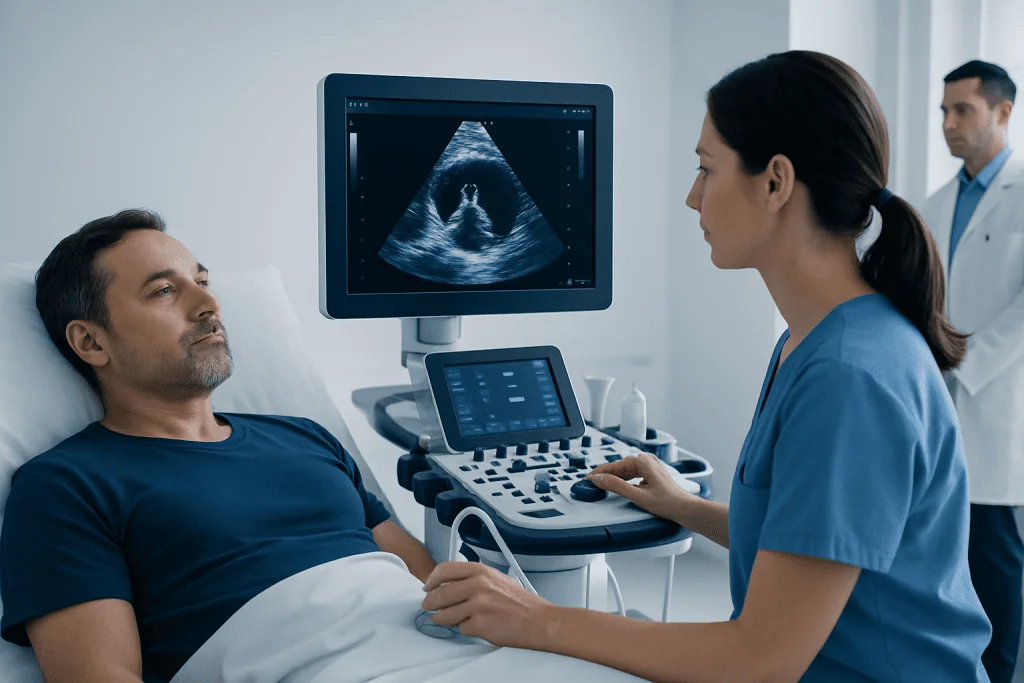
An echocardiogram is usually a key first test. It uses ultrasound to assess heart movement, valve function, chamber filling, and how breathing affects blood flow. Electrocardiography, chest X-ray, and blood tests may also be used to evaluate heart rhythm, inflammation, kidney and liver function, and possible alternative explanations for symptoms.
Cardiac CT or MRI can show pericardial thickening, calcification, inflammation, and related changes in the heart. If uncertainty remains, right and left heart catheterization may measure pressures inside the heart and help confirm the typical filling pattern. Diagnosis is often best made by a cardiology team with experience in pericardial disorders because similar findings can occur in restrictive cardiomyopathy and other conditions.
Treatment options and follow-up
Treatment is individualized according to the cause, duration, severity of symptoms, and whether there is evidence of active inflammation. When constrictive features are temporary and related to ongoing inflammation, anti-inflammatory treatment may be considered under specialist supervision. Treating an underlying infection, autoimmune condition, or other identified cause is also important.
Diuretic medicines may help reduce swelling and breathlessness by removing excess fluid. They can provide symptom relief but do not remove the restriction itself, so clinicians use them carefully and monitor kidney function, blood pressure, and electrolytes. A balanced approach is needed because excessive fluid removal can reduce heart filling.
For chronic, symptomatic constriction caused by a permanently rigid pericardium, surgery to remove most of the pericardium may be recommended. This procedure is called pericardiectomy. It is a major cardiac operation, and the expected benefits and risks depend on the person’s overall health, the cause of constriction, and whether other heart or lung problems are present.
Regular follow-up helps the care team monitor symptoms, fluid balance, heart function, and response to treatment. Multidisciplinary specialists at Acibadem International’s JCI-accredited hospitals can assess and treat pericardial disorders for international patients when specialist cardiac care is needed.
Daily care and when to seek medical care
There is no reliable home treatment that can reverse a scarred or calcified pericardium. However, practical measures may help support medical care: attending follow-up appointments, taking prescribed medicines as directed, tracking weight and swelling if advised, and discussing appropriate activity levels with the cardiology team. A clinician may recommend limiting salt or fluids in some situations, but dietary changes should be personalized rather than started independently.
People should contact a healthcare professional promptly for new or worsening breathlessness, rapidly increasing leg or abdominal swelling, a noticeable gain in weight over a short period, worsening fatigue, or difficulty carrying out usual activities. These changes may indicate fluid retention or progression of the underlying problem.
Emergency assessment is appropriate for severe shortness of breath at rest, chest pain or pressure that is new or persistent, fainting, confusion, bluish lips, or sudden severe weakness. These symptoms can have several causes, including urgent heart or lung conditions, and should not be managed at home.
Frequently asked questions
Is pericardial constriction the same as pericarditis?
No. Pericarditis means inflammation of the sac around the heart, while pericardial constriction means that the sac has become stiff enough to restrict heart filling. Pericarditis can sometimes lead to constriction, but most people with pericarditis do not develop chronic constriction.
Can pericardial constriction be cured without surgery?
Some cases linked to active inflammation may improve with treatment of the inflammation and careful monitoring. However, established scarring or calcification usually does not reverse with medicines alone. Surgery may be considered when chronic constriction causes significant symptoms or impaired heart function.
Does pericardial constriction cause heart failure?
It can cause symptoms that resemble heart failure, including breathlessness, swelling, and fatigue. The mechanism is different from many forms of heart failure because the heart is restricted by a stiff outer sac. Accurate diagnosis matters because treatment options and outlook may differ.
What tests confirm constrictive pericarditis?
Echocardiography, cardiac CT, and cardiac MRI are commonly used to evaluate the pericardium and heart filling. In some cases, cardiac catheterization is needed to measure pressures inside the heart. Doctors combine test findings with symptoms, examination results, and medical history.
How serious is pericardial constriction?
Its effect ranges from mild, potentially reversible symptoms to substantial limitation from chronic fluid congestion and reduced exercise tolerance. The outlook depends on the cause, timing of diagnosis, other health conditions, and response to treatment. Ongoing care with a cardiologist is important.
Can exercise make pericardial constriction worse?
Activity may worsen breathlessness or fatigue when heart filling is restricted, but complete inactivity can also reduce physical conditioning. The appropriate level of exercise depends on symptoms and treatment stage. A cardiology clinician can advise on safe activity and when activity should be reduced.
References
- American Heart Association
- European Society of Cardiology
- Mayo Clinic
- National Heart, Lung, and Blood Institute
- Merck Manual Consumer Version
This article is for general information only and is not a substitute for professional medical advice. Please consult a qualified doctor about your individual situation.
Heart care in Turkey — expert evaluation and treatment
JCI-accredited · board-certified surgeons · reply within 24h
Add us as a Preferred Source to see more of our trusted health content across Google Search, AI Overviews and Discover.

More from the Health Library

Celery Juice: An Evidence-Based Guide for Patients

Prostate Exam — Explained by Medical Evidence, Not Myths

Expectorant Medicine: A Complete Medical Overview

Todd Paralysis: An Evidence-Based Guide for Patients

Sore Chest Breathing: A Complete Medical Overview