Peripheral Nerve Stimulator Procedure: An Evidence-Based Patient Guide

Peripheral nerve stimulation aims to modify pain signaling rather than repair a damaged nerve directly. Most patients undergo a temporary trial before a permanent implant is considered.
Key Takeaways
- Peripheral nerve stimulation aims to modify pain signaling rather than repair a damaged nerve directly.
- Most patients undergo a temporary trial before a permanent implant is considered.
- Recovery is usually gradual, with activity restrictions during early healing to protect the lead and incision.
- Benefits and results vary by pain condition, nerve target, device type and individual response.
- A pain specialist can help determine whether the pain pattern is suitable for peripheral nerve stimulation.
A peripheral nerve stimulator procedure is a form of neuromodulation that places a small electrical lead near a targeted peripheral nerve to reduce persistent pain signals. It may be considered when conservative treatments have not provided sufficient relief and the pain source can be clearly identified.
Overview: What Is a Peripheral Nerve Stimulator Procedure?
A peripheral nerve stimulator procedure is an interventional pain-management treatment for certain types of chronic pain. It involves placing one or more thin electrical leads close to a peripheral nerve, which is a nerve outside the brain and spinal cord. The device delivers low-level electrical pulses that can change how pain messages are processed before they reach the brain.
The procedure does not remove the cause of every pain condition and does not restore a severely injured nerve. Instead, its purpose is to reduce pain intensity, improve function and support participation in daily activities, rehabilitation and sleep. It is generally considered after a careful evaluation and after appropriate non-surgical options have been tried.
Peripheral nerve stimulation differs from spinal cord stimulation because the lead is positioned near a specific peripheral nerve or nerve branch rather than in the epidural space around the spinal cord. This targeted approach may be useful for well-localized pain, such as persistent pain affecting a limb, shoulder, knee, head or a painful surgical scar.
How Peripheral Nerve Stimulation Works
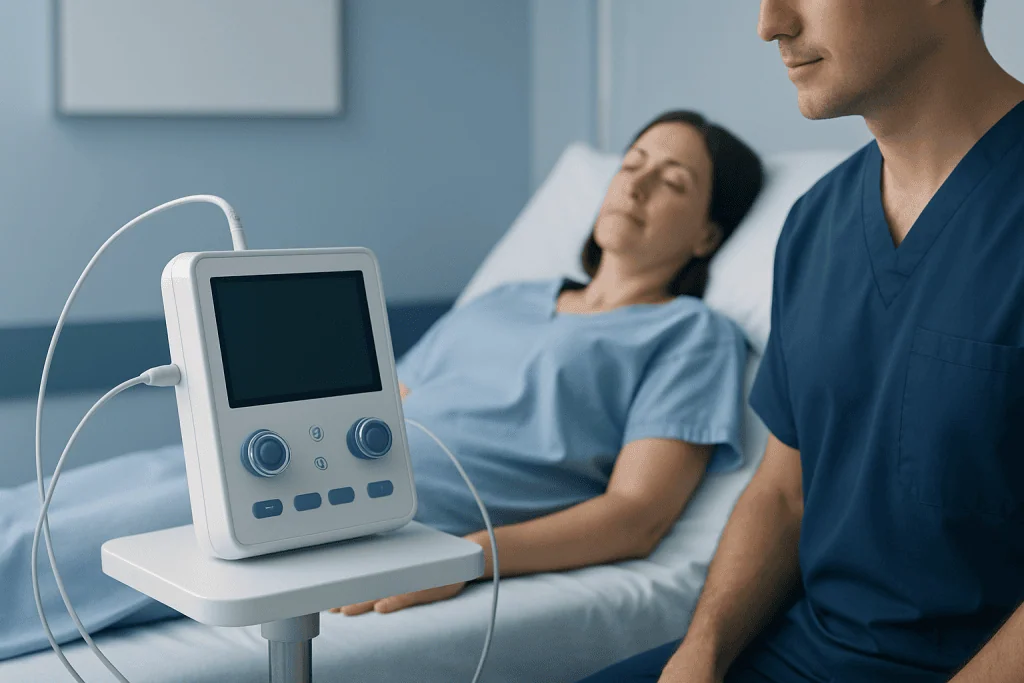
Peripheral nerves carry sensory information, including pain signals, from tissues to the spinal cord and brain. When a nerve remains irritated or becomes abnormally sensitive after injury, surgery or disease, it may send pain signals even after the original tissue injury has healed. Electrical stimulation can influence these signals and may reduce the nervous system’s pain response.
The system commonly includes a small lead with electrodes, an external or implanted pulse generator and a controller used to adjust settings. Some systems are designed for temporary use with an external power source; others involve a fully implanted generator. The exact technology and placement plan depend on the pain location, anatomy and treatment goals.
People may notice a mild tingling sensation with some settings, while newer systems may provide pain relief without a noticeable sensation. Stimulation is programmed individually, and settings can be adjusted over time in collaboration with the clinical team.
- It is most suitable when pain can be linked to a particular peripheral nerve or region.
- It is used for pain management and is not a cure for all causes of neuropathy.
- It is usually part of a broader plan that may include physical therapy, psychological support and treatment of underlying conditions.
Who May Be a Candidate?

A specialist may consider peripheral nerve stimulation for chronic pain that is persistent, function-limiting and localized to a nerve distribution. Examples can include some cases of post-surgical nerve pain, traumatic nerve injury pain, complex regional pain syndrome, painful neuromas, chronic shoulder pain, chronic knee pain and selected headache or facial pain conditions. Suitability depends on the diagnosis rather than pain severity alone.
Evaluation typically includes a detailed pain history, physical examination and review of prior treatments. Imaging, nerve testing or diagnostic nerve blocks may sometimes help identify the nerve involved. Clinicians also review medical conditions, medications, skin health near the proposed site, bleeding risk and the person’s ability to follow aftercare instructions.
A candidate should have realistic treatment goals, such as improved walking tolerance, sleep or ability to participate in therapy, rather than an expectation of guaranteed or complete pain elimination. Active infection, untreated bleeding disorders, inability to manage the device safely or certain medical circumstances may mean the procedure should be delayed or is not appropriate.
Chronic pain can have physical, emotional and social effects. A multidisciplinary assessment may therefore include pain medicine, neurology, rehabilitation, psychology and surgical specialists when needed. This helps ensure that reversible causes of pain and other appropriate therapies have been considered.
What Happens During the Procedure?
The pathway commonly starts with a trial period, although the approach varies by device and clinical indication. During a trial, a clinician uses ultrasound or fluoroscopic imaging to guide a thin lead close to the selected nerve. Local anesthetic and, in some cases, sedation may be used. The lead is connected to an external stimulator so the person and care team can assess whether stimulation provides meaningful benefit during ordinary activities.
If the trial is helpful and a permanent system is appropriate, implantation is planned. The lead is placed near the target nerve through a small incision or needle-based approach, and an implanted pulse generator may be positioned under the skin in a suitable location. The lead and generator are secured, the incisions are closed and the device is programmed.
The procedure is usually performed in an outpatient setting, but this depends on the device, anesthesia plan and individual health needs. A responsible adult may be needed to provide transport home if sedation or anesthesia is used. Before leaving, the person receives wound-care guidance, activity restrictions and instructions for using the controller.
For patients considering neuromodulation, peripheral nerve stimulation treatment should be discussed with a qualified pain specialist who can explain the available devices, trial process and alternatives.
How Long Is Recovery for a Peripheral Nerve Stimulator?
Recovery for a peripheral nerve stimulator varies according to whether the system is temporary or permanently implanted, the location of the lead and the person’s general health. Many people return home on the day of the procedure. Mild soreness, bruising or incision discomfort is common in the first several days and is usually managed with the plan provided by the clinical team.
For the first one to two weeks, patients are commonly asked to keep the incision clean and dry as directed and avoid stretching, twisting, heavy lifting or vigorous activity. These precautions help protect the lead while tissues heal. Follow-up visits allow the team to check wound healing, remove dressings or sutures when appropriate and fine-tune stimulation settings.
A return to desk-based work may be possible within days for some people, while physically demanding work can require a longer period of restriction. Full settling of the implant area and a stable activity routine may take several weeks. The treating team should provide individualized guidance, particularly for driving, exercise, bathing and travel.
Contact the care team promptly for increasing redness, warmth, swelling, drainage, fever, severe worsening pain, new weakness or concerns that the device is not functioning as expected.
Benefits, Limitations and Risks
The potential benefit of peripheral nerve stimulation is meaningful reduction in pain for appropriately selected patients, with improved sleep, movement and quality of life. It may also help some people reduce reliance on pain medicines, but medication changes should only be made with the prescribing clinician. A successful trial can provide useful information about whether ongoing stimulation is likely to be worthwhile.
Response is individual. Some people obtain substantial relief, while others have modest benefit or do not respond. Pain may fluctuate, and stimulation settings may need adjustment over time. The therapy may be less effective if pain has multiple sources or if the target nerve cannot be identified clearly.
Possible procedure-related risks include temporary pain or bruising at the insertion site, bleeding, infection, skin irritation, lead movement or breakage, unwanted stimulation and the need for reprogramming or further procedures. Rarely, an allergic reaction to device materials or damage to nearby structures can occur. The specialist reviews these risks in relation to the planned site and device.
People with an implanted system should tell all healthcare professionals about it before imaging, surgery or other procedures. Device-specific instructions are important because compatibility with MRI and other equipment differs between systems.
What Is the Success Rate of Peripheral Nerve Stimulation?
There is no single success rate for peripheral nerve stimulation because studies examine different pain conditions, device designs, lead locations and definitions of success. In clinical practice and research, success often means a meaningful reduction in pain together with improved daily function, rather than complete disappearance of pain.
Temporary trials are used to identify people who appear likely to benefit before committing to a permanent implant. A positive response during the trial is encouraging, but it cannot guarantee that long-term outcomes will be identical. The quality of nerve targeting, the underlying diagnosis, rehabilitation and regular follow-up can all influence results.
The most useful question is whether the treatment is likely to help a particular person’s goals and pain pattern. A pain specialist can review the evidence relevant to the affected body region, explain expected benefits and limitations, and discuss alternatives before a decision is made.
What Is the Most Successful Treatment for Peripheral Neuropathy?
There is no one treatment that is most successful for every type of peripheral neuropathy. The best approach depends on the cause, such as diabetes, vitamin deficiency, alcohol exposure, autoimmune disease, certain medicines, inherited conditions or nerve compression. Identifying and treating a reversible cause is often the most important first step.
For painful neuropathy, clinicians may combine condition-specific treatment with pain-relieving medicines, physical therapy, regular foot care when sensation is reduced and lifestyle measures that support metabolic and nerve health. For example, blood glucose management is important in diabetic neuropathy, while a compressed nerve may need targeted rehabilitation, injections or surgery in selected cases.
Peripheral nerve stimulation is not a first-line treatment for widespread neuropathy and is generally more relevant when pain is focal and linked to a targetable nerve. A neurologist or pain specialist can determine whether symptoms suggest generalized neuropathy, a trapped nerve, radiculopathy or another cause requiring different care.
How Much Does It Cost to Get a Peripheral Nerve Stimulator Implant?
The cost of a peripheral nerve stimulator implant varies considerably. It can depend on the country, hospital, device type, whether a temporary trial is used, anesthesia, imaging guidance, follow-up appointments, programming and any insurance or public-health coverage. For these reasons, a general online price is unlikely to be accurate or useful for an individual patient.
Before proceeding, patients can ask for a written estimate that explains which parts of care are included and whether there may be separate charges for consultations, the device, procedure, anesthesia, follow-up and potential future device maintenance. They should also ask their insurer or payer whether prior authorization, a trial period or specific clinical criteria are required.
Cost should be considered alongside likely benefit, alternative treatments, recovery requirements and the possibility that a device may need adjustment or revision. A treating center can provide a personalized financial discussion after the clinical assessment and procedure plan are complete.
When to Seek Medical Care
Medical assessment is appropriate for persistent burning, tingling, electric-shock sensations, numbness or pain that interferes with sleep, walking, work or everyday activities. Evaluation is especially important when symptoms are new, worsening or follow an injury or surgery, since early treatment of the underlying cause may prevent further problems.
Urgent medical care is needed for sudden weakness, loss of bladder or bowel control, rapidly spreading numbness, severe pain after significant trauma, fever with a painful swollen area, or symptoms of stroke such as facial drooping, speech difficulty or weakness on one side of the body. These symptoms may have causes that require prompt assessment.
After a stimulator procedure, patients should contact their care team for signs of infection, wound opening, persistent drainage, increasing swelling, a sudden change in stimulation or new neurological symptoms. Acibadem International’s multidisciplinary specialists and JCI-accredited hospitals can assess and treat chronic pain conditions for international patients.
Frequently asked questions
Is a peripheral nerve stimulator procedure painful?
The procedure is performed with local anesthetic, and sedation or anesthesia may be used depending on the treatment plan. Some soreness at the procedure site is expected afterward, but the care team provides instructions for managing it. During a trial, the patient can often give feedback that helps guide lead placement.
How long is recovery for a peripheral nerve stimulator?
Many patients go home on the day of the procedure and may resume light activities within several days. Protecting the lead and incision is important during the first one to two weeks, while a fuller return to usual activity often takes several weeks. Recovery instructions vary by implant location and device type.
What is the most successful treatment for peripheral neuropathy?
The most effective treatment depends on the cause of neuropathy. Treating an underlying condition, such as diabetes, nutritional deficiency or nerve compression, is central to care, while pain management and rehabilitation may also be needed. Peripheral nerve stimulation may be considered for selected focal pain conditions but is not the best option for every form of neuropathy.
What is the success rate of peripheral nerve stimulation?
Success rates vary because studies involve different pain diagnoses, devices and measures of improvement. A meaningful reduction in pain and better daily function are commonly used measures of success. A temporary trial can help determine whether an individual is likely to benefit from longer-term stimulation.
How much does it cost to get a peripheral nerve stimulator implant?
Costs vary by country, hospital, device, insurance coverage, anesthesia requirements and follow-up needs. A personalized estimate should be requested after clinical evaluation, as it can clarify what is included in the proposed plan. Patients should also check coverage criteria with their insurer or payer.
Can a peripheral nerve stimulator be removed?
In many cases, peripheral nerve stimulation systems can be removed if treatment is no longer effective, complications occur or the patient chooses not to continue. Removal is a procedure that should be planned with the implanting specialist. The approach depends on the type of lead, how long it has been in place and the device system used.
References
- International Association for the Study of Pain
- U.S. Food and Drug Administration
- National Institute of Neurological Disorders and Stroke
- American Society of Regional Anesthesia and Pain Medicine
This article is for general information only and is not a substitute for professional medical advice. Please consult a qualified doctor about your individual situation.
Peripheral Nerve in Turkey — costs, top hospitals & a free quote
JCI-accredited · board-certified surgeons · reply within 24h
Add us as a Preferred Source to see more of our trusted health content across Google Search, AI Overviews and Discover.

More from the Health Library

Related Specialists

Prof. Dr. Deniz Tuna Edizer
Ear Nose & Throat
Dr. Güneş Şayan Can
Psychiatry
Dr. Sebiha Nihal Yılmaz
Oral Dental and Maxillofacial Surgery
Prof. Dr. Murat Sungur
Internal Medicine