Peripheral Nerve Treatment
Peripheral nerve surgery addresses nerve compression, injury, or tumors in the arms, legs, face, or trunk to relieve pain, restore sensation, and improve movement.
Quick answer
Peripheral nerve surgery is a group of procedures that treat damaged nerves outside the brain and spinal cord. Depending on the diagnosis, compression, injury, tumour or painful neuroma, the surgeon may release pressure on the nerve, repair or graft it, transfer a working nerve branch, or remove a tumour. The aim is to relieve pain, protect sensation and preserve movement before muscle changes become permanent.
Nerve Pain, Numbness and Weakness: When Neuropathy Starts to Affect Daily Life
Peripheral nerve surgery is a group of specialised procedures that treat nerves outside the brain and spinal cord. Depending on the diagnosis, the surgeon may release pressure on a compressed nerve, repair a nerve that has been cut or damaged, remove a nerve tumour, reconstruct lost function or reduce severe nerve pain. It is considered when neuropathy or a focal nerve injury causes pain, numbness or weakness that has not settled with conservative care, or when a nerve is unlikely to recover without repair.
Your nerves are the communication lines between the brain, spinal cord, muscles, skin and internal tissues. They let you feel touch and temperature, move your hands and feet, smile, blink, walk, hold objects and react to pain. When a nerve is compressed, injured, stretched, cut or affected by a tumour, the symptoms are hard to ignore. Pain can become sharp, burning or electric. Numbness can make it difficult to button a shirt, type, hold a cup or feel the ground under your feet. Weakness can limit work, sport, sleep and independence.
For many patients, the decision to consider surgery comes after weeks, months or even years of symptoms. Some people worry that nerve problems are permanent. Others are concerned about surgery near delicate structures, the possibility of incomplete recovery, or simply not knowing how long healing will take. These concerns are reasonable. Nerve conditions need careful evaluation because the right treatment depends on the exact nerve involved, the cause of the damage, the severity of your symptoms and the time that has passed since the problem began.
The earlier a significant nerve problem is recognised and managed, the better the opportunity to protect the muscles and sensory pathways that depend on that nerve. In appropriate patients, treatment can relieve pain, improve sensation, restore movement and prevent further loss of function. It cannot always undo damage that has been present for years, and an honest assessment of what is still achievable is part of good nerve care.
At Acibadem, peripheral nerve conditions are evaluated through a coordinated process that may involve neurosurgery, orthopaedics, plastic and reconstructive surgery, neurology, physical medicine and rehabilitation, radiology, pain medicine and, when tumours are involved, oncology. This multidisciplinary approach is designed to produce a clear diagnosis and a treatment plan that is medically sound, understandable and practical to follow through recovery.
What is neuropathy?
Neuropathy means damage to, or dysfunction of, one or more nerves, which changes how those nerves carry signals between the body and the brain. When it affects a single nerve, for example, the median nerve at the wrist, doctors call it a mononeuropathy. When many nerves are affected at once, usually starting in the feet and hands, it is called polyneuropathy, and the most common form is peripheral neuropathy. The distinction matters for treatment. Surgery is mainly relevant for focal problems: a nerve compressed at a specific point, cut, tethered by scar tissue or involved by a tumour. Widespread neuropathy caused by a systemic condition is usually managed medically, although selected compression points can still be treated surgically in some patients whose nerves are made more vulnerable by that underlying disease.
What is the peripheral nervous system?
The peripheral nervous system, often shortened to the PNS, is the network of nerves lying outside the brain and spinal cord. It includes motor nerves that drive your muscles, sensory nerves that report touch, temperature, pain and joint position, and autonomic nerves that regulate functions you do not consciously control, such as heart rate, blood pressure, sweating and digestion. Damage to that third group causes autonomic neuropathy, which behaves quite differently from the pain and numbness most people associate with nerve disease. Peripheral nerve surgery deals with the motor and sensory nerves of the limbs, trunk and face: the parts of the PNS a surgeon can realistically reach, decompress or reconstruct.
What Peripheral Nerve Surgery Is
Peripheral nerve surgery is not one operation; it is a family of techniques applied to the nerves running through the face, neck, shoulders, arms, hands, chest wall, abdomen, pelvis, legs and feet. The goal is to improve the environment around a nerve or to reconstruct the pathway of nerve signals. A compressed nerve may need decompression, which means releasing the tight tissue, scar, bone, ligament or muscle that is squeezing it, to give the nerve more space. A cut or severely damaged nerve may require microsurgical repair, nerve grafting or nerve transfer. A benign or malignant tumour involving a nerve may need careful removal, sometimes with reconstruction. In selected cases of painful neuroma or chronic nerve pain, surgery may redirect or manage injured nerve endings to reduce disabling pain.
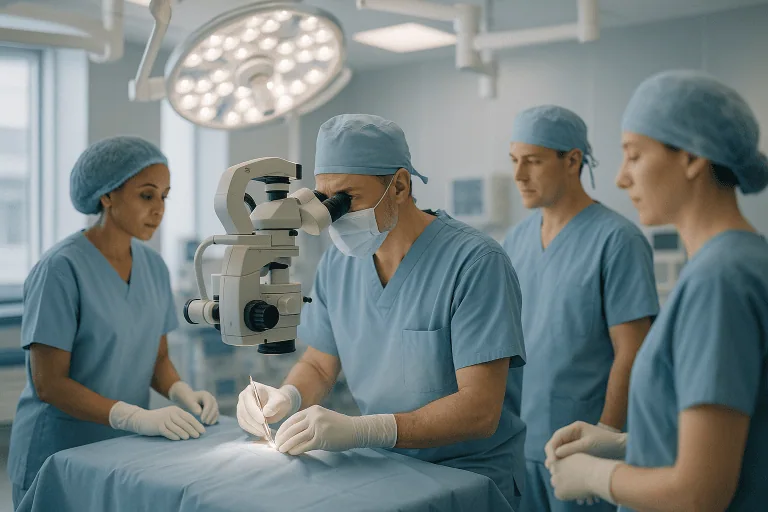
Because nerves are delicate and often lie close to blood vessels, tendons, bones and muscles, these operations are planned with detailed imaging and neurophysiological testing where needed. During surgery, magnification, microsurgical instruments, fine sutures and nerve monitoring may be used to identify individual nerve branches and protect function. The operation is tailored to your anatomy and your diagnosis rather than performed as a standard procedure for every case.
Surgery is usually considered after nonsurgical care has not provided enough relief, when symptoms are progressing, or when a nerve injury is unlikely to recover without repair. In some situations: a sharp nerve laceration, severe compression with developing muscle weakness, or a tumour causing neurological decline, surgical evaluation is time-sensitive.
What are peripheral nerves and what do they do?
Peripheral nerves are cable-like bundles of nerve fibres that connect the brain and spinal cord to the rest of the body. What they do falls into two directions of traffic. Motor fibres carry commands outwards from the brain to the muscles, allowing movement; sensory fibres carry information from the skin, joints and tissues back to the brain, allowing sensation. Many nerves contain both types, which is why a single injured nerve can cause weakness and numbness at the same time. Each fibre is wrapped in insulating and supporting layers, and the whole nerve is organised into smaller bundles called fascicles: a structure the surgeon must respect when repairing a nerve or separating a tumour from healthy tissue.
Where are peripheral nerves located?
Peripheral nerves are located everywhere outside the skull and spinal canal: they begin where nerve roots leave the spinal cord and branch through the neck, shoulders, arms, trunk, pelvis and legs, all the way to the fingertips and toes. Some travel deep between muscles; others run close to the skin surface, where they are vulnerable to pressure and injury. Certain locations are natural bottlenecks: the carpal tunnel at the wrist, the cubital tunnel at the elbow, the fibular head just below the knee, the tarsal tunnel at the ankle. These narrow passages are where compression syndromes most often develop, and they are the sites surgeons most frequently release.
Who May Need Peripheral Nerve Surgery
People who may need peripheral nerve surgery usually have symptoms that follow the pathway of a specific nerve. The symptoms may appear suddenly after trauma or build gradually through compression, inflammation, repetitive motion, scarring, previous surgery or tumour growth. The pattern matters, because different nerves produce different clinical pictures, and the pattern is often the first clue to the diagnosis.
Peripheral neuropathy symptoms: the patterns that matter
Peripheral neuropathy symptoms include numbness, tingling, burning pain, electric shock-like pain, hypersensitivity to touch, weakness, muscle wasting, loss of coordination, reduced grip strength, foot drop, hand clumsiness and, when facial nerves are involved, difficulty with facial movement. Some patients notice symptoms mainly at night; others feel them during activity or when pressure is placed on the affected area. In advanced cases, the muscles supplied by the nerve become visibly smaller and movement becomes limited. Where the symptoms sit tells the examiner a great deal. Numbness in the thumb, index and middle fingers points towards the median nerve at the wrist. Tingling in the little finger points towards the ulnar nerve at the elbow. A glove-and-stocking pattern affecting both feet suggests a generalised process rather than a single trapped nerve, and that changes the treatment conversation entirely.
What could be mistaken for neuropathy?
Several conditions mimic nerve damage closely enough to mislead both patients and clinicians. A pinched nerve root in the cervical or lumbar spine can cause arm or leg symptoms that feel identical to a peripheral problem. Circulatory disorders, including peripheral vascular diseases, can produce leg pain, cold feet and cramping that patients describe in very similar words. Joint disease, tendon problems, vitamin deficiencies, thyroid disorders and the side effects of some medicines can all blur the picture. Autoimmune conditions such as systemic lupus erythematosus can involve nerves as part of a wider illness. This is exactly why careful diagnosis comes before any decision about surgery: releasing the wrong level, or operating on a nerve that is not the true source of symptoms, helps nobody.
How is the diagnosis made?
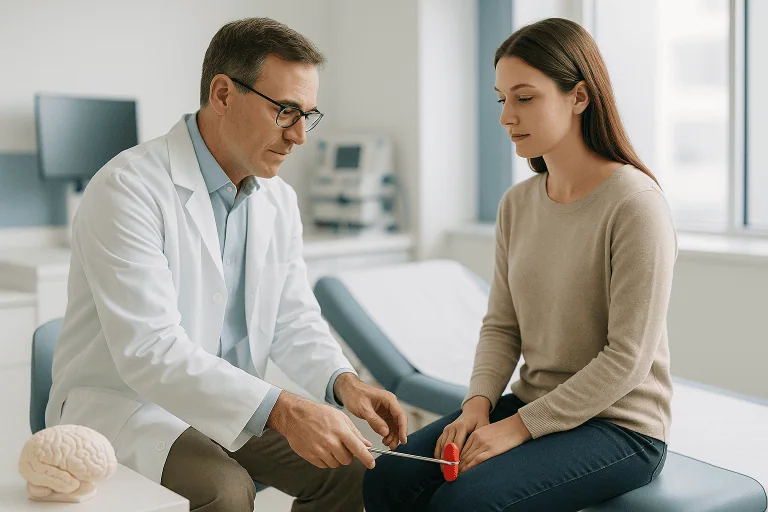
Diagnosis begins with a detailed medical history and physical examination. The physician maps the location and quality of your pain, changes in sensation, muscle strength, reflexes, joint motion, scars, previous injuries and the practical limits the problem places on daily life. Specific physical tests may deliberately reproduce your symptoms by applying gentle pressure or stretch to a suspected nerve. The examination also screens for cervical and lumbar spine disease, because spine problems can convincingly imitate peripheral nerve disorders.
Electrodiagnostic testing usually comes next. A nerve conduction study and electromyography (EMG) measure how well a nerve transmits signals and how the muscles respond. These tests can show whether a nerve is compressed, partially injured, severely damaged or already showing signs of recovery, information that directly shapes the decision between watching, rehabilitating and operating.
Imaging may include ultrasound, magnetic resonance imaging, computed tomography or specialised nerve imaging, depending on the nerve and the suspected cause. Imaging can reveal compression points, tumours, scar tissue, muscle changes, fractures and the precise relationship between a nerve and the structures around it. Ultrasound has the added advantage of showing superficial nerves dynamically, while the limb moves.
Referral for surgery typically follows when symptoms persist despite splinting, activity modification, medication, injections or rehabilitation; when weakness is progressing; when a nerve has been cut or trapped by scar; when a mass is found along a nerve; or when pain or loss of function significantly limits quality of life. The decision weighs the expected benefit of surgery against the natural course of the condition and your overall health.
Conditions and Indications Treated with Peripheral Nerve Surgery
The largest category is nerve compression. Examples include carpal tunnel syndrome at the wrist, cubital tunnel syndrome at the elbow, radial nerve compression in the arm, peroneal nerve compression near the knee, tarsal tunnel syndrome at the ankle, meralgia paraesthetica in the thigh and, in selected patients, thoracic outlet-related nerve compression. In each of these, a nerve is squeezed by surrounding tissue at a predictable point, producing pain, numbness, weakness or functional loss along its territory.
Traumatic nerve injuries form the second major group. Nerves can be damaged by cuts, fractures, dislocations, crush injuries, penetrating trauma, traction injuries or complications of previous operations. Some injuries are temporary and recover with observation and therapy; others involve structural disruption of the nerve and need repair. Brachial plexus injuries, affecting the network of nerves that supplies the shoulder, arm and hand, demand particularly detailed assessment and careful timing, because reconstruction options narrow as months pass.
Nerve tumours are the third indication. Most peripheral nerve tumours are benign, such as schwannomas and neurofibromas, but they can still cause pain, tingling, weakness or a visible swelling along the nerve. Less commonly, malignant peripheral nerve sheath tumours require full oncological planning. In tumour cases, a multidisciplinary board may review the imaging, biopsy results where appropriate, the surgical risks and whether additional treatment is needed after removal.
Other indications include painful neuromas, nerve entrapment after fractures or orthopaedic procedures, scar-related nerve tethering, nerve injuries following injections or medical procedures, selected diabetic and metabolic nerve compression syndromes, and facial nerve injuries. In some cases, nerve transfers are considered to restore a key movement after severe injury, especially when the original nerve pathway cannot recover before the target muscles deteriorate.
Not every nerve condition requires an operation. Many mild or early disorders improve with conservative treatment. Surgery becomes important when there is ongoing compression, structural nerve damage, significant or progressive weakness, a mass lesion, or pain that remains disabling despite appropriate nonsurgical care.
What triggers neuropathy?
Neuropathy has many possible triggers, and identifying the right one is the foundation of treatment. Diabetes is the most common systemic cause worldwide. Others include physical compression or trauma, repetitive strain, inflammatory and autoimmune disease, infections, thyroid and kidney disorders, vitamin deficiencies, heavy alcohol use, inherited nerve disorders and, in some people, the effects of certain medicines, which the treating doctor reviews as part of the work-up. Sometimes the trigger is purely mechanical: a ligament that has thickened over a nerve, a fracture fragment, scar tissue from an old operation, or a slowly growing tumour. Mechanical causes are the ones surgery can address directly; systemic causes are managed medically, often alongside any surgical treatment of a vulnerable compression point.
How Peripheral Nerve Treatment Is Performed
Peripheral nerve care begins well before the operating theatre. The first step is confirming the diagnosis and defining the goal of treatment. Prior imaging, nerve test results, operative reports, medication lists and rehabilitation notes all feed into this, so the consultation builds on what is already known rather than starting from zero.
A typical care pathway moves through defined stages:
- Assessmenthistory, physical examination and review of imaging and electrodiagnostic studies to confirm which nerve is affected and how severely.
- Planningthe physician explains the intended procedure, its expected benefits and its limits, the risks, the anaesthesia plan, the incision site and the recovery requirements.
- Preparationlaboratory tests, cardiac evaluation where indicated, and a team review of your medicines before anaesthesia. Smoking, uncontrolled diabetes and nutritional deficiencies affect healing, so these factors are addressed wherever possible.
- Surgerythe operation itself, tailored to the diagnosis.
- Rehabilitation and follow-upstructured therapy, wound care and monitoring of nerve recovery over the following months.
Nerve decompression
In a decompression, the surgeon identifies the compressed nerve and releases whatever is causing the pressure. That may mean opening a tight ligament, removing scar tissue, freeing the nerve from adhesions or creating a less restrictive pathway. The aim is to stop the ongoing irritation and give the nerve the conditions it needs to recover over time. Decompression does not instantly restore a nerve; it removes the obstacle to recovery.
Nerve repair, grafting and nerve transfers
When a nerve has been cut or structurally disrupted, the damaged ends may be reconnected with microsurgical technique if they can be brought together without tension. When a gap remains, a nerve graft or conduit bridges the distance. In selected cases, the surgeon performs a nerve transfer: a functioning, less critical nerve branch is connected to a more important injured nerve to restore a key movement. Nerve transfers are especially time-sensitive, because muscles disconnected from their nerve supply for too long lose much of their capacity to respond, even to a technically successful reconstruction.
Surgery for nerve tumours
For tumours, the aim is to remove the lesion while preserving functioning nerve fibres wherever possible. Many benign tumours grow from part of the nerve sheath and can be separated from the main fascicles using magnification and painstaking dissection. If the tumour involves the nerve more extensively, reconstruction is discussed in advance, so nothing decided in theatre comes as a surprise afterwards. When malignancy is suspected or confirmed, surgical planning is coordinated with oncology, radiology, pathology and rehabilitation specialists from the start.
Technology and precision
Technology supports every stage. High-resolution imaging defines the location and size of a lesion, the condition of the muscles the nerve supplies, and the relationship to nearby vessels and bone. Ultrasound visualises superficial nerves in motion and can guide diagnostic injections. Electrodiagnostic tests document the functional state of nerves and muscles before and after treatment. In the operating theatre, magnification, microsurgical instruments, fine suture techniques and intraoperative nerve stimulation or monitoring help the team distinguish functioning nerve tissue and avoid unnecessary handling.
Procedure length depends on complexity. A straightforward nerve release takes less time than a multi-level decompression, a nerve graft, a brachial plexus reconstruction or a tumour operation. Some procedures are done as day surgery; others require one or more nights in hospital. The care team gives individual guidance on fasting, anaesthesia, expected length of stay, wound care, splinting and when everyday activities can safely resume.
Recovery starts immediately after surgery. Pain is managed with a structured medication plan set by the treating team. The surgical site may be protected with a dressing, splint, sling or brace, depending on the operation. Early movement is encouraged for some procedures, while others need temporary immobilisation to protect a repair. Rehabilitation is often the centre of gravity of recovery: a therapist guides range-of-motion work, swelling control, scar management, strengthening, sensory re-education, desensitisation techniques and functional retraining.
Expect the process to be gradual. Pain from compression may ease relatively early in some patients, but numbness, strength, coordination and muscle bulk take longer to change, because nerves regenerate slowly and the distance from the repair site to the target muscle or skin matters. Plan for a recovery measured in weeks to months, and sometimes longer after severe injuries. Follow-up visits and repeat testing track the healing and let the team adjust rehabilitation as the nerve recovers.
Why Acting Early Matters
Timing is one of the most important variables in nerve care. A mildly compressed nerve often recovers well once the pressure is relieved, particularly when treatment happens before permanent changes set in. When compression continues for a long period, the nerve can lose its ability to conduct signals normally and the muscles it supplies weaken. Severe or prolonged denervation leads to muscle wasting, stiffness and a reduced ceiling on what any later treatment can achieve.
After traumatic injuries, the calendar matters even more. Some injuries show early signs of spontaneous recovery and are best observed; others need early repair or reconstruction. Waiting too long shrinks the window in which regenerating nerve fibres can reach their target muscles before irreversible muscle changes occur. This does not mean every nerve injury needs immediate surgery; it means timing carries the most weight in injuries that involve weakness, loss of sensation, severe pain or a known laceration.
Delay also affects patients with nerve tumours. Many benign tumours grow slowly, but increasing pain, weakness or sensory loss suggests the nerve is under growing stress. Malignant tumours require prompt, coordinated evaluation, because surgical planning, pathology and decisions about additional treatment must be sequenced carefully. An early review of existing records also clarifies whether the diagnosis is already complete or whether further testing is needed before any decision can responsibly be made.
Acting early also limits secondary problems. Numb feet raise the risk of falls and unnoticed injuries. A weak hand can develop tendon imbalance, joint stiffness and compensatory strain. Chronic nerve pain erodes sleep, mood, work and social life. Good timing preserves options, even when the eventual plan turns out to be observation, therapy or injections rather than surgery.
Will neuropathy ever go away?
Sometimes: it depends entirely on the cause and the degree of damage. Neuropathy caused by a reversible problem, such as a compressed nerve that is released in time or a treatable metabolic condition brought under control, can improve substantially as the nerve heals. Nerve tissue regenerates slowly, so improvement is measured in months rather than days. When damage has been severe or present for many years, some numbness or weakness may be permanent even after appropriate treatment; in those cases, the realistic goals become reducing pain, protecting remaining function and preventing further decline. No honest clinician promises complete reversal, what a proper assessment can do is tell you which category your nerve problem falls into.
Potential Benefits of Peripheral Nerve Treatment
The benefits depend on the diagnosis, the severity, the timing and the procedure, but the central aims are the same: protect nerve function and improve daily life.
| Benefit | What It Means for You |
|---|---|
| Pain relief | Reducing pressure on a nerve or treating a painful neuroma may decrease the burning, shooting or electric pain that interferes with sleep and activity. |
| Improved sensation | Successful decompression or repair may help restore protective feeling, reduce tingling and rebuild confidence when using the hand, foot or affected area. |
| Better movement | When motor nerves are treated in time, strength, coordination, grip, walking ability or facial movement may improve with healing and rehabilitation. |
| Protection from further decline | Addressing compression, scar entrapment or a growing lesion may help prevent additional nerve damage and secondary muscle or joint problems. |
| Clearer diagnosis and planning | Specialist evaluation distinguishes peripheral nerve disease from spine, joint, vascular and systemic causes, helping you avoid unnecessary or ineffective treatment. |
Recovery Timeline After Peripheral Nerve Surgery
Recovery varies widely with the procedure and the nerve involved, but the following timeline gives a realistic sense of what many patients experience.
| Time Period | What Patients Can Expect |
|---|---|
| Day 1 | You are monitored after anaesthesia, receive pain control and get instructions for protecting the surgical area. Some patients return home the same day; others stay in hospital. |
| First week | Swelling, soreness and bruising are common. The care team advises on wound care, elevation, movement restrictions, medications and the signs that should prompt a medical review. |
| First month | Stitches are removed if needed, and rehabilitation begins or progresses. Some symptoms may improve early, but nerve-related numbness or weakness usually needs more time. |
| Several months | Nerve healing and muscle retraining continue. Therapy focuses on strength, coordination, sensory re-education, scar mobility and return to work or sport. |
| Longer term | Complex repairs, grafts, transfers and severe injuries can continue to improve over many months. Follow-up testing tracks regeneration and guides rehabilitation. |
Factors That Influence Outcomes
A good result depends on several factors, most of which are identified during the diagnostic process. The type of injury is central: a nerve that is compressed but structurally intact has a different recovery potential from one that has been cut, crushed, stretched or invaded by a tumour. Severity and duration matter too. Long-standing numbness, marked weakness and visible muscle wasting usually indicate a more advanced problem with a lower ceiling for recovery.
Timing is especially critical when movement is affected. Muscles need nerve signals to stay healthy, and a muscle deprived of input for too long may not regain useful strength even after a technically successful reconstruction. New or progressive weakness is therefore a more time-sensitive finding than stable numbness or intermittent tingling.
The location of the injury shapes the timeline, because regenerating fibres must grow from the injury site to their target. A repair close to the hand or foot follows a different schedule from one near the shoulder, pelvis or thigh. Age, general health, diabetes control, smoking status, nutrition, previous surgery, scar tissue, circulation and how consistently you engage with rehabilitation all influence healing as well.
Surgical planning and technique matter, but they are only part of the outcome. Rehabilitation, splinting, sensory retraining, pain management and your own participation are often decisive. Some patients must relearn movement patterns after a nerve transfer. Others need desensitisation therapy to calm hypersensitive tissue. In compression syndromes, ergonomic changes and treatment of underlying conditions reduce the chance of recurrence or persistent irritation.
Expectations should be individual and realistic. Some patients gain meaningful pain relief but only partial return of sensation. Others regain an important function while keeping mild numbness or fatigue. In complex injuries, the goal may be to restore one key movement, improve independence or reduce disabling pain, not to return the nerve exactly to its previous state. A careful consultation clarifies what improvement is medically reasonable in your specific case.
What to do about neuropathy?
The first step is establishing the cause, because everything that follows depends on it. Nerve-friendly management typically combines treatment of the underlying condition, planned with your treating doctor, with physiotherapy, splinting or bracing, activity and ergonomic changes, structured pain management and, where a specific compression or injury is identified, surgery. Protecting numb areas from injury, keeping joints mobile and staying engaged with rehabilitation all preserve options while the diagnosis is refined. What does not help is guessing: identical symptoms can come from a wrist, an elbow, a knee, the spine or a systemic illness, and each of those has a different correct answer.
Peripheral Nerve Care at Acibadem
Patients weighing up nerve treatment usually need more than an operation. They need an accurate diagnosis, experienced specialists, clear communication and a workable plan for recovery and follow-up. At Acibadem, peripheral nerve care is organised around those needs, with modern diagnostic pathways and coordinated input across specialties.
Nerve conditions sit at the intersection of several medical fields, which is precisely why coordination matters. A patient with hand numbness may need evaluation for wrist compression, elbow compression, cervical spine disease, diabetes-related nerve damage or an old injury. A patient with foot drop may need assessment of the peroneal nerve, the lumbar spine, the hip region and the muscles themselves. A patient with a nerve tumour needs radiology review, pathology expertise, surgical planning and oncology input. These questions are worked through in multidisciplinary collaboration and, where appropriate, specialist boards that align treatment with evidence-based practice.
Strong diagnostics are essential because nerve symptoms mislead easily. High-quality imaging, nerve conduction studies, electromyography, ultrasound assessment and laboratory testing are combined to locate the true source of symptoms. This reduces the risk of treating the wrong level or overlooking a systemic condition. For patients who have already received conflicting opinions elsewhere, a structured second opinion can establish whether surgery is appropriate, whether more testing is needed or whether nonsurgical care should continue.
The surgical environment matters too. Peripheral nerve procedures may call for microsurgical technique, meticulous tissue handling, magnification, nerve stimulation and close coordination between surgery, anaesthesia and rehabilitation teams. Experienced physicians plan the incision, exposure, decompression, repair, graft, transfer or tumour removal around the individual anatomy and the agreed goals. Complex cases may involve staged care or a combined procedure with another specialty.
Personalised planning is the core of it. The same symptom can have different causes, and the same diagnosis can need different solutions depending on severity and timing. Mild compression may be managed with therapy and monitoring. Severe compression with muscle loss may need surgery. A clean laceration may need microsurgical repair; a delayed traumatic injury may need grafting, a transfer, a tendon procedure or rehabilitation-focused care. The recommendation should fit your diagnosis, your functional priorities, your health status and your personal circumstances, not a standard template.
Continuity closes the loop. Nerve recovery takes time, so a sound plan spells out what is done at the hospital, what continues with a therapist or physician afterwards, and when remote or in-person follow-up makes sense. Clear explanations, realistic expectations and structured follow-up let you stay informed through the whole recovery, without anyone overstating what surgery can achieve.
Understanding Your Situation Before Any Decision
Nerve problems are frustrating precisely because the symptoms are painful, unpredictable and hard to explain to other people. Yet most nerve conditions yield to a systematic approach, and treatment options often exist even when symptoms have been present for a long time. The essential step is always the same: identify the exact nerve involved, understand the cause, and determine whether surgery, rehabilitation, pain management, observation or a combination is the right answer.
A specialist evaluation is built to answer three questions. Which nerve is responsible, and where along its course is the problem? Is the damage the kind that recovers on its own, the kind that needs release, or the kind that needs repair or reconstruction? And what degree of improvement is realistic, given how long the problem has existed and what the muscles and skin still show? Existing imaging, nerve conduction studies, EMG reports and prior operative notes make that evaluation far more precise, which is why they are reviewed carefully as part of the diagnostic process.
Whatever the eventual plan, the value of a thorough assessment is that it replaces uncertainty with a clear picture: what the procedure would involve, how long recovery is likely to take, what rehabilitation will demand of you, and what improvement is medically reasonable in your particular situation. That clarity, more than any single technique, is what lets you make a good decision about your own nerve care.
Preparation
- Evaluation usually includes a neurological examination, imaging, and nerve conduction studies when needed. Patients should share all medications, allergies, and prior surgeries with the care team. Blood thinners or certain supplements may need to be stopped before surgery, as advised by the doctor.
Aftercare
- After surgery, the limb or affected area may be protected with a dressing or splint. Pain control, wound care, and follow-up visits are important to monitor nerve healing. Physical therapy may be recommended to improve strength, coordination, and function over time.
Frequently Asked Questions
What affects the cost of peripheral nerve surgery?
The main factors are the diagnosis, nerve location, severity of damage, type of procedure, surgeon subspecialty, hospital setting, anaesthesia, diagnostic tests, hospital stay, and rehabilitation needs. International travel, accommodation, interpreter support, and follow-up planning can also affect the total estimate.
How can I get a personalised quote from Acibadem?
You can request a free consultation by sharing medical reports, imaging, nerve conduction test results if available, photographs when relevant, and a summary of symptoms. A specialist review helps define the likely treatment plan and a personalised cost estimate.
Is the lowest-cost option always the best choice?
Not necessarily. Peripheral nerve surgery is highly specialised, and the plan should consider diagnosis, timing, expected recovery, hospital quality, surgeon experience, rehabilitation access, and patient safety. Cost should be reviewed together with clinical suitability.
What is usually included in an international treatment package?
Package content varies by case, but it may include specialist consultation, standard preoperative tests, surgery, anaesthesia, hospital stay, interpreter assistance, transfer coordination, and follow-up planning. Items such as advanced imaging, pathology, implants, rehabilitation, or extended stay may be separate.
Will I need rehabilitation after peripheral nerve surgery?
Many patients need hand therapy, physiotherapy, splinting, sensory re-education, or home exercises after surgery. The need and duration depend on the nerve involved, the procedure, and the recovery goals, and should be discussed with the treating specialist.
Medically reviewed by the Acıbadem International Medical Board August 31, 2026
See our medical review board →
Update history
- PublishedJune 8, 2026
- Medical review approvedAugust 31, 2026
- Last content updateSeptember 8, 2026
References3
- Peripheral Nerve Disorders medlineplus.gov
- Peripheral neuropathy nhs.uk
- Peripheral Neuropathy my.clevelandclinic.org
Trusted care for international patients
From the Acibadem Blog

Who May Be a Candidate for Peripheral Nerve Surgery? Injury, Compression and Tumor Cases
Peripheral nerve surgery is considered for three groups: people with a nerve that has been cut, torn or crushed and shows no sign of…

Peripheral Nerve Surgery Recovery: Splints, Physical Therapy and How Nerve Healing Is Tracked
Recovery after peripheral nerve surgery is slow because nerve fibers regrow from the repair site at roughly an inch a month. A splint protects…