Photopsia — Explained by Medical Evidence, Not Myths

Photopsia refers to seeing light phenomena such as flashes or sparks that are not coming from the environment. It can happen with common conditions like migraine aura or age-related vitreous changes, but it may also point to a retinal tear or retinal detachment.
Key Takeaways
- Photopsia refers to seeing light phenomena such as flashes or sparks that are not coming from the environment.
- It can happen with common conditions like migraine aura or age-related vitreous changes, but it may also point to a retinal tear or retinal detachment.
- Urgent evaluation is important if flashes begin suddenly, increase quickly, or occur with new floaters, a curtain-like shadow, or vision loss.
- Diagnosis often includes a detailed eye exam with dilated pupils to examine the retina.
- Treatment depends on the cause and may range from observation to prompt retinal treatment or management of migraine and other underlying conditions.
Photopsia is the medical term for flashes, sparks, zigzags, or shimmering lights seen without a real light source. It is a symptom rather than a disease, and while some causes are temporary and benign, new or sudden photopsia should be assessed to rule out retinal problems or other eye and nervous system conditions.
What photopsia means
Photopsia is the medical word for seeing flashes or other light effects when no actual light is present. People often describe it as brief sparks, flickers, lightning streaks, shimmering, stars, or zigzag patterns. The experience may affect one eye or both eyes, and it may last for seconds or longer depending on the cause.
Photopsia is not a diagnosis on its own. It is a symptom that can start in the eye, especially in the vitreous or retina, or in the brain’s visual pathways, as can happen with migraine aura. This is why the same symptom can have very different meanings in different people.
A key point is that context matters. A few stable flashes that have already been checked may not mean an emergency, while sudden new flashes with floaters or reduced vision need prompt attention. Understanding the pattern helps doctors decide whether photopsia is likely benign, eye-related, or linked to a neurological cause.
How photopsia can feel
People do not all experience photopsia in the same way. Some notice a quick flash at the edge of vision, especially in dim light or when moving the eyes. Others see shimmering arcs, geometric patterns, or a wave-like distortion that slowly spreads across vision before fading.
The timing can offer clues. Eye-related flashes from traction on the retina are often brief and may recur over days or weeks. Migraine aura tends to develop gradually over several minutes and can last up to an hour, sometimes followed by headache, nausea, or light sensitivity, though headache is not always present.
Symptoms that should not be ignored include:
- a sudden shower of new floaters
- flashes that become more frequent or intense
- a shadow, curtain, or veil over part of the visual field
- blurred vision or loss of side vision
- symptoms after an eye injury
These features can suggest a retinal tear or retinal detachment, which needs urgent assessment to protect vision.
Why photopsia happens: common causes and risk factors

One of the most common eye-related causes of photopsia is posterior vitreous detachment, often called PVD. The vitreous is the gel-like substance inside the eye. With age, it can shrink and pull away from the retina, creating flashes and floaters. PVD itself is common and often not dangerous, but in some cases the pulling can create a retinal tear.
Retinal tears and retinal detachment are among the most important causes to rule out. They are more likely in people who are very nearsighted, have had previous eye surgery, trauma, or a family history of retinal problems. Diabetes and certain inflammatory eye diseases can also affect the retina and lead to visual symptoms.
Not all photopsia starts in the eye. Migraine aura can cause flashing lights, zigzags, shimmering, or blind spots, usually involving both eyes because the visual processing centers in the brain are affected. Less often, photopsia can be associated with head injury, low blood pressure, occipital lobe conditions, medication effects, or neuro-ophthalmic disorders. Cataract surgery and some other eye procedures can also change the vitreous-retina relationship and occasionally lead to flashes that need review.
How doctors find the cause
Assessment starts with a careful history. A doctor will usually ask when the flashes began, whether they affect one eye or both, what they look like, how long they last, and whether there are floaters, pain, headache, or vision loss. They may also ask about migraine history, past eye problems, recent injury, and any systemic diseases.
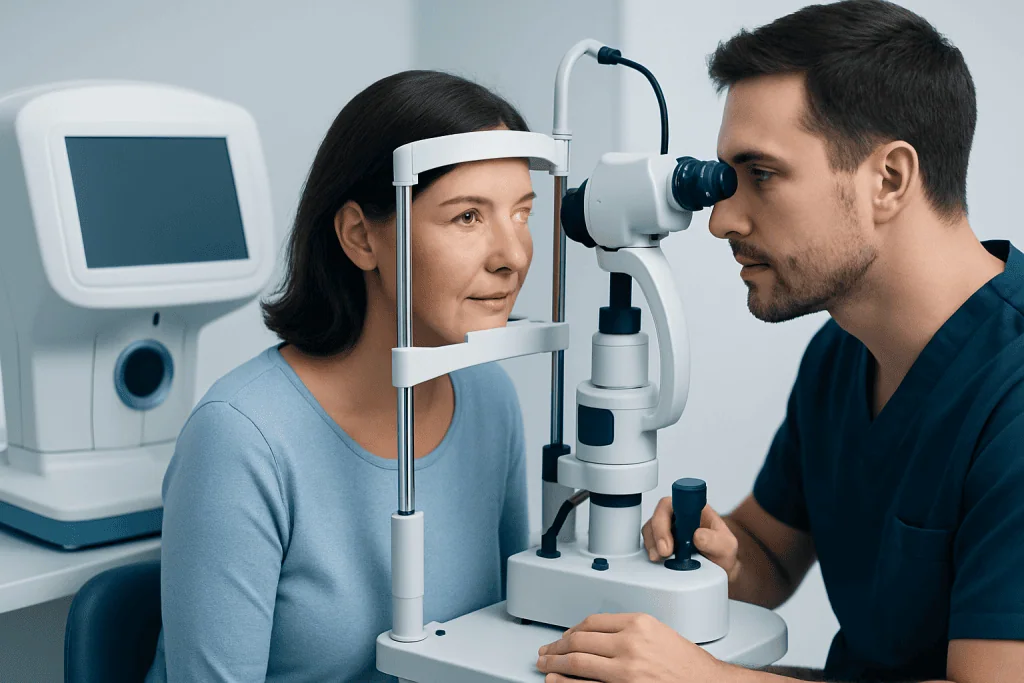
The eye examination is especially important if the symptoms are new. Vision is checked, and the pupils are usually dilated so the retina can be examined closely for tears, bleeding, or detachment. Depending on the findings, additional testing may include retinal imaging, ultrasound if the view into the eye is limited, or broader eye check-up evaluation.
If the pattern suggests a neurological source rather than a retinal one, further assessment may be needed. This can include referral for a neurology consultation or, in selected cases, brain imaging. The goal is not just to label the symptom, but to identify whether it comes from the retina, vitreous, optic pathway, or visual cortex.
Treatment depends on the underlying cause
There is no single treatment for photopsia because the symptom has different causes. If the flashes are due to an uncomplicated posterior vitreous detachment, the main approach may be observation with safety advice. Many people find that flashes become less noticeable over time as the eye adapts and traction settles.
If a retinal tear is found, prompt treatment is often recommended to prevent progression to detachment. Depending on the situation, this may involve laser therapy or cryotherapy, and some patients need surgery if the retina has detached. In that setting, timely specialist care is essential, and a retina surgery pathway may be discussed.
When photopsia is related to migraine aura, management focuses on migraine triggers, diagnosis, and prevention strategies when appropriate. If another eye condition is contributing, such as inflammation or diabetic retinal disease, treatment is directed at that disorder. Because flashes can signal different levels of urgency, self-diagnosis is not reliable; treatment decisions should follow a proper examination.
Self-care, prevention, and what not to ignore
Not every case of photopsia can be prevented, especially when it is linked to normal age-related changes in the vitreous. Still, regular eye care is helpful, especially for people with high myopia, diabetes, a history of eye surgery, or previous retinal disease. Protecting the eyes from injury and managing chronic health conditions may also reduce some risks.
Self-care should focus on observation rather than trying home remedies. It can help to note whether symptoms affect one eye or both, whether they happen in darkness or daylight, how long they last, and whether they come with floaters, headache, or visual field changes. This information can help the clinician distinguish between retinal traction, migraine aura, and other possibilities.
Patients should avoid dismissing sudden changes as simple eye strain. Photopsia caused by screen use alone is uncommon; digital eye strain more often causes discomfort, dryness, and blurred vision rather than true flashes. Anyone who is unsure should seek professional advice instead of waiting for symptoms to pass.
When to seek medical care
Urgent medical attention is important if photopsia appears suddenly, especially when it is in one eye and comes with new floaters, a dark curtain, side-vision loss, or reduced clarity of vision. These symptoms can suggest a retinal tear or detachment, and prompt assessment may help preserve sight.
Medical review is also advisable if flashes follow an eye or head injury, recur frequently, or are accompanied by eye pain, redness, or marked visual distortion. Even if symptoms seem mild, a first episode of unexplained photopsia deserves evaluation, particularly in older adults or people at higher retinal risk.
For international patients who need eye or neurological evaluation, Acibadem International’s multidisciplinary specialists and JCI-accredited hospitals diagnose and treat conditions related to photopsia, including retinal and neuro-ophthalmic causes. Depending on the clinical picture, doctors may also assess related conditions such as migraine.
Frequently asked questions
Is photopsia the same as floaters?
No. Photopsia means seeing flashes or light effects, while floaters are small spots, strands, or cobweb-like shapes drifting across vision. They can occur together, especially when the vitreous pulls on the retina.
Can photopsia be harmless?
Yes, sometimes. Photopsia can happen with migraine aura or with age-related vitreous changes that do not damage the retina. Even so, new or sudden flashes should be checked because the symptom can also be the first sign of a retinal tear.
Does photopsia always mean retinal detachment?
No, but retinal detachment is one of the most important causes to exclude. Many people with flashes have posterior vitreous detachment or migraine aura instead. The concern is highest when flashes are sudden and come with new floaters, a curtain-like shadow, or vision loss.
Can migraine cause photopsia without a headache?
Yes. Some people have migraine aura without a significant headache, and the visual symptoms can include zigzags, shimmering lights, or blind spots. These symptoms usually affect both eyes and develop gradually over minutes rather than appearing as a sudden single-eye flash.
How do doctors tell whether photopsia is from the eye or the brain?
Doctors use the pattern of symptoms together with an eye examination. One-eye flashes, especially with floaters, raise concern for retinal traction, while visual patterns affecting both eyes and spreading gradually are more typical of migraine aura. In some cases, further neurological assessment is needed.
Should someone go to the emergency room for photopsia?
Emergency or same-day care is appropriate if flashes are sudden, frequent, or associated with floaters, a shadow over vision, injury, or decreased sight. If the symptom is mild but new, urgent contact with an eye specialist is still a sensible step. Prompt evaluation matters most when a retinal tear or detachment is possible.
This article is for general information only and is not a substitute for professional medical advice. Please consult a qualified doctor about your individual situation.
Explore treatments in Turkey — costs, top hospitals & a free quote
JCI-accredited · board-certified surgeons · reply within 24h
Add us as a Preferred Source to see more of our trusted health content across Google Search, AI Overviews and Discover.
Check your numbers in seconds
BMI, calories, due date, blood pressure and 30+ more clinical calculators — free, instant, doctor-reviewed ranges.

More from the Health Library

Facet Injections — Explained by Medical Evidence, Not Myths

Ossicles: What Patients Need to Know

Cure Acne Vulgaris — Explained by Medical Evidence, Not Myths

Upper Body Workout: What Patients Need to Know

Bubble Study: What Patients Need to Know