Physical Therapy Lower Back Exercises Pdf: How It Works, Results and What to Expect

Lower back exercise plans work best when matched to the person’s symptoms, movement limits, health history, and goals. Physical therapy often includes guided movement, core and hip strengthening, mobility work, pacing, and practical advice for daily activities.
Key Takeaways
- Lower back exercise plans work best when matched to the person’s symptoms, movement limits, health history, and goals.
- Physical therapy often includes guided movement, core and hip strengthening, mobility work, pacing, and practical advice for daily activities.
- The ‘big 3’ core-stability exercises are commonly described as modified curl-ups, side planks, and bird-dogs, but they are not suitable for everyone at every stage.
- Most uncomplicated lower back pain improves with continued gentle activity rather than prolonged bed rest.
- New weakness, numbness in the groin area, bowel or bladder changes, fever, or pain after major injury requires prompt medical assessment.
A physical therapy lower back exercises PDF can be a useful home reference, but it should support—not replace—an assessment and individualized exercise plan. Physical therapy typically combines movement, strengthening, education, and gradual return to daily activities to help people manage lower back pain safely.
Overview: How Physical Therapy Lower Back Exercises Work
A physical therapy lower back exercises PDF is usually a printable guide to movements that improve trunk control, hip strength, flexibility, and confidence with everyday activity. It can be helpful for remembering exercises prescribed by a physiotherapist, especially after an in-person or virtual assessment. However, a generic PDF cannot determine why a person has back pain or identify which movements should be avoided.
Physical therapy for lower back pain is not one fixed procedure. A clinician first considers symptoms, daily demands, posture and movement patterns, strength, medical history, and any warning signs. The exercise program is then adjusted over time, with the aim of restoring comfortable movement and helping the person return to work, walking, household tasks, sport, or other meaningful activities.
For many people with non-specific lower back pain, gradual activity and targeted exercise can reduce disability and improve function. Pain may not disappear immediately, and mild, temporary muscle soreness can occur when starting a program. The important goal is steady progress without repeatedly provoking sharp, spreading, or worsening symptoms.
What Do They Do in Physical Therapy for Your Lower Back?
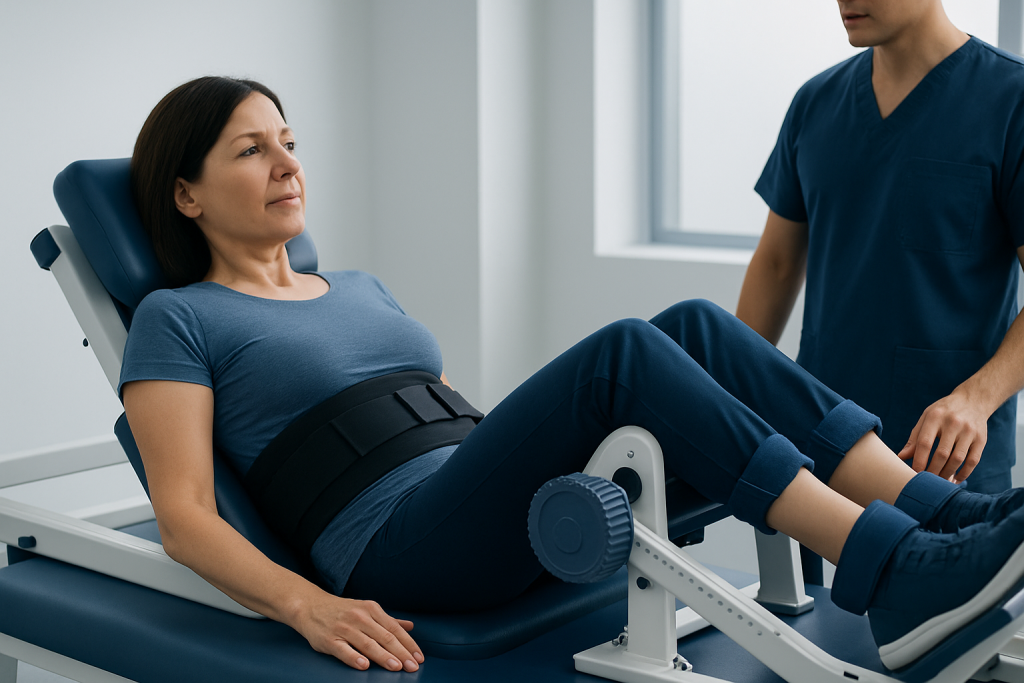
During physical therapy, the clinician listens to the person’s symptoms and goals, reviews relevant medical conditions, and performs a movement-based examination. This may include observing walking, sitting, bending, lifting, balance, leg strength, hip movement, and how symptoms respond to particular positions or repeated movements. Imaging is not always needed for common lower back pain, unless findings suggest a specific underlying problem.
Treatment may include education about staying active, changing positions, sleep and work ergonomics, and pacing activities. Therapists commonly teach exercises for trunk endurance, hip and leg strength, flexibility, balance, and movement control. Hands-on techniques or other supportive treatments may sometimes be used, but active rehabilitation and a home exercise plan are usually central parts of care.
A program can also address related conditions when appropriate. For example, leg pain caused by sciatica may need a different movement approach from pain that remains local to the lower back. A specialist may recommend physical therapy and rehabilitation when a structured, individualized plan is needed.
Who May Benefit and Who Needs Assessment First?

People may be candidates for lower back rehabilitation if they have recent or recurring lower back discomfort, stiffness, reduced confidence with movement, weakness after inactivity, or difficulty returning to normal tasks. Exercise-based care is often appropriate for non-specific lower back pain, provided a clinician has excluded urgent causes and the exercises are progressed sensibly.
Some people need more individualized assessment before following exercises from a PDF. This includes those with severe or persistent leg symptoms, previous spinal surgery, osteoporosis or a history of fractures, inflammatory arthritis, cancer, pregnancy-related concerns, significant neurological disease, or pain that started after a fall, collision, or other trauma. A clinician can decide whether an exercise plan should be modified and whether further testing or specialist input is needed.
People with possible nerve compression may be assessed for symptoms such as pain traveling below the knee, tingling, numbness, or weakness. Some may benefit from coordinated care involving rehabilitation clinicians, orthopedics, neurology, pain medicine, or spine specialists, depending on the diagnosis and response to conservative treatment.
Step by Step: What a Lower Back Exercise Plan Usually Involves
A rehabilitation plan typically starts with a baseline assessment and shared goals. The therapist may ask what activities are currently difficult, such as getting out of bed, sitting at a desk, lifting a child, walking, or exercising. They then select a small number of movements that can be performed with good technique and a manageable symptom response.
Early sessions often focus on comfortable movement and learning how to control the trunk, hips, and breathing without bracing excessively. As tolerance improves, the program may progress to strengthening, endurance work, carrying, bending, stair climbing, or work- and sport-specific tasks. The number of repetitions, resistance, range of movement, and frequency are individualized rather than copied from a standard sheet.
At home, people are generally advised to follow the instructions given by their clinician, record symptom patterns, and report exercises that consistently worsen pain. It is usually better to do a manageable program regularly than to perform a high-intensity session irregularly. Good technique, gradual progression, and consistency matter more than trying to advance quickly.
- Warm up with gentle walking or easy movement if tolerated.
- Perform the prescribed exercises slowly, without holding the breath.
- Stop and seek advice if pain becomes sharp, spreads significantly, or is accompanied by new numbness or weakness.
- Progress only when movements feel controlled and recovery after exercise is acceptable.
What Are the Big 3 Exercises for Lower Back?
The phrase “big 3” commonly refers to three core-stability exercises associated with spine endurance: the modified curl-up, side plank, and bird-dog. In simplified terms, these exercises train the trunk to stay stable while the arms or legs move. They are often used in rehabilitation and conditioning programs because they can be adapted to different abilities.
A modified curl-up is generally performed lying on the back with one knee bent, using a small lift of the head and shoulders rather than a full sit-up. A side plank trains the muscles along the side of the trunk and can begin with the knees bent for support. A bird-dog is performed on hands and knees by extending the opposite arm and leg while keeping the back steady.
These are not automatically the best first exercises for every person. They may need modification or temporary avoidance if they increase symptoms, if getting onto the floor is difficult, or if a person has a condition that changes exercise safety. A physiotherapist can select alternatives and ensure that the exercise matches the person’s current ability.
Can You Provide Me With a PDF of Lower Back Strengthening Exercises?
A printable physical therapy lower back exercises PDF is most useful when it comes from the treating clinician and includes individualized instructions, pictures, and progression guidance. This type of handout helps a person remember the agreed plan between appointments. It should state which exercises to perform, how often to review them, and what symptoms should prompt the person to pause and contact the care team.
A general online PDF can offer ideas, but it should not be treated as a diagnosis or a complete treatment plan. Exercises that help one type of back pain may be uncomfortable or unsuitable for another. Before using a generic strengthening guide, it is sensible to obtain medical advice if symptoms are severe, last several weeks without improvement, recur frequently, or include leg weakness, altered sensation, or other concerning features.
In a personalized program, the PDF may include mobility exercises, trunk-control drills, hip strengthening, walking goals, and advice for lifting or sitting. It may also include instructions for gradual return to activities. The plan should be reviewed as function changes, rather than followed unchanged for months.
Expected Results, Recovery Timeline, Benefits and Risks
Recovery varies because lower back pain has many causes and is influenced by sleep, stress, work demands, physical conditioning, and other health conditions. Some people notice improved movement confidence and function within a few weeks of regular exercise, while longer-standing or more complex symptoms may require a longer rehabilitation period. A clinician can help set realistic milestones based on the person’s starting point.
Potential benefits of a well-designed program include better trunk and hip endurance, improved mobility, less fear of movement, and greater ability to perform daily tasks. Exercise does not guarantee that all pain will resolve, but it can be an important part of long-term self-management and prevention of recurring disability.
The main risks are usually related to doing the wrong movement, progressing too rapidly, or continuing despite worsening symptoms. Mild muscle fatigue or short-lived soreness may be expected when activity increases. Sharp pain, increasing pain that travels down the leg, new weakness, or symptoms that do not settle after adjustment should be discussed with a qualified clinician.
What’s the Worst Thing You Can Do for Back Pain?
There is no single action that is the worst for every type of back pain, but prolonged bed rest and complete avoidance of movement can slow recovery for many people with uncomplicated lower back pain. Long periods of inactivity can reduce strength, increase stiffness, and make normal activities feel more difficult. Gentle movement within a tolerable range is often more helpful than trying to protect the back completely.
Other unhelpful patterns include repeatedly pushing through severe or spreading pain, making sudden large increases in exercise or lifting, relying on one passive treatment without rebuilding function, and following unverified online advice that does not fit the individual’s symptoms. Smoking, poor sleep, and high stress can also affect recovery and should be addressed compassionately as part of a broader care plan.
Healthy back care usually involves regular movement, gradual strengthening, sensible pacing, and attention to technique during repetitive tasks. Acibadem International’s multidisciplinary specialists and JCI-accredited hospitals can assess and treat lower back conditions for international patients when coordinated evaluation and rehabilitation are needed.
When to Seek Medical Care
Prompt medical care is important for lower back pain accompanied by new or worsening leg weakness, numbness around the genitals or buttocks, loss of bladder or bowel control, inability to pass urine, fever, unexplained weight loss, or pain after a serious injury. These symptoms can indicate a condition that needs urgent assessment rather than self-directed exercise.
A doctor should also assess pain that is severe, persistent, progressively worsening, present with a history of cancer or infection, or associated with substantial night pain that does not improve with changing position. People who are unsure whether exercise is safe should seek guidance before starting a strengthening program.
For non-urgent symptoms that interfere with daily life, a primary care clinician, physiatrist, orthopedic clinician, or physiotherapist can help identify next steps. Early advice can support safe activity, reduce unnecessary fear, and guide referral if specialist care is appropriate.
Frequently asked questions
How often should lower back exercises be done?
The right frequency depends on the exercise, the person’s symptoms, fitness level, and rehabilitation goals. A physiotherapist may recommend brief mobility work more often and strengthening exercises on selected days, with rest and recovery as needed. Following the individualized plan is safer than increasing exercise simply because a general guide suggests it.
Should lower back exercises hurt?
Exercise may cause mild effort, muscle fatigue, or temporary soreness, particularly when a person is becoming more active. It should not cause sharp pain, rapidly escalating pain, or new pain spreading down the leg. If symptoms worsen during or after an exercise, the person should stop and ask a clinician how to modify the program.
Is walking good for lower back pain?
Walking is often a useful, low-impact activity for people with uncomplicated lower back pain because it supports gentle movement and overall conditioning. The duration and pace should be built up gradually, especially after a flare-up or period of inactivity. If walking consistently increases leg pain, numbness, or weakness, medical advice is important.
Can core exercises cure lower back pain?
Core exercises may improve trunk endurance and function, but they do not cure every cause of lower back pain. A complete program may also include hip and leg strengthening, mobility work, education, sleep and activity strategies, and treatment of any underlying condition. Results vary, so the plan should be reviewed if progress stalls.
Do I need an MRI before physical therapy for lower back pain?
Most people with uncomplicated lower back pain do not need an MRI before starting physical therapy. Imaging is typically considered when there are warning signs, significant neurological findings, a suspected serious condition, or symptoms that do not respond as expected. A doctor can decide whether imaging is likely to change treatment decisions.
Can I do lower back exercises during a pain flare-up?
Many people can continue gentle, modified movement during a flare-up, but high-load or aggravating exercises may need to be reduced temporarily. The aim is usually to remain as active as symptoms allow without repeatedly provoking significant pain. A clinician can provide specific guidance when flares are frequent, severe, or associated with leg symptoms.
References
- World Health Organization
- National Institute for Health and Care Excellence
- American College of Physicians
- International Association for the Study of Pain
- National Institute of Neurological Disorders and Stroke
This article is for general information only and is not a substitute for professional medical advice. Please consult a qualified doctor about your individual situation.
Joint and spine care in Turkey — expert assessment & treatment
JCI-accredited · board-certified surgeons · reply within 24h
Add us as a Preferred Source to see more of our trusted health content across Google Search, AI Overviews and Discover.

More from the Health Library



Related Specialists

Prof. Dr. Sinan Zeren
Urology
Prof. Dr. Özlem Dicle
Dermatology
Dt. Beyhan Kasapoğlu
Oral & Dental Health
Prof. Dr. Çetin Karaca (m)
Gastroenterology