Pineal Gland: An Evidence-Based Guide for Patients

The pineal gland’s best-known role is making melatonin, a hormone linked to the sleep-wake cycle. Most pineal gland findings, especially small incidental cysts, do not cause symptoms and may only need monitoring.
Key Takeaways
- The pineal gland’s best-known role is making melatonin, a hormone linked to the sleep-wake cycle.
- Most pineal gland findings, especially small incidental cysts, do not cause symptoms and may only need monitoring.
- Possible symptoms of pineal gland disorders can include headaches, vision changes, sleep disruption, nausea, or early puberty in children.
- MRI is the main imaging test used to evaluate the pineal region and distinguish benign from concerning findings.
- Treatment depends on the cause and may range from observation to medication, surgery, or other specialist care.
- Medical review is important if symptoms are new, persistent, or accompanied by vision problems or neurological changes.
The pineal gland is a small structure deep in the brain that mainly helps regulate the body’s sleep-wake cycle by producing melatonin. Most people never notice it, but problems such as cysts, tumors, calcification, or hormone-related changes can sometimes affect sleep, headaches, vision, or puberty timing.
Overview: what the pineal gland is and why it matters
The pineal gland is a very small gland located near the center of the brain, between the two hemispheres. Its most widely recognized job is to produce melatonin, a hormone that helps the body align sleep and wakefulness with light and darkness. In simple terms, the pineal gland acts as part of the body’s internal timing system.
Although it is small, the pineal gland has an important relationship with the brain’s circadian rhythm network. Signals related to light exposure influence when the gland releases melatonin, which usually rises in the evening and falls in the morning. This is why pineal gland function is often discussed in relation to sleep patterns, jet lag, shift work, and nighttime light exposure.
Patients often search for information about the pineal gland because of sleep concerns, incidental MRI findings such as a pineal cyst, or questions about whether the gland can become diseased. Pineal gland disorders are relatively uncommon, but when they do occur, they may involve cysts, tumors, inflammation, bleeding, pressure on nearby structures, or hormone-related effects.
Most pineal gland issues are not emergencies, and many are found by chance during imaging done for another reason. A careful evaluation helps determine whether a finding is harmless, needs follow-up, or requires treatment. Understanding the gland’s normal role can make test results and treatment discussions much easier to follow.
How the pineal gland works
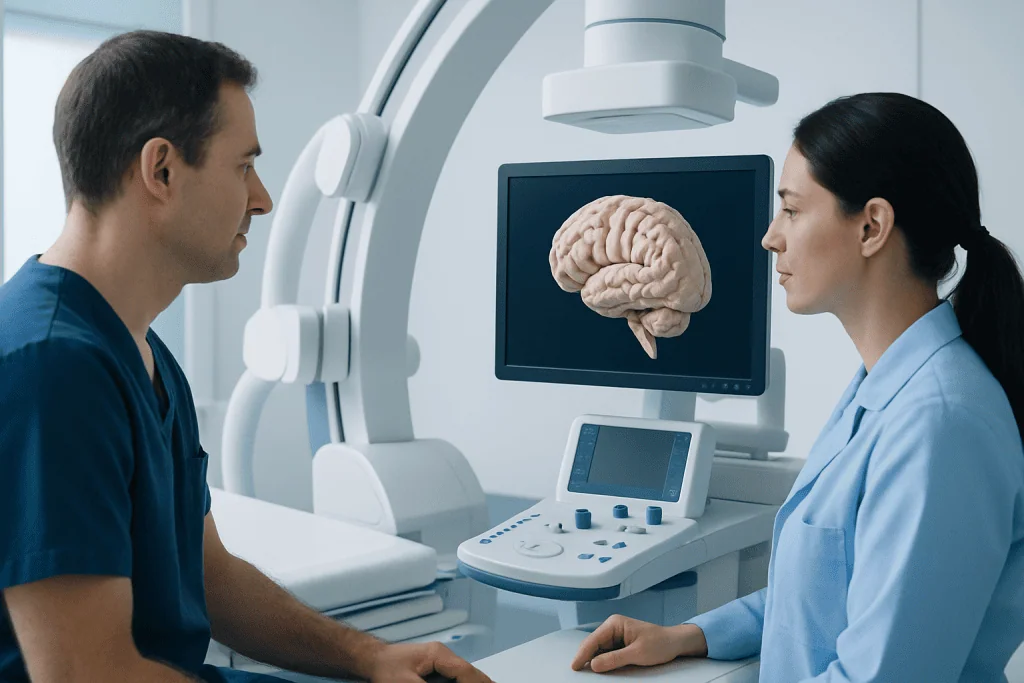
The pineal gland receives information indirectly from pathways in the brain that respond to light reaching the eyes. When environmental light decreases, the body signals the gland to increase melatonin production. As melatonin levels rise, the body receives a biological cue that supports sleep readiness.
Melatonin does not work like a sedative in the usual sense. Instead, it helps synchronize internal rhythms, including the timing of sleep, body temperature, and some hormone patterns. This is one reason why good sleep hygiene, including regular light exposure during the day and minimizing bright light at night, can support the pineal gland’s normal function.
The gland may also have interactions with reproductive hormone timing, especially during development, which is why some pineal region tumors in children can affect puberty. However, the pineal gland is not the body’s only hormone regulator, and most endocrine functions are controlled by broader systems involving the hypothalamus and pituitary gland.
It is also common for the pineal gland to develop calcification with age. Calcification means mineral deposits are visible on imaging. This is often considered a normal finding rather than a disease, although researchers continue to study whether extensive calcification has any meaningful effect on sleep or circadian rhythm in some individuals.
Symptoms and signs of pineal gland problems

Many pineal gland findings cause no symptoms at all. For example, a small pineal cyst is often discovered incidentally during an MRI performed for headaches, dizziness, or unrelated reasons. In such cases, the cyst may not be the cause of the person’s symptoms, which is why medical interpretation is important.
When symptoms do occur, they usually relate either to pressure on nearby brain structures or to the underlying disease process. Possible symptoms can include persistent headaches, nausea, vomiting, balance problems, double vision, difficulty looking upward, or other visual changes. Larger lesions can sometimes block the normal flow of cerebrospinal fluid, leading to increased pressure inside the skull.
Sleep disruption may also raise questions about the pineal gland, especially when people are trying to understand melatonin and circadian rhythms. Still, sleep problems are common and often have many other causes, including stress, sleep apnea, medications, mood disorders, and irregular schedules. A sleep complaint alone does not usually mean there is a structural pineal gland disorder.
In children and adolescents, certain pineal region tumors may affect hormone signaling and contribute to early puberty. Because symptoms can overlap with many other neurological or endocrine conditions, evaluation often involves specialists in neurology, endocrinology, neurosurgery, or ophthalmology depending on the presentation.
Common pineal gland disorders and risk factors
Pineal gland disorders include benign cysts, tumors of the pineal region, calcification, inflammation, and rarely bleeding. Pineal cysts are among the most common findings and are often harmless. In contrast, pineal region tumors are much less common but may require prompt diagnosis and treatment because of their location and their potential to affect nearby brain structures.
Different tumors can arise in or around the pineal gland, including germ cell tumors and pineal parenchymal tumors. Their behavior ranges from relatively slow-growing to more aggressive. A diagnosis depends on imaging, blood tests in selected cases, and sometimes biopsy or surgery. Some masses in this area may also represent spread from another cancer, though this is uncommon.
Risk factors are not always clear. Many pineal cysts appear without any known cause. For tumors, age can matter, as some types are more often seen in children, adolescents, or young adults. Family history is not a major factor for most pineal lesions, although a doctor will still review personal and family medical history as part of a full assessment.
Because pineal region conditions sit within the broader field of brain disorders, doctors may compare them with other intracranial masses during evaluation. Depending on imaging findings, the care team may also discuss related brain conditions and whether further workup is needed for issues such as brain tumors. In some patients, symptoms like obstructed cerebrospinal fluid flow can overlap with problems seen in hydrocephalus.
How pineal gland conditions are diagnosed
Diagnosis begins with a medical history and neurological examination. The doctor asks about headaches, sleep changes, visual symptoms, nausea, imbalance, hormone-related concerns, and how long symptoms have been present. A physical exam may include eye movement testing and a focused neurological assessment.
MRI is the most useful imaging test for the pineal gland because it provides detailed views of the gland and surrounding structures. It helps show the size, shape, and characteristics of a cyst or mass and whether there is pressure on nearby tissue or blockage of cerebrospinal fluid pathways. CT can also be helpful in some cases, especially when calcification or acute bleeding is being assessed.
If a tumor is suspected, doctors may order additional tests. These can include blood tests or cerebrospinal fluid tests for tumor markers in selected patients, especially when a germ cell tumor is a possibility. Eye examinations may be used if visual symptoms are present, and hormone evaluation may be recommended when puberty timing or endocrine symptoms raise concern.
Not every pineal gland finding needs an invasive test. For many small, typical-appearing cysts, the most appropriate plan is observation with repeat imaging after a period recommended by the treating doctor. When imaging is unclear or a lesion appears concerning, patients may be referred for advanced evaluation, sometimes including MRI scanning and specialist review by neurology or neurosurgery teams.
Treatment options and follow-up care
Treatment depends entirely on the diagnosis, the size of the lesion, symptoms, and whether there is any effect on surrounding brain structures. Many incidental pineal cysts do not require active treatment. Instead, doctors may recommend monitoring with follow-up imaging and clinical review, particularly if the cyst is small and has a typical benign appearance.
When a pineal region lesion causes symptoms or appears suspicious for tumor, treatment may involve several specialties. Surgery can be considered to remove a mass, obtain tissue for diagnosis, relieve pressure, or restore normal cerebrospinal fluid flow. In selected cases, endoscopic procedures may be used, especially if there is associated fluid buildup in the brain requiring treatment similar to approaches used for hydrocephalus treatment.
Some tumors are treated with radiation therapy, chemotherapy, or a combination of approaches depending on the exact tumor type. The treatment plan is individualized and based on pathology, imaging findings, age, overall health, and whether the lesion has spread. If a broader neuro-oncology evaluation is needed, the care team may discuss options such as brain tumor treatment.
Recovery and follow-up vary. Some patients need only periodic imaging. Others may need rehabilitation, eye care, endocrine follow-up, or repeat scans after surgery or other therapy. Near the end of the care pathway, patients who travel internationally may seek assessment at centers such as Acibadem International, where multidisciplinary specialists in JCI-accredited hospitals evaluate and treat pineal region conditions.
Prevention, self-care, and living with a pineal gland finding
There is no proven way to prevent most structural pineal gland disorders, including many cysts and tumors. However, supporting healthy circadian rhythms can help with the gland’s normal melatonin-related function. Practical steps include maintaining a regular sleep schedule, reducing bright light exposure late at night, getting daylight exposure in the morning, and limiting caffeine close to bedtime.
Patients who learn they have a pineal cyst often feel anxious, especially if it was discovered unexpectedly. In many cases, reassurance and clear follow-up plans are the most important parts of care. Asking the doctor about the size of the lesion, whether it looks typical, whether repeat MRI is needed, and which symptoms should prompt urgent review can make the situation easier to manage.
Self-care should focus on overall neurological and sleep health rather than attempting unproven “detox” or “activation” methods sometimes promoted online. There is no reliable evidence that special cleanses, supplements beyond standard clinical guidance, or alternative regimens can treat a pineal gland cyst or tumor. Patients should speak with a qualified clinician before taking hormone-related supplements, including melatonin, especially for children or for those with complex medical conditions.
For people whose main concern is sleep, a doctor may explore whether the issue is truly related to circadian rhythm timing or whether another condition is more likely. Keeping a sleep diary, reviewing medications, and discussing symptoms such as snoring, restless sleep, anxiety, or low mood can help guide appropriate evaluation and care.
When to seek medical care
Medical review is appropriate if a person has ongoing headaches, unexplained nausea, new vision changes, trouble with balance, unusual sleep disruption, or a newly found pineal lesion on imaging. A doctor can help determine whether these symptoms are related to the pineal gland or another condition. This is especially important when symptoms are persistent, worsening, or interfering with daily life.
Urgent medical care is needed for severe headache with vomiting, sudden changes in vision, increasing drowsiness, confusion, seizures, or other new neurological symptoms. These can signal increased pressure in the brain or another serious problem that needs prompt evaluation. Children with signs of unusually early puberty should also be assessed without delay.
Patients do not need to assume the worst if a scan mentions the pineal gland. Many findings are benign, and careful interpretation usually clarifies the next step. The key is not to ignore symptoms and not to rely solely on internet information in place of a professional assessment.
If there is uncertainty about imaging results, consultation with a neurologist, neurosurgeon, or endocrinologist may be helpful. A second opinion can also be appropriate when surgery or cancer treatment is being considered, particularly for uncommon pineal region conditions.
Frequently asked questions
What does the pineal gland do?
The pineal gland mainly produces melatonin, a hormone that helps regulate the body’s sleep-wake cycle. It responds to signals related to light and darkness, helping the body align internal rhythms with the day-night pattern.
Can a pineal gland problem cause sleep issues?
It can, especially because the pineal gland is involved in melatonin production and circadian timing. However, most sleep problems are caused by more common issues such as stress, irregular schedules, sleep apnea, medications, or mental health conditions rather than a structural pineal gland disorder.
Is a pineal cyst dangerous?
Usually not. Many pineal cysts are small, benign, and found incidentally on MRI, and they may never cause symptoms or require treatment. A doctor may recommend follow-up imaging if needed to confirm that the cyst remains stable.
How are pineal gland disorders diagnosed?
Doctors use a combination of symptom history, neurological examination, and brain imaging, especially MRI. If a tumor is suspected, additional tests such as tumor markers, eye exams, or tissue sampling may be recommended depending on the situation.
Can the pineal gland become cancerous?
Yes, but pineal region cancers and other tumors are uncommon. Because the area is deep in the brain and close to important structures, suspicious findings need specialist evaluation to determine the exact diagnosis and best treatment.
Should someone take melatonin if they have a pineal gland issue?
Not automatically. Melatonin supplements may be appropriate for some sleep-related problems, but they do not treat a cyst or tumor and are not right for everyone. A clinician can advise whether melatonin is suitable based on age, symptoms, and medical history.
References
- National Institute of Neurological Disorders and Stroke
- National Cancer Institute
- American Association of Neurological Surgeons
- Endocrine Society
- Mayo Clinic
This article is for general information only and is not a substitute for professional medical advice. Please consult a qualified doctor about your individual situation.
Explore treatments in Turkey — costs, top hospitals & a free quote
JCI-accredited · board-certified surgeons · reply within 24h
Add us as a Preferred Source to see more of our trusted health content across Google Search, AI Overviews and Discover.