Pinpoint Pupils: A Complete Medical Overview

Pinpoint pupils are also called miosis and describe pupils that remain abnormally small. Common causes include opioid medicines, certain eye drops, chemical exposure, and some brain or nerve conditions.
Key Takeaways
- Pinpoint pupils are also called miosis and describe pupils that remain abnormally small.
- Common causes include opioid medicines, certain eye drops, chemical exposure, and some brain or nerve conditions.
- Pinpoint pupils become more concerning when they occur with drowsiness, trouble breathing, weakness, confusion, or severe headache.
- Diagnosis focuses on the pupil exam, medication history, neurologic assessment, and testing based on the suspected cause.
- Treatment depends on the underlying reason and may range from observation to emergency care.
Pinpoint pupils are pupils that stay unusually small, often because the muscles that control pupil size are being affected by medicines, toxins, nerve pathways, or certain medical conditions. Sometimes they are harmless and temporary, but in other situations they can signal an emergency that needs prompt medical evaluation.
Overview: What pinpoint pupils mean
Pinpoint pupils are very small pupils that do not widen as expected in dim light. The medical term for this is miosis. Pupils naturally change size throughout the day in response to light, focus, age, and emotional state, but pinpoint pupils suggest that this normal balance may be altered.
On their own, small pupils are not always dangerous. A person may briefly have smaller pupils after using certain prescription medicines, eye drops, or in bright environments. The key question is whether the pupils are small in a way that is unexpected, persistent, or happening together with other symptoms.
The size of the pupil is controlled by muscles in the iris and by signals from the nervous system. When those muscles or nerve pathways are affected, the pupil can become unusually small. Because of this, pinpoint pupils can sometimes act as a visible clue to a problem elsewhere in the body.
In clinical practice, doctors do not treat pinpoint pupils as a disease by themselves. Instead, they look for the underlying cause, which may range from a medication effect to a toxic exposure or a neurologic emergency such as stroke.
How pupils normally work
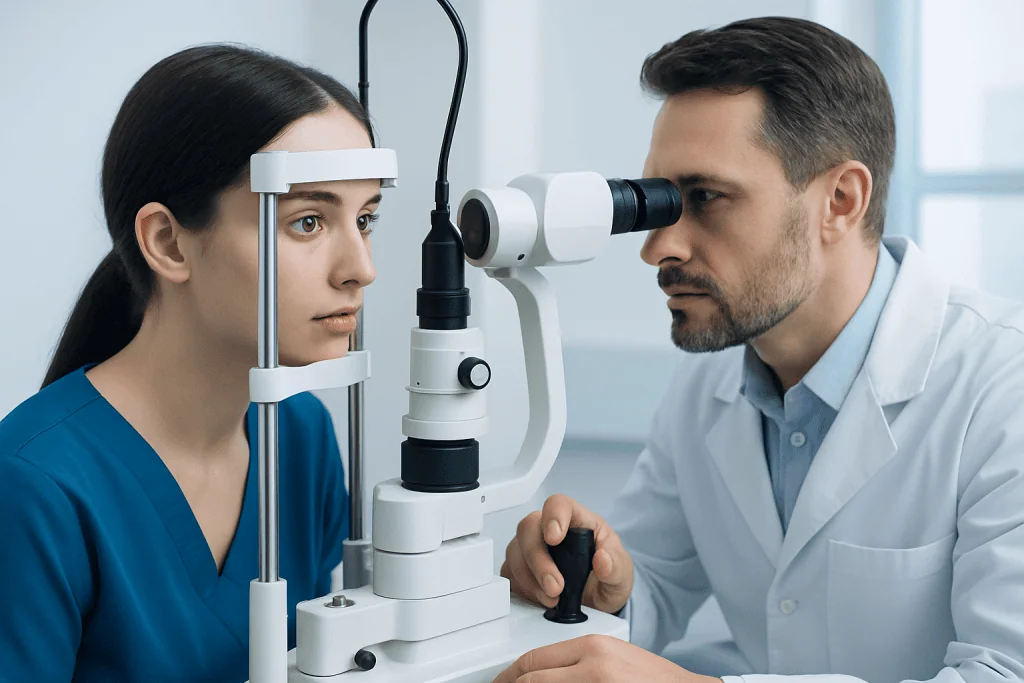
The pupil is the dark opening in the center of the eye. It controls how much light enters the eye, much like the aperture of a camera. In bright light, the pupil becomes smaller to protect the retina from too much light. In dim light, it enlarges to improve vision.
Two sets of muscles in the iris control this process. One muscle narrows the pupil, while another widens it. These muscles are regulated by different parts of the autonomic nervous system. If the narrowing pathway becomes overactive, or the widening pathway is interrupted, the pupil may stay very small.
Doctors also assess whether both pupils are equally small, whether they react to light, and whether the change is new. This helps them decide if the finding is more likely related to a medicine, an eye problem, or a disorder affecting the brain, nerves, or circulation.
Symptoms that may occur with pinpoint pupils
Some people notice pinpoint pupils by looking in the mirror or in a photograph, while others do not notice them at all. In many cases, the associated symptoms provide more useful information than the pupil size itself. For example, pupils that are very small after a prescribed medication may occur without any other concerning signs.
Symptoms that can accompany pinpoint pupils include blurred vision, trouble seeing in dim light, eye discomfort, headache, drowsiness, slowed breathing, nausea, confusion, or faintness. If pinpoint pupils occur with weakness, trouble speaking, severe imbalance, or sudden severe headache, doctors consider urgent neurologic causes.
In opioid overdose, a classic pattern can include extreme sleepiness, slow or stopped breathing, and pinpoint pupils. In other settings, small pupils may happen along with sweating, muscle twitching, vomiting, or diarrhea after exposure to certain chemicals or toxins.
- Vision changes or light sensitivity
- Sleepiness or difficulty staying awake
- Slow, shallow, or labored breathing
- Confusion or unusual behavior
- One-sided weakness or facial droop
- Eye pain or redness
Common causes and risk factors
Several different issues can cause pinpoint pupils. One of the most recognized is exposure to opioids, including prescription pain medicines and illicit opioids. Other medicines can also narrow the pupils, such as some glaucoma eye drops, certain sedatives, and drugs that affect the nervous system.
Toxic exposures are another important cause. Organophosphate insecticides and some nerve-agent-like chemicals can overstimulate the body systems that constrict the pupil. These exposures often cause additional symptoms such as sweating, drooling, vomiting, breathing difficulty, and muscle twitching, making them medical emergencies.
Neurologic conditions can also lead to pinpoint pupils. Problems involving the brainstem, certain hemorrhages, and disruptions in the nerve pathways that regulate pupil size may be responsible. In some people, a combination of a small pupil, drooping eyelid, and reduced sweating on one side of the face suggests Horner syndrome, which requires medical assessment to find the cause.
Eye-related causes are also possible. Inflammation inside the eye, prior eye surgery, or use of prescribed eye medicines may narrow the pupil. If symptoms include sudden vision changes, eye pain, or redness, an eye specialist may recommend a detailed eye examination and, when appropriate, eye surgery or other targeted treatment depending on the diagnosis.
How doctors diagnose pinpoint pupils
Evaluation starts with a careful history. A doctor will ask when the pupil change began, whether both eyes are affected, what medicines or eye drops are being used, and whether there has been any recent illness, injury, or chemical exposure. Symptoms such as sleepiness, breathing changes, weakness, or headache help guide the next steps.
The physical examination includes checking pupil size in light and dark conditions, how quickly the pupils react, and whether the eye movements and eyelids are normal. A neurologic exam may assess speech, strength, coordination, sensation, and level of alertness. If an overdose or toxic exposure is suspected, emergency assessment is needed right away.
Additional tests depend on the likely cause. These may include blood tests, toxicology testing, brain imaging, or specialized eye examination. When there is concern for a neurologic event, doctors may use urgent imaging such as MRI or other scans to look for bleeding, stroke, or structural problems. If the pupil change is part of a broader neurologic picture, referral for neurology evaluation may be appropriate.
The goal of diagnosis is not simply to confirm that the pupils are small, but to identify whether the finding is benign, medication-related, or a sign of a condition that needs prompt treatment. That distinction is what shapes the treatment plan.
Treatment options and what recovery depends on
There is no single treatment for pinpoint pupils because the right approach depends entirely on the cause. If a medicine is responsible, a doctor may adjust or review that medication. If an eye drop is causing the change and it is being used as intended, the small pupil may be expected and not harmful.
When pinpoint pupils are related to opioid overdose, emergency treatment is critical. The immediate priorities are restoring breathing, providing supportive care, and reversing the opioid effect when appropriate. This is why pinpoint pupils with severe drowsiness or slowed breathing should always be treated as urgent.
If a neurologic condition is responsible, treatment focuses on that underlying diagnosis. For example, management may involve time-sensitive care for stroke, treatment of bleeding, or therapy for a nerve-related disorder. Eye inflammation, infection, or structural eye disease may need prescription treatment and follow-up with an ophthalmologist.
Recovery varies. Some cases resolve quickly once the triggering medicine wears off or the cause is treated. Others require ongoing monitoring, especially when the pupil change is linked to chronic neurologic or eye conditions. In selected situations, Acibadem International’s multidisciplinary specialists and JCI-accredited hospitals evaluate international patients with complex neurologic and eye symptoms and coordinate treatment across specialties.
Prevention, self-care, and when to seek medical care
Prevention begins with safe medication use. People should take prescription medicines only as directed, avoid mixing sedating medicines unless a doctor has advised it, and follow instructions carefully for eye drops. Household chemicals and pesticides should be stored and used safely, with proper protective measures.
Self-care is limited because pinpoint pupils are a sign, not a diagnosis. It is reasonable to observe briefly if the cause is obvious and harmless, such as a prescribed eye medicine that a doctor has already discussed. However, trying to self-diagnose can be risky if there are any new symptoms or uncertainty about what caused the change.
Medical care is needed promptly if pinpoint pupils occur with drowsiness, confusion, trouble breathing, fainting, chest pain, severe headache, weakness, slurred speech, or after possible drug or chemical exposure. Emergency care is especially important if the person is difficult to wake up or has slow breathing. If the pupils remain persistently small without a clear explanation, a doctor should evaluate the person to rule out eye, nerve, or brain causes.
Doctors may also recommend further assessment when small pupils are new on one side only, occur with eyelid drooping, or are accompanied by vision changes. Early evaluation helps identify whether the issue is temporary and harmless or a clue to a more significant condition.
Frequently asked questions
Are pinpoint pupils always a sign of opioid use?
No. Opioids are a well-known cause, but pinpoint pupils can also result from certain eye drops, other medicines, toxic exposures, and neurologic or eye conditions. The surrounding symptoms and medical history are important for understanding the cause.
Can bright light alone cause pinpoint pupils?
Bright light normally makes pupils smaller, and this can be completely normal. The concern is when the pupils stay unusually small in settings where they should widen, or when the finding is new and unexplained.
Should one small pupil be taken seriously?
Yes, especially if the change is new. A one-sided small pupil can sometimes point to a nerve pathway problem, eye disorder, or another underlying condition that needs evaluation.
Do pinpoint pupils affect vision?
They can. Very small pupils may make it harder to see in dim light and may sometimes be associated with blurred vision or eye discomfort, depending on the cause.
What should someone do if pinpoint pupils happen with sleepiness or slow breathing?
This should be treated as an emergency. Slow breathing, difficulty waking up, or severe drowsiness together with pinpoint pupils may signal opioid overdose or another serious problem and needs urgent medical care.
Can pinpoint pupils go away on their own?
Sometimes they do, especially if they are caused by a temporary medication effect or a normal reaction to light. However, persistent or unexplained pinpoint pupils should be checked by a doctor so the underlying cause can be identified.
References
- American Academy of Ophthalmology
- National Eye Institute
- National Institute of Neurological Disorders and Stroke
- MedlinePlus
- Centers for Disease Control and Prevention
This article is for general information only and is not a substitute for professional medical advice. Please consult a qualified doctor about your individual situation.
Explore treatments in Turkey — costs, top hospitals & a free quote
JCI-accredited · board-certified surgeons · reply within 24h
Add us as a Preferred Source to see more of our trusted health content across Google Search, AI Overviews and Discover.

More from the Health Library

Dyspnea on Exertion — Explained by Medical Evidence, Not Myths

Testicular Torsion: What Patients Need to Know

Absolute lymphocytes high: Symptoms, Causes, and Treatment — Complete Patient Guide

Grey Pubic Hair: What Patients Need to Know

Betadine: What Patients Need to Know