Placenta Accreta: An Evidence-Based Guide for Patients

Placenta accreta happens when the placenta grows too deeply into the uterus. It may cause little or no symptoms during pregnancy and is often found on ultrasound.
Key Takeaways
- Placenta accreta happens when the placenta grows too deeply into the uterus.
- It may cause little or no symptoms during pregnancy and is often found on ultrasound.
- A previous cesarean birth and placenta previa are important risk factors.
- Planned delivery in a specialist center helps lower the risk of severe bleeding.
- Treatment often involves cesarean delivery, and in some cases hysterectomy may be recommended.
- People with bleeding during pregnancy should seek prompt medical assessment.
Placenta accreta is a pregnancy complication in which the placenta attaches too deeply into the wall of the uterus and may not separate normally after delivery. Early diagnosis and delivery planning with an experienced maternity team can reduce serious bleeding risks and improve safety for both parent and baby.
Overview: what placenta accreta means
Placenta accreta is a condition in pregnancy where the placenta attaches too deeply into the wall of the uterus. In a typical pregnancy, the placenta separates from the uterus after the baby is born. With placenta accreta, that separation may be difficult or incomplete, which can lead to heavy bleeding at delivery.
The term “placenta accreta spectrum” is often used because there are related forms that differ in depth of attachment. In placenta accreta, the placenta is abnormally attached to the uterine wall. In more severe forms, called increta and percreta, placental tissue grows deeper into the muscle of the uterus or even through it and into nearby organs.
This condition is uncommon, but it is taken seriously because it can cause major blood loss during childbirth. The good news is that modern imaging, careful pregnancy monitoring, and delivery planning by an experienced team have improved outcomes. Many people with placenta accreta have a scheduled birth in a hospital that can provide obstetric, anesthesia, blood bank, and surgical support.
Symptoms and how it may present
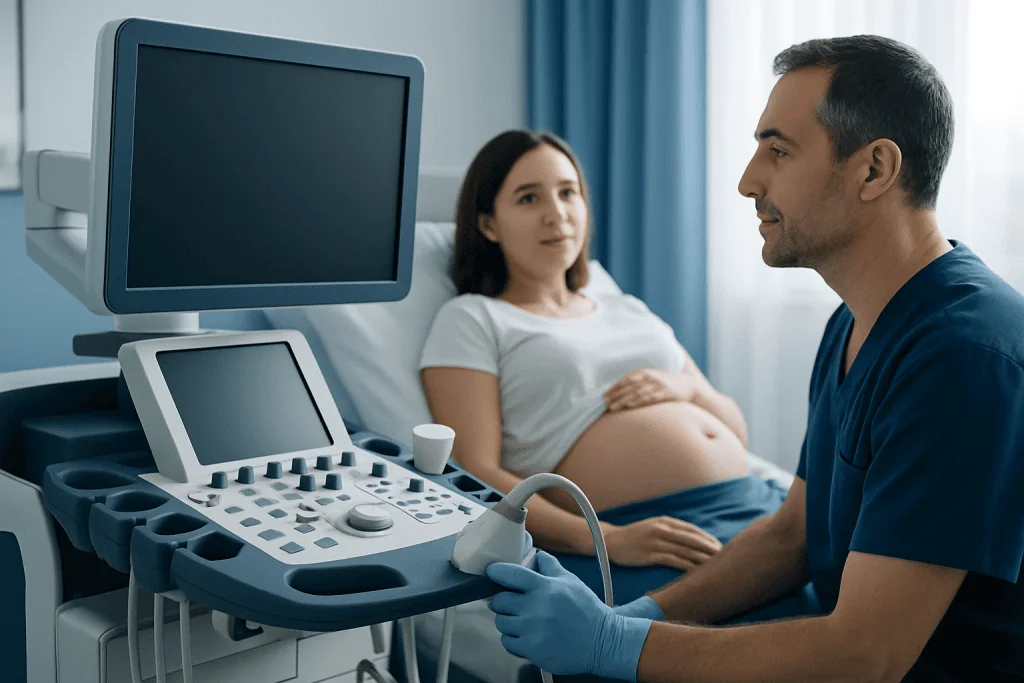
Placenta accreta often does not cause obvious symptoms during pregnancy. Many people feel well and only learn about the condition during a routine ultrasound or when a doctor investigates another placental concern. That is one reason prenatal care and recommended imaging are so important.
When symptoms do happen, the most common is vaginal bleeding in the second or third trimester. Bleeding is not specific to placenta accreta and can occur for other reasons, including placenta previa, so it always needs medical assessment. Some people may also have contractions or abdominal discomfort, but these are not reliable signs of accreta itself.
Placenta accreta is closely linked to placenta previa, a condition in which the placenta covers part or all of the cervix. If previa is present, especially after a previous cesarean birth, doctors may look more carefully for signs of accreta. Readers wanting background on that related condition may find placenta previa helpful to understand.
- Often no symptoms at all before diagnosis
- Possible painless vaginal bleeding later in pregnancy
- May be suspected more strongly when placenta previa is also present
- Sometimes recognized only at delivery if not seen earlier
Causes and risk factors

Placenta accreta develops when the normal boundary between the placenta and the uterine wall is disrupted. This can allow placental tissue to grow more deeply than usual. Doctors do not always know why this happens in an individual pregnancy, but certain patterns are well established.
The strongest risk factors are a history of cesarean birth and placenta previa in the current pregnancy. The risk rises as the number of prior cesarean deliveries increases. Other factors that may raise risk include previous uterine surgery, such as fibroid removal or dilation and curettage, prior placenta accreta, and changes to the lining of the uterus from scarring.
Maternal age over 35 years is also associated with a higher likelihood, although age alone does not mean someone will develop the condition. It is important to remember that placenta accreta is not caused by routine activity, exercise, travel, or something the pregnant person did wrong. In many cases, it reflects how the placenta implanted early in pregnancy against a uterus that may have prior scar tissue.
How doctors diagnose placenta accreta
Placenta accreta is usually diagnosed before birth with imaging. Ultrasound is the main test and is often very effective when performed by experienced clinicians. Doctors may look for placental location, abnormal blood flow patterns, and signs that the normal boundary between the placenta and the uterus is less clear than expected.
If ultrasound findings are uncertain or if more detail is needed, magnetic resonance imaging may be used in selected cases. MRI can help define how deeply the placenta may be attached and whether nearby structures could be involved. However, ultrasound remains the first-line tool in most pregnancies.
Diagnosis is not only about confirming the condition. It also helps the team create a delivery plan, estimate the likelihood of bleeding, and arrange the right specialists. This may include experts in high-risk pregnancy, anesthesia, neonatology, blood management, and if needed, interventional radiology or gynecologic surgery support.
Sometimes placenta accreta is only recognized at the time of cesarean or after attempted placental delivery. For that reason, people with important risk factors are often monitored more closely during pregnancy, even if early imaging is not definitive.
Treatment options and delivery planning
Treatment for placenta accreta focuses on safe delivery and prevention of severe bleeding. In most cases, the preferred approach is a planned cesarean birth before labor begins, in a hospital prepared for complex obstetric care. The exact timing depends on the pregnancy, bleeding history, and how strongly accreta is suspected.
For many patients, the standard treatment is cesarean delivery followed by hysterectomy, which means removing the uterus with the placenta left in place rather than trying to detach it. This approach is often recommended because attempting to remove a deeply attached placenta can trigger dangerous hemorrhage. If a hysterectomy is planned, the care team explains the implications for future fertility and discusses blood transfusion and surgical risks in advance.
In carefully selected situations, a conservative approach may be considered to preserve the uterus, but this is not appropriate for everyone and carries its own risks, including bleeding, infection, and the need for later surgery. Decisions are individualized and depend on the depth of placental invasion, the person’s health, fertility goals, and the expertise available.
Some patients may require supportive treatments such as blood products, intensive monitoring, or procedures to help control bleeding. Depending on the case, doctors may coordinate with high-risk pregnancy care specialists and, when surgery is planned, gynecologic surgery teams. The aim is a coordinated birth plan that prioritizes safety for both parent and baby.
Recovery, future pregnancy, and emotional support
Recovery depends on the type of delivery, blood loss, and whether additional surgery was needed. After a planned cesarean or cesarean hysterectomy, hospital recovery may be longer than after an uncomplicated birth. Pain control, anemia management, wound care, and monitoring for infection are all important parts of care.
Emotional recovery matters too. A diagnosis of placenta accreta can be stressful, especially when delivery planning includes the possibility of hysterectomy or intensive care monitoring. Some patients feel grief about loss of future fertility, while others may feel anxiety related to the birth experience. Support from clinicians, loved ones, and mental health professionals can be helpful.
Future pregnancy counseling is important after any placenta accreta spectrum diagnosis. People who keep their uterus may have a higher risk of recurrence in another pregnancy and usually need early specialist assessment. Those who have had a hysterectomy will no longer be able to carry a pregnancy, so discussions about reproductive options and emotional support should be handled with sensitivity and clear information.
Prevention, self-care, and when to seek medical care
There is no guaranteed way to prevent placenta accreta, but risk can sometimes be reduced by avoiding unnecessary uterine procedures and cesarean births when a vaginal birth is a safe option. Once pregnancy begins, the most important steps are regular prenatal visits, attending recommended scans, and following medical advice if placenta previa or another placental issue is suspected.
Self-care does not treat placenta accreta directly, but it can support safer pregnancy management. Patients should keep all appointments, know their blood type if advised, bring records of prior surgeries to prenatal visits, and discuss any vaginal bleeding right away. If a specialist center is recommended, planning ahead for transport and delivery can reduce last-minute stress.
Medical care should be sought promptly for vaginal bleeding during pregnancy, especially in the second or third trimester. Urgent assessment is also important for contractions, severe abdominal pain, dizziness, fainting, or reduced fetal movement. Heavy bleeding is an emergency, and the patient should go to the nearest emergency department or call local emergency services.
For international patients who need coordinated evaluation, Acibadem International’s multidisciplinary specialists and JCI-accredited hospitals diagnose and treat complex pregnancy conditions, including placenta accreta, with individualized planning.
Frequently asked questions
Is placenta accreta dangerous?
Placenta accreta can be serious because it increases the risk of heavy bleeding during delivery. However, when it is identified before birth and managed by an experienced team, care can be planned to improve safety for both parent and baby.
Can placenta accreta be seen on ultrasound?
Yes. Ultrasound is the main test used to suspect or diagnose placenta accreta during pregnancy. In some situations, MRI may be added to clarify how deeply the placenta is attached.
Does placenta accreta always require a hysterectomy?
Not always, but hysterectomy is a common and often recommended treatment, especially when the placenta is deeply attached and bleeding risk is high. In selected cases, doctors may discuss more conservative approaches, but these need careful consideration and close follow-up.
What is the difference between placenta previa and placenta accreta?
Placenta previa means the placenta covers or lies very close to the cervix. Placenta accreta means the placenta is attached too deeply into the uterus. The two conditions can occur together, and when they do, the chance of accreta is higher.
Can someone with placenta accreta have a vaginal birth?
In most confirmed cases, doctors recommend planned cesarean delivery because labor and placental separation can increase bleeding risk. The safest birth plan depends on the imaging findings, the pregnancy history, and the resources available at the hospital.
Will placenta accreta affect future pregnancies?
It can. If the uterus is preserved, there may be a higher risk of placenta accreta happening again in a future pregnancy, so early specialist care is important. If hysterectomy is required, future pregnancy in the uterus is not possible.
References
- American College of Obstetricians and Gynecologists
- Society for Maternal-Fetal Medicine
- Royal College of Obstetricians and Gynaecologists
- National Institute for Health and Care Excellence
- World Health Organization
This article is for general information only and is not a substitute for professional medical advice. Please consult a qualified doctor about your individual situation.
Explore treatments in Turkey — costs, top hospitals & a free quote
JCI-accredited · board-certified surgeons · reply within 24h
Add us as a Preferred Source to see more of our trusted health content across Google Search, AI Overviews and Discover.

More from the Health Library



Related Specialists

Dr. Fadime Sevgi Saçlı
Internal Medicine
Dr. Seçil Demir
Internal Medicine
Fzt. Murat Özel
Physical Medicine & Rehabilitation
Prof. Dr. Mehmet Özkan
Cardiovascular Surgery