Placenta Previa: Bleeding in Pregnancy, Ultrasound Diagnosis, and Delivery Planning

Placenta previa means the placenta is covering or very close to the cervix. The most common symptom is painless vaginal bleeding in the second or third trimester.
Key Takeaways
- Placenta previa means the placenta is covering or very close to the cervix.
- The most common symptom is painless vaginal bleeding in the second or third trimester.
- Ultrasound is the main test used to diagnose placenta previa safely and accurately.
- Many cases found early in pregnancy improve as the uterus grows, but persistent previa needs close follow-up.
- Delivery planning depends on how much of the cervix is covered, bleeding history, and the stage of pregnancy.
Placenta previa is a pregnancy condition in which the placenta lies low in the uterus and partly or completely covers the cervix. It can cause painless vaginal bleeding, especially later in pregnancy, and usually requires careful monitoring, ultrasound follow-up, and a personalized delivery plan.
Overview
Placenta previa is a condition during pregnancy in which the placenta implants low in the uterus and lies over, or very near, the cervix. The cervix is the opening of the uterus that leads into the birth canal. Because the placenta is positioned low, it can interfere with a vaginal delivery and may cause bleeding as pregnancy progresses.
The condition is often found during a routine ultrasound, sometimes before any symptoms appear. In early pregnancy, a low-lying placenta is relatively common and may move upward as the uterus expands. For this reason, an early finding does not always mean placenta previa will remain later in pregnancy.
Doctors usually describe the condition based on how close the placenta is to the cervix or whether it fully covers it. This detail matters because it helps guide monitoring and delivery planning. Persistent placenta previa later in pregnancy needs careful obstetric care to reduce risks for both the mother and baby.
Symptoms
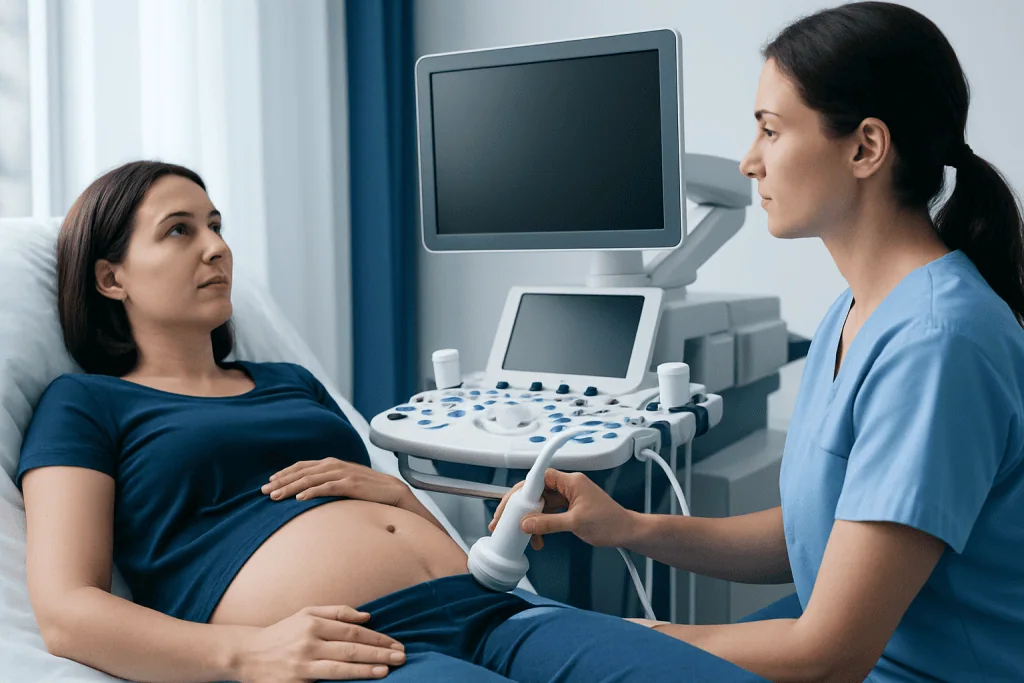
The most common symptom of placenta previa is vaginal bleeding that is usually bright red and often painless. This bleeding most often happens in the second half of pregnancy, especially in the third trimester. Some people notice only a small amount, while others may have heavier bleeding.
Not everyone with placenta previa has symptoms. In many cases, it is discovered during a scheduled pregnancy ultrasound before bleeding occurs. Even without symptoms, the condition still needs follow-up because the placenta’s location can affect the safety of labor and delivery.
Other symptoms can sometimes occur, although they are less specific. These may include:
- Bleeding after sexual intercourse
- Bleeding after physical exertion
- Uterine contractions or tightening in some cases
- Recurrent episodes of bleeding later in pregnancy
Any vaginal bleeding during pregnancy should be assessed by a doctor promptly. While placenta previa is one possible cause, bleeding can also occur with other conditions, including placental abruption, cervical changes, or preterm labor.
Causes and Risk Factors
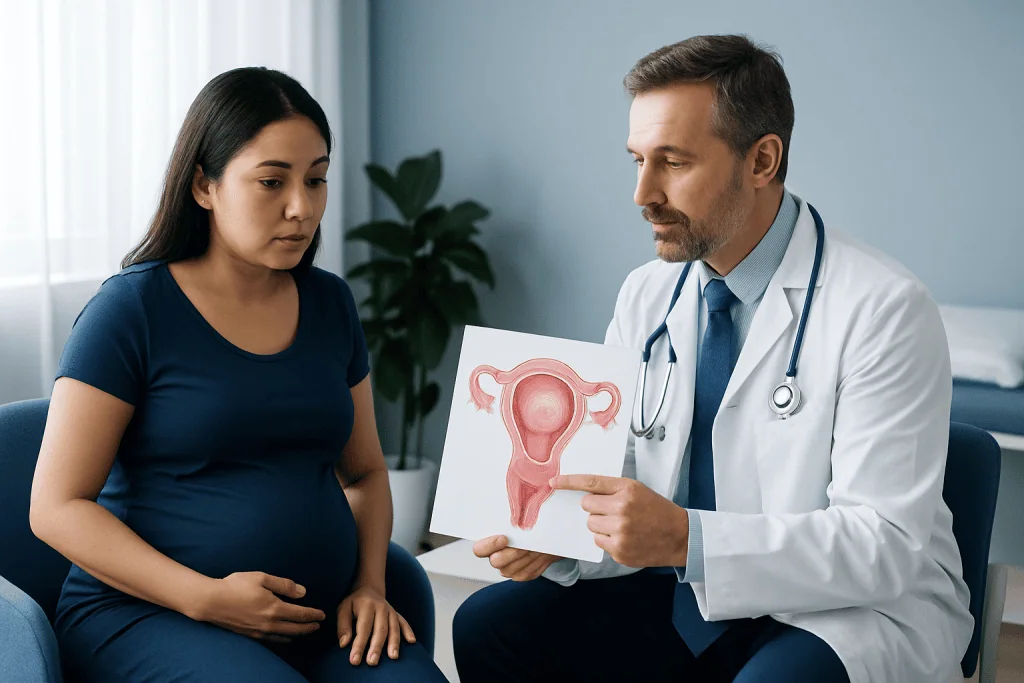
Placenta previa happens when the placenta attaches in the lower part of the uterus instead of higher up. The exact reason this occurs is not always clear. In many pregnancies, there is no single identifiable cause, and the condition is discovered unexpectedly on imaging.
Several factors are known to increase the chance of placenta previa. These risk factors do not mean a person will definitely develop the condition, but they can make it more likely:
- Previous cesarean delivery or other uterine surgery
- A history of placenta previa in a prior pregnancy
- Multiple pregnancy, such as twins
- Previous pregnancies or higher maternal age
- Smoking or cocaine use
- Assisted reproductive techniques in some pregnancies
Scar tissue in the uterus may affect where the placenta implants. A low-lying placenta may also be associated with other placental problems, such as placenta accreta spectrum, especially in people with both placenta previa and a prior cesarean birth. This is one reason doctors pay close attention to the placenta’s exact position and appearance on ultrasound.
How Placenta Previa Is Diagnosed
Ultrasound is the main and safest way to diagnose placenta previa. A routine abdominal ultrasound may first suggest that the placenta is low. If the placental edge is difficult to assess clearly, a transvaginal ultrasound is often recommended because it gives a more accurate view of the cervix and placenta.
Although some patients worry about transvaginal ultrasound when bleeding is present, it is generally considered safe when performed by trained clinicians. In fact, it is often the best test to determine whether the placenta covers the cervix and to help avoid unnecessary uncertainty.
If placenta previa is suspected, doctors usually avoid a digital vaginal examination until the placenta’s location is confirmed, because touching the cervix may trigger serious bleeding. Evaluation may also include checking the baby’s growth and well-being, reviewing bleeding episodes, and monitoring the mother’s blood count if bleeding has been significant.
Follow-up ultrasounds are commonly arranged because a low-lying placenta seen earlier in pregnancy may move away from the cervix over time. Imaging helps determine whether the condition has resolved or whether it is likely to affect delivery planning later on. When bleeding is recurrent or the placenta looks unusually attached, doctors may use additional imaging to assess related concerns.
Treatment and Monitoring During Pregnancy
Treatment for placenta previa depends on the amount of bleeding, the baby’s gestational age, the exact placental position, and the overall health of the mother and baby. There is no medicine that can move the placenta, so care focuses on monitoring, preventing complications, and choosing the safest time and method of delivery.
If bleeding is light and both mother and baby are stable, management may involve rest, reducing strenuous activity, avoiding intercourse if advised, and attending regular follow-up appointments. Some people can be monitored at home, while others may need hospital observation, especially if bleeding is recurrent or more severe.
When there is heavy bleeding, treatment may include hospital care, intravenous fluids, blood tests, fetal monitoring, and sometimes blood transfusion if needed. If preterm delivery seems possible, doctors may recommend medications to help prepare the baby’s lungs or reduce certain risks of prematurity. In selected cases, close inpatient care continues until delivery.
Because placenta previa can occasionally be linked with deeper placental attachment, the care team may also evaluate for related conditions and plan surgery accordingly. If a cesarean birth is expected, this may be discussed in advance as part of cesarean delivery planning to improve safety and coordination.
Delivery Planning
Delivery planning is one of the most important parts of managing placenta previa. If the placenta still covers the cervix later in pregnancy, a vaginal birth is usually not safe because the placenta blocks the baby’s passage and can bleed heavily during labor. In these cases, cesarean birth is typically recommended.
The timing of delivery depends on individual circumstances. Doctors consider whether bleeding has occurred, how severe it has been, whether labor has started, the baby’s growth and well-being, and whether the placenta completely or partially covers the cervix. If bleeding becomes severe or the mother or baby is unstable, earlier delivery may be necessary.
For some patients, a low-lying placenta no longer covers the cervix by late pregnancy. In that situation, a doctor may discuss whether vaginal birth could still be possible depending on the measured distance between the placenta and the cervical opening. This decision is based on ultrasound findings and overall obstetric assessment.
Patients may also be advised to deliver in a hospital with access to emergency obstetric services, blood banking, neonatal support, and experienced surgical teams. Near the end of care, Acibadem International’s multidisciplinary specialists in JCI-accredited hospitals can evaluate placenta previa and coordinate treatment for international patients when advanced delivery planning is needed.
Self-care, Safety Measures, and Prevention
There is no guaranteed way to prevent placenta previa, because placental implantation is not something a pregnant person can directly control. However, early prenatal care is very important. Regular visits and scheduled ultrasounds help identify placental location and allow the care team to respond quickly if bleeding occurs.
For those already diagnosed, practical safety steps can help reduce risk and support prompt care. These may include:
- Following the obstetrician’s advice about activity, travel, and sexual intercourse
- Seeking immediate care for any vaginal bleeding, even if it stops
- Keeping emergency contact numbers available
- Knowing which hospital to go to if bleeding begins
- Attending all follow-up ultrasound appointments
General pregnancy health also matters. Avoiding smoking and recreational drugs, taking prescribed prenatal supplements, and reporting new symptoms early may support safer pregnancy management overall. Patients with prior cesarean births or uterine surgery should make sure their full history is shared with the prenatal team.
Some women with placenta previa may feel anxious about exercise, work, or daily activities. Recommendations vary from person to person, so it is best not to rely on general advice alone. A qualified obstetrician can explain what level of activity is appropriate based on the placenta’s position and any bleeding history.
When to See a Doctor
Any vaginal bleeding during pregnancy should be reported to a doctor right away. Even if the bleeding is painless or seems mild, it can signal placenta previa or another condition that needs prompt evaluation. Immediate assessment is especially important in the second or third trimester.
Urgent medical care is needed if bleeding is heavy, repeated, or accompanied by dizziness, weakness, fainting, contractions, abdominal pain, or reduced fetal movements. These symptoms do not always mean placenta previa is worsening, but they should never be ignored during pregnancy.
Patients should also contact their doctor if they have already been diagnosed with placenta previa and notice any new bleeding, pressure, contractions, or changes in fetal activity. Ongoing communication with the prenatal team helps them adjust the care plan as pregnancy progresses and decide whether observation, hospital care, or delivery is safest.
Frequently asked questions
Can placenta previa go away on its own?
Yes, many cases found early in pregnancy improve as the uterus grows and the placenta moves farther from the cervix. This is why repeat ultrasound scans are often recommended later in pregnancy. If the placenta still covers the cervix near delivery, it is less likely to resolve.
Is bleeding with placenta previa always painful?
Not usually. The classic symptom is painless vaginal bleeding, especially in the second half of pregnancy. However, any bleeding in pregnancy should still be assessed promptly, whether it is painful or not.
Why is ultrasound so important in placenta previa?
Ultrasound shows exactly where the placenta is in relation to the cervix. This helps confirm the diagnosis, monitor whether the placenta moves, and guide decisions about delivery. It also helps doctors avoid procedures that could trigger bleeding.
Can someone with placenta previa have a vaginal birth?
It depends on the placental position late in pregnancy. If the placenta covers the cervix, a vaginal birth is generally not safe and cesarean birth is recommended. If the placenta is only low-lying and not covering the cervix, the care team may assess whether vaginal delivery is possible.
Does placenta previa affect the baby?
It can, mainly if bleeding leads to preterm birth or if urgent delivery becomes necessary. With careful monitoring, many pregnancies affected by placenta previa are managed safely. The baby's growth and well-being are usually checked during follow-up care.
Should sexual intercourse be avoided with placenta previa?
Doctors often advise avoiding intercourse if placenta previa is diagnosed, especially if there has been bleeding. This is because contact with the cervix may increase the risk of bleeding. The exact recommendation should come from the treating obstetrician based on the individual situation.
References
- World Health Organization
- American College of Obstetricians and Gynecologists
- Royal College of Obstetricians and Gynaecologists
- National Institute for Health and Care Excellence
- Society for Maternal-Fetal Medicine
This article is for general information only and is not a substitute for professional medical advice. Please consult a qualified doctor about your individual situation.
Ultrasound in Turkey — costs, top hospitals & a free quote
JCI-accredited · board-certified surgeons · reply within 24h
Add us as a Preferred Source to see more of our trusted health content across Google Search, AI Overviews and Discover.

Check-up & Preventive Medicine
Comprehensive health screenings designed for early detection and prevention.
3 specialists in this unit