Plantar Wart: What Patients Need to Know
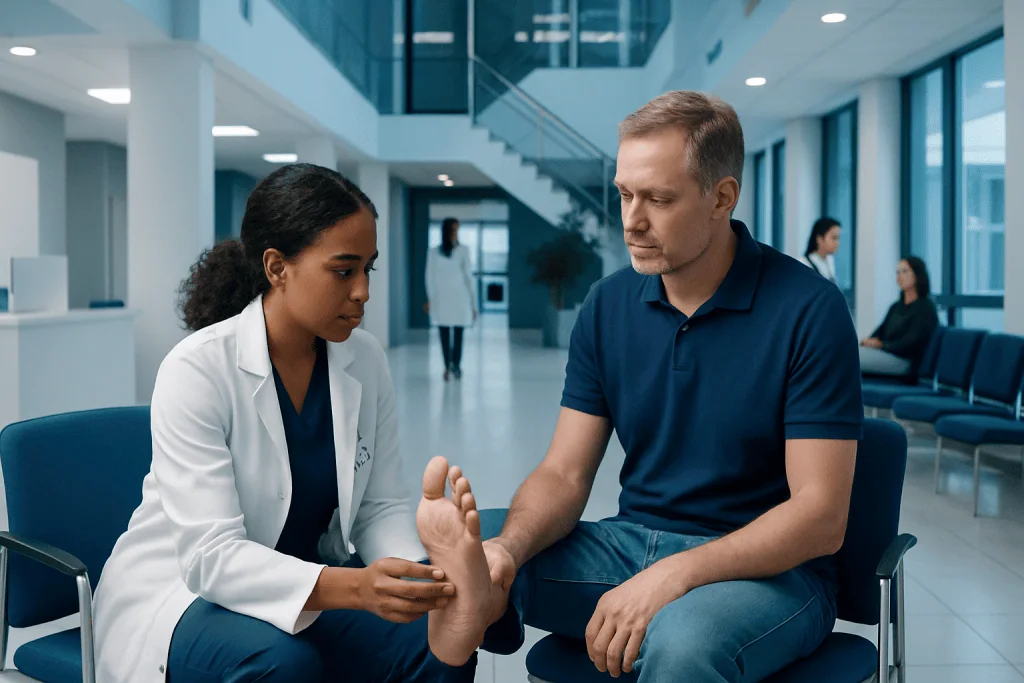
A plantar wart is caused by HPV entering the skin through tiny breaks, usually on pressure-bearing areas of the foot. These warts often look rough or callus-like and may contain small black pinpoint dots from tiny clotted blood vessels.
Key Takeaways
- A plantar wart is caused by HPV entering the skin through tiny breaks, usually on pressure-bearing areas of the foot.
- These warts often look rough or callus-like and may contain small black pinpoint dots from tiny clotted blood vessels.
- Some plantar warts go away on their own, but treatment may be useful if they are painful, persistent, spreading, or bothersome.
- Self-treatment is not right for everyone, especially people with diabetes, poor circulation, reduced sensation, or uncertain diagnosis.
- A doctor can confirm whether a lesion is a plantar wart and recommend options such as topical therapy, freezing, or minor procedures.
A plantar wart is a common skin growth on the bottom of the foot caused by certain types of human papillomavirus (HPV). It is usually harmless, but it can become painful with standing or walking and may need treatment if it persists, spreads, or is difficult to distinguish from other foot problems.
Overview: what a plantar wart is
A plantar wart is a noncancerous skin growth that develops on the sole of the foot. It is caused by specific types of human papillomavirus (HPV) that infect the outer layer of skin, usually after entering through tiny cuts or areas softened by moisture and friction. Plantar warts are common and can affect both children and adults.
Unlike warts on other body areas, plantar warts are pressed inward by body weight. This pressure can make them feel tender, as if a pebble is stuck in the shoe. Some remain small and cause little trouble, while others thicken, spread, or occur in clusters called mosaic warts.
Many plantar warts improve without treatment as the immune system gradually clears the virus. Even so, they can last for months or longer, and some are easily mistaken for corns, calluses, or other foot conditions. A clear diagnosis matters because the best approach depends on symptoms, age, overall health, and how certain the diagnosis is.
How plantar warts look and feel
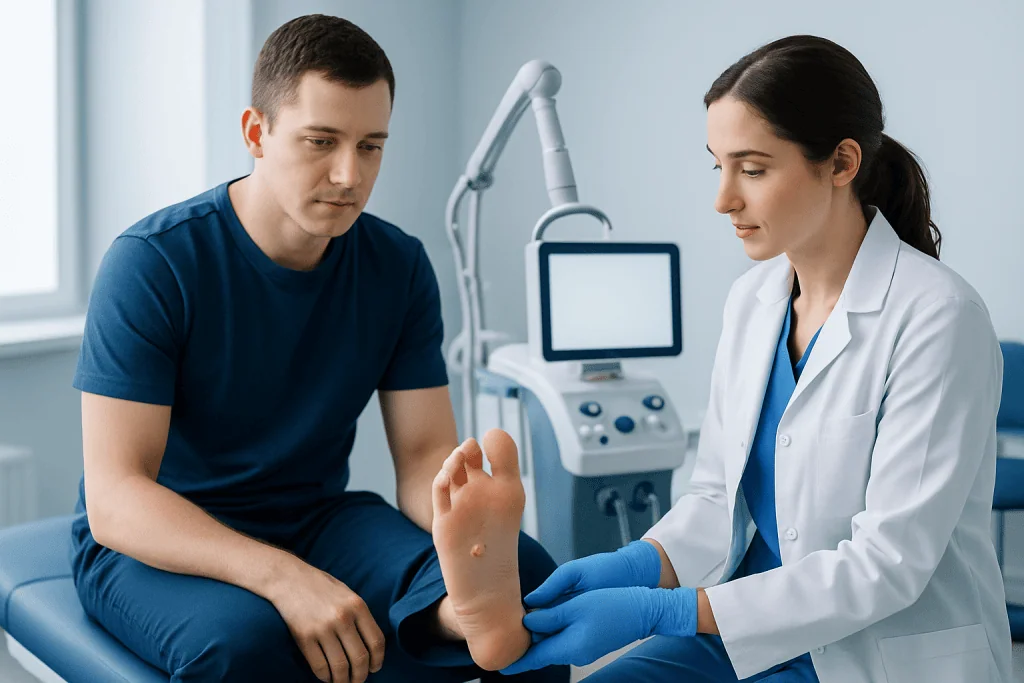
A plantar wart often appears as a rough, grainy area on the bottom of the foot, commonly on the heel or the ball of the foot. The surrounding skin may become thick and hard, so the wart can look similar to a callus. A person may notice pain when pressing from the sides or when putting weight directly on the spot.
One feature that can help distinguish a plantar wart is the presence of tiny black dots within the lesion. These are small blood vessels that have clotted. The normal lines of the skin may also be interrupted over the wart, while a callus usually preserves the skin lines.
Symptoms can vary. Some people mainly notice tenderness while standing or walking. Others are more concerned about the appearance, spread to nearby areas, or repeated recurrence after seeming to improve. If a lesion is changing quickly, bleeding without being picked, or does not look typical, it should be examined by a clinician rather than assumed to be a wart.
Causes and risk factors
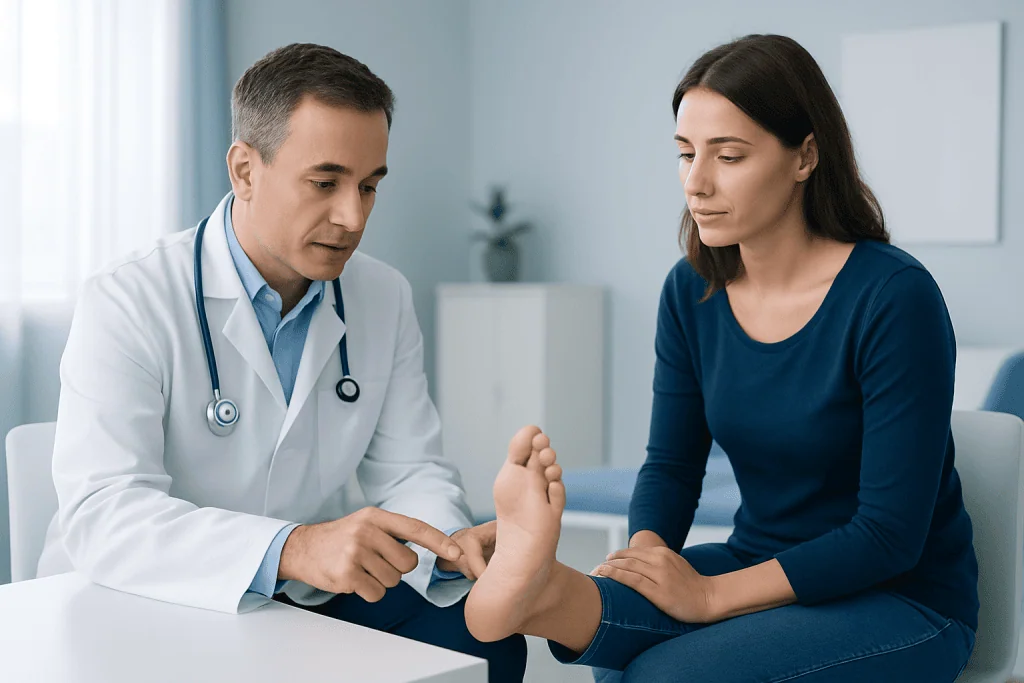
Plantar warts develop when HPV infects the skin on the foot. The virus is common, but not everyone exposed to it develops a wart. Infection is more likely when the skin barrier is disrupted by minor cuts, dryness, friction, shaving, or prolonged moisture. Walking barefoot in communal showers, pool areas, or locker rooms may increase exposure, although direct contact with contaminated surfaces does not always lead to infection.
Children, teenagers, and young adults tend to get warts more often, partly because they may not yet have developed immunity to the virus types involved. People with eczema, skin injuries, or a weakened immune system may also be at higher risk. Sweaty feet and tight footwear can contribute by increasing friction and skin breakdown.
Having one wart can make spread more likely through scratching, picking, or shaving around the area. Family members do not necessarily infect one another easily, but sharing footwear, towels, or foot care tools can increase the chance of transmission. Good foot hygiene can reduce risk, although it cannot prevent every case.
Diagnosis and how doctors tell it apart from other foot lesions
Doctors usually diagnose a plantar wart by examining the skin. They look at the lesion’s surface, the pattern of skin lines, and whether there are tiny pinpoint blood vessels. In some cases, gently trimming the thickened surface helps reveal the typical wart structure more clearly.
One reason diagnosis matters is that several common foot problems can look similar. A corn or callus is caused mainly by pressure and friction, while a wart is a viral skin growth. Other conditions, including certain benign growths and less commonly skin cancers, may also resemble a stubborn plantar lesion. If there is uncertainty, a dermatologist or foot specialist may recommend closer evaluation.
Further testing is not usually needed. Rarely, a biopsy may be considered if the lesion is atypical, repeatedly returns despite treatment, or occurs in a person with risk factors that make an accurate diagnosis especially important. Evaluation may also include discussion of pain level, number of lesions, treatments already tried, and medical conditions such as diabetes or poor circulation.
Treatment options for plantar wart
Treatment is guided by symptoms and patient preference. If a plantar wart is small, not painful, and clearly diagnosed, watchful waiting can be reasonable because some resolve on their own. When treatment is needed, the aim is to remove infected skin and stimulate the body’s immune response while minimizing discomfort and damage to normal tissue.
Over-the-counter salicylic acid is one of the most commonly used first-line treatments. It gradually softens and removes layers of the wart over several weeks. Success depends on consistent use and careful preparation of the skin as directed on the product label or by a clinician. Self-treatment should be avoided without medical advice in people with diabetes, neuropathy, poor circulation, or uncertain diagnosis.
In a clinic, cryotherapy with liquid nitrogen may be used to freeze the wart. Other options for persistent cases can include stronger topical agents, cantharidin in some settings, curettage, electrosurgery, laser-based approaches, or selected immunotherapy techniques. Dermatology evaluation may be helpful for resistant lesions, and some patients may benefit from dermatology care if the diagnosis is uncertain or the wart keeps coming back.
If the lesion causes altered walking, ongoing pressure pain, or confusion with other structural foot problems, broader assessment of the foot may be useful. In selected cases, this can include orthopedic evaluation to address pressure points or gait issues that are making symptoms worse. Management should be individualized rather than based on one method for everyone.
Self-care and preventing spread
Simple self-care can reduce discomfort and help limit spread. Keeping the feet clean and dry, changing socks regularly, and wearing well-fitting shoes can reduce friction and skin breakdown. Some people find that cushioned pads or donut-shaped offloading pads make walking more comfortable by reducing pressure on the sore area.
To lower the chance of passing the virus to other parts of the foot or to other people, it helps to avoid picking or shaving the wart. The area should be covered if advised by a clinician, and personal items such as nail files, pumice stones, socks, and shoes should not be shared. Wearing sandals in communal changing areas and poolside spaces is a sensible precaution.
At-home wart products should be used exactly as directed and stopped if there is marked irritation, skin breakdown, or unexpected pain. Home freezing kits are not the same strength as clinical cryotherapy and may be less effective. If symptoms are worsening or the lesion does not improve, medical review is more appropriate than prolonged repeated self-treatment.
When to seek medical care
Medical care is recommended if a plantar wart is painful, growing, multiplying, or interfering with walking, exercise, or daily activities. A person should also seek evaluation if the diagnosis is uncertain, if the lesion bleeds easily, or if it has not improved after appropriate home treatment.
People with diabetes, reduced sensation in the feet, poor blood flow, or a weakened immune system should not try to remove a plantar wart on their own unless a doctor has advised it. In these situations, even minor skin injury can lead to complications or delayed healing. Assessment may also be important when a lesion resembles another condition rather than a straightforward wart.
Because some foot lesions can mimic each other, a clinician may evaluate whether the problem is truly a wart or another skin condition. In that context, related foot skin concerns may overlap with conditions such as athlete’s foot or other sources of sole discomfort that require a different treatment plan. Near the end of the care pathway, patients who need specialist assessment may also be seen at Acibadem International, where multidisciplinary specialists in JCI-accredited hospitals diagnose and treat foot and skin conditions for international patients.
Frequently asked questions
Can a plantar wart go away on its own?
Yes. Many plantar warts eventually clear as the immune system recognizes and controls the virus. However, this can take months or sometimes longer, and treatment may be preferred if the wart is painful, spreading, or bothersome.
How can someone tell a plantar wart from a callus?
A plantar wart often interrupts normal skin lines and may show tiny black pinpoint dots from clotted blood vessels. A callus is usually caused by pressure and friction, tends to preserve the skin lines, and may feel different when pressed. If the distinction is unclear, a clinician should examine it.
Is a plantar wart contagious?
It can spread through direct or indirect contact, but exposure does not always lead to infection. The virus enters more easily through small breaks in the skin. Avoiding picking, not sharing foot care items, and wearing footwear in communal wet areas may help reduce spread.
Are over-the-counter treatments effective?
They can be effective, especially salicylic acid products used consistently over time. Results are usually gradual rather than immediate. People with diabetes, poor circulation, reduced feeling in the feet, or uncertain diagnosis should ask a doctor before using home treatments.
Why does a plantar wart hurt more than some other warts?
Because it develops on a weight-bearing surface, body pressure pushes the wart inward. This can create tenderness with standing or walking and make it feel as though there is a small stone under the foot. The surrounding callused skin can add to discomfort.
When should a child with a plantar wart see a doctor?
Medical review is helpful if the lesion is painful, spreading, unclear in appearance, or not improving with basic measures. Children who avoid activities because of foot pain should also be evaluated. A doctor can confirm the diagnosis and choose a treatment that is suitable for the child’s age and symptoms.
This article is for general information only and is not a substitute for professional medical advice. Please consult a qualified doctor about your individual situation.
Explore treatments in Turkey — costs, top hospitals & a free quote
JCI-accredited · board-certified surgeons · reply within 24h
Add us as a Preferred Source to see more of our trusted health content across Google Search, AI Overviews and Discover.

More from the Health Library

Pentamidine — Explained by Medical Evidence, Not Myths

Clindamycin: What Patients Need to Know

How a Satin Pillowcase for Hair May Help

Labile Blood Pressure: An Evidence-Based Guide for Patients

Subcutaneous Fat: An Evidence-Based Guide for Patients