Pleural Mesothelioma: Diagnosis and Specialist Treatment

Pleural mesothelioma begins in the lining around the lungs, not in the lung tissue itself. Symptoms can be gradual and may include breathlessness, chest discomfort, cough, fatigue, and fluid around the lung.
Key Takeaways
- Pleural mesothelioma begins in the lining around the lungs, not in the lung tissue itself.
- Symptoms can be gradual and may include breathlessness, chest discomfort, cough, fatigue, and fluid around the lung.
- A tissue biopsy reviewed by specialist pathologists is needed to confirm the diagnosis.
- Treatment may include systemic therapy, surgery, radiation therapy, symptom-relieving procedures, or a combination of approaches.
- Outlook varies widely and depends on tumor type, stage, overall health, and response to treatment.
Pleural mesothelioma is a rare cancer that develops in the pleura, the thin lining around the lungs. It is most often associated with past asbestos exposure and requires prompt assessment by an experienced multidisciplinary cancer team to confirm the diagnosis and discuss individualized treatment options.
Understanding pleural mesothelioma
Pleural mesothelioma, also called malignant pleural mesothelioma, is a cancer of the pleura. The pleura is a two-layered membrane that covers the lungs and lines the inside of the chest wall. A small amount of fluid between these layers normally helps the lungs move smoothly during breathing. In pleural mesothelioma, abnormal cells grow within this lining and can gradually thicken it or cause fluid to collect around a lung.
This condition differs from lung cancer because it starts in the pleural lining rather than in the airways or lung tissue. It is uncommon, and its symptoms may overlap with more frequent respiratory conditions. For this reason, assessment often involves chest imaging, drainage and testing of pleural fluid when present, and a biopsy to identify the cell type accurately. Early specialist review can help patients understand the findings and available next steps.
There are several pathological subtypes. Epithelioid mesothelioma is the most common and generally has a more favorable outlook than sarcomatoid mesothelioma. Biphasic mesothelioma contains features of both types. The subtype is one of several important details used by the clinical team when discussing prognosis and planning care.
Symptoms and everyday effects
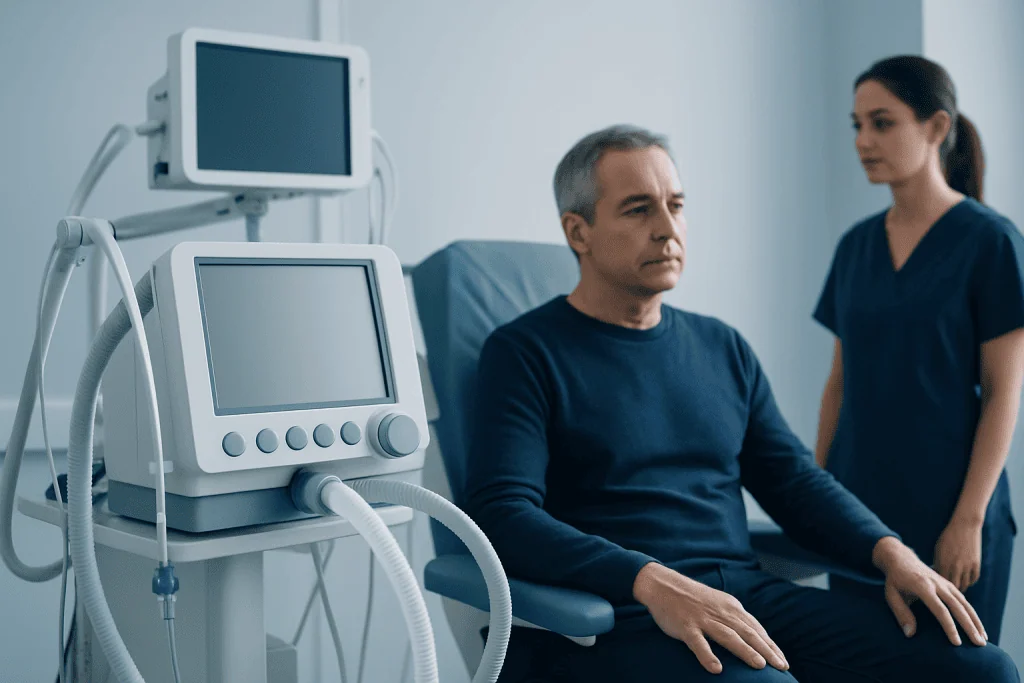
Symptoms of pleural mesothelioma often develop gradually. Shortness of breath is common, particularly when fluid builds up between the lung and chest wall; this is known as a pleural effusion. Other possible symptoms include persistent chest or shoulder discomfort, a dry cough, reduced exercise tolerance, tiredness, reduced appetite, unintended weight loss, and night sweats.
These symptoms do not automatically mean a person has mesothelioma. Chest infections, heart conditions, chronic lung disease, and other cancers can cause similar concerns. However, a new or persistent respiratory symptom deserves medical assessment, especially in someone with a known history of asbestos exposure or previous work in construction, shipbuilding, insulation, manufacturing, or similar industries.
Pleural fluid can be uncomfortable and can make breathing feel restricted. Clinicians may remove fluid with a needle or drain both to ease symptoms and to investigate its cause. Relief may be temporary if fluid reaccumulates, so the team may discuss longer-term approaches to fluid management when needed.
Causes and risk factors

Past exposure to asbestos is the main recognized risk factor for pleural mesothelioma. Asbestos is a group of mineral fibers that was widely used in insulation, building materials, brake linings, and other industrial products. When fibers are disturbed, they can become airborne and may be inhaled. Mesothelioma usually develops many years, and sometimes decades, after exposure.
Occupational exposure is most often associated with risk, but family members may also have had indirect exposure when fibers were carried home on work clothing. Not everyone with asbestos exposure develops mesothelioma, and some people diagnosed with the disease do not recall a known exposure. A clinician may ask about past jobs, military service, home renovation, and environmental exposures as part of a thorough medical history.
Smoking does not appear to cause mesothelioma, although smoking increases the risk of several other serious lung diseases and cancers, particularly in people exposed to asbestos. Stopping smoking can still support breathing, cardiovascular health, treatment tolerance, and overall wellbeing. There is no routine population screening test proven to detect pleural mesothelioma early in people without symptoms.
How pleural mesothelioma is diagnosed and staged
Diagnosis usually starts with a clinical assessment and imaging. A chest X-ray may show pleural fluid or thickening, while a contrast-enhanced CT scan of the chest helps show the pleura, lungs, lymph nodes, and nearby structures in greater detail. PET-CT and MRI may be used in selected cases to clarify the extent of disease and assist treatment planning.
Imaging alone cannot reliably confirm mesothelioma. A biopsy is usually required, often obtained through a minimally invasive procedure called thoracoscopy, in which a clinician examines the pleural space using a small camera and takes tissue samples. Pathologists examine the samples under a microscope and use specialized laboratory tests to distinguish mesothelioma from lung cancer, metastatic cancer, and non-cancerous pleural conditions.
After diagnosis, the team assesses the stage, meaning how far the cancer has grown locally and whether it has spread to lymph nodes or more distant areas. Staging is helpful, but it is not the only factor that matters. Cell subtype, symptoms, fitness for treatment, medical conditions, and personal goals all contribute to an individualized care plan.
Modern treatment approaches
Pleural mesothelioma treatment is planned by a multidisciplinary team that may include medical oncologists, thoracic surgeons, radiation oncologists, respiratory specialists, radiologists, pathologists, specialist nurses, and palliative care professionals. The aim may be to control cancer growth, ease symptoms, preserve quality of life, or, in carefully selected circumstances, pursue intensive treatment with long-term disease control in mind.
Systemic treatment travels through the bloodstream and may be recommended when surgery is not appropriate or when disease is more extensive. Chemotherapy commonly uses a pemetrexed-based combination with a platinum medicine. Immunotherapy, which helps the immune system recognize and respond to cancer cells, may be an option for some people with unresectable disease, depending on the tumor characteristics, treatment history, and local clinical guidance.
Surgery is considered only for selected patients after detailed evaluation at an experienced center. Procedures may remove part of the pleural lining and visible tumor while preserving the lung, or more extensive surgery may occasionally be discussed in highly selected cases. Radiation therapy can sometimes help manage localized pain or be incorporated into a broader treatment plan. Clinical trials may also offer access to carefully studied emerging approaches for eligible patients.
Supportive care is active medical care at every stage, not a last resort. It can include drainage of recurrent pleural fluid, pain control, treatment for breathlessness, nutritional support, pulmonary rehabilitation, emotional support, and help with practical decisions. These services can be provided alongside cancer-directed treatment.
Outlook, monitoring, and living with the condition
The outlook for pleural mesothelioma varies considerably from person to person. Important influences include the pathological subtype, stage, whether surgery is suitable, response to systemic treatment, general health, and the presence of other medical conditions. A treating specialist is best placed to explain what the available information may mean for an individual, while acknowledging that no prediction can be exact.
Follow-up appointments usually include symptom review, physical examination, and interval imaging. The schedule is tailored to the treatment plan and the patient’s needs. Patients should tell the team about worsening breathlessness, increasing pain, fever, reduced food intake, marked fatigue, or new side effects, as many symptoms can be assessed and managed.
Living with a rare cancer can be emotionally and practically demanding. Patients may find it helpful to involve family or trusted friends in appointments, keep a list of questions, and ask for support from nurses, social workers, dietitians, physiotherapists, psychologists, or patient support organizations. Acibadem International’s multidisciplinary specialists and JCI-accredited hospitals support international patients requiring assessment and treatment planning for pleural mesothelioma.
When to seek medical care
A person should arrange a medical appointment if they have unexplained shortness of breath, persistent chest discomfort, a cough that does not improve, unexplained weight loss, or ongoing fatigue. Assessment is particularly important when these symptoms are new, progressive, or occur in someone with possible past asbestos exposure. Most of these symptoms have causes other than mesothelioma, but timely evaluation is appropriate.
Urgent medical attention is needed for severe or rapidly worsening breathlessness, sudden chest pain, coughing up blood, fainting, confusion, or blue-colored lips or face. These symptoms can have a range of causes and should not be managed at home. Emergency services or local urgent care should be contacted promptly.
People with a past history of asbestos exposure who do not have symptoms can discuss their individual circumstances with a doctor. The clinician can review occupational history, smoking status, respiratory health, and whether any evaluation or follow-up is appropriate. Avoid disturbing materials that may contain asbestos; qualified professionals should handle inspection and removal.
Frequently asked questions
Is pleural mesothelioma the same as lung cancer?
No. Pleural mesothelioma starts in the lining around the lungs, whereas most lung cancers begin in the lung tissue or airways. The symptoms can overlap, so imaging and a tissue biopsy are important for an accurate diagnosis.
How long after asbestos exposure can pleural mesothelioma develop?
Pleural mesothelioma often develops after a long latency period, commonly many decades after asbestos exposure. A person may not remember or recognize all past exposures, which is why a detailed work and environmental history can be useful.
Can pleural mesothelioma be diagnosed from pleural fluid alone?
Pleural fluid testing may provide useful clues and can rule out or identify some other causes of fluid buildup. However, fluid samples do not always provide enough information to confirm mesothelioma. A pleural tissue biopsy is usually needed for a definitive diagnosis.
Is surgery possible for pleural mesothelioma?
Surgery may be appropriate for a small group of carefully selected patients, usually after evaluation by an experienced multidisciplinary team. Suitability depends on the cancer’s extent and subtype, lung and heart function, overall health, and treatment goals.
What treatments can help with breathlessness from pleural mesothelioma?
Breathlessness may improve when excess fluid around the lung is drained. Depending on the situation, clinicians may recommend procedures to reduce recurrent fluid buildup, as well as medication, oxygen when clinically indicated, rehabilitation, and treatment directed at the cancer.
Can pleural mesothelioma be prevented?
The most effective prevention is avoiding asbestos exposure. Materials suspected of containing asbestos should not be disturbed, drilled, cut, or removed without professional assessment, because this can release harmful fibers into the air.
References
- World Health Organization
- National Cancer Institute
- American Cancer Society
- European Society for Medical Oncology
- American Society of Clinical Oncology
This article is for general information only and is not a substitute for professional medical advice. Please consult a qualified doctor about your individual situation.
Oncology care in Turkey — second opinion and treatment plan
JCI-accredited · board-certified surgeons · reply within 24h
Add us as a Preferred Source to see more of our trusted health content across Google Search, AI Overviews and Discover.