Pluvicto Radiation Safety: How It Works, Results and What to Expect

Pluvicto is a targeted radioligand treatment used for certain advanced prostate cancers that express PSMA. Most radiation leaves the body through urine, especially during the first days after an infusion.
Key Takeaways
- Pluvicto is a targeted radioligand treatment used for certain advanced prostate cancers that express PSMA.
- Most radiation leaves the body through urine, especially during the first days after an infusion.
- Temporary distance, hygiene and toileting precautions help reduce radiation exposure to household members.
- Blood tests and imaging help clinicians assess response and monitor bone marrow, kidney and salivary gland effects.
- Fatigue, dry mouth and blood-count changes can occur; urgent symptoms should be reported promptly.
Pluvicto radiation safety is managed with practical, temporary precautions because the treatment gives off radiation as it travels through and leaves the body. The care team provides individualized instructions based on the dose, kidney function, home situation and local radiation-safety rules.
Pluvicto radiation safety: the essential answer
Pluvicto radiation safety focuses on reducing other people’s exposure while the radioactive medicine is leaving the patient’s body. After treatment, most patients can return home, but they need to follow individualized guidance on hydration, toilet hygiene, laundry, close physical contact and time spent near children or pregnant people.
Pluvicto is the brand name for lutetium Lu 177 vipivotide tetraxetan, a radioligand therapy for selected people with metastatic castration-resistant prostate cancer. It combines a molecule that seeks out prostate-specific membrane antigen (PSMA) with lutetium-177, a radioactive isotope that delivers radiation mainly to PSMA-positive cancer cells.
The instructions given by the nuclear medicine team should always take priority over general advice. Radiation precautions can vary by country, treatment center, living arrangements, urinary continence, kidney function and whether there are pregnant people or young children at home.
How Pluvicto works and who may be a candidate
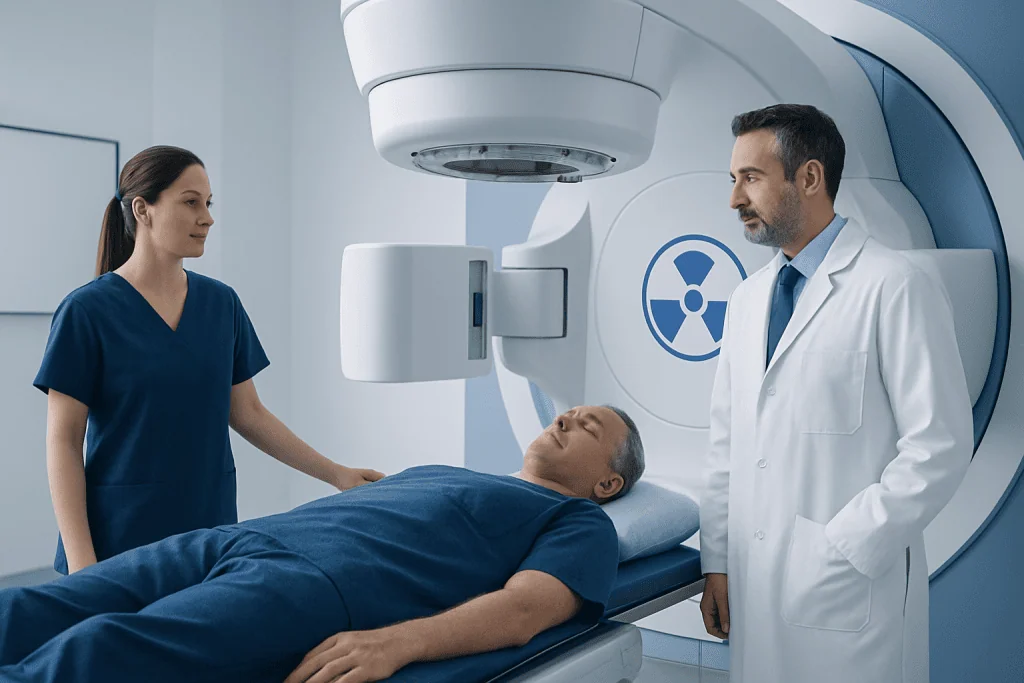
Pluvicto circulates in the bloodstream and attaches to PSMA, a protein commonly present in prostate cancer cells. Once attached, lutetium-177 emits beta radiation over a very short distance. This can damage cancer-cell DNA while limiting exposure to much of the surrounding healthy tissue, although normal tissues can still be affected.
It is generally considered for adults with PSMA-positive metastatic castration-resistant prostate cancer whose disease has progressed after appropriate prior treatments. A PSMA PET scan is used to confirm that cancer sites have sufficient PSMA expression for the treatment to be suitable. The oncology team also reviews prior therapies, symptoms, blood counts, kidney function, liver function and overall health.
Pluvicto is not a cure for advanced prostate cancer, but it may slow disease progression, reduce some cancer-related symptoms and help some people live longer. Decisions are made by a multidisciplinary team that may include medical oncology, nuclear medicine, urology, radiation oncology, radiology and supportive-care specialists.
Other prostate cancer concerns, including symptoms from bone spread, may need parallel assessment. Patients should tell their team about new pain, weakness, numbness, urinary changes or reduced bowel control, as these symptoms may require urgent evaluation.
What happens during a Pluvicto treatment cycle
Before each cycle, the team usually reviews symptoms, medicines and recent laboratory results. Blood tests commonly assess red cells, white cells, platelets, kidney function and liver function. Patients should ask in advance about eating, drinking, travel and whether they need someone to accompany them home.
Pluvicto is given through a vein by trained nuclear medicine staff. The infusion itself is typically brief, but the appointment may include preparation, observations and radiation-safety counseling. Patients may be encouraged to drink fluids unless a clinician has advised fluid restriction for another medical reason.
After the infusion, the patient may spend a period in the treatment area while staff confirm it is safe to leave under local regulations. Written instructions should explain how long to follow precautions, who to avoid close contact with, and how to contact the team if questions arise after returning home.
Treatment is usually delivered in a series of cycles separated by several weeks, with the exact plan tailored to response, tolerance and current clinical recommendations. Follow-up laboratory tests and scans help the team decide whether to continue, delay, adjust or stop therapy.
How long are you radioactive after Pluvicto?
After Pluvicto, a patient emits some radiation for a limited time. The amount falls continuously as lutetium-177 naturally decays and as the medicine is removed from the body, primarily in urine. The highest need for practical precautions is generally in the first several days after treatment, although the exact duration is individualized.
Many centers advise careful toilet hygiene, frequent handwashing, good fluid intake when medically appropriate, and cleaning any urine, blood or vomit promptly according to the written instructions. Men may be advised to sit to urinate to reduce splashing. If incontinence is present, the treatment team may give additional guidance about pads, clothing, bedding and waste handling.
Patients may also be asked to limit prolonged close contact with children and pregnant people for a specified period. This does not mean that brief everyday contact is necessarily unsafe; it means exposure should be kept as low as reasonably achievable. Sleeping arrangements, public travel and sexual activity should be discussed directly with the nuclear medicine team.
It is important not to rely on a generic timetable found online. A radiation-safety officer or nuclear medicine professional can provide the most appropriate plan for the patient’s treatment dose and home circumstances.
Recovery timeline, benefits and possible risks
Most people do not experience an immediate, dramatic reaction after the infusion. Some feel tired for a few days, while others notice little change at first. Energy can fluctuate during the following weeks, especially in people who already have anemia, extensive bone involvement, pain, poor sleep or other cancer treatments.
Common or clinically important effects can include fatigue, dry mouth, nausea, reduced appetite, changes in taste, constipation and temporary changes in blood counts. Lower red blood cells may worsen tiredness or breathlessness; low white blood cells can raise infection risk; and low platelets can increase bruising or bleeding. Kidney function is also monitored because the medicine is cleared through the kidneys.
Dry mouth occurs because salivary glands may take up some PSMA-targeting medicine. Gentle oral care, regular dental review and discussing persistent dryness with the team can help protect comfort and oral health. Patients should not start supplements, mouth products or new medicines for side effects without checking with their clinicians.
The potential benefit is disease control in appropriately selected patients, rather than a guaranteed response. The oncology team weighs expected benefit against possible toxicity, symptom burden, prior treatment response and the patient’s own priorities for quality of life.
What are the hardest days after radiation treatment?
There is no single hardest day after Pluvicto because recovery differs from person to person. For many patients, the first few days are most demanding from a practical standpoint because radiation-safety precautions are most important and fatigue, nausea or anxiety about the unfamiliar process may occur.
For others, tiredness or blood-count effects may become more noticeable later in the treatment cycle. This is why scheduled blood tests and symptom checks matter even when a person initially feels well. Cancer-related symptoms, such as pain or low energy, may also change independently of treatment side effects.
Planning can make the first week easier. Patients may arrange help with meals, hydration, transport or household tasks if needed, prepare a comfortable rest area and keep the treatment team’s contact number available. A clinician can offer individualized advice for nausea, constipation, pain, dry mouth and fatigue.
Severe or rapidly worsening symptoms are not something to manage alone. New fever, significant bleeding, confusion, severe vomiting, inability to drink, marked shortness of breath or severe pain should be reported promptly.
How do you know if Pluvicto is working?
Pluvicto response is assessed over time, not by how a person feels immediately after an infusion. The care team considers symptoms, physical examination findings, prostate-specific antigen (PSA) trends, blood tests and imaging. Each measure provides only part of the picture, so clinicians interpret them together.
A falling PSA can be encouraging, but PSA alone does not prove benefit or failure. It may take time for the trend to become clear, and some people can have disease changes that are better shown on scans or by symptom improvement. Imaging may include CT, MRI, bone scans or PSMA PET, depending on the clinical plan.
Signs that may suggest benefit include reduced cancer-related pain, less need for pain medicine, improved activity or stable imaging. However, symptoms can be influenced by many factors, including anemia, infection, treatment side effects and other health conditions. Patients should continue all prescribed cancer and supportive treatments unless their doctor advises otherwise.
Regular follow-up also identifies side effects early. If blood counts fall too much or kidney function changes, the team may delay a cycle, provide supportive treatment or reconsider the treatment plan.
What is the success rate of Pluvicto? When to seek medical care
There is no single success rate for Pluvicto because outcomes depend on cancer biology, PSMA scan findings, the extent and location of metastases, previous treatments, general health and how response is defined. In clinical studies of selected patients with PSMA-positive metastatic castration-resistant prostate cancer, Pluvicto improved outcomes compared with standard care alone, but not every patient responds and response duration varies.
The treating oncologist can explain what published trial results may mean in an individual situation, including the goal of treatment and realistic measures of response. It is appropriate to ask how response will be monitored, when scans are expected and what would lead the team to continue or change treatment.
Patients should contact their cancer team promptly for fever or signs of infection, unusual bruising or bleeding, severe tiredness, new or worsening shortness of breath, persistent vomiting, inability to keep fluids down, markedly reduced urination, or severe dry mouth that interferes with eating or drinking. New severe back pain, leg weakness, numbness, trouble walking, or new bladder or bowel control problems requires urgent medical assessment because these can indicate pressure on the spinal cord.
Acibadem International’s multidisciplinary specialists and JCI-accredited hospitals support diagnosis and treatment planning for international patients with advanced prostate cancer, including coordinated nuclear medicine and oncology care.
Frequently asked questions
Can family members be around someone after Pluvicto?
Yes, but temporary precautions may be needed to reduce radiation exposure, particularly for children and pregnant people. The exact advice depends on the individual treatment and household situation, so patients should follow the written instructions from their nuclear medicine team.
Do I need to stay in hospital after Pluvicto treatment?
Many patients can go home after the infusion and a short observation period. Local regulations and individual circumstances can differ, so the treatment center will explain whether outpatient treatment is appropriate.
Why is hydration important after Pluvicto?
When medically appropriate, drinking fluids can support urinary elimination of the medicine and may help reduce radiation retained in the body. People with heart failure, kidney disease or fluid restrictions should follow their clinician’s specific fluid advice instead.
Can Pluvicto make PSA rise before it falls?
PSA changes can be complex during cancer treatment and should not be interpreted in isolation. The oncology team uses repeated PSA tests along with symptoms, blood work and imaging to determine whether treatment is helping.
Does Pluvicto cause hair loss?
Hair loss is not usually a prominent effect of Pluvicto because it is a targeted radioligand therapy rather than traditional chemotherapy. However, side effects vary, and patients should report any new or troubling changes to their care team.
Can I travel after Pluvicto?
Travel may be possible, but timing depends on radiation-safety instructions and the type of travel planned. Patients should ask their nuclear medicine team before booking flights or long journeys, particularly during the first days after treatment.
References
- U.S. Food and Drug Administration
- European Medicines Agency
- National Cancer Institute
- European Association of Urology
- Society of Nuclear Medicine and Molecular Imaging
This article is for general information only and is not a substitute for professional medical advice. Please consult a qualified doctor about your individual situation.
Explore treatments in Turkey — costs, top hospitals & a free quote
JCI-accredited · board-certified surgeons · reply within 24h
Add us as a Preferred Source to see more of our trusted health content across Google Search, AI Overviews and Discover.