Poison Ivy in Eye Treatment: How It Works, Results and What to Expect

Urushiol oil from poison ivy can trigger allergic contact dermatitis on the eyelids and irritation around the eye. Immediate rinsing and avoiding further exposure are important first-aid steps.
Key Takeaways
- Urushiol oil from poison ivy can trigger allergic contact dermatitis on the eyelids and irritation around the eye.
- Immediate rinsing and avoiding further exposure are important first-aid steps.
- Do not use steroid eye drops, numbing drops or skin creams in or near the eye unless prescribed.
- Most mild eyelid reactions improve over days to a few weeks, but eye pain or blurred vision needs urgent assessment.
- Medical treatment may include prescribed eye lubricants, allergy medicines or corticosteroids when clinically appropriate.
Poison ivy in eye treatment starts with gently flushing the eye and surrounding skin with clean lukewarm water, removing any contaminated contact lenses, and avoiding rubbing. Because eye symptoms can resemble more serious problems, pain, light sensitivity, vision changes, discharge or marked swelling should be assessed promptly by an eye-care professional.
Overview: poison ivy in eye treatment
Poison ivy in eye treatment focuses on removing any remaining plant oil, protecting the eye from further irritation and checking for problems that need prescription care. After exposure, the eye and nearby skin should be gently rinsed with clean lukewarm water, contact lenses should be removed if possible, and the person should avoid rubbing their eyes.
Poison ivy contains urushiol, an oil that can cause allergic contact dermatitis in people who are sensitive to it. Direct contact is not always required: the oil may reach the face from hands, clothing, pets, gardening tools or smoke from burning plants. The eyelids are particularly vulnerable because their skin is thin and people often touch their eyes without realizing it.
In many cases, the reaction mainly affects the eyelids and skin around the eye rather than the surface of the eyeball. However, a red eye with pain, reduced vision, sensitivity to light or discharge requires prompt medical evaluation, since these symptoms may indicate more than a skin reaction.
What happens when poison ivy gets in your eye?
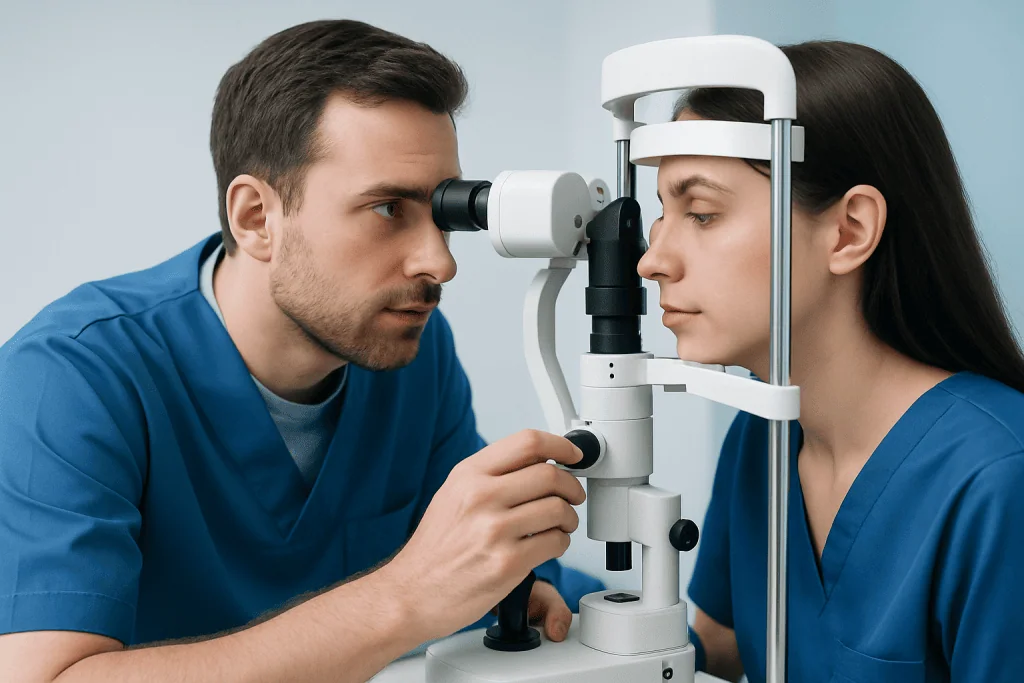
When urushiol contacts the eyelid skin, the immune system may produce a delayed allergic reaction. Itching, redness, warmth, swelling and small fluid-filled blisters can develop, often beginning several hours to a few days after exposure. Swelling may be substantial enough to make opening the eye difficult, especially after sleep.
If plant material, oil or an irritant reaches the eye surface, it may cause tearing, stinging, redness and a gritty sensation. These symptoms are not specific to poison ivy; infection, a scratched cornea, a retained foreign body and other eye conditions can feel similar. For that reason, a person should not assume that all eye redness after outdoor activity is harmless.
The rash fluid from poison ivy blisters does not spread the reaction to others. New areas of rash usually occur because urushiol remains on skin, nails, clothing, equipment or pet fur, or because different areas absorbed the oil at different times. Washing potentially contaminated items helps prevent repeated exposure.
How poison ivy in eye treatment works

The first aim of treatment is decontamination. Prompt rinsing may help remove surface oil before it binds to the skin, although washing is still worthwhile after time has passed because it can remove oil from nearby areas and reduce transfer to other parts of the body. The person should wash their hands carefully and clean glasses, tools, clothing and other items that may carry urushiol.
For mild irritation, a clinician may recommend cool compresses on closed eyelids, preservative-free lubricating eye drops or oral antihistamines for itch when suitable for the individual. These measures can ease symptoms but do not immediately stop the immune reaction. A clinician can also advise on skin-safe treatments for the eyelids, where medications must be chosen cautiously.
More significant swelling or dermatitis may require a prescription corticosteroid treatment. The choice between a topical skin medicine, oral medicine or eye-specific treatment depends on whether the eyelid skin, eye surface or both are involved. Steroid eye drops should only be used following an eye examination and prescription, as they can worsen certain infections and may raise eye pressure in some people.
There is no procedure that instantly cures a poison ivy reaction. Instead, care is individualized to calm inflammation, relieve discomfort and protect vision while the skin and eye tissues recover.
Who needs medical assessment and what to expect at the visit
Anyone with eye pain, blurred or reduced vision, light sensitivity, inability to keep the eye open, pus-like discharge, fever, severe swelling, or concern that plant material entered the eye should seek same-day medical advice. Children, contact lens wearers and people with previous eye disease may also benefit from a lower threshold for assessment.
At an appointment, the clinician will ask about outdoor exposure, symptom timing, contact lens use and any products already used around the eye. They will examine the eyelid skin and eye surface, check vision, and may use a dye to look for a corneal scratch or other surface injury. This helps distinguish allergic dermatitis from infection or injury.
If the diagnosis is consistent with poison ivy exposure, treatment may include supportive care or prescribed anti-inflammatory medication. An ophthalmologist may be involved when eye-surface symptoms are present, when the diagnosis is uncertain or when vision is affected. Acibadem International’s multidisciplinary specialists and JCI-accredited hospitals can assess eye and skin symptoms for international patients when coordinated care is needed.
How to cure poison ivy in the eye?
There is no immediate cure that removes an established poison ivy allergy, but most reactions resolve as the body clears the inflammation. The safest approach is to rinse promptly, stop further exposure, use comfort measures recommended by a clinician and follow prescribed treatment exactly as directed.
People should not put over-the-counter hydrocortisone cream, calamine lotion, antihistamine cream, essential oils or home remedies into the eye. Even products intended for skin can irritate the eye surface or cause harm if they enter the eye. If a product has entered the eye, it should be rinsed with clean water or sterile saline, followed by professional advice when symptoms persist.
Contact lenses should not be worn until the eye is comfortable, the redness has resolved and a clinician says it is appropriate to resume them. The lenses, case and solution may need to be discarded if contamination is possible. Makeup and eye-area cosmetics should also be avoided during active swelling or rash.
Antibiotics are not routinely needed for poison ivy because it is an allergic reaction, not a bacterial infection. They may be considered only if a clinician identifies a secondary bacterial infection or another condition requiring them.
Recovery timeline, benefits and possible complications
Symptoms commonly worsen for several days before gradually improving. Mild reactions may settle within about one to two weeks, while more extensive dermatitis can last two to three weeks or occasionally longer. Treatment can reduce itch, swelling and discomfort, but recovery time varies with the amount of exposure, individual sensitivity and whether the eye surface was irritated.
The benefit of early assessment is that it can identify conditions requiring targeted treatment and help protect vision. Prescribed anti-inflammatory medicines may be useful for substantial eyelid swelling or persistent symptoms, but they are not appropriate for every person. The clinician weighs the expected benefit against possible side effects based on the examination.
Potential complications are uncommon but can include skin breakdown from scratching, secondary infection, prolonged eyelid swelling and missed eye-surface injury. The greatest concern is not usually the rash itself, but symptoms suggesting corneal involvement or another eye disorder. Prompt review is important if symptoms are worsening rather than improving.
How long does poison ivy in the eye last?
Poison ivy affecting the eyelids often lasts one to three weeks. The timing is variable: itching and redness may appear within hours but can also be delayed for one to several days, and swelling may peak after the initial rash develops. Re-exposure from contaminated objects can make it seem as though the rash is continuing to spread.
When the eye itself feels painful, sensitive to light or visually affected, the duration cannot be predicted safely without an examination. Those symptoms need timely evaluation rather than watchful waiting. With appropriate care, many people experience gradual improvement, but persistent or recurrent symptoms should be reviewed.
To reduce the chance of a prolonged reaction, wash potentially contaminated clothing separately, clean equipment with appropriate protection and bathe pets that may have contacted the plant. Urushiol can remain active on objects for a long time if they are not cleaned.
How long does poison ivy last with treatment?
With appropriate treatment, itching and swelling may begin to ease within several days, but the full rash may still take one to three weeks to resolve. Prescription treatment can be particularly helpful for severe inflammation, yet it does not always make the reaction disappear immediately. Completing the prescribed course is important unless the prescribing clinician advises otherwise.
Cool compresses over closed eyelids can be soothing. A clean cloth dampened with cool water may be applied briefly several times a day, without pressure on the eye. Scratching, rubbing and popping blisters should be avoided because they can injure delicate skin and increase the risk of infection.
Prevention is the most reliable long-term strategy. Learning to recognize poison ivy, wearing protective clothing outdoors, washing exposed skin after possible contact and never burning poison ivy plants can reduce future reactions. Smoke from burning poison ivy can carry urushiol and may irritate the eyes and airways.
When to seek medical care
Urgent medical assessment is recommended for sudden vision changes, severe eye pain, significant light sensitivity, trouble opening the eye, a feeling that something is stuck in the eye, extensive facial swelling, fever or signs of infection such as increasing warmth, tenderness or pus-like drainage. Emergency care is needed for breathing difficulty, swelling of the lips or tongue, faintness or a rapidly worsening whole-body reaction.
A doctor should also be contacted if symptoms do not begin improving after several days of appropriate self-care, if the rash is widespread, or if a person has used eye drops or creams that were not intended for use in or around the eye. Contact lens wearers should be assessed promptly for a red, painful eye because infections associated with lenses can progress quickly.
Before the visit, the person can note when symptoms started, possible exposure sources and any medicines or products used. This information helps the clinician provide safer, more targeted care.
Frequently asked questions
Can poison ivy cause blindness?
Poison ivy usually causes an allergic rash on the eyelids and does not typically cause blindness. However, eye pain, reduced vision, marked light sensitivity or a persistent foreign-body sensation may indicate eye-surface injury or another condition and should be assessed urgently.
Should the eye be flushed after poison ivy exposure?
Yes. Gently flush the open eye and surrounding area with clean lukewarm water or sterile saline, and avoid rubbing. If discomfort, redness or visual symptoms continue after rinsing, a clinician should examine the eye.
Can hydrocortisone cream be used around the eye for poison ivy?
Skin around the eye is thin and sensitive, so corticosteroid creams should not be used there unless a clinician recommends a specific product and duration. Creams should never be placed in the eye. An eye specialist or clinician can determine whether prescription treatment is needed.
Can poison ivy spread from the eye to other parts of the body?
The rash itself does not spread through blister fluid. New rash areas usually mean urushiol oil was transferred from hands, clothing, gear, pets or other contaminated surfaces. Careful washing helps prevent additional exposure.
Is it safe to wear contact lenses with poison ivy eye symptoms?
Contact lenses should be removed if possible and not worn while there is redness, pain, swelling, tearing or irritation. A red or painful eye in a contact lens wearer needs prompt medical assessment, and contaminated lenses or cases may need to be replaced.
When can someone return to work or school after poison ivy near the eye?
A person can generally return when they feel well enough and can avoid rubbing the eye or exposing others to contaminated items. Poison ivy rash is not contagious once urushiol has been washed away, but contaminated clothing, tools and personal items should be cleaned first. Severe swelling or vision symptoms should be medically assessed before resuming activities that require clear vision.
References
- American Academy of Ophthalmology
- American Academy of Dermatology Association
- Centers for Disease Control and Prevention
- Mayo Clinic
- National Institute for Occupational Safety and Health
This article is for general information only and is not a substitute for professional medical advice. Please consult a qualified doctor about your individual situation.
Explore treatments in Turkey — costs, top hospitals & a free quote
JCI-accredited · board-certified surgeons · reply within 24h
Add us as a Preferred Source to see more of our trusted health content across Google Search, AI Overviews and Discover.

More from the Health Library



Related Specialists

Dt. Salev Zeyrek
Oral & Dental Health
Assoc. Prof. Dr. Murat Sezer
Pulmonary Medicine
Prof. Dr. Züleyha Akkan Çetinkaya
Gastroenterology
Dt. İlkay Toptan Köne
Dentistry