Poliosis: Symptoms, Causes, and Treatment Options

Poliosis is a defined patch of white or gray hair due to loss of pigment in affected hair follicles. It may appear alone or together with conditions such as vitiligo, inflammatory skin disorders, thyroid disease, or certain rare syndromes.
Key Takeaways
- Poliosis is a defined patch of white or gray hair due to loss of pigment in affected hair follicles.
- It may appear alone or together with conditions such as vitiligo, inflammatory skin disorders, thyroid disease, or certain rare syndromes.
- Diagnosis focuses on finding the cause through skin examination, medical history, and sometimes blood tests or specialist eye evaluation.
- Treatment depends on the underlying condition; the white hair itself is often not harmful and may be managed cosmetically if desired.
- A new or changing patch of white hair, especially with skin color changes, eye symptoms, or other autoimmune signs, should be assessed by a doctor.
Poliosis is a localized patch of white or gray hair caused by reduced or absent melanin in the hair follicles. It can occur on the scalp, eyebrows, eyelashes, or other body hair and may be harmless on its own, but in some people it is associated with an underlying skin, autoimmune, inflammatory, or genetic condition.
What poliosis is
Poliosis is a patch of hair that turns white or gray because the affected hair follicles produce little or no melanin, the pigment that gives hair its color. It most often affects scalp hair, but it can also involve the eyebrows, eyelashes, beard, or other body hair. The change is usually sharply defined, which means the white area stands out clearly from the surrounding hair.
On its own, poliosis is not usually dangerous. However, it is a visible sign rather than a diagnosis by itself. In some people it is simply an isolated finding, while in others it may be linked to a skin disorder, an autoimmune condition, inflammation, medication effects, or a genetic syndrome present from birth.
Because poliosis can be associated with conditions that also affect the skin, eyes, or immune system, evaluation is important when it first appears or changes. A careful medical review helps distinguish a harmless cosmetic difference from a clue that further testing or treatment may be useful.
How poliosis looks and feels
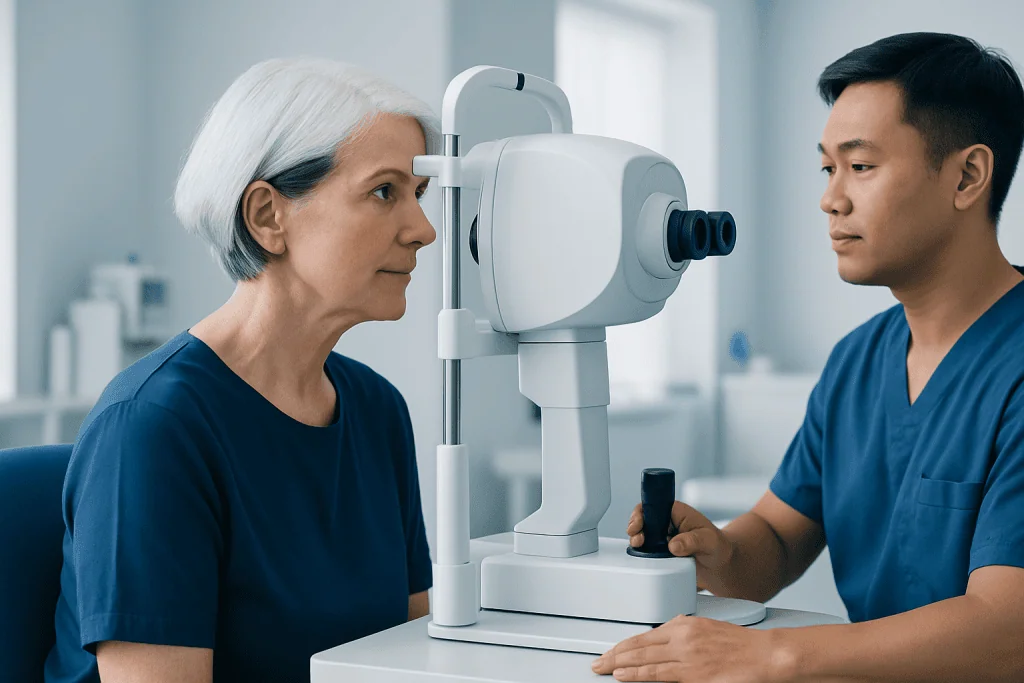
The main feature of poliosis is a localized tuft or streak of white or gray hair. It may be small and subtle or more noticeable, such as a white forelock near the front of the scalp. Some people are born with it, while others develop it later in childhood or adulthood.
Poliosis itself usually does not cause pain, itching, or hair loss. The texture of the affected hair is often normal. What matters most is whether there are additional symptoms nearby or elsewhere in the body that point to an underlying cause.
Associated findings can include:
- Light or white patches of skin near the hair change, as can happen with vitiligo
- Redness, scaling, or irritation of the skin or scalp
- Eye symptoms such as redness, pain, sensitivity to light, or vision changes
- Hearing symptoms, headaches, or other inflammatory signs in uncommon immune-related disorders
- Changes in eyelashes or eyebrows as well as scalp hair
If the white patch appears together with these features, doctors are more likely to investigate for a broader medical explanation rather than treating it as an isolated cosmetic issue.
Causes and related conditions

Poliosis happens when pigment-producing cells called melanocytes are absent, damaged, or not functioning normally in specific hair follicles. This can happen for several reasons. Some cases are congenital, meaning they are present from birth due to inherited or developmental conditions. Other cases are acquired later in life because of inflammation, autoimmune activity, medications, or local injury.
One of the better-known associations is vitiligo, a condition in which melanocytes are lost from areas of the skin and sometimes from hair-bearing areas as well. Inflammatory disorders can also be linked to poliosis. Examples include conditions that affect the scalp or nearby skin, and more rarely eye inflammation such as uveitis. In these situations, the white hair may appear near the inflamed area.
Other possible causes or associations include:
- Autoimmune disorders, including thyroid disease in some patients
- Inflammatory skin conditions or scarring processes affecting the scalp
- Certain medications or treatments that alter pigmentation
- Previous injury, burns, radiation, or repeated local irritation
- Rare genetic syndromes such as Waardenburg syndrome, tuberous sclerosis complex, or piebaldism
Not every person with poliosis has a serious illness. Still, because the list of associations is broad, a clinician usually looks at the whole clinical picture rather than the hair change alone.
How doctors diagnose poliosis
Diagnosis begins with a detailed history and examination. A doctor will ask when the white patch first appeared, whether it is stable or spreading, and whether there are skin changes, eye symptoms, autoimmune conditions, recent medication use, or family history of similar findings. This information often provides important clues.
The physical exam usually includes the scalp, skin, eyebrows, eyelashes, and sometimes nails or mucous membranes, depending on the suspected cause. A dermatologist may use close inspection tools to assess pigment changes and signs of inflammation. When skin depigmentation is present, the doctor may consider disorders such as vitiligo or other pigment conditions.
Additional tests are not needed for everyone, but they may be recommended if there are suggestive symptoms. These can include blood tests for thyroid or autoimmune disease, eye examination if uveitis is suspected, or occasionally a skin biopsy when the diagnosis is unclear. Imaging is uncommon unless another disorder is being investigated.
The goal is not simply to confirm that the hair is white, but to determine whether poliosis is isolated or part of a wider condition that needs treatment or follow-up.
Treatment options and cosmetic management
Treatment for poliosis depends on the cause. If no underlying disease is found and the white patch is stable, medical treatment may not be necessary. Many people choose simple cosmetic strategies instead, such as changing hairstyle, trimming facial hair, or using hair coloring products if the skin is healthy and there is no irritation.
When poliosis is related to an inflammatory or autoimmune condition, treatment is aimed at that disorder. For example, management of associated skin inflammation may include dermatologist-guided topical therapies or other medical treatments. If depigmentation is part of vitiligo, treatment may involve approaches used for pigment disorders, such as vitiligo treatment under specialist care.
In selected cases, doctors may discuss therapies that support repigmentation of the skin or nearby hair, although hair color recovery is not always predictable. If there is significant scalp disease, a dermatologist may also evaluate the broader health of the hair and scalp and consider hair restoration options only when medically appropriate and after active disease has been addressed.
When eye inflammation or another systemic disorder is involved, care may require coordination among dermatology, ophthalmology, pediatrics, or internal medicine. Acibadem International’s multidisciplinary specialists and JCI-accredited hospitals diagnose and treat conditions related to poliosis for international patients when specialist evaluation is needed.
Prevention and self-care
There is no guaranteed way to prevent poliosis because many cases are genetic or related to immune or inflammatory processes that cannot be fully controlled. However, early assessment of new pigment changes can help identify treatable causes before related symptoms progress.
General self-care focuses on scalp and skin health. Gentle hair care, avoiding unnecessary chemical irritation, and protecting affected skin from sun exposure are sensible steps. If there are pale skin patches nearby, sunscreen is especially important because depigmented skin burns more easily.
Helpful self-care measures include:
- Use mild hair and skin products if the area is sensitive
- Avoid scratching or traumatizing inflamed skin or scalp
- Monitor for new skin color changes, eye discomfort, or spreading white hair
- Follow treatment plans for related conditions such as autoimmune or inflammatory skin disease
- Seek professional advice before using dyes on irritated or diseased skin
Self-care can improve comfort and appearance, but it should not replace medical review if the change is new, rapidly progressing, or accompanied by other symptoms.
When to seek medical care
A doctor should assess poliosis when it appears for the first time without a clear explanation, especially in a child or when it develops suddenly in adulthood. Medical review is also important if the white patch is growing, affecting eyelashes or eyebrows, or appearing together with skin depigmentation, rash, scalp inflammation, or hair loss.
Prompt evaluation is particularly important if there are eye symptoms such as redness, pain, blurred vision, or sensitivity to light, as these may point to inflammation that needs timely care. Patients should also seek advice if they have fatigue, weight changes, or other features that could suggest thyroid or autoimmune disease.
Urgent medical attention is appropriate for significant eye pain or vision changes, severe skin inflammation, or other rapidly developing symptoms. In most cases, poliosis itself is not an emergency, but a professional assessment helps clarify whether it is simply a cosmetic finding or part of a condition that should be treated.
Frequently asked questions
Is poliosis the same as normal graying?
No. Normal graying usually develops gradually and more diffusely with age, while poliosis is a localized patch or streak of white hair. Poliosis often has a clearer border and may be linked to a local or systemic condition.
Can poliosis go away on its own?
Sometimes it remains stable for years, and in some cases pigment may partially return, especially if the underlying cause is treated. However, repigmentation is not guaranteed. The outlook depends on why the poliosis developed.
Does poliosis mean someone has vitiligo?
Not always. Vitiligo is one possible cause, but poliosis can also occur with other inflammatory, autoimmune, genetic, or isolated conditions. A doctor looks for skin changes and other symptoms to determine whether vitiligo is present.
Is poliosis harmful?
Poliosis itself is usually not harmful. The main concern is whether it may be a sign of another condition, especially if it appears suddenly or with skin, eye, or immune-related symptoms. That is why medical evaluation can be helpful.
Can hair dye be used on a white patch caused by poliosis?
Often yes, if the scalp and surrounding skin are healthy and not inflamed. People with sensitive skin, dermatitis, or active scalp disease should ask a doctor before using dyes or bleaching products. A patch test may also be recommended.
Can children have poliosis?
Yes. Some children are born with poliosis, while others develop it later. In children, doctors may pay particular attention to family history, skin findings, and rare genetic syndromes, although many cases are still benign.
References
- American Academy of Dermatology
- National Institute of Arthritis and Musculoskeletal and Skin Diseases
- MedlinePlus
- National Eye Institute
- DermNet
This article is for general information only and is not a substitute for professional medical advice. Please consult a qualified doctor about your individual situation.
Hair transplant in Turkey — costs, graft counts & a free assessment
JCI-accredited · board-certified surgeons · reply within 24h
Add us as a Preferred Source to see more of our trusted health content across Google Search, AI Overviews and Discover.